

A NASA Earth science field experiment is being conducted at SheltAir’s flagship location at Fort Lauderdale Hollywood International Airport. Florida’s largest, privately owned family of FBOs is assisting the GRIP (Genesis and Rapid Intensification Processes) experiment during the peak of South Florida’s hurricane season. The effort seeks to gather quantitative data to gain a better understanding of how tropical storms form and develop into major hurricanes.
Deputy project manager for NASA, Michael Craig, stated that the main purpose of this mission is to gather information that will help scientists understand the genesis, or beginning stages of a hurricane and how they form, as well as what causes tropical storms to change in intensity and develop into major hurricanes.
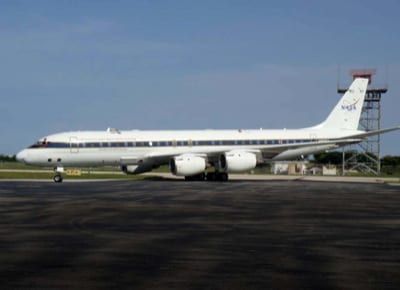
The DC-8 Airborne Laboratory that is temporarily based at the Fort Lauderdale facility will make 12 flights as part of this research. This unique aircraft is tailored to fly into hurricanes to collect data on the storm’s structure, dynamics and motion. The DC-8 contains computer systems and probes that collect aerosols and data from the storms. Since arriving in Fort Lauderdale in mid-August, NASA has been able to gather data on the rapid intensification related to hurricane Earl. The research will continue through the end of September.
Two additional aircraft, a WB-57 and a Global Hawk Unmanned Airborne System, are also being used in this research. The WB-57 is stationed at the NASA Johnson Space Center’s Ellington Field in Houston, and the Global Hawk is located at NASA’s Dryden Flight Research Facility in California. SheltAir is the only FBO to accommodate NASA as part of this mission for the designated time period.
SheltAir Aviation Services Chief Operating Officer, Danny Walsh stated, “We are honored to be a part of this mission and to be able to facilitate NASA with its needs. We believe this is an important step in understanding how to better prepare for and how to more accurately predict hurricane disasters.”
During this experiment, SheltAir will welcome a total of 150 NASA scientists, managers and support staff with estimated 60 individuals present on a daily basis. The FBO was selected for its Florida location in close proximity to the Caribbean, as well as other features including ramp space large enough to accommodate the NASA aircraft and ample office space.
For more information: NASA.gov, SheltAirAviation.com
