

The future of Jetpack travel is a step closer after the latest record-breaking test in the Martin Jetpack. The Jetpack shot into the sky over the Canterbury Plains in New Zealand at a climb rate of 800 feet per minute, reaching an altitude of 5,000 feet (previous record 100ft/min & 50 ft altitude) before safely deploying the ballistic jetpack parachute. You can see a video of the flight here.
Captured on video by TVNZ’s SUNDAY programme, the flight above Pudding Hill in Canterbury, New Zealand, is a “major step towards commercial production of the world’s first practical Jetpack,” according to officials with Martin Aircraft Company. “This successful test brings the future another step closer,” said the Jetpack’s inventor, Glenn Martin.
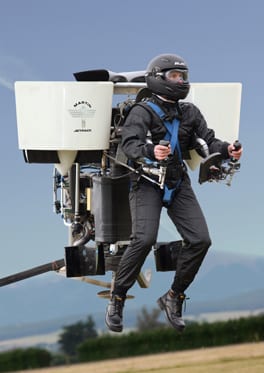 The record-breaking flight is part of an intensive period of flight-testing for the Jetpack as the Martin Aircraft Company works through the final development phase of the Jetpack’s technologies with the aim to have first deliveries of both the manned and unmanned (UAV) versions to customers within the next 18 months, according to company officials.
Named one of Time Magazines’ top 50 inventions for 2010, the Martin Jetpack has the ability to fly for half an hour or more, climb more than 1,000 ft per minute and to cruise at 100 km/h. “In this test we limited the jetpack to 800 ft/min climb so the chase helicopters could keep up,” said Martin.
Another first during the flight was the world first test of the Jetpack’s Ballistic Parachute safety system. While this test was a verification of the safety system using an off the shelf version, Martin Aircraft officials said they believe that with the purpose built Ballistic Parachute they are developing, the Jetpack’s avoidance curve can be removed entirely – meaning that with the Martin safety systems there is no height where a catastrophic failure needs to lead to significant injury.
For this high altitude flight the company tested the UAV unmanned version using a weighted dummy simulating a pilot’s weight to demonstrate the Jetpack’s ability to fly high.
“This test also validated our flight model, proved thrust to weight ratio and proved our ability to fly a Jetpack as an unmanned aerial vehicle, which will be key to some of the Jetpack’s future emergency/search & rescue and military applications,” said Martin.
The earliest Martin Jetpack customers are expected to be in the military and emergency response sectors around the world. Unmanned Jetpacks could be used for delivery, observation and extraction in areas and situations too dangerous for people and other aircraft to get to.
Martin Aircraft CEO Richard Lauder said the Christchurch-based company is now in an intensive testing period to refine technology in the areas of safety (the Ballistic Parachute), engine performance over extended and continuous hours of operation, and high speed flight stability. “This latest successful high flight was a complex aviation event requiring approval from the Civil Aviation Authority, and took several months to coordinate,” he said. “From a company point of view, the high flight shows Martin Aircraft’s development over the past two years and its expertise in coordinating and running a sophisticated and complex aviation event of this nature. In the past two years we’ve gone from unveiling a world leading invention to a company on the verge of international commercialisation of both the manned and unmanned versions of the Jetpack.”
Since the public unveiling of the Jetpack at Oshkosh in the US, Martin Aircraft has received substantial interest from governments, military and emergency services around the world, along with many in the general aviation sector who are interested in being one of the first to own a jetpack, company officials claim.
