

Many years ago when I took my Commercial checkride, the Designated Pilot Examiner told me that a pilot’s commitment to safety ebbs and flows. We are at our safest right after a checkride. As we gain experience, our vigilance can diminish, replaced by a new-found confidence that can lead to complacency.
Over the years efforts to keep pilots at that just-back-from-the-checkride level of safety has led to the creation of FAA-sponsored safety programs. The most recent incarnation is the FAASTeam, the name derived from FAASafety Team.
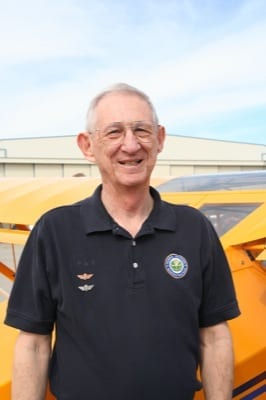
“The FAASafety team is really the re-engineered safety program from earlier years,” explained Bryan Neville, FAA Safety Team outreach program manager. “The goal is to raise the level of awareness of the risks involved in flying general aviation aircraft.”
The goal of the FAASTeam is to make safer pilots, said Neville. The program is administered through online courses and seminars held at airshows and other aviation events around the country.
“We are trying to reach three pilot demographics,” he said. “There is the pilot who says ‘I want to be safe’ — they study, they read, they practice, and they fly with an instructor on a regular basis. Then there are the pilots who say ‘hey I’ve got my license, that’s all I need to know’ and when they read an accident report they think ‘that will never happen to me.’ Then there is the middle group who are not aware of the efforts the safety team is undertaking, but once they discover us, they grab hold, they go to our website, and they take our online courses.”
Flying is all about risk management, said Neville, adding that the FAASTeam focuses on getting pilots to recognize and be aware of the risks and develop ways to mitigate them.
“The risks involved can run all the way from diving into the ground at 100 miles per hour to stubbing your toe on the ramp,” he said. “We say open your eyes and understand the risks. If you understand and address those risks before you go flying, chances of arriving safely are increased significantly.”
According to Neville, the reasons that airplanes crash have not changed over the years, but the ways to mitigate the causes, such as fostering an increased awareness of risk management, have become easier with the development of the digital information age.
The online courses are particularly popular, said Neville. Course topics include What you can expect for your first flight?, Takeoffs and Landings, VFR into IMC, and a course on the performance and limitations of aircraft. All courses are free at FAASafety.gov
“One of the weaknesses that we have found with pilots is that when they studied for the practical test they read the AFM from front to back,” he said. “Now that they have done that, they don’t go back and renew it. We want to encourage pilots to do that. Airline pilots have to demonstrate their proficiency every six to 12 months.”
The flight review, required every two years for general aviation pilots, is still important, said Neville. “The advantage of the flight review is that it gets a pilot thinking about safety every other year. The disadvantage of the flight review is that it only requires an hour of ground and an hour of flight, and it is not defined as to what the review will cover. The FAASteam programs are designed so that the pilot will think about safety 12 months out of the year.
“I am the first one to tell you that a private pilot who has been properly trained should never lose control of an aircraft,” he continued, adding that weak training, coupled with rusty skills, complacency, lack of situational awareness, and arrogance have led to many a crash.
“We are not out to tell pilots don’t do this, don’t do that, do it this way,” he said. “We’re here to ask have you paid attention to what is going on around you? Are you aware of your environment? Things change over time, even in a day. For example, a pilot who takes off from an airport at 6 in the morning with a fully loaded aircraft and flies to some place, then takes off at 1 in the afternoon with the same fully loaded aircraft will most certainly have different aircraft performance.”
It boils down to aeronautical decision making, he said. At seminars and in the online courses, FAASteam officials ask pilots to think, “when was the last time I flew with an instructor? When is the last time I performed a power-on stall as it would occur in real flight?” “Lots of CFIs teach power-on stalls straight head,” Neville said. “Many CFIs have never done them in a turn, but in takeoff, that can happen. Often the first thing the pilot wants to do when the airplane enters a power-on stall in a turn is try to regain control with the yoke and, oh my, that can make the airplane behave differently!”
The emphasis is on scenario-based training to make sure the pilot is thinking ahead.
“A beginning pilot needs to develop motor skills first then, as they progress, there should be greater importance and value on decision making,” he said. “We need to ask ‘what would you do if…?’ You need to have a Plan B, and practice it and know what to do in specific situations.”
The FAASTeam also encourages pilots to stay proficient, which can be a challenge in the winter months.
“In the spring time the accident chart takes a spike,” Neville noted. “You have a pilot who hasn’t flown in three to six months and they are rusty, and the airplane hasn’t flown in the same amount of time.”
Neville notes that pilots don’t necessarily have to step into the cockpit or in front of a computer to take advantage of recurrent training. The FAASTeam provides safety seminars all over the country. Often they take the form of a lecture illustrated with power-point slides. Presenters can be Designated Pilot Examiners, FAA employees, volunteer pilots, or aircraft mechanics. Information about upcoming seminars can be found on the FAASTeam webpage.