

I went to the Carolinas Aviation Museum in Charlotte earlier this month to see the Miracle on the Hudson airliner. And the big jet was certainly impressive. But my lasting memories from the trip are about the warbirds on display.
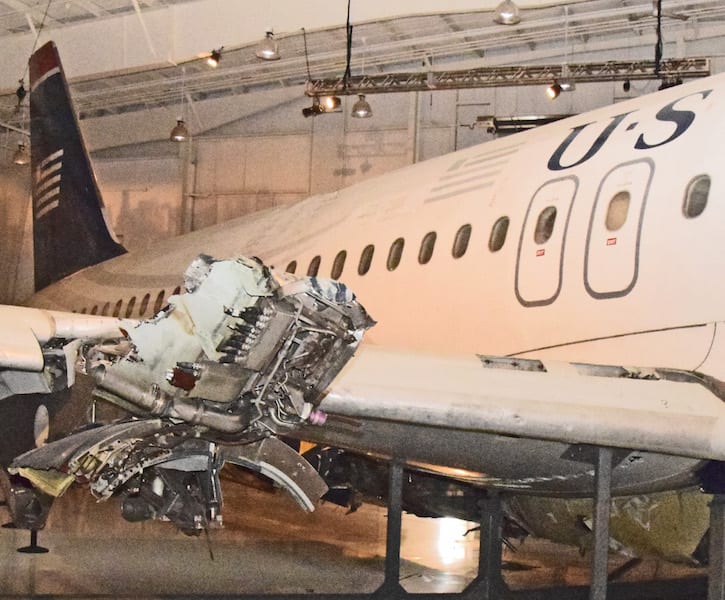
The museum centerpiece is the A320-214 Airbus that Capt. Chesley Sullenberger and First Officer Jeff Skiles successfully landed on the Hudson River Jan. 15, 2009. The aircraft, with damage from the water impact showing prominently, has helped nearly triple the museum’s yearly attendance since display began in 2011.
That will probably increase with this month’s release of the major motion picture “Sully” about the incident that stars Tom Hanks and was directed by Clint Eastwood.

On the day I visited earlier this month, the Miracle airliner got the most attention.
But the warbird displays surrounding U.S. Air Flight 1549 drew plenty of visitors also.
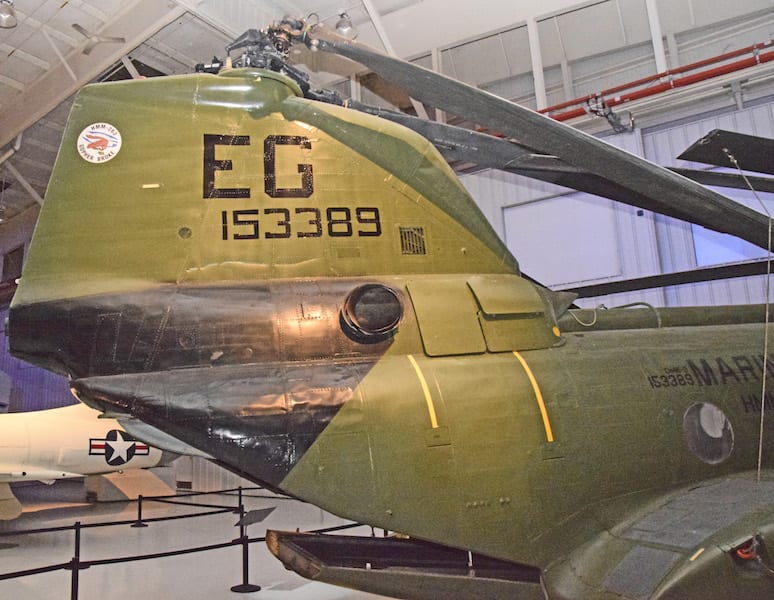
For example, a few steps away from the Miracle on the Hudson Airbus, the U.S. Marine Corps CH-46D Sea Knight helicopter helped write a proud chapter in Corps history.
On Jan. 31, 1970, EG 153389 landed on a rescue mission near Da Nang, South Vietnam. Crew member Private First Class Raymond Michael Clausen Jr., repeatedly walked through a mine field to carry out wounded comrades.
His Medal of Honor citation reads in part, “With 11 Marines wounded, one dead, and the remaining eight Marines holding their positions for fear of detonating other mines, Private First Class Clausen quickly leaped from the helicopter and, in the face of enemy fire, moved across the extremely hazardous, mine-laden area to assist in carrying casualties to the waiting helicopter and in placing them aboard. Despite the ever-present threat of further mine explosions, he continued his valiant efforts, leaving the comparatively safe area of the helicopter on six separate occasions to carry out his rescue efforts.”
The Grumman F-14D Super Tomcat is one of the most popular exhibits in the museum.
 “People remember the F-14 from the movie Top Gun,” said museum director Wally Coppinger (pictured left).
He noted that the museum’s F-14D was one of the last F-14s to launch from an aircraft carrier on an operational deployment over Iraq.
The Lockheed C-130 Hercules outside the museum on a display ramp near the main runways at Charlotte-Douglas International Airport (CLT) also has a unique story.
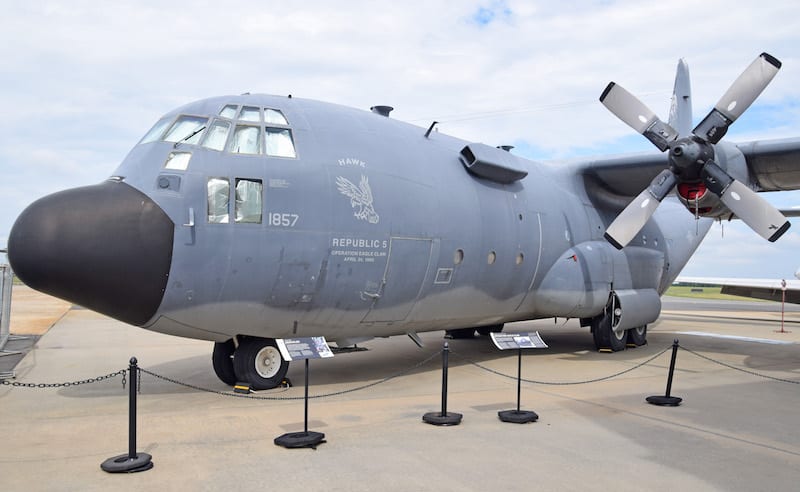
Aircraft 62-1857 was put into Air Force service in 1963 and modified in 1967 to carry the Airborne Battlefield Command and Control Center. The aircraft flew out of Thailand and the Philippines during the Vietnam War. The name Republic 5 stenciled on the nose is a reminder of Operation Eagle Claw, the unsuccessful mission in April 1980 to rescue 52 U.S. hostages held in Iran after the fall of the Shah of Iran.
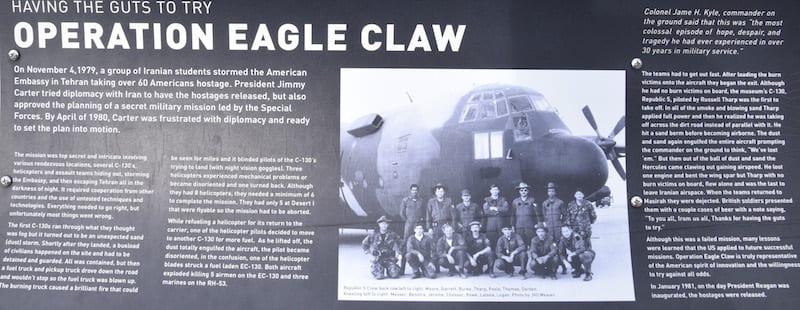
Republic 5 was one of three Air Force C-130s serving as fuel and personnel transports for the rescue helicopters. The rotor blades of a Marine RH-53 helicopter collided with one of the C-130s and both aircraft were destroyed at the desert landing site in Iran with the loss of five airmen and three Marines.
But Republic 5 made it out after the aborted mission. The plane was flown in Operation Desert Shield and Desert Storm of the first Gulf War (1990-1991). Later, the transport was operated from the U.S. air base at Aviano, Italy, for operations during the 1990’s conflicts in the former Yugoslavia.
The aircraft, with more than 35,000 hours in its logbooks, was retired after being displayed at the 25th anniversary of the rescue mission in April 2005.
The Vought A-7 Corsair II on display was flown from the Carrier John F. Kennedy during Operation Desert Storm. The aircraft was one of the last A-7E’s to fly in combat, Koppinger pointed out.
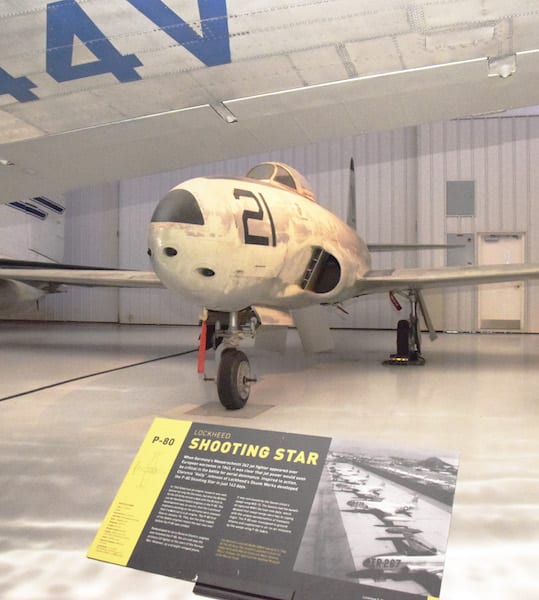
The museum’s Lockheed P-80 Shooting Star is a well-preserved example of the aircraft that became the U.S. military’s first jet fighter. As the F-80, the Shooting Star logged extensive service early on in Korea before being succeeded by the F-84 fighter.
Another warbird exhibit is the Douglas A-4A Skyhawk, a carrier-based fighter capable of delivering a nuclear bomb. The McDonnel Douglas F-4 Phantom II on display is an example of a flying legend with a record of combat sorties flown from Vietnam to the Gulf War. The Phantom was not taken out of service until 1996.
The museum displays one of only two D-558-1 Skystreak jets in existence. The smooth-skinned Douglas Skystreak (37972 NACA-142, 81) had a top speed of 650 miles per hour and briefly held the title of world’s fastest aircraft until Air Force Capt. Chuck Yeager broke the sound barrier in the Bell X-1.
The museum’s AV-8 Harrier II, famed as a vertical and short takeoff and landing fighter, saw extensive combat in the first Gulf War where it was used in bombing raids, for armed reconnaissance and for ground troop support, according to the display placard.
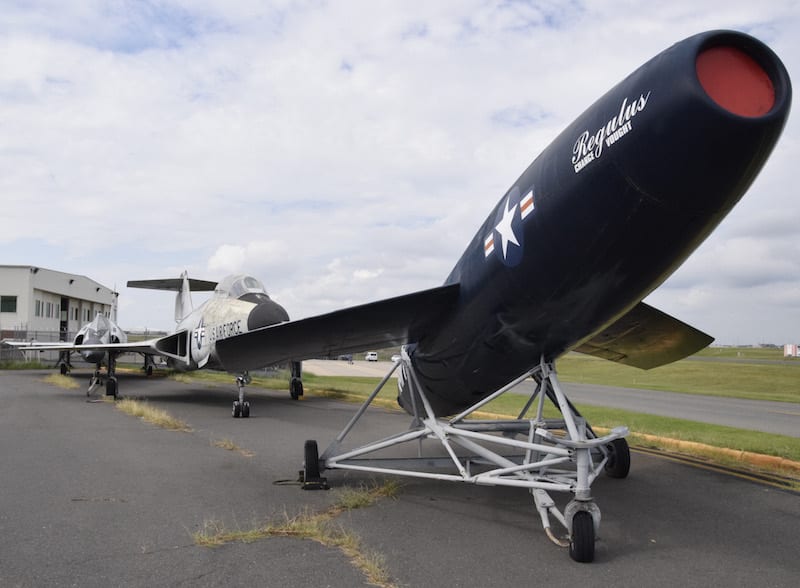
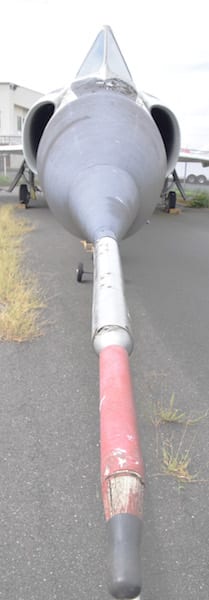
Also on display outside the museum are a McDonnell F-101 Voodoo fighter and a Convair F-102 Delta Dagger fighter plus a 1956 U.S. Navy SSM-N-8a Regulus 1 cruise missile.
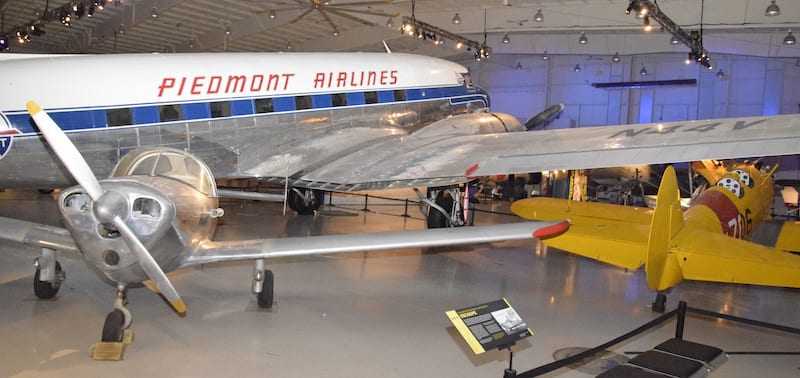
Two other museum aircraft have strong military ties. The PT-17 Boeing Stearman Kaydet biplane was the primary trainer for about half of all U.S. military pilots in World War II. More than 10,000 Stearman aircraft were built before the run ended in 1944.

The Piedmont Airlines Douglas DC-3 is a superbly painted and polished example of the legendary aircraft that wrote significant chapters in civil and military aviation history. The military version, the C-47, played a prominent role in supplying the U.S. military during World War II. Worldwide, more than 16,000 DC-3/C-47 transports (including foreign copies) were built.
The Ercoupe 415-C and Cessna 150 on display are examples of small general aviation aircraft. And the Savoia Marchetti S.56 Flying Boat is one of two remaining examples of the Italian single engine biplane built under license in the U.S.
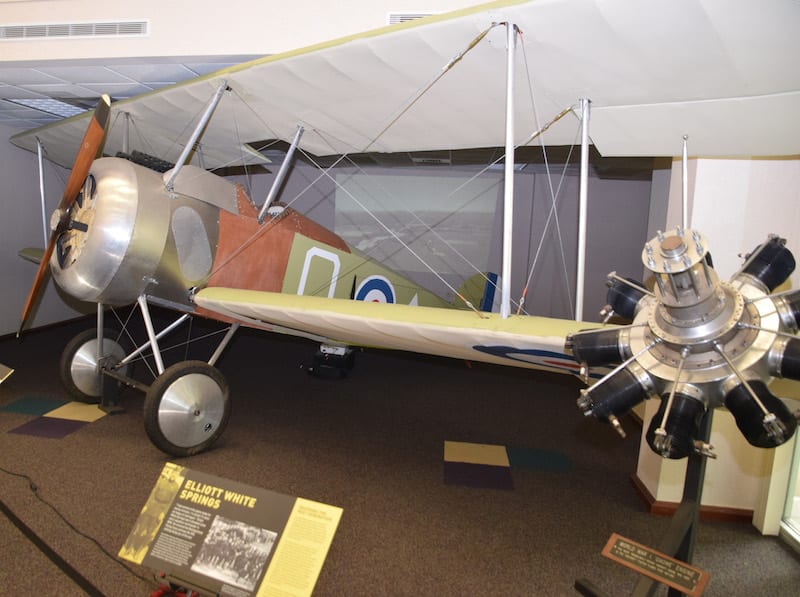
The replica Sopwith Camel World War I fighter biplane in the entrance hall gift shop recalls the aircraft flown by a Carolinas aviation legend. Area high school students built the replica to honor World War I flying ace Col. William White Springs of Fort Mill, S.C.
According to Coppinger, an effort is underway to double the museum’s display space. The museum has many aircraft and other potential exhibits in storage for lack of a place to show them to the public, he said.
More than 6,000 students visited the museum in the past year to take part in the wide-ranging program offered by Education and Exhibits Director Katie Swaringen.
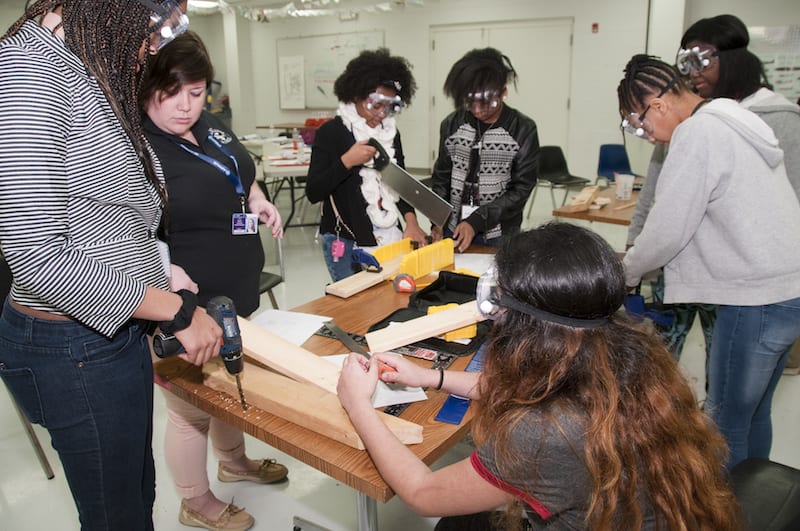
“We like to tell the stories of people along with the aircraft,” Swaringen said. “The Miracle on the Hudson aircraft marked a real shift for the museum. Most people have flown on a commercial aircraft and they can relate more to a personal story.”
The museum website lists details of the special programs.
The Carolinas Aviation Museum is open daily except Thanksgiving, Christmas Eve, Christmas Day, New Year’s Day and Easter. General admission is $12, with special rates for seniors, students, active duty and retired military and children.