

In late 1961, Jack Brown, owner of the Northwest Flyer, the predecessor to General Aviation News, traveled to Denver to meet with Univair’s founder J.E. Dyer. The resulting story — more than 4,800 words long published on Feb. 26, 1962 – sang the praises of the company and its family heritage. Brown crowed that it was the first time the Univair story had been told in the press.
Brown begins: “After the first of four days spent in Denver at Sky Ranch Airport obtaining material for this story, it became quite apparent to me that herein lay more than just a story of a firm manufacturing and distributing aircraft parts. Here too, was a personal story that could easily be a guiding light for all America.”
Highlighting the family aspect of the company, Brown notes that when he flew into Sky Ranch Airport, J.E. Dyer unloaded his baggage from the company Mooney before insisting that Brown and the “Flyerettes” stay at the “exquisite” family home nearby.
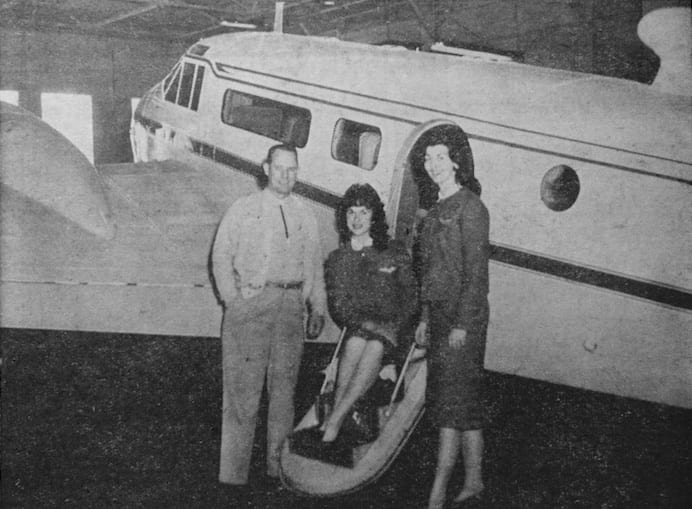
“When I mentioned hotel accommodations I found that ‘J.E.’ would have no part of that,” Brown relates. “We were to be his guests. With the two girls assigned to a delightful modern penthouse apartment, which is maintained by Univair for the convenience of their guests and customers, I was given a guest room in the main part of the home.”
“In a matter of moments I felt as though I had known the Dyers for years,” he continued.
He then goes on to talk about the company: “First, let it be said that if it were not for Univair, the number of family and older type work planes plying our skies would be drastically reduced. In the warehouse are parts for nearly all craft that have ceased production. As soon as the company stops production of one model of craft and their parts supply for that particular plane reach the point of depletion, Univair sets up production under PMA for those parts in demand and necessary to keep those planes in the air throughout the world.
“This service to the flying public can best be appreciated by the following example: An item we shall call X was produced by a leading aircraft manufacturer and wholesaled to their dealers for $23.50. Once the craft was out of production and part stocks depleted, the dealers reordered part X, which by then had to be produced as a special run in the manufacturer’s plant, then cost $280.
“Univair, realizing the need for an ample stock of parts, stepped into the picture, manufactured the parts and now offer them to John Q for $28.80 per copy. This is a real service to the flying public and the officers of Univair are richly rewarded by dozens of letters of appreciation in their files, which I had the opportunity to scan through, from grateful aircraft owners for the part Univair has played in keeping their airplane flying.
“To further expand on this subject, let me point out that to manufacture part X or any other part under PMA, Univair has to prove through tests to the satisfaction of the manufacturing and engineering branch of the FAA that the parts they manufacture are equal to, or better than, the original approved part turned out by the aircraft manufacturer.
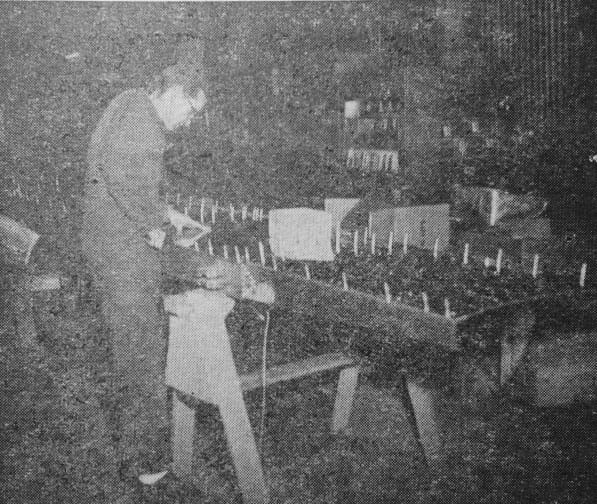
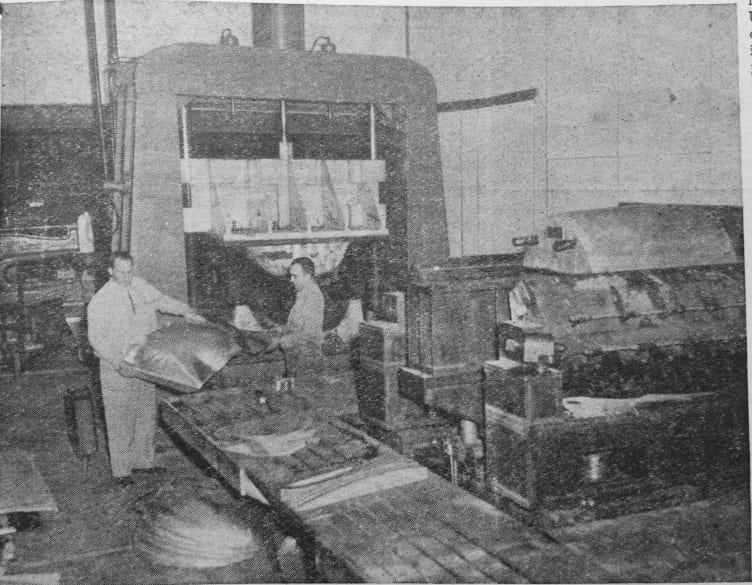
“Parts manufactured and stocked by Univair run into the millions. Imagine the job of keeping track of all this. Many parts when turned out requires so much work on the original setup that Univair runs off a life-time supply of them, after which the expensive dies are melted down and new dies cast for another job. Other parts that are more easily produced are manufactured on estimated year’s needs at one run.
“Thousands of planes are flying today only because Univair recognized the need and set up and produced the needed parts. Thousands of planes likewise are flying today that can obtain needed parts only from Univair, unless they find a cadaver someplace. With this terrific leverage over the flying public, their catalog reflects the caliber of Univair executive personnel in holding all prices to that of the near original wholesale price. Personally I can’t help but tip my hat to them.”
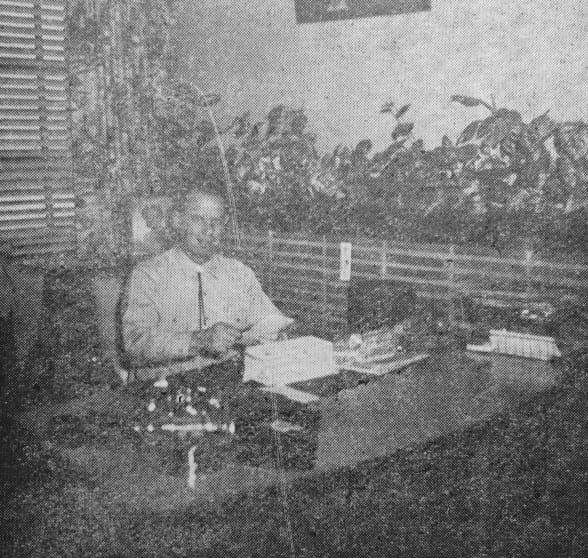
Brown notes that company founder J.E. opened all the mail each morning, with letters coming in from all over the world.
“As head of the firm J.E. feels that he can keep in personal touch with all facets of the company’s varied operations by personally examining the mail. Any letter that denotes the slightest dissatisfaction on the part of a customer is marked so that all correspondence up until the time the matter is settled to the full satisfaction of the customer must pass over J.E.’s desk.
He and department heads likewise place great emphasis on maintaining good customer relations. Once again I tip my hat to this organization for nowhere could the attitude of “So what? They gotta deal with us anyway” prevail more realistically under improper management.
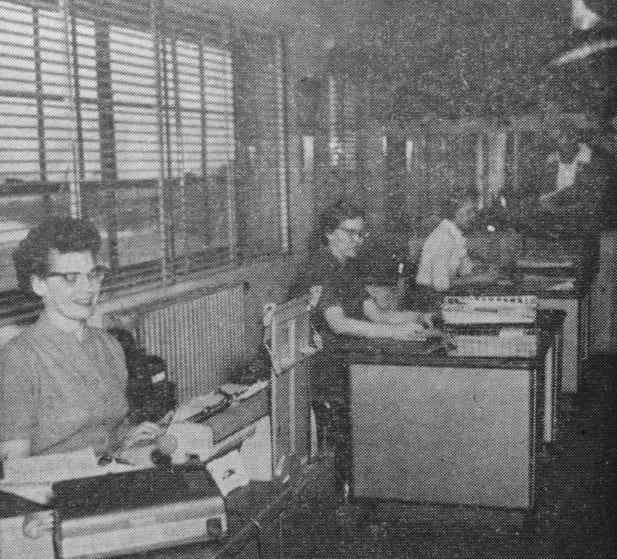
It’s at this point in the story that Brown turns to the Dyer family and the company’s start-up: “After World War II, J.E. was out of the Air Force and out of a job, but had a box full of tools and a desire to carry on in the aviation business of designing and manufacturing. With his meager savings of the war years, a bulldog determination and 17 years of hard work, he has created Univair, known the world over as a leader in aircraft parts manufacturing.
“Perhaps you can best see how it all came to be if I brief you on J.E.’s history,” Brown continued.
“Born into a family of moderate means, his early childhood was an average one until the crash of 1929, after which it became one of real hardship. The family fortune disappeared overnight and the mother’s death left a father, who was an architect and building contractor, with three young sons of which J.E. was the oldest — being 12 at the time – to rear. Things were so bleak that they actually set up housekeeping in a cave along the Osage river, which is now on the Lake-of-the-Ozarks in Missouri. Before long, the family had worked themselves back into a house and a place of standing in the community. Even at the early age of 12 years, J.E. knew what it was to work for what you wanted and that most things were possible with determination and hard work.”
After chronicling J.E.’s training through the war years and the start of the company, Brown noted that “self sacrifice has been the key note of the success of this venture,” adding that “with Veda’s help” J.E. “forged ahead in the business world to his enviable position today.”
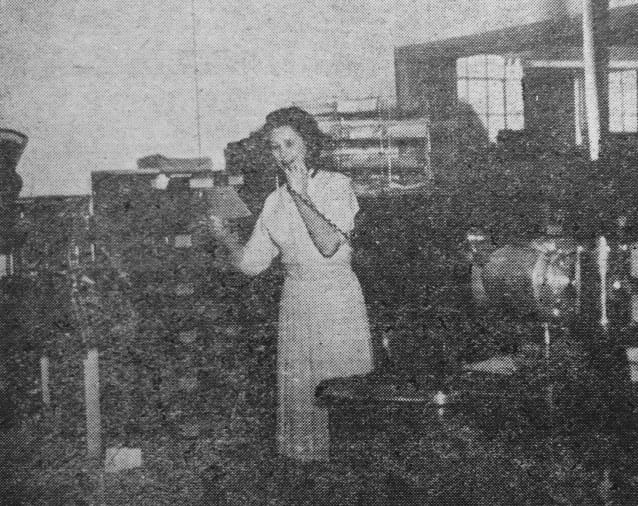
Brown also notes that the Dyers recognized employee loyalty, offering stock in the company to key employees.
“The close employee-employer relationship is noticeable to all who visit the plant,” Brown wrote. “Employees go out of their way to speak to J.E. and Veda, and respect in their leadership is quite apparent.”
Brown’s story then takes a turn, focusing on the family home.
“Although certainly not normally reported on in an aviation publication, the Dyer home cannot be omitted from this story, for it brings to mind the caption to this story that says only in America would this be possible.”
“The Dyer home is one of the nicest, most modern homes I have ever visited, yet it conveys a warm friendly lived-in feeling from the moment you step into the door,” he continued. “It is the result of one fact. Somewhere along the line J.E. and Veda’s folks forgot to tell them that there were things in this world they could not do. With this lack of instruction the two Dyers have lived under the assumption all this time that anything they make up their minds to do can be done.”
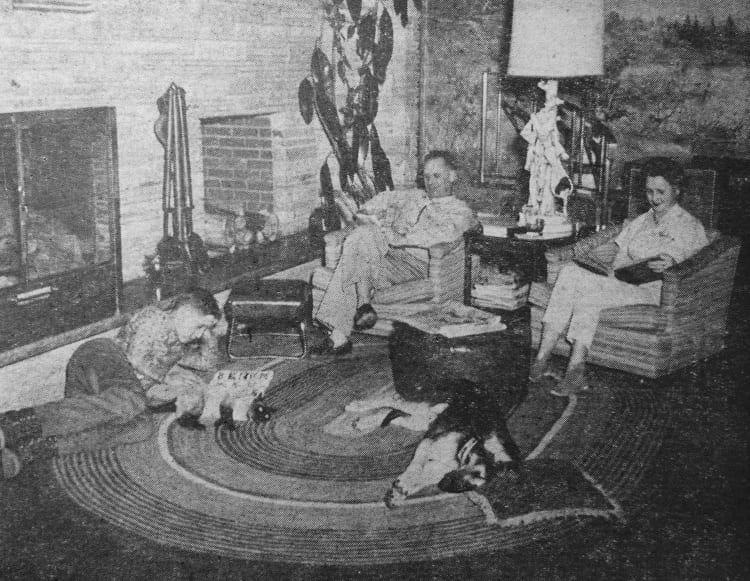
He goes on to relate that the couple built their home themselves.
“By that I do not mean that they called up some contractor and for ‘X’ amount of dollars had their home built to their specifications. I mean just what I said! They bought a piece of land adjoining Sky Ranch Airport, paced off so many feet from the road and marked it as the spot to build their home.
“Thereafter, for 3-½ solid years, from the time the plant closed until the wee hours of the morning, J.E. and Veda had on their old clothes and were to be found working on their home. Their son Steve, also joined them after school and on weekends, and although a youngster, his efforts counted in the building of his character for here is a boy today who knows the satisfaction of the fruits of his efforts.”
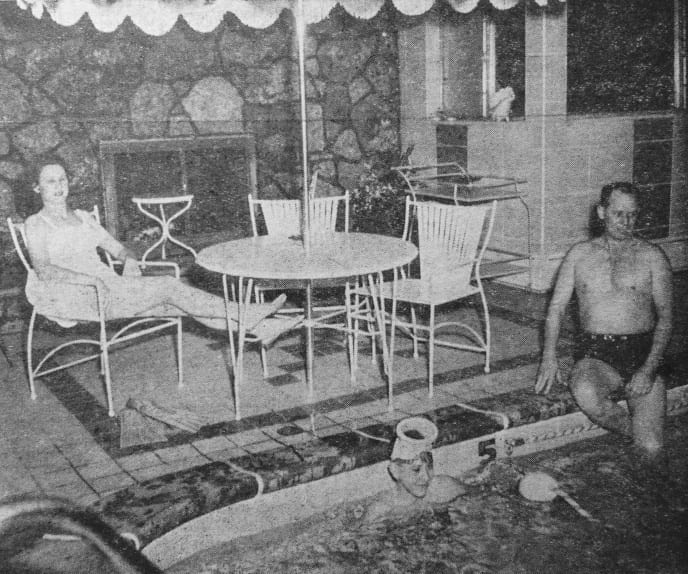
“Imagine, if you can, a family erecting a home such as this in their spare time while building an empire in the aviation world during working hours.
“Unbelievable…. yes, but true. Only in America could all this be possible. I salute the Dyers. Would that there were more like them in the world.”
Related content: Univair celebrates 70th anniversary