

On this day in history, June 23: Solar Impulse 2 successfully completed the world’s first solar-powered flight across the Atlantic on June 23, 2016, establishing a world first and setting four FAI world records.
The first solar-powered plane to circumnavigate the world was piloted by Dr. Bertrand Piccard.
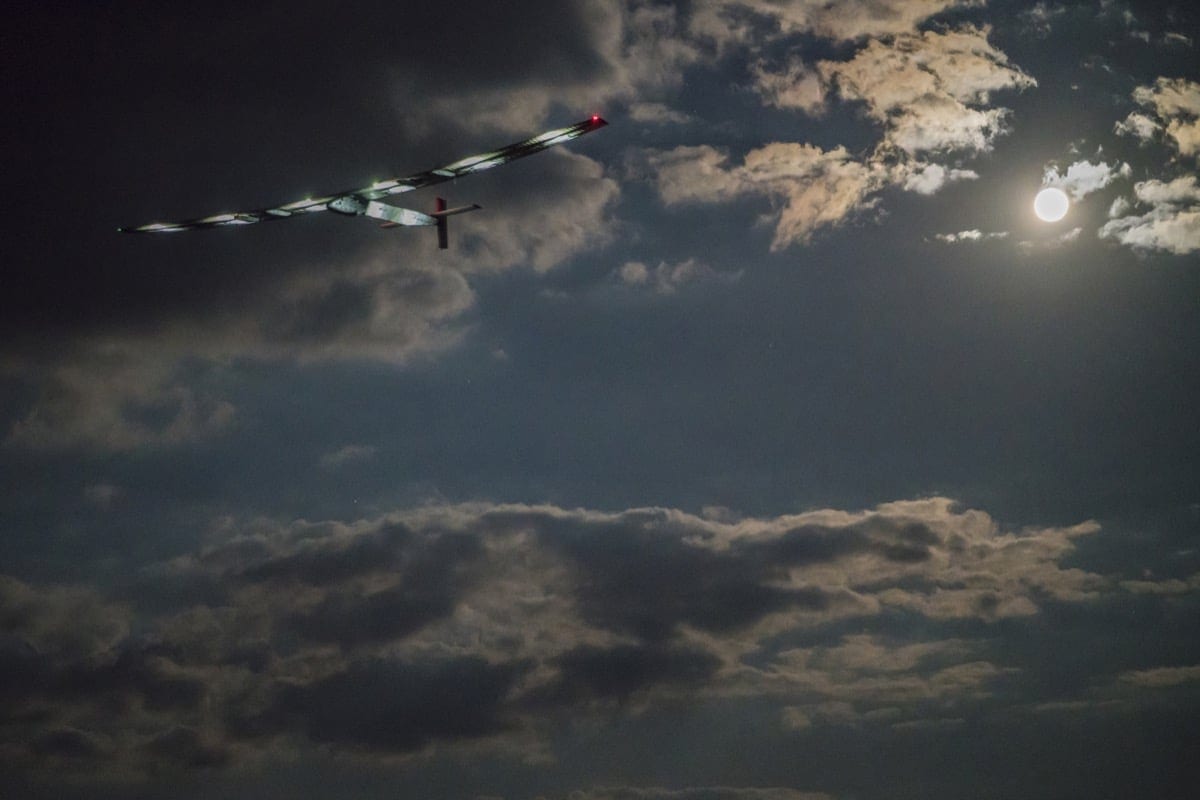
For its record flight across the Atlantic, it took off at 2:30 am local time from New York on June 20, 2016.
After almost exactly three days in the air, it landed at Seville International Airport in the south of Spain at 7:38 am local time.
It had flown for 71 hours and 8 minutes at a height of up to 8,531 m, covering a total distance of 6,765 km — a straight-line distance of 5,851.3 km between the two points.
The Solar Impulse 2 team set four FAI world records for the flight:
- Distance, in the Electric-Powered Aeroplane category: 5,851.3 km
- Distance along a course with pre-declared waypoints, in the Experimental and New Technologies/Solar-Powered Aeroplane category: 5,851.3 km
- Speed over a recognized course, in the Electric-Powered Aeroplane category: 80.6 km/h
- Altitude, in the Electric-Powered Aeroplane category: 8,531 m.
The team had hoped to land in Paris, to echo the historic transatlantic flight of pioneer aviator Charles Lindbergh in 1927. However, bad weather meant the flight plan was re-routed south and Seville was chosen as the safest option.
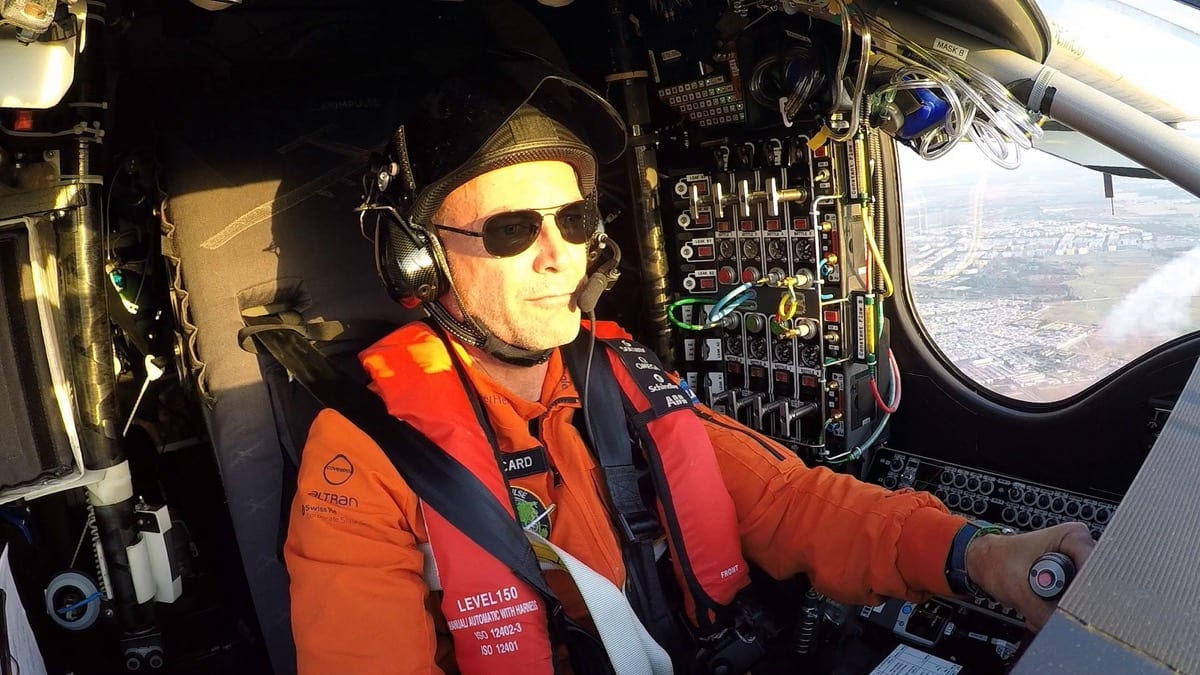
After landing in Seville, the Solar Impulse team said: “The transatlantic flight [was] powered only by the sun, confirming Solar Impulse’s vision that clean technologies and renewable energy can achieve the impossible.”
 The transatlantic flight was the 15th leg of the Solar Impulse 2 project to fly around the world in the solar-powered plane. After two more legs – Seville to Cairo and Cairo to Abu Dhabi – it completed the journey on July 26, 2016, after 42,000 km in the air.