

Genesys Aerosystems has introduced its new S-TEC 3100 Digital Flight Control System (DFCS), developed for FAA Part 23 single- and twin-engine aircraft.
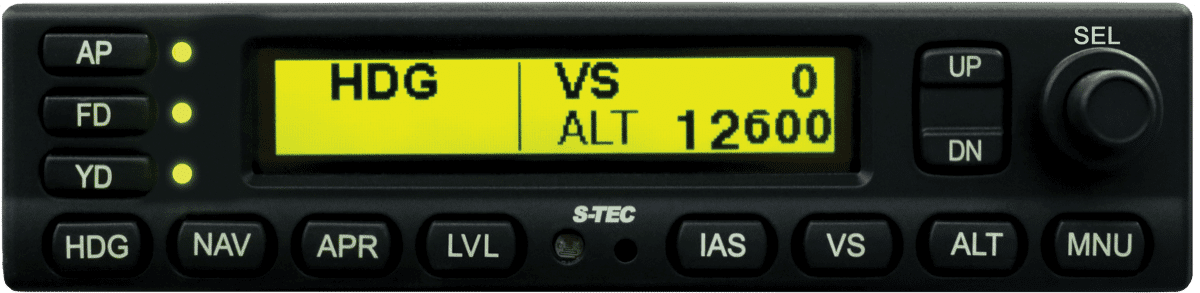
“We’ve worked diligently with piston aircraft owners to identify what were the most important feature sets for our next autopilot, and undoubtedly it was envelope protection and one-button straight and level recovery,” said Genesys Aerosystems’ Director of Sales and Marketing Jamie Luster. “We’re excited to bring these new capabilities to the S-TEC 3100 autopilot. It’s like having a virtual copilot along on every flight.”
Another goal of the Genesys Aerosystems engineering team was to ensure that the S-TEC 3100 was designed with open architecture to easily integrate with both legacy analog avionics, such as HSIs and DGs, and today’s advanced digital systems, such as complete EFIS displays, she added.
It also was designed to require minimal additional equipment to keep the incremental cost as low as possible, she said.
In addition to Envelope Protection and Straight and Level Recovery, the next-generation S-TEC 3100 Digital Flight Control System features the option for a 2-axis or 3-axis autopilot system with Flight Director and Optional Yaw Damper built into the autopilot.
Other features include precision and nonprecision Approach mode, Heading Hold, Altitude Preselect and Hold with Autotrim, Vertical Speed Control, Indicated Airspeed Control, course intercept, and more.
“The initial aircraft we have identified to earn FAA STCs for the S-TEC 3100 are the Cessna 182, Cessna 210, Beechcraft Bonanza and Piper Saratoga,” Luster said. “The reason we chose these four initially was twofold: There are thousands of these aircraft in the field and we received very favorable responses from owners of these types during our initial research.”
“These owners use their aircraft and will value the array of benefits that they will enjoy with the new S-TEC 3100 system,” she said. “The STCs are currently underway and we expect certification in early 2018.”
She added pricing will be announced in the coming months, but will be “comparable to other autopilots with similar capability.”