

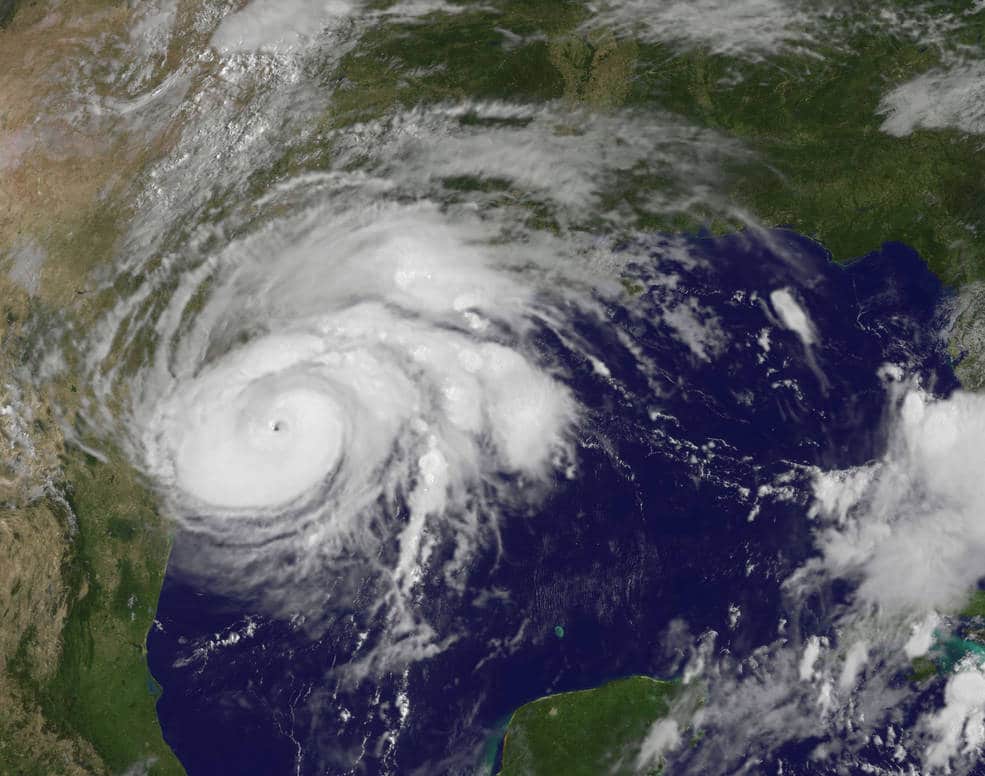
Devastation from Hurricane Harvey is still being assessed, with the aftermath of the storm still wreaking havoc in Texas.
The National Business Aviation Association has put together a web page detailing the latest on the storm and its impact on the area, including airports and aviation.
Airport Information
There are multiple airport closures in the Houston area.
Houston International Airport (IAH) is hoping to reopen on Aug. 29, 2017, but officials said they won’t be able to confirm that until later in the afternoon of Aug. 28.
Currently they are only allowing Emergency Operations Flights into William P Hobby Airport (HOU) and IAH.
There are multiple equipment outages at airports in the Houston area and flooding is expected to continue to affect airports throughout the area during the next few days.
NOTAMs are the most accurate way to determine the status of an airport as these are managed by the airport manager or airport authority, NBAA officials note.
“In events such as this, it is hard for the FAA to keep the OIS page updated with the ongoing airport status changes,” NBAA officials said.
Route Information
Houston TRACON (I90) and Houston Center (ZHU) continue to deal with reduced staffing. With the reduced volume they expect things to be manageable today, NBAA officials report.
Required reroutes may be issued to route traffic around Houston Center (ZHU) and for traffic into other airports within ZHU. These reroutes will be issued, cancelled or amended as needed depending on traffic volume and staffing levels at the facilities. There are also multiple route closures in the Gulf of Mexico.
Pilots are encouraged to monitor the FAA Current Reroutes page and FAA Advisory Database for the latest on required reroutes and route closures.
TFRs for rescue and recovery operations will start being issued Aug. 28. TFR NOTAMs should contain a phone number for pilots to obtain special permission to operate humanitarian relief flights into those areas.
In addition, there are several Airspace Coordination Area (ACA) NOTAMs that have been issued and encourage pilots to exercise extreme caution while operating in these areas due to current rescue operations.
These NOTAMs may be found on PilotWeb in the ZHU (HOUSTON ARTCC) NOTAMs under the “ARTCC Notices, TFRs and Special Notice Page” section.
Additional Resources
National Hurricane Center
The National Hurricane Center has all the latest information on tropical storms or hurricanes in both the Atlantic (including the Caribbean Sea, Gulf of Mexico) and Pacific basins. These resources include forecast tracks and intensity as well as winds and storm surge.
NBAA Airspace Alerts
NBAA Air Traffic Services (ATS) at the FAA Air Traffic Control System Command Center also distributes email alerts about operational issues, including those related to weather.
Humanitarian and Relief Resources
NBAA’s Humanitarian Emergency Response Operator (HERO) Database: GA has long served as a lifeline to people and communities in crisis. That’s because general aviation and business aircraft can reach locations impacted by natural disasters, when airliners and sometimes even automobiles cannot.

General aviation aircaft can operate on short notice into outlying airports with small runways, and sometimes unpaved airstrips, or even onto roads. They are uniquely suited to providing a first response to natural disasters and other emergencies, NBAA officials note.
The NBAA Humanitarian Emergency Response Operator (HERO) Database is a list of people in the business aviation community who are part of disaster-response mobilization efforts. In the aftermath of major crises, basic information from the database is provided to organizations coordinating relief efforts.