

You can now use your mobile phone to see moments that made history with the new VR Hangar from the Smithsonian’s National Air and Space Museum.
The VR Hangar brings some of the museum’s most important milestone artifacts to life using real 3-D-scan data in immersive virtual-reality vignettes.
The app is optimized for use with Google Cardboard and similar devices, and is available free of charge in the iOS and Android app stores.Users will discover three of the museum’s most popular air- and spacecraft, each with three immersive scenes:
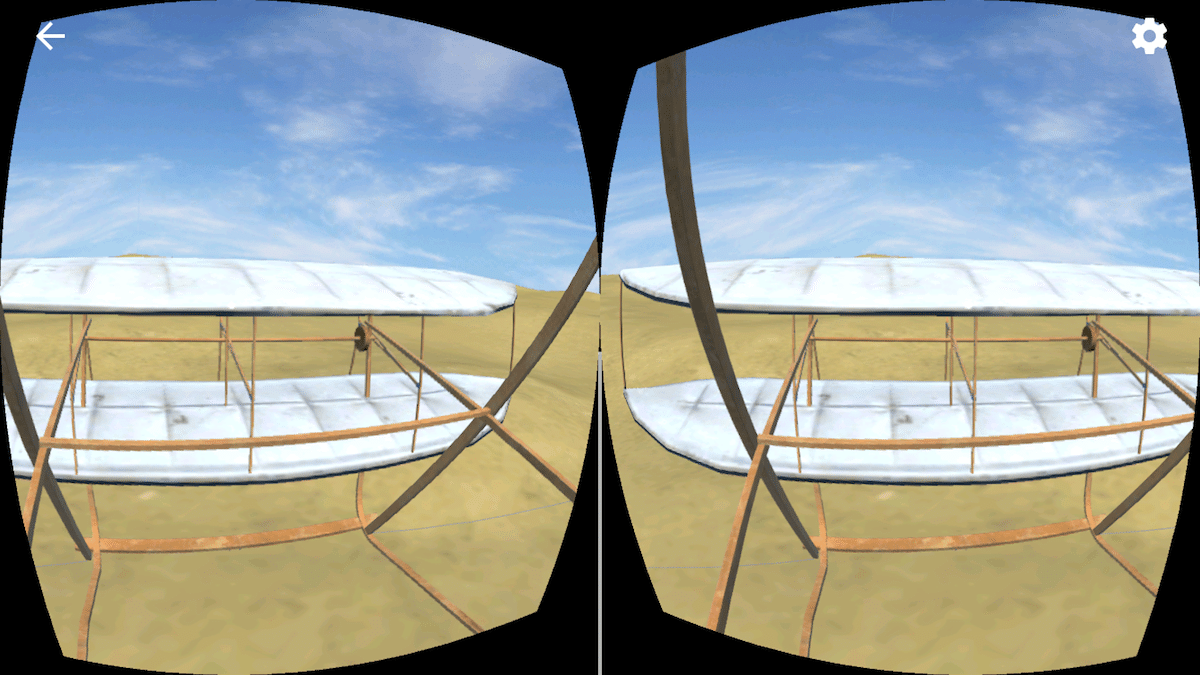
1903 Wright Flyer
The 1903 Wright Flyer was the product of a sophisticated four-year program of research and development conducted by Wilbur and Orville Wright beginning in 1899. After building and testing three full-sized gliders, the Wrights’ first powered airplane flew at Kitty Hawk, N.C., Dec. 17, 1903, making a 12-second flight, traveling 120 feet.
Users can:
- See the workshop where Wilbur and Orville built the Flyer
- Watch their first unsuccessful attempt at Kitty Hawk
- Witness the inauguration of the aerial age with the Wright’s first flight
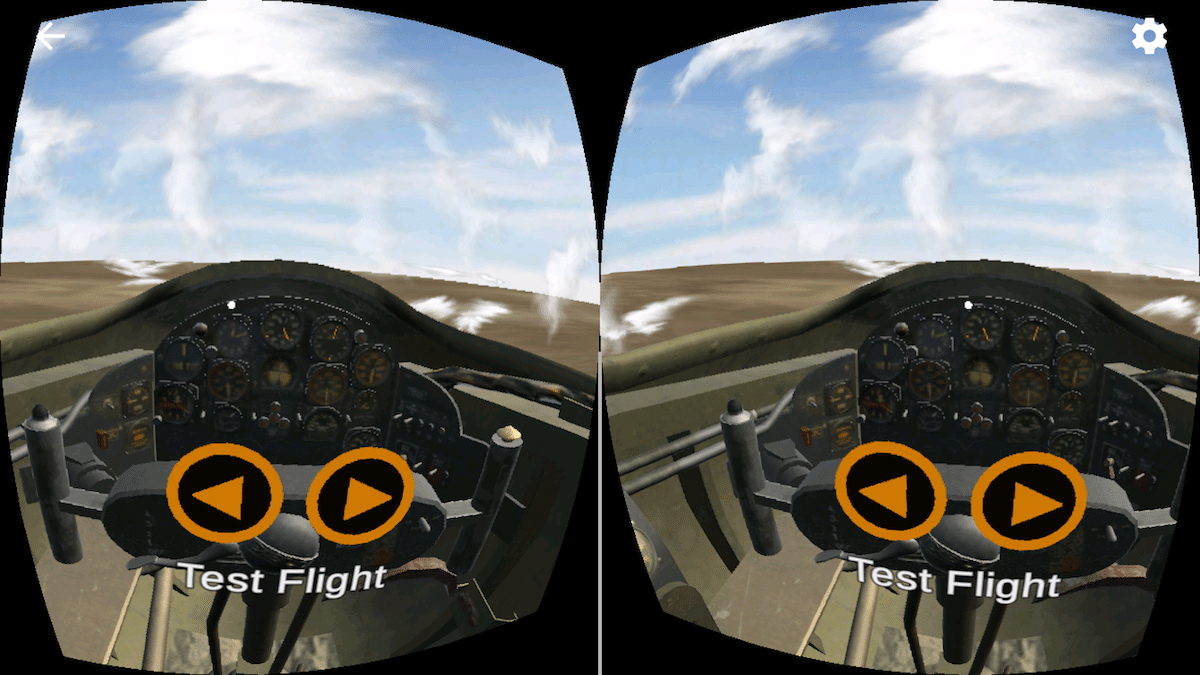
Bell X-1 Glamorous Glennis
On Oct. 14, 1947, the Bell X-1 became the first airplane to fly faster than the speed of sound. Piloted by U.S. Air Force Capt. Charles E. “Chuck” Yeager, the X-1 reached a speed of 700 miles per hour, Mach 1.06, at an altitude of 43,000 feet. Yeager named the airplane “Glamorous Glennis” in tribute to his wife.
Users can:
- See the experimental X-1 in development
- Watch as the aircraft is loaded onto a B-29 for air-launch
- Witness history’s first transonic flight
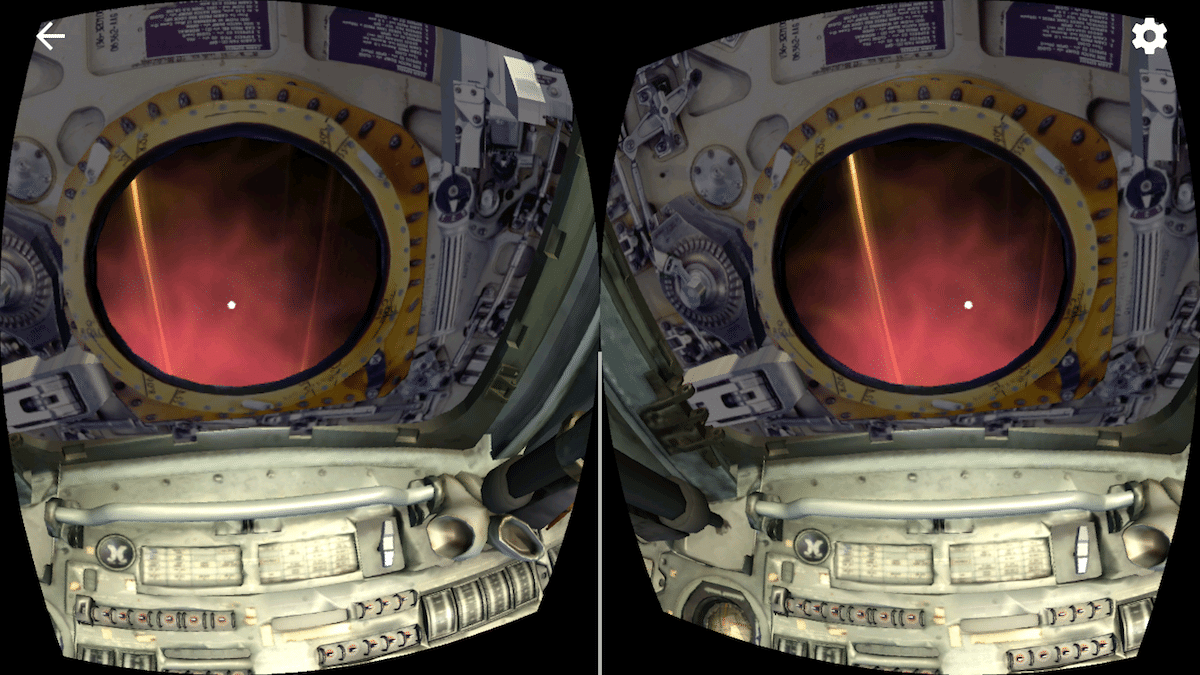
Apollo 11 Command Module Columbia
The Command Module Columbia was the home to the three-person crew of history’s first lunar-landing mission. It launched atop a 363-foot Saturn V rocket, and housed the crew en route to the moon.
Columbia remained in lunar orbit while Eagle landed on the surface and is the only portion of the spacecraft that returned to Earth.
Users can:
- See where the astronauts boarded Columbia for their history journey
- Watch the spacecraft in orbit around the moon
- Witness the reentry of Columbia as it returns the crew safely to Earth
This new virtual-reality experience is a prototype, designed to help the museum explore the use of digitized artifacts in immersive storytelling, according to museum officials. Feedback from consumers will be used to build new, more in-depth experiences for use onsite at the museum and beyond gallery walls on users’ own devices.