

Land and seaplanes share many operational similarities. The differences, where they exist, are extreme.
“Floatplane pilots have been completely unserved when it comes to modern training technology,” said Redbird Flight Simulations President Charlie Gregoire.
A new partnership between Redbird Flight Simulations, Wipaire and Tropic Ocean Airways seeks to modernize floatplane training.
-

Redbird Flight Simulations’ CRV
Redbird has customized its immersive, full-motion CRV training device — which represents a Cessna 208 Grand Caravan — to include an amphibious float kit from Wipaire. Now, without setting foot in their aircraft, the pilots at Tropic Ocean Airways will be able to experience safely and accurately the flight characteristics and training events specific to their operations.
-
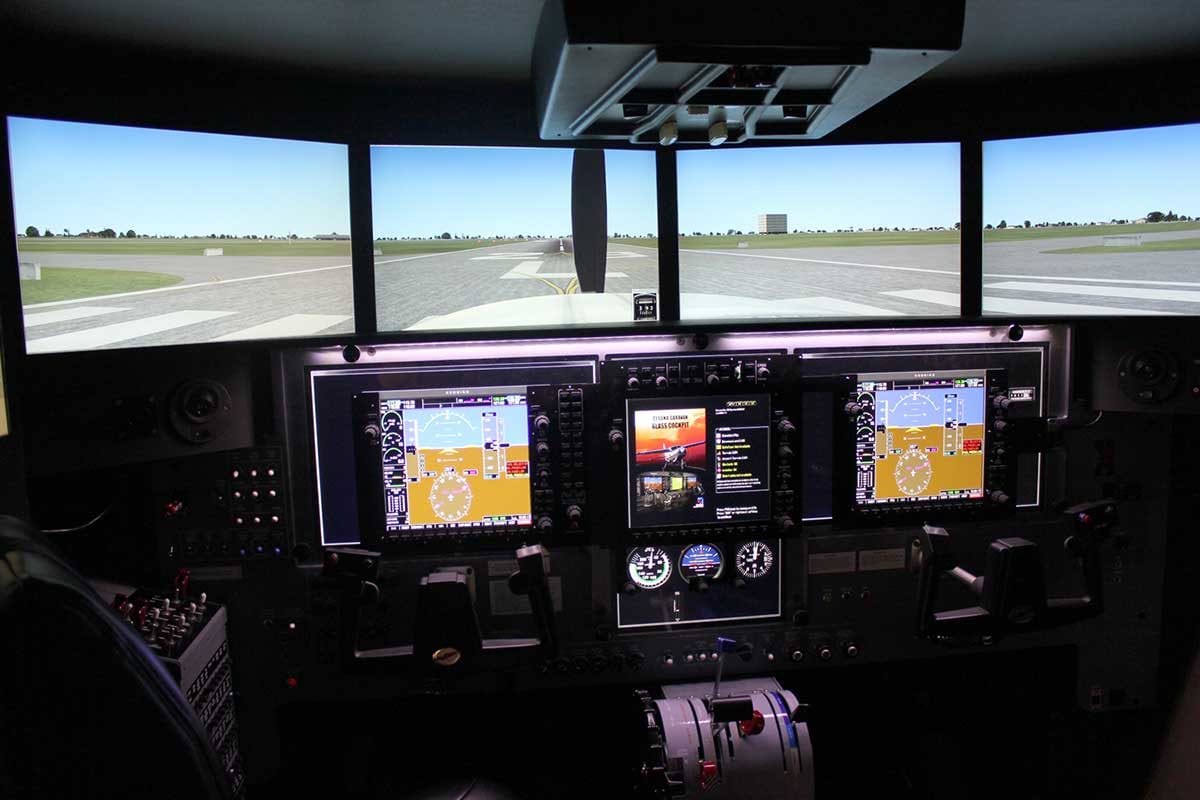
Panel/interior view of Redbird’s CRV
Wipaire supplied components to Redbird to create the most realistic training environment possible, company officials noted. The custom Redbird CRV is equipped with Wipaire’s Laser Gear Advisory system, which provides intelligent alerts when gear position and detected landing surface are mismatched.
“Seaplane operations occur in a very dynamic environment, similar to aircraft carrier operations,” added Rob Ceravolo, CEO of Tropic Ocean Airways. “Our training program is designed after the U.S. Navy’s program, which applies a standardized approach to training, relying on building the routine skillsets through simulation, allowing the pilot’s focus to be on the dynamic nature of the mission. This partnership will allow us to drill those skillsets at an increased tempo, resulting in a higher level of standardization, accelerated training timeline, and a lower cost per pilot trained.”