

MAXWELL AIR FORCE BASE, Alabama — The Civil Air Patrol reached a mission milestone March 24, 2021: 365 continuous days in support of America’s humanitarian response to the novel coronavirus pandemic.
“Today we begin Year Two of our COVID-19 operations,” said Maj. Gen. Mark Smith, CAP’s national commander and CEO, who previewed the full year of service in a recent message to CAP’s membership of 54,000 volunteers.
“These missions are making a big difference in our local communities, our states, and our nation,” he said. “Over 41,000 volunteer days have been logged in our biggest endeavor since World War II. On top of that, volunteers and staff have innovated to conquer pandemic-imposed roadblocks to ensure we get the business of CAP done.”
The Air Force auxiliary is aligned with First Air Force to rapidly respond to non-military threats domestically. When executing Air Force assigned missions, members work as a component of the Air Force in a Defense Support of Civil Authorities capacity to save lives, relieve suffering, and provide humanitarian assistance.
This is the third mission milestone CAP reached in March. In addition to the 40,000-plus days of volunteer service achieved earlier this month, CAP’s Operation Pulse Lift blood collection program surpassed its one-year goal of 2,500 units last week, four weeks before the target date. That mission began in March 2020 in response to an appeal from the American Red Cross for more blood donation sites.
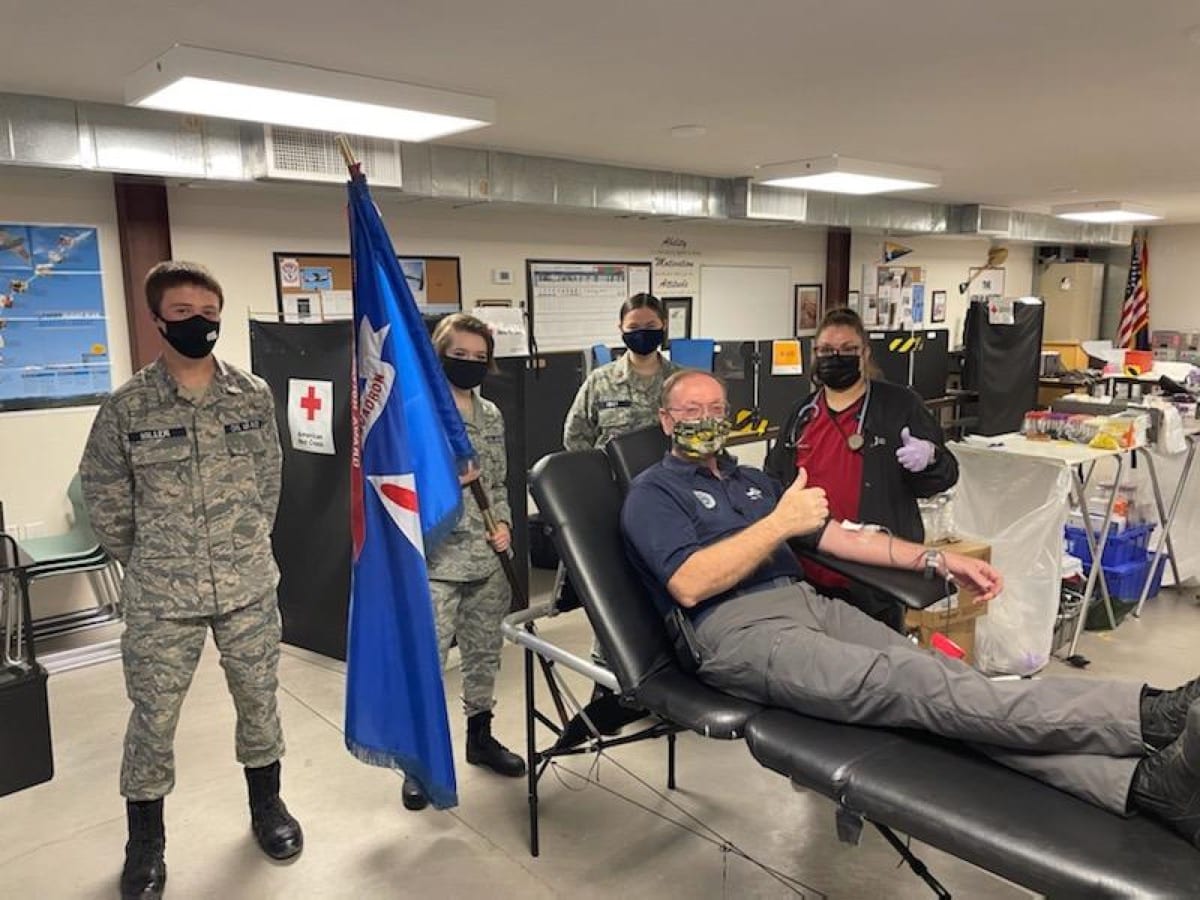
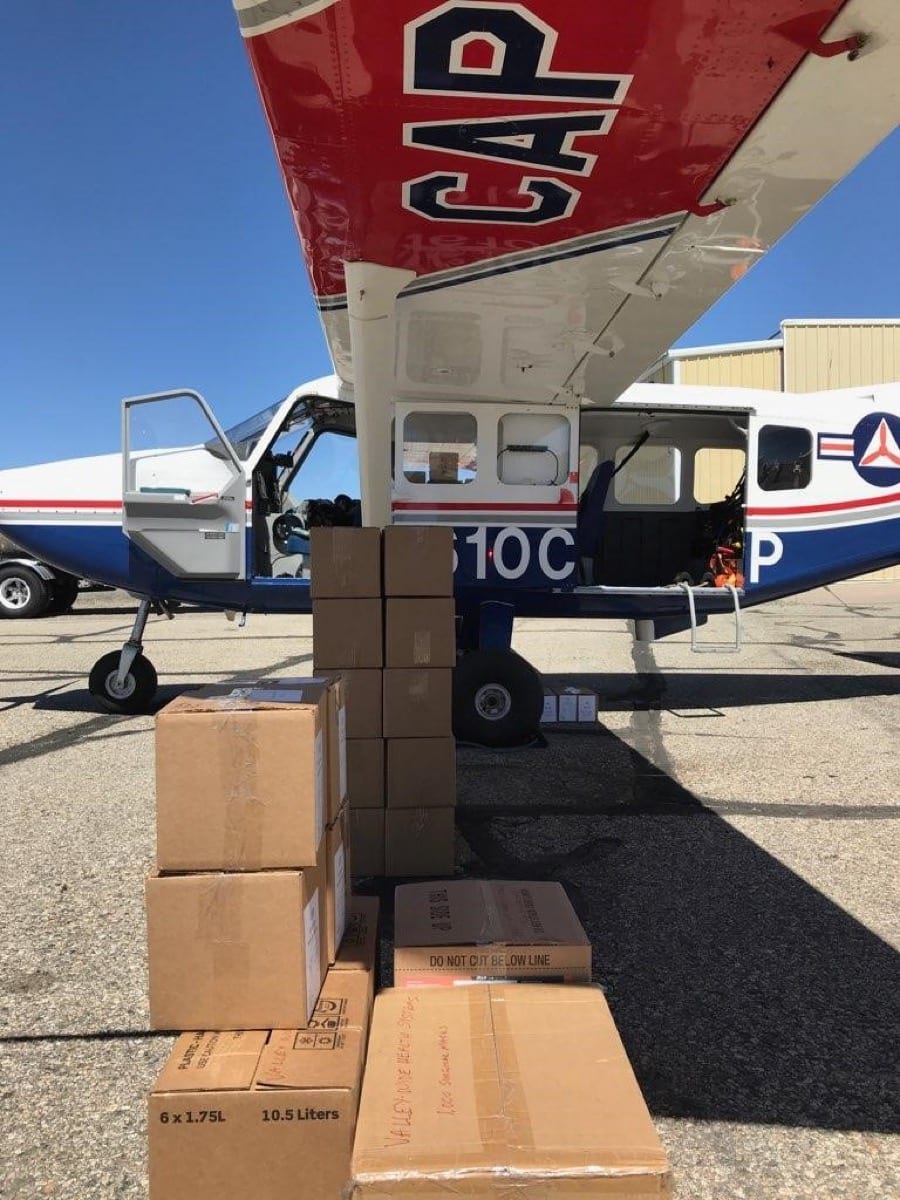
Here is a statistical rundown of what the organization’s missions have delivered, as of March 24, 2021:
- 2,803 units of blood;
- 8,209,955 meals;
- 1,154,861 pounds of food;
- More than 2.6 million masks;
- 177,407 test kits;
- 116,792 test samples; and
- 7,493 vials of vaccine.
The achievements occurred despite the pandemic-related personal challenges members have faced, CAP officials noted. Like many Americans, CAP volunteers have practiced COVID-19 safeguards, which have included a shutdown of most regular on-site activities.
Yet they have persevered. One full year into the pandemic, more than 75% of CAP’s 52 wings are now in Phase II of the organization’s three-phased remobilization process, allowing them to hold on-site unit meetings with up to 50 members.
Based on Centers for Disease Control standards, CAP’s remobilization plans begin at the wing level and are based on the more restrictive guidance in place — state-level directives or federal guidelines. A national-level team of experts led by Brig. Gen. Ed Phelka, CAP’s national vice commander, examines and approves wing plans.
Several of the 40 CAP wings in Phase II are being evaluated for readiness to move into Phase III, which permits overnight activities like encampments. Health experts say these conditions will greatly improve as more Americans are vaccinated and continue to practice COVID-19 safeguards.
In the meantime, CAP members’ volunteer service to their communities continues. Day 365 of COVID-19 operations was typical of this support, as volunteers in seven CAP wings actively conducted missions:
- Arizona Wing members provided support at a vaccine site and collected 35 more units of blood at one of its collection centers.
- Maine Wing members delivered two cases of personal protective equipment (PPE) and entered data for the state’s Emergency Operations Center.
- Maryland Wing members updated the state’s Tier 1A database with 62 new responses.
- New Hampshire Wing members delivered 51 cases of PPE to three of the state’s vaccine sites.
- North Carolina Wing members assisted at two vaccine sites in the state.
- Pennsylvania Wing members assisted at a vaccine site.
- Washington Wing members assisted at three vaccine sites.
Established in 1941, Civil Air Patrol is the official auxiliary of the U.S. Air Force. It operates a fleet of 560 single-engine Cessna aircraft and more than 2,000 small Unmanned Aircraft Systems (sUAS) and performs about 90% of all search and rescue operations within the contiguous United States as tasked by the Air Force Rescue Coordination Center. Often using innovative cellphone forensics and radar analysis software, CAP was credited by the AFRCC with saving 130 lives during the past fiscal year. CAP’s 54,000 members also perform homeland security, disaster relief and drug interdiction missions at the request of federal, state and local agencies. As a nonprofit organization, CAP plays a leading role in aerospace education using national academic standards-based STEM (science, technology, engineering and math) education. Members also serve as mentors to more than 20,000 young people participating in CAP’s Cadet Programs.