


Fatal accidents in experimental aircraft have fallen 40% in the last decade, including a 5% drop in the fiscal year that ended Sept. 30, 2021.
This decrease in fatal accidents mirrors a year of substantial improvement in overall general aviation, even with increased flight hours over the past 12 months, according to officials with the Experimental Aircraft Association (EAA).
There were 42 fatal accidents in experimental category aircraft between Oct. 1, 2020, and Sept. 30, 2021. That number is five below the FAA’s “not-to-exceed” number set for the year.
Of the total fatal accidents, 33 were in amateur-built aircraft, EAA officials point out.
The FAA has continued to lower the not-to-exceed total each year “as an expectation for improving the safety metrics throughout aviation,” EAA officials noted. The agency first set a goal in 2010 of reducing the fatal accident total by 10% over the next decade, a target that was quickly surpassed and set the stage for even more dramatic improvements in the safety measurements, EAA officials added.
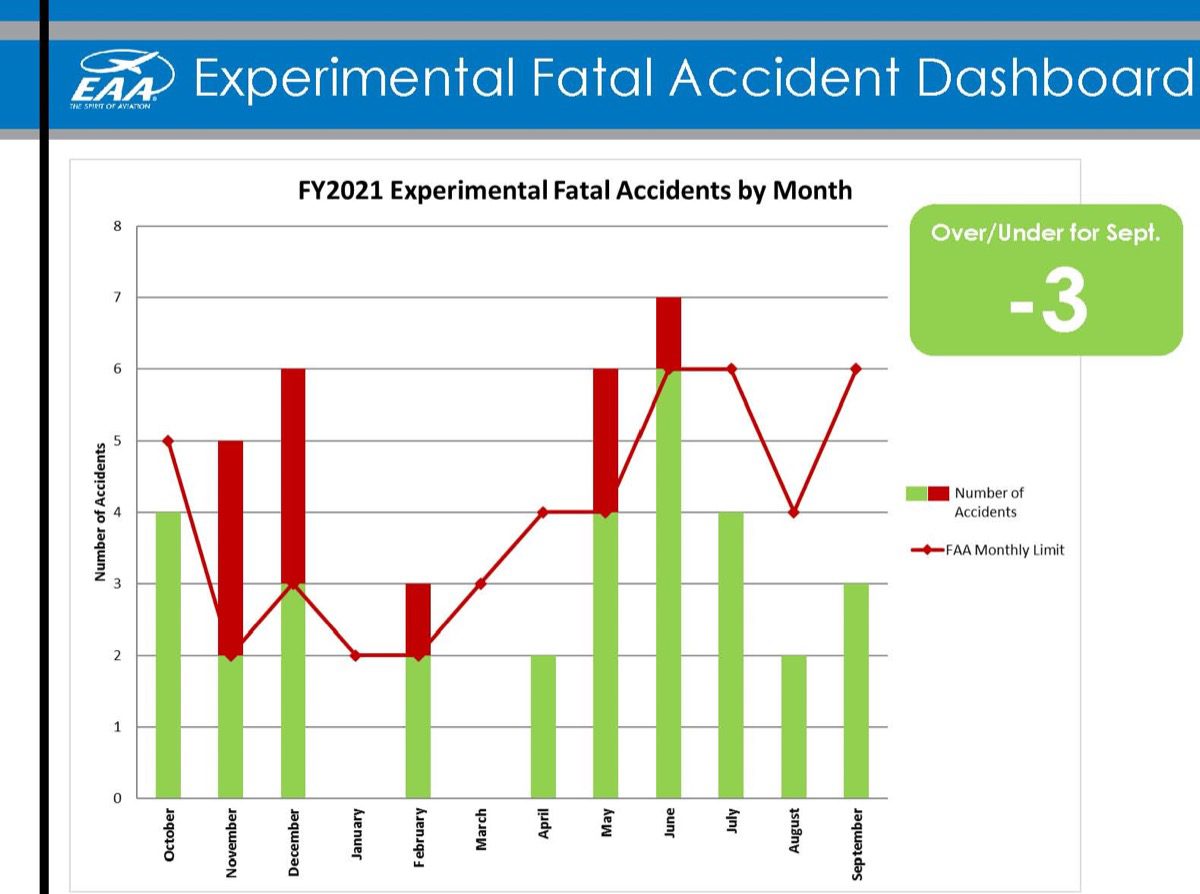
“This is continued good news on the safety front, as fatal accident totals in the experimental category have fallen 40% in the past decade,” said Sean Elliott, EAA’s vice president of advocacy and safety. “Fatal accidents in homebuilt aircraft have dropped by one-third over that time as well, reflecting a safety culture that is more widely accepted and followed as an important part of the balance of freedom and responsibility that is such an essential element of flying.”
“As positive as these figures are, EAA will not stop here and will continue to lead in making safety the top priority for all of us who fly,” Elliott said. “We have pushed the totals to very small numbers that are substantially fewer than many other common recreational pursuits, such as boating or all-terrain vehicles. But with such small numbers, even one or two accidents can have a negative impact on the overall safety trend.”