


This June, women pilots from all over the U.S. will gather at Lakeland Linder International Airport (KLAL) in Florida to begin the 2022 Air Race Classic.
Whether they have bought, built, rented, or borrowed their planes, the teams must work together to fly the designated 2,500-mile route as efficiently as possible in four days.
This year is a return to tradition, as in 2020 the race was canceled due to the pandemic, while in 2021 the race was modified to individual routes pilots flew in their local areas.
How It Began
The annual competition began in 1929 as the Women’s Air Derby. The first race ran from Santa Monica, California, to Cleveland, Ohio, and took nine days. Besting the 20 pilots who competed was Louise Thaden in the heavy aircraft class, while the winner of the light aircraft class was Phoebe Omlie.
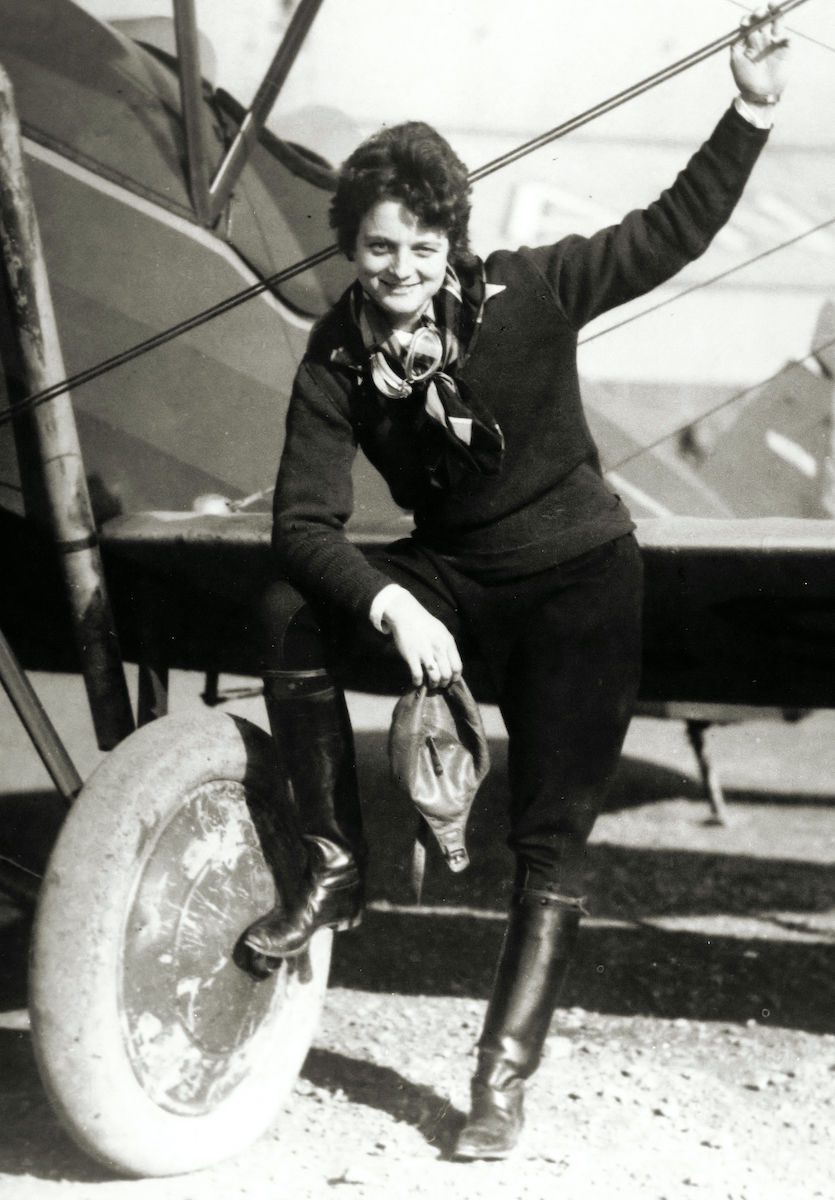
After World War II, the race was renamed the All Women’s Transcontinental Air Race, which humorist Will Rogers nicknamed the Powder Puff Derby. It ran until 1977.
It was 25 years later, in 2002, when the race was reborn as the Air Race Classic.
Besides coordinating the annual race, the non-profit The Air Race Classic Inc. has several other missions, including:
- Encourage and educate current and future women pilots
- Increase public awareness of general aviation
- Demonstrate women’s roles in aviation
- Preserve and promote the tradition of pioneering women in aviation.
How It Is Today
The modern race runs about 2,500 statute miles over four days from the start in Lakeland to the terminus, which is at Terre Haute Regional Airport (KHUF) in Indiana.
All flight legs are flown in daylight under visual flight rules (VFR). Aircraft from 100 to 570 horsepower can qualify for use in the race.
How long it will take each team to finish the race depends on the weather, the pilot’s strategy, and the speed of the airplane, according to Air Race Classic officials. The fastest planes may complete the course in two days, while the slowest airplanes may take all four days. Because the Air Race Classic is a handicap race, teams race against their own best time, officials noted. This allows slower planes to compete against faster airplanes on an equal basis, they said.
Official standings aren’t determined until after the last team crosses the finish line — the last plane arriving in Terre Haute may, in fact, be the winner, officials said.

The race begins at 8 a.m. June 21, when the 50 race planes will launch full throttle, 30 seconds apart, down the runway at KLAL.
Teams will put their piloting skills to the test, flying at maximum speed across 12 states, according to race officials. At each stop along the way, they will execute a high-speed low pass across a timing line, racing to reach Terre Haute by the arrival deadline at 5 p.m. on June 24.
The eight intermediate stops are Moultrie, Georgia; Muscle Shoals, Alabama; Hattiesburg, Mississippi; Pine Bluff, Arkansas; Ada, Oklahoma; Lawrence, Kansas; Mt. Vernon, Illinois; Tullahoma, Tennessee; and a flyover in Washington, Indiana.
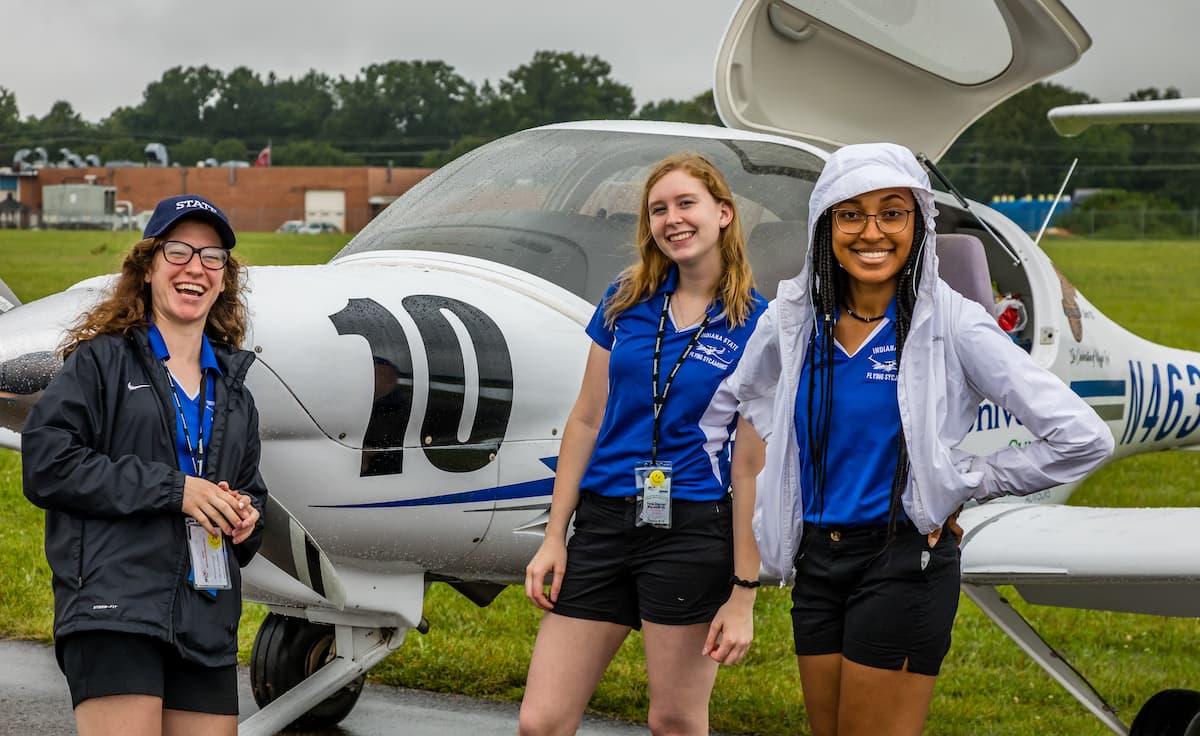
Each race plane carries a team of two or three women: A pilot, copilot, and an optional teammate.
This year 119 pilots are registered for the race. The youngest pilot is 17 years old, and the oldest is in her 90s.
There are 18 collegiate teams, two family teams, and 79 pilots who are first-time racers. One of the racers flies for the Hurricane Hunters at the NOAA.
Collegiate teams in this year’s race come from Auburn University with three teams, Indiana State University, Kansas State University Polytechnic, Kent State University, LeTourneau University, Liberty University with two teams, Northwestern Michigan College Carbondale, Ohio University, Polk State, Purdue University, Southern Illinois University, the University of North Dakota, and Western Michigan University.
Preflight
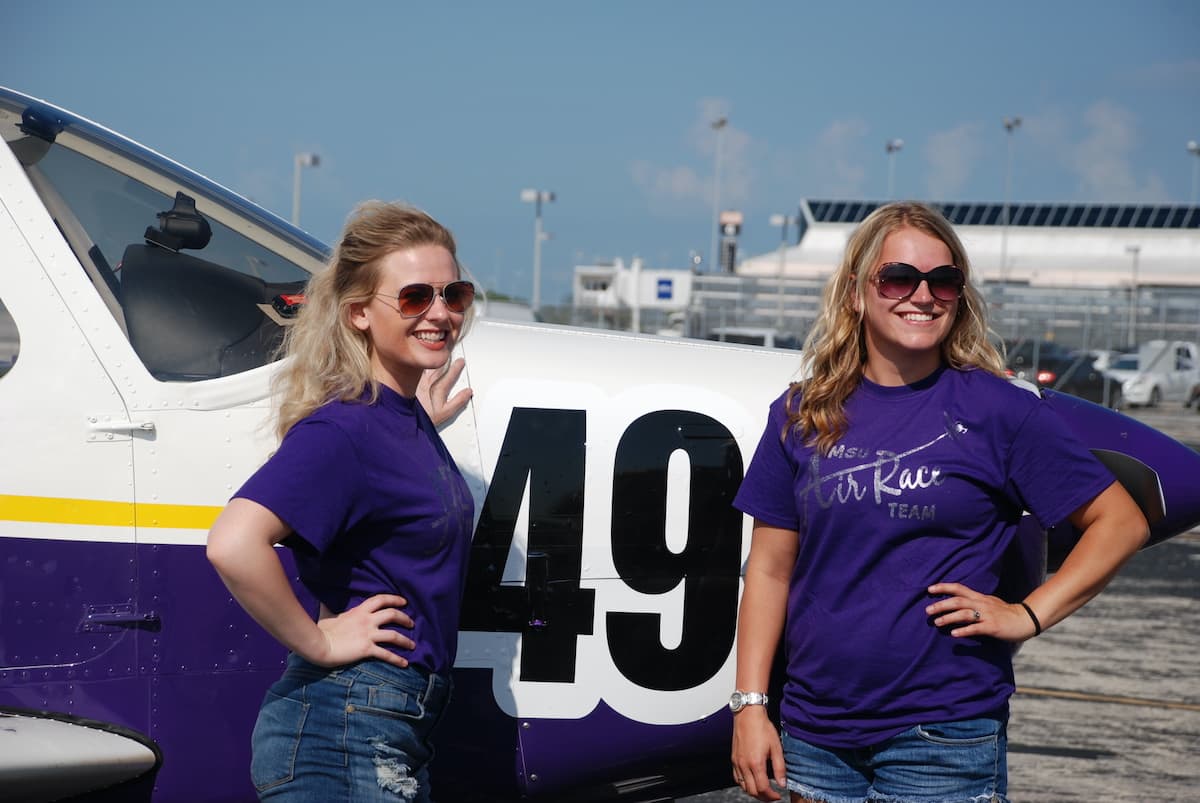
Air races require months of planning and fundraising to cover the costs of fuel, lodging, food, and potential maintenance, estimated between $5,000 and $6,000 per team.
Each team is assigned a number that is attached to the aircraft, and each team also has a name. Some names hint at aircraft types: Comanche-me If You Can, Cirrusly Fast, Cheetah Champs, Archer Attitudes, and Cardinal Cruisers. Some team names embrace attitude: Freakin Awesome, Missile Minions, Free Rein, Lady Aces, Cool Beans, Team Bernoulli, Third Time’s the Charm, and Birds of Paragon. A few fun names from past races are ARC Angels, Miss Behavin, Valley Valkyries, and Estrogen Chemtrails.
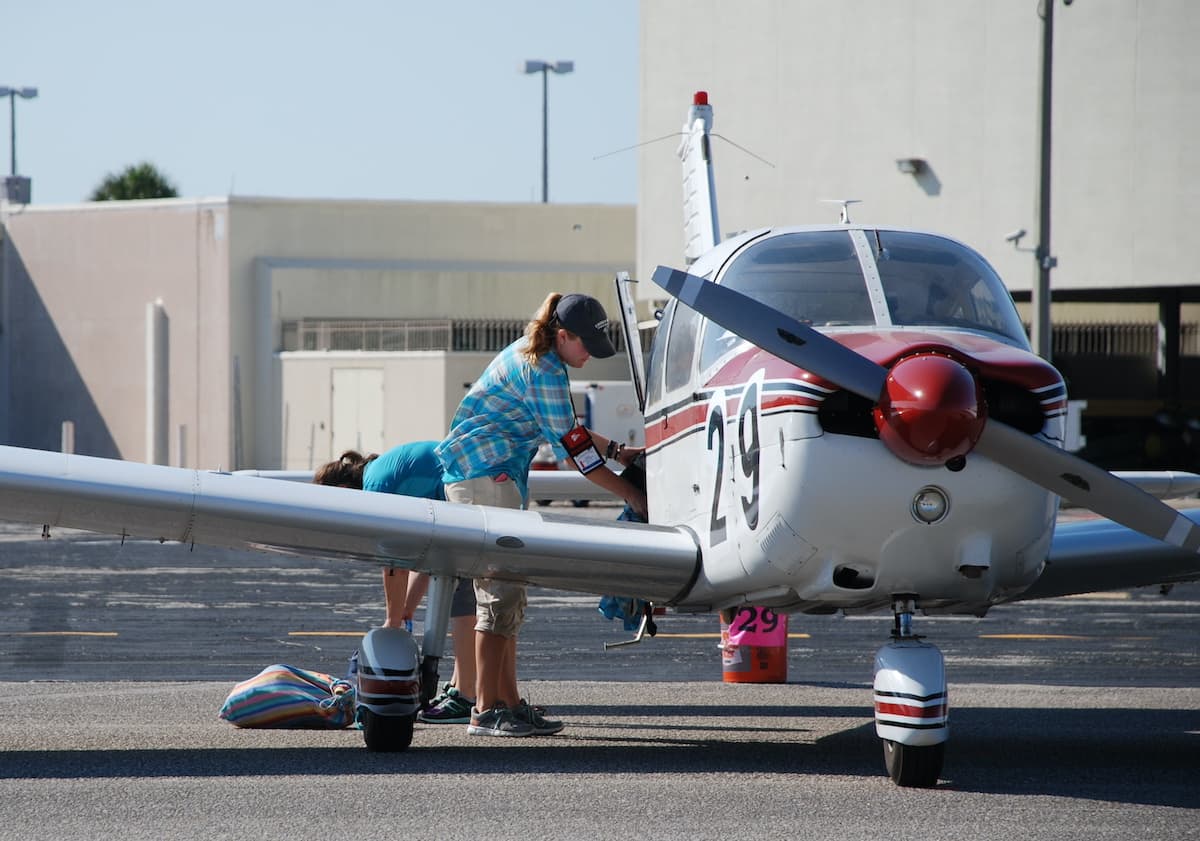
Before the official start of the race, the racers participate in many activities. The start weekend includes a welcome reception BBQ with live music by the Sofa Kings, aircraft and racer credentialing, a youth and community aviation event, safety and educational briefings for the racers, and a takeoff banquet honoring the racers participating in this year’s great adventure.
In the spirit of Go Big or Go Home, the takeoff weather briefing will be conducted by an expert from the National Oceanic & Atmospheric Administration (NOAA). NOAA’s Hurricane Hunters are based at KLAL.
Each plane contains a Bad Elf GPS tracker, which allows race officials and the public to follow the progress of each aircraft.
You can follow the racers live at AirRaceClassic2022.Maprogress.com.
