

By JIM OLTERSDORF, For General Aviation News
At 10,000 AGL and in cruise with a speed indicating about 190 kts (a bit of a tailwind), the vast expanse seemed never ending. I must have seen a million different lakes, pot holes, and raging waterways, not to mention the glaciers and magnificent mountains. Alaska. Nothing is like it. And so was the airplane that I was experiencing all of this in.
During the preflight I asked Capt. Andrew Cizek what he thought about this huge white monster with a “tailgate.” His affectionate reply, “It is our dump truck,” as he lit up the vast array of state-of-the-art avionics displays. Switches, dials, levers both overhead and below told me this was a machine made for the job. It is called a CASA (ka’ za). A model 212-200 to be exact.
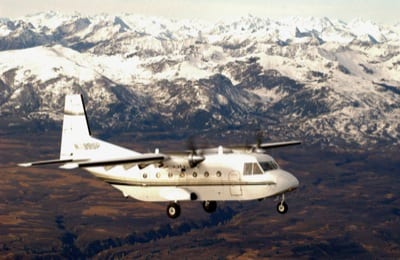
This wonderful workhorse, originally called Aviocar, is manufactured under license in Indonesia by Indonesian Aerospace, commonly known as IAe. CASA was founded in Spain by Jose Ortiz Echagüe in 1923. The government of Spain became heavily involved in the aircraft to a point of the CASA joining the Spanish Air Force. In 1943, Spain invested in the company (a 33% share). By 1992 it owned 99%. Since 1999 CASA has been a part of EADS, the European aerospace corporation, and is now known as EADS-CASA.
Because of its incredible load carrying capabilities and drop down ramp, both heavy and wide, loads can easily be transported, making the CASA a great craft for both military and civilian usage. The company reports 478 CASA 212s (or variations) were manufactured by the end of 2008, predicting an additional 85 will be sold by 2016. Worldwide there is hardly a country that doesn’t have at least one working.
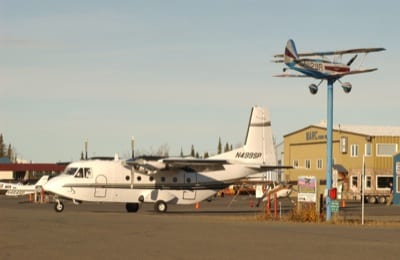
Originally purchased by Franklin Graham’s “Samaritan’s Purse” global relief Christian organization, N499SP is regularly flown by its next-door neighbor in Soldotna, Alaska, Missionary Aviation Repair Center (MARC), headed by 25-year pilot Ret. USAF Lt. Col. Drew Baker. The airplane is just one of a number of planes that serve the extremely remote villages of Alaska. From King Airs to Cessna Caravans, MARC is the “hub” of sorts to ensure that precious cargo, whether it is people, medicine, food, or building materials, are delivered quickly and efficiently.
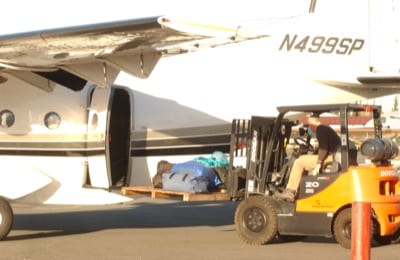
On one of the days I flew with Cizek and co-pilot Rod Moyer, we went to four villages, dropping off and picking up supplies and cargo. There were two refuelings and later I was told we had burned between 500-600 gallons of fuel. Doing the math, it is a staggering amount, as in the Alaskan bush, fuel can run as high as $8 a gallon.
The CASA has made a big difference in Alaska, says Mark Swensen, a MARC pilot and mechanic.
“The CASA has proven itself beyond any of our initial expectations,” he said. “Many church building and parsonage projects, pastors moving into and out of villages, as well as vehicles and large items being shipped out to villages for ministry have become commonplace for many of our partners. Many of these activities were rarely done, or only at great expense to the church, before we were able to offer the service of the CASA.
“It would be interesting indeed to know how many tons of cargo this aircraft has hauled for the church in Alaska,” he continued. “Additionally, many evangelistic events, conferences, and most notably, Bible camps have been able to reach out to a larger number of people and increase their area of influence with the use of this aircraft.”
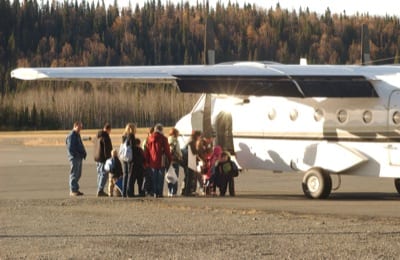
According to Baker, the organization often draws an automobile analogy about its fleet. “The King Air is the station wagon, the Caravan is the pickup truck, and the CASA is the semi,” he said. “In the Air Force we often referred to large cargo aircraft as ‘force multipliers.’ The CASA is just that for the work we do here in Alaska. It is our biggest force multiplier.”
For more information: MARCAlaska.org, SamaritansPurse.org
SPECIFICATIONS
- Capacity: Up 6,217 lbs. of cargo
- Length: 53 ft
- Wingspan: 66 ft, 7 in
- Height: 21 ft, 8 in
- Wing area: 441 ft²
- Empty weight: 9,862 lbs
- Max takeoff weight: 17,600 lbs
- Powerplant: 900shp each, TPE331-10R-511C models
- Never exceed speed: 200 kts
- Maximum speed: 200 kts
- Cruise speed: 170 kts
- Range: 774 nm
- Service ceiling: 26,000 ft
- Rate of climb: 1,630 ft/min
Nice report. Thanks for taking the time to do it.