

“We sell fun,” says Helen Woods, manager of Chesapeake Sport Pilot in Stevensville, Md., a flight school specializing in Light-Sport Aircraft and recognized by the Aircraft Owners and Pilots Association (AOPA) as one of the 50 best flight schools in the nation.
The school operates a fleet of European-made LSAs, but being located next to the beautiful Chesapeake Bay, with hundreds of potential water landing spots to explore, Woods has shifted her focus to the Searey “flying boat” amphibian made by Progressive Aerodyne in Tavares, Fla.
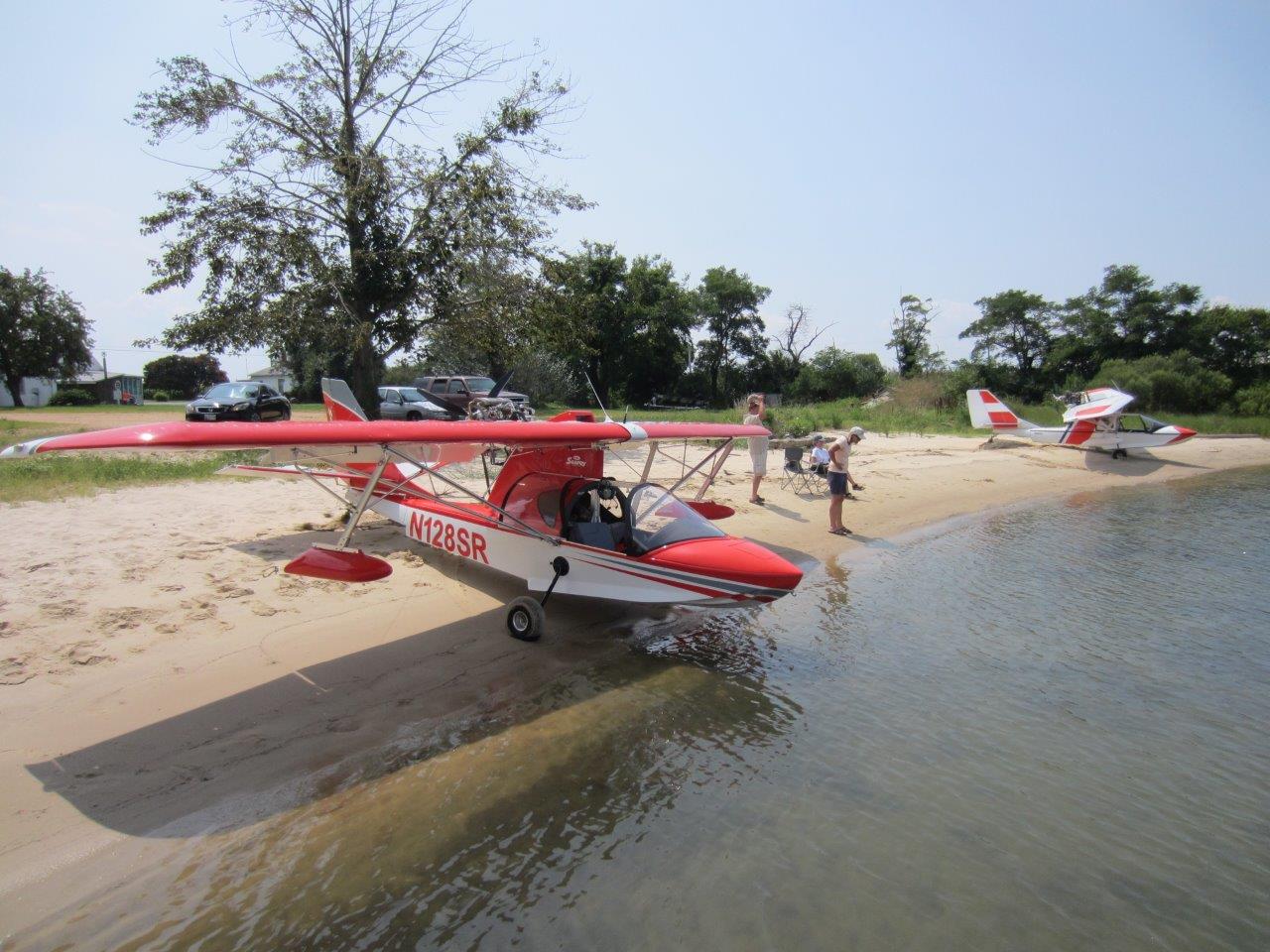 Two years ago, Woods and some partners built an experimental Searey from a kit and obtained a special FAA waiver to do flight instruction in the plane.
Progressive Aerodyne has produced Searey kits for more than 20 years and the plane has a good record as a homebuilt, but after the company certified a new and improved version to Light Sport rules, Woods ordered a factory-built Searey for her flight school.
Now, after recently taking delivery of one of the first certified S-LSA Searey amphibians to come off the production line, for which no flight instruction waiver is required, Woods has it available for dual-only flight training at Bay Bridge Airport (W29), just across from Annapolis.
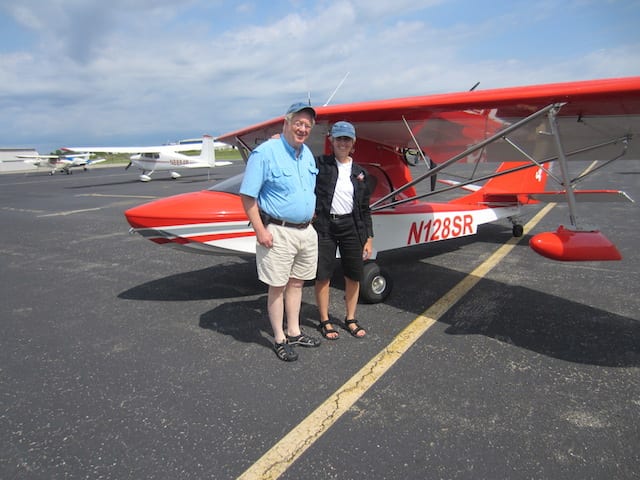
And, if you’re like me and want to experience the fun of barefoot flight training in a factory-built Searey before committing to buy one, Chesapeake Sport Pilot is the only flight school in the country that has a certified SeaRey available for rent.
When operated correctly, Searey amphibians have proven safe and reliable over the years, but variable water landing conditions are a significant new challenge for transitioning land-based pilots. Add the plane’s retractable landing gear and taildragger configuration to the mix and you soon realize why the NTSB database lists Searey accidents that probably could have been avoided with enough type-specific training.
As a direct result of those accidents, full coverage liability and hull insurance rates for low-time SeaRey pilots can be cost prohibitive, leading Woods and a select group of other SeaRey flight instructors around the world to found the Searey Flight Instructors Association and formalize a 13.5 hour curriculum that should qualify Searey owners for lower rates.
Transitioning pilots with previous seaplane and/or tailwheel experience may be able to demonstrate proficiency in less time. However, to maintain an insurance discount certificate after the initial sign-off, some insurance carriers may require four hours of annual recurrency training with an approved instructor.
Another important member of Woods’ team is California-based Denise Porter of Aviation West Insurance Brokers, who is working hard to educate aviation insurance companies on the safety benefits of the program. Demo rides at Oshkosh for several underwriters, with SeaRey designer Kerry Richter at the controls, showcased the strength and stability of the design.
Modeled on the initial and recurrent seaplane training available for many years through the Lake Amphibian Flyers Club, an extensive flight skills checklist is contained in a thick binder of Searey-specific training materials. Woods quotes an average initial training cost of $3,500 for transitioning pilots, including aircraft rental and instructor fees.
Woods’ Searey, a Sport model powered by a standard 100-hp Rotax 912 engine, was ordered with an optional carbon fiber hull to make it as light as possible for flight training purposes. Although the deluxe Elite model of the Searey is more popular with private owners, it’s equipped with the heavier 115-hp Rotax 914 turbocharged engine and typically weighs at least 40 pounds more.
With two hours — 10 gallons — of fuel on board and Woods as the instructor, she can accommodate a 250-pound pilot, which meant I didn’t have to go on a crash diet prior to recently presenting myself for three and a half days of fun water flying.
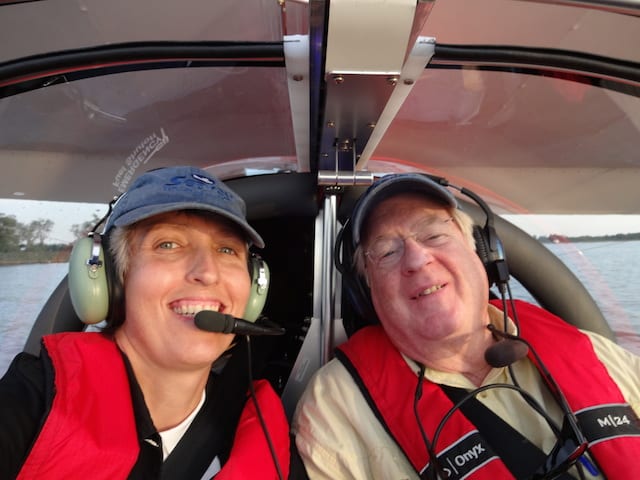 After a 12-year hiatus from flying boat ownership, an impressive 30-minute demo flight at the SeaRey factory convinced this 65-year-old former Lake Buccaneer pilot that a SeaRey is well worth considering for the future, especially if maintaining my medical certificate becomes a concern.
Another important factor as I survey the used Lake Buccaneer and Renegade market, with planes averaging 30 to 40 years old, is that a factory-built SeaRey is brand new, with a warranty.
In addition, the SeaRey’s fuel burn of less than 5 gph of auto gas makes its cost of operation well under half that of a Lake, which makes flying for fun more affordable.
A marine biologist by training, Woods abandoned her cubicle at a government agency 10 years ago for a career as a flight instructor. As we took off for the first time and experienced the beauty of flying over the Chesapeake Bay, she smiled and said, “welcome to my office.”
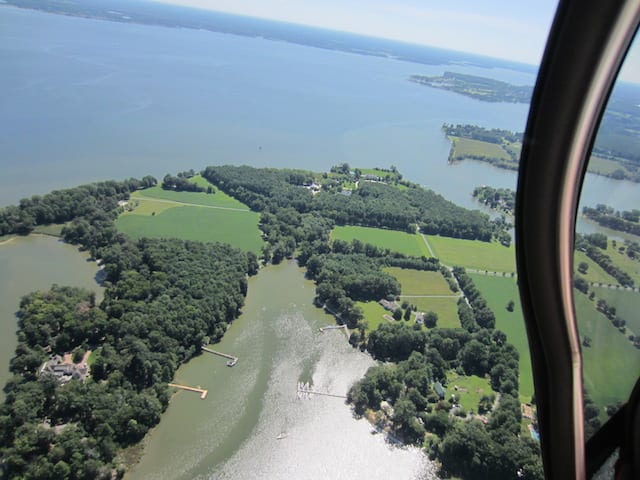 Woods combines a no-nonsense brand of SeaRey flight instruction focused on proper procedures with a running commentary on the history and ecology of the 200-mile-long Chesapeake Bay estuary. Numerous rivers and “creeks” offer protection from the wind and whitecaps common in the middle of the bay, making it a perfect playground for seaplane pilots to explore — especially if you like crab cakes.
Serious flight training is broken up by fun stops at various waterfront restaurants, where dining opportunities range from rustic mom and pop establishments focused on locally-caught rockfish and crab to the nearby Hyatt luxury hotel, where we caused quite a stir by taxiing into its harbor and wading to the beach amid sunbathers.
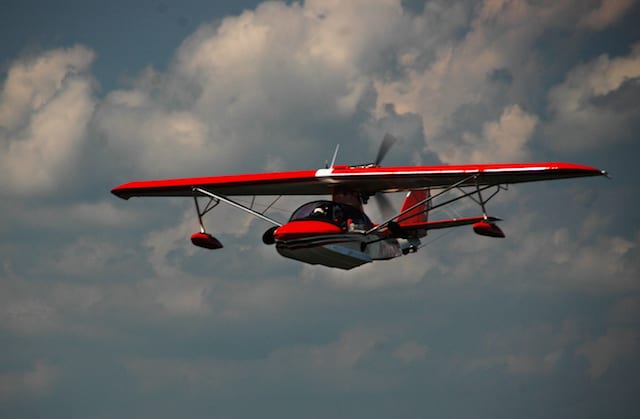 An added bonus available to a “low and slow” Chesapeake Bay pilot is an aerial view of the numerous waterfront mansions that are common in the area. Several even include grass airstrips ideal for a Searey.
Speaking of slow, you’d best not be in a hurry when flying a Searey, since 90 mph (not knots) is top speed for the 100-hp Sport model. However, with comfortable side-by-side seating and dual canopies that can be completely opened at any speed, cruising along with your elbow hanging out is a fun way to travel once the plane is properly trimmed for level flight.
Controlled with a coolie-hat switch on top of the stick, the Searey’s electric trim system gets a steady workout because the plane is light and trim-sensitive. Landing speeds, whether on land or water, must be carefully monitored, especially if the pilot is accustomed to the mass and inertia of a heavier plane.
I often over-corrected for landing speeds that were too high (over 65 mph) and then suddenly too slow and behind the power curve, making it hard to flare properly.
Noise-cancelling headsets are recommended for Searey flying, since the geared Rotax engine turning 5,500 rpm just behind your head sounds like a swarm of angry bees flying in formation. Woods includes instruction in the care and feeding of the reliable Rotax, which must be “burped” to check the oil level.
Limited time away from home did not allow me to complete the full SeaRey transition course, which includes glassy water landings, rough water operations and other important portions of the flight regime that are necessary to earn an insurance discount certificate.
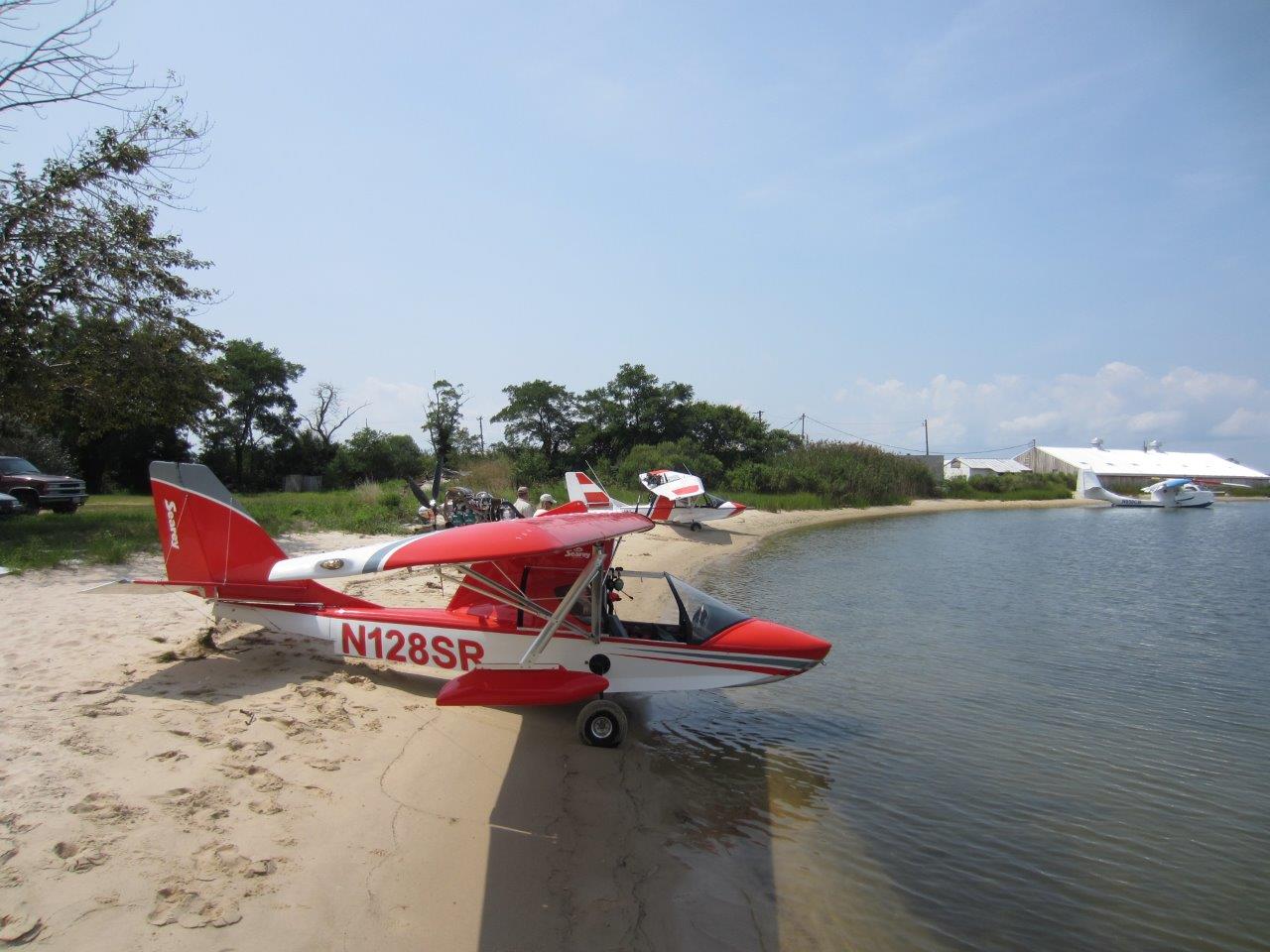 However, a Saturday splash-in lunch organized by Woods gave me a chance to meet several area SeaRey owners, who all said it’s the most fun they’ve ever had with an airplane.
A side-trip to historic Tangier Island, located in the middle of Chesapeake Bay about an hour by SeaRey south of Bay Bridge Airport, was a great way to conclude my training for now.
Will I buy a new SeaRey? I’m still considering my options … one of which is to schedule more flight time with Woods and get my Chesapeake Bay water flying and crab cake fix that way. However, I suspect I will get addicted.

Send me more information please!!
“Catalog” and other related information about Searey sales and training on Chesapeake Bay can be found at http://www.chesapeakesearey.com
I would like to have more information about the seaplane , if you send me a catalog with specifications and how much is the price. francisco . thank you very much.
Please send me a catalog with prices.
Thanks,
Kirk