

By J. DOUGLAS HINTON
It was March 20, 1991, as the Russian-built MiG 23 slowly taxied toward the runway at Cuba’s Santa Clara air base. Due for a flight test after an avionics installation, Major Orestes Lorenzo was at the controls.
He had never flown the MiG 23 before, but after hundreds of hours in the MiG 21 he was confident there should be no problem. It would be the last time Lorenzo flew a MiG 23 — any MiG for that matter.
What the control tower didn’t suspect as it issued takeoff clearance was that Lorenzo had other plans than a flight test once airborne. With wheels in the well, he flattened his climb, banked sharply at wave top level and set course for Florida. It wouldn’t be a long flight, covering the 90 or so miles at 200 feet in a Mach 2.2 fighter.
American radar picked him up not far from the Boca Chica Naval Air Station, just outside of Key West, and scrambled fighters from Homestead Air Force Base to intercept, also putting more fighters on alert at Tampa’s MacDill Air Force Base. But the Homestead Boys were too late to engage the fast-mover.
Arriving over Boca Chica, Lorenzo had a problem: How to convince the American military he was defecting, not attacking, or proceeding to the Turkey Point nuclear complex south of Tampa?
Because of different radio frequencies, contact with the ground was impossible, so he reduced speed, dropped his gear and flaps, then buzzed the airstrip three times, waggling his wings before making his landing approach and touchdown. Once clear of the runway, he shut down the engine, raised the canopy and waited. Soon surrounded by a crowd of military, he was astonished at the warm reception he received. Welcome to America!
But it wasn’t over yet…
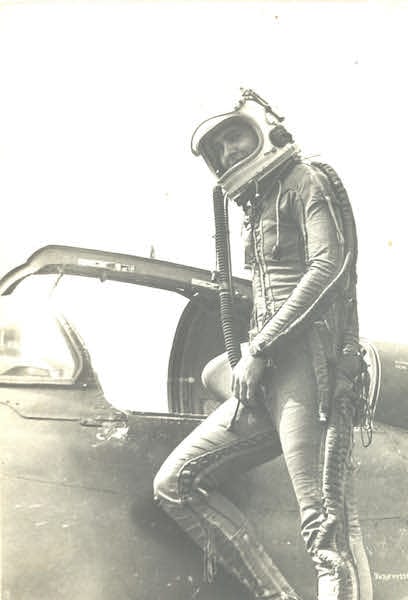
Lorenzo grew up under Fidel Castro and Che Guevara, believing ardently in the Revolution. He became a school teacher, but always had a desire to fly. There was no such thing as private aviation in Cuba. The only avenue to realize his dream was to join the military, which he did with 29 other applicants.
Once accepted, they were sent to Russia for three years. The first year was a crash course in Russian as the flight instructors didn’t speak Spanish. The next two years consisted of intensive training, culminating in combat-ready status on the MiG 21.
The only downside to Lorenzo’s otherwise satisfaction as an aviator was the fact he was separated from his recently married sweetheart, Vicki. Years later he returned to Russia on an advanced officer’s course for four years, but with Vicki this time. One more separation for 14 months involved a tour of Angola after its independence to fight the South African Air Force and UNITA rebels.
Back in Cuba, the Revolution began to pale for Lorenzo. Castro’s persona became more of a dictator than that of a savior of the nation. Laws and restrictions became more totalitarian, with harsh penalties for non-compliance. Many Cubans were leaving for the U.S. if they could get exit visas.
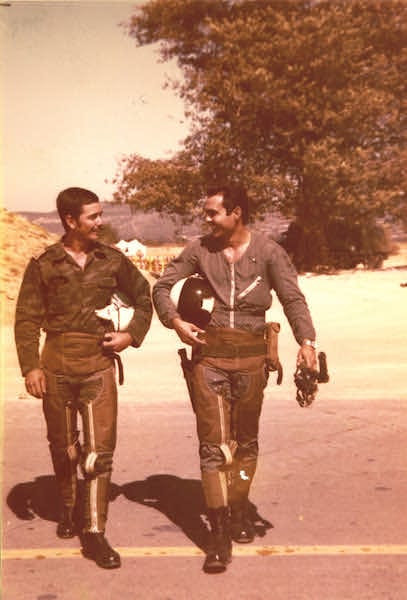
In the meantime, Orestes and Vicki had produced two sons, Rayniel and Alejandro, who had accompanied them to Russia on the second deployment. What would be their chances of growing up and being successful in Cuba under the current regime? What were the chances of America invading and destroying Cuba? The propaganda certainly seemed to give credibility to that possibility.
Lorenzo decided the best option was to defect to the United States with his family. When their repeated applications for exit visas were denied, Lorenzo decided to go first in the MiG 23, then try to get his family to the U.S. by whatever means necessary.
In the two years it took to realize this goal, he was admirably supported by various Cuban/American organizations from Florida to New Jersey, as well as aunts, uncles and cousins already ensconced in America. Assistance included learning English, as well as living expenses.
When efforts to get exit visas for his family through the United Nations, as well as the embassies of Spain and Chile, failed, Lorenzo concluded it was time to take action on his own.
Working with Vicki’s father by telephone, Lorenzo perfected his rescue plans. Obviously, to negate wire tapping, they communicated in code. “How’s the weather today?” would mean something entirely different.

The only plan Lorenzo felt comfortable with was to rescue his family by plane. Purchasing a used Cessna 310 was the first step. Choosing a landing spot in Cuba was the next. And lastly, the date and time of the pickup. All went undetected by Cuban security forces.
But there was a major hitch: The landing spot picked by Lorenzo as being the least subject to discovery was about 180 miles from Vicki’s home in Havana. Too far to get his family there during the limited time for rescue. The time window necessitated a much closer rendezvous point, which meant more radar, more missiles and more patrolling MiGs.
And time was getting short. Vicki’s life had become a nightmare. Constant surveillance by the authorities, her phone tapped, she was followed everywhere. She was, in their eyes, the wife of a traitor.
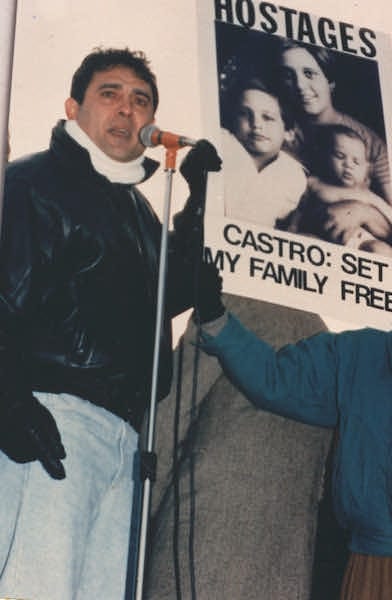
One other obstacle: Lorenzo needed an American pilot’s license. Completing a crash course in Virginia for a private pilot certificate, he flew to Columbus, Georgia, bought his 310 with a grant from the Valladares Foundation and flew it to Marathon, Florida, as his departure point.
His intended Cuban landing point was a new road near El Marney Beach, which he would locate using his maps and the LORAN set in the airplane. Flight time would be 38 minutes, arriving just at dusk so he could locate the road visually, load his family, then have enough light remaining to takeoff — then darkness on the way back to avoid any patrolling MiGs.
Once airborne from Marathon just before sunset, he climbed to 1,000 feet, nav lights and transponder on. At the 24th parallel, half way to Cuba, he turned them off and headed for the waves. On time, the Cuban coast appeared in the growing gloom and Lorenzo was able to identify El Marney and the road he sought for landing.
But whoa! There was a bus and truck on the road, plus a car coming from the opposite direction. And, to gild the lily, a huge rock in the middle. He only had time for one approach. Then he spotted his family wearing, as instructed, fluorescent orange clothing, the better to be seen.
Even with all these obstacles, he made it, loading his family into the plane with his boys screaming “Daddy! Daddy!” — they had no idea about the rescue plan — and took off, lifting a wing over the rock with the stall warning beeping intermittently.
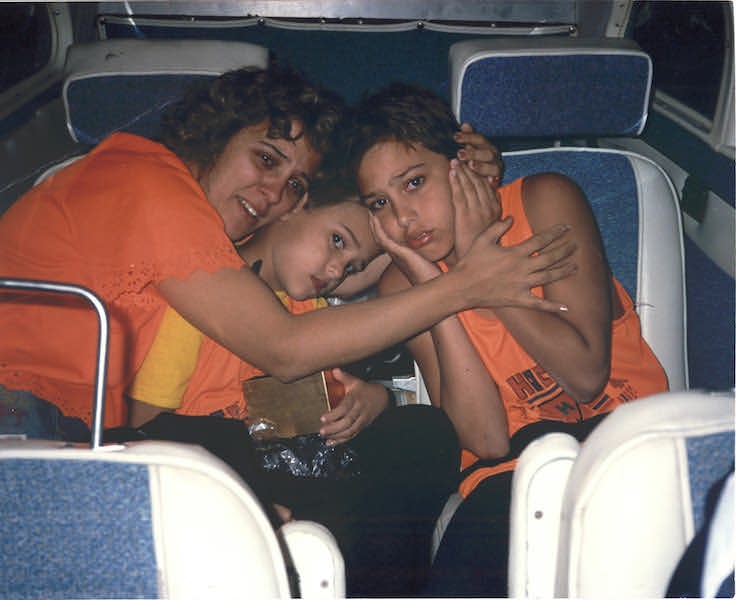
The total round trip only took 100 minutes. Arrival back in Marathon was as emotional as it gets with relatives and friends swarming around the plane, laughing, clapping, crying and embracing.
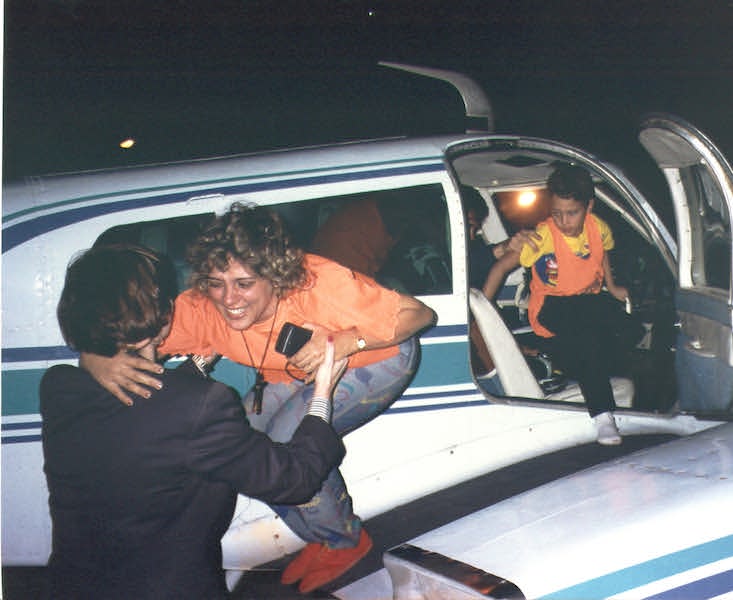
Raul Castro was quoted as saying, “If Lorenzo had the guts to steal one of my MiGs, maybe he has the guts to come back and get his family!” He sure did, Raul!
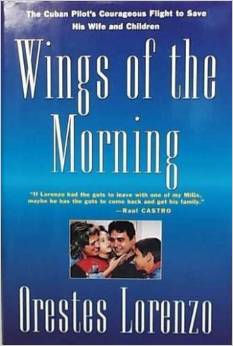 Epilogue: The MiG 23 was returned to Cuba from Boca Chica several weeks after Lorenzo’s escape. Lorenzo and Vicki subsequently had a son, John, born in the United States. The family now lives near Ocala, Florida.
Lorenzo now owns a construction company in Orlando in which all of his family work and he has his own L39 jet trainer to fly. He also wrote a fascinating book about his adventures called “Wings of the Morning.”
It is now out of print, but available through Amazon.
bought the book, look forward to reading it and passing it along. i would also reccommend Arturo Sandoval, remarkable trumpter / composer. one cd of his is titled ” Flight to Freedom “.
Excellent article. We welcome and need people like Lorenzo and his family.
One very minor correction. Turkey Point Nuclear Power Plant is just south of Miami, not Tampa. Nice article.
In 1991 a man steals a MiG from Cuba, is welcomed to the U.S., returns and makes a daring rescue of his family, and lives a happy life in Florida.
In 2000 the government sends armed thugs to kidnap a small child and forcibly return him to Cuba.
What’s wrong with this picture?
Well one was perfectly legal and one wasn’t. Ten bucks you get them backwards.