

By JEB BURNSIDE.
Any time two or more pilots get together, no matter the reason, the conversation eventually turns to flying.
Even if one of them just got married, they’ll at least ask each other how their flight in went, and where they’re headed next.
In fact, the only real exception to this rule is when the pilots are in an airplane or working on one in a hangar, when the subject rarely involves actual flying and usually centers on members of the opposite sex.
If these two or more pilots just met, but especially if they happen to have gone through primary training together, one of the conversation’s first objectives is to establish a pecking order of some sort: Hours, certificates, when they last flew, what they’re flying today. Whose airplane is more spacious, has a higher gross weight, is more efficient, or more red.
It’s a classic example of “Can you top this?” but can involve moving maps.
Once the highest-time pilot of the group is identified and his or her relative primacy over the others established, the next topic typically is the aircraft they each flew last.
They’ll go on until by elimination identifying a type in which they both have some recent experience, then one will ask, “What did you think of it? Was yours as much of a dog as the one I flew?”
That’s when the real purpose of the conversation begins: Who can tell the best “So, there I was” story.
You’ve heard these kind of stories before. Ernest Gann perhaps tells the best-ever examples of the genre in “Fate Is The Hunter.”
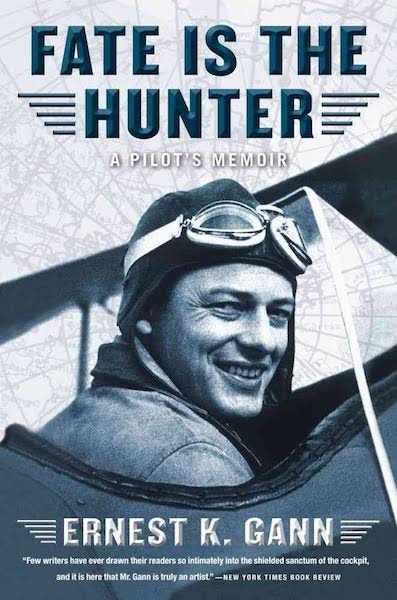
Among so many choices, there’s the ice-laden DC-2 with fuel limitations and a DC-4/C-54 fresh out of a spark-plug change on all but one of its engines.
These tales typically focus on some operational problem the story-teller encountered, the rising adrenaline and hilarity, and the lessons learned.
Stories like this usually have some kind of happy ending, but their message is how superior airmanship saved the day.
These stories all have things in common, and usually involve a combination of factors converging at a time and place you would not choose.
Classic elements can include a must-do mission, weather, fuel or mechanical problems, and/or fuzzy weight-and-balance numbers. It can be as relatively simple as a passenger who needs a bathroom or as complicated as multiple system failures. The list is endless.
How you tell the story matters, of course. Regardless of the specific set of facts, your hands are so full a mere first officer would have folded like a cheap suit under the pressure. You take it all in stride, managing the situation, making decisions, and exercising the command authority and superior airmanship people around you have come to expect.
Telling the story, you secrete nonchalance about the whole thing. When you’re asked about your underwear’s condition after the actual event, you lie.
One of my favorite examples of this kind of tale involves a Twin Comanche owned by a local business and flown by “Charlie.”

Hanging around the FBO of my youth one day, someone asked if I’d heard Charlie and his boss had lost all of the Twinkie’s electrics going IFR into Miami one recent night.
“Wow,” I said. “What’d they do?”
“Bought a Baron,” was the response.

This short tale has all the basic elements, haiku-like: An in-flight problem, difficult conditions, a solution to be derived, and an airplane to be flown. That details of the actual outcome are not knowable only adds to its allure. That the professed outcome omits all the gory details amid mass quantities of nonchalance seals the deal.
It’s entertaining enough, but the problem with this kind of story is there’s little to learn. We never know how Charlie flew an approach without flowing electrons, whether he implemented lost-communication procedures, how he got the gear down, or if the Twinkie was even flyable again after landing.
We also fail to learn what some consider the most important aspects of such a tale: What went wrong with the electrical system and what Charlie did to resolve it. A little more information would make the story even more entertaining, and we might actually learn something.
At the end of the day, the stories we tell other pilots are about something we did or didn’t do, a set of decisions we made, and the outcome. And it can be about not flying just as readily as it can involve your last checkride.
It’s usually a dark and stormy night, of course, and the ducks are walking. You’ve just missed the approach into your favorite fuel stop and diverted to the closest ILS, landing right before the field goes below minimums.
You order fuel, hit the head and call Flight Service. Then the first briefer you speak with about flying on to your destination says you’re gonna die.
Not accepting no for an answer, you call back and talk to a second briefer who tells you to stop wasting his time — nobody’s going anywhere tonight. Besides, the only legal alternates are Tri-Cities and Savannah, and your Skyhawk doesn’t have gas for that. So you grab your gear and hop into the hotel shuttle for another night on the road.
Invariably, the next morning’s flight home is in severely clear, smooth skies.
That’s the best kind of tale to tell your fellow pilots.
Loved the end the best
Great story.