

By WILLIAM BENNETT
When pilots search for that one special airplane to purchase, they sometimes get stuck in the rut of only looking at Cessnas, Pipers, Beechcraft, Mooney and Cirrus.
All make good and capable planes. But most of the time the SOCATA “Caribbean Series” gets overlooked. Especially by those pilots in the USA who don’t get to see one very often.
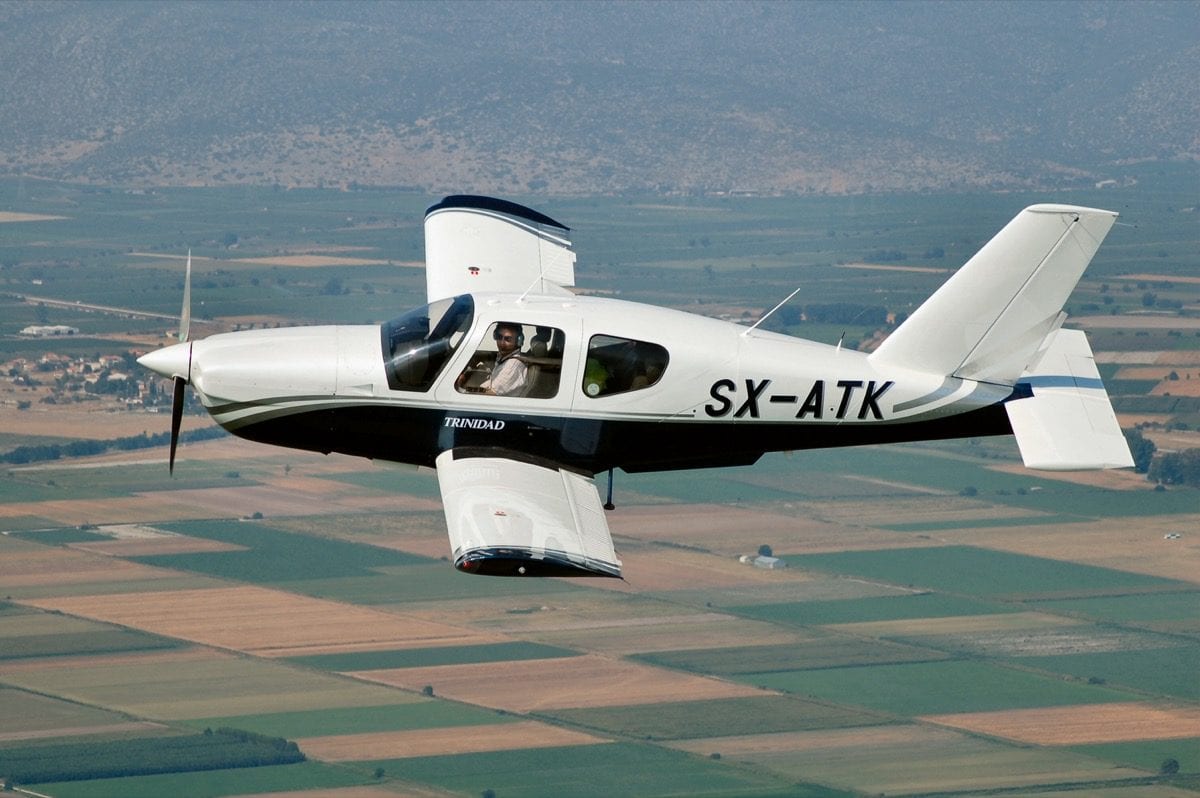
The SOCATA Trinidad, Tobago and Tampico have ahead-of-their-time European styling and flair. The planes have such great flight characteristics that almost any pilot can enjoy every flight. They are docile in the stall, almost impossible to load out of weight and balance and rock steady IFR platforms, not to mention easy to land.
But the SOCATA “Caribbean Series” also has true worldwide support.
True, the planes were built in France by the same company that builds the TBM turboprop, but many of the components, from their Lycoming engines to Cleveland brakes, are all American.
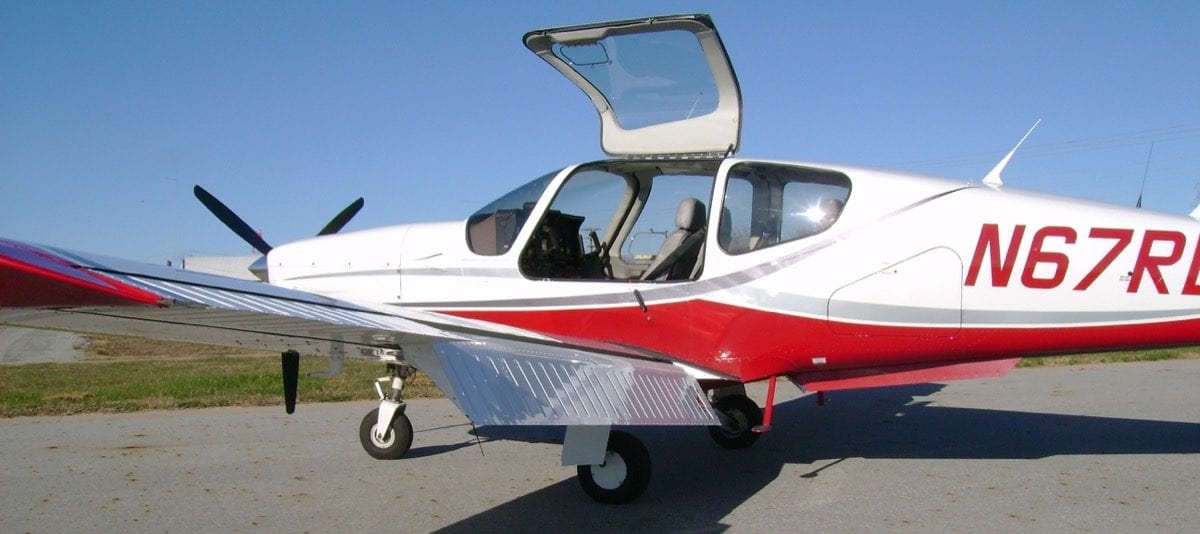
Well over 2,000 aircraft were built and most are in use today. They are truly spread worldwide, so only about 500 are in the USA.
That makes for relatively few on the market for sale at any one time.
A recent check of SOCATA “Caribbean Series” Trinidad (TB 20 normally aspirated and TB 21 for the turbocharged version, both 250 hp), Tobago (TB 10 180 hp and TB 200 which is 200-hp) and Tampico (TB 9, which is 160 hp), shows only about a dozen for sale.
A lot of pilots find stepping up to a TB 20 Trinidad an easy step up from lower powered aircraft. The TB 9 Tampico has been used by many flight schools as trainers, and the TB 10 Tobago is a great get-there plane, similar to a Piper Archer, but with a touch more style.
The TB 20 Trinidad has the most for sale with the others only having only one or two for sale.
William Bennett is author of the book “Flying the SOCATA Trinidad, Tobago and Tampico.” Originally published in 2012, a new expanded second edition has just been released. It is available on Amazon.com.
I presently have a TB21 and have been fortunate enough to have owned quite a few single and multi engine aircrafts in the past.
TB21 takes the cake.Smooth swift and agile.
FL 250 with oxy. crusing 190 knots is like being on top of the world.
Truly a dream to fly
BM
gbig is correct about no comparison between the “old” planes and the new ones. For example, if you inadvertently get into a spin with an “old” plane, the technique to get out of it is pretty simple. To get out of a spin with the new planes mentioned above, they have no demonstrated capability, so one has to activate a parachute that costs thousands of dollars in costs to the airplane once it has been deployed. I am glad that I learned to fly in an old plane even if I would eventually decide to move into one of the new ones.
Utterly false and silly. Old planes not rated for acrobatic flight will break up no differently than any plane rated as such. In fact many of the old designs are quite dangerous indeed like the V-Tail Bonanza or the Piper PA30.
The current world’s champion acrobatic plane is the Extra 330SC. Carbon fiber wing assembly with integral tank, Carbon composite empennage structure and fiberglass fixed landing gear. http://www.extraaircraft.com/330SC.php
They are ancient. Same goes for old Pipers, Bonanzas and Cessnas. They will all go quickly once most of their owners refuse to upgrade to ADS-B and their engines unable to run the new fuels.
Umm, lets see . . . Levil in Florida is releasing an ADSB-out solution which uses the existing transponder and costs $1,400 for the non-certified version, with a certified one to follow soon. So let’s say the complete setup is two grand installed (it only needs power, no pitot-static connection), well I guess I’ll junk my old airplane because it isn’t worth putting two grand into it and I’ll go buy something new for 200 or 300K which will STILL need an ADSB solution anyway and doesn’t go any faster or carry more stuff but it is oooh, shiny!!!!
And what “new fuels” do you refer to? At this writing, gasoline is still available everywhere, and the unleaded mogas STC is still good as long as there is no ethanol in the gas. The “new fuels” suppliers know there will be absolutely zero market for them unless their products are 100% compatible with the existing fleet.
Please advise your information sources that it might be time to significantly upgrade the quality of their recreational pharmaceuticals.
Let’s face it, some of us naturally see the glass as being half full, while others see it as being half empty. For those who seem to permanently be in the “half empty” camp, ADSB is seen as a mountain to climb. For those of us who are in the “half full” camp, that’s great news since we will be able to buy their old, worthless non-ADSB aircraft for pennies on the dollar.
Having already made my aircraft 2020-compliant I can say from personal experience this isn’t as big a deal as many people make it out to be. The truth of the matter is that some folks just like to have something to complain about, so ADSB is an easy target for them.
The comment about the SOCATA aircraft being old is indeed true, but they are no older than most of the rest of the GA fleet. Having experienced a Trinidad I can say they are a beautiful aircraft and would be a great starting point for a serious mid-life upgrade program to introduce new avionics, paint and interior. The finished product would be quite a wonderful aircraft.
I completely agree – the TB-20 is a wonderfully under appreciated aircraft. You can get three abreast seating in the back, and with near 1200lb usable load you can actually carry 5 people and still have room for a usable fuel load and baggage. And they are as rock-stable as you can get in normal flight with a good-if-not-great cruising speed. They’re not a Cirrus, but honestly I’d probably take a quality TB-20 over an SR-22 and I’d pocket the $250k that I saved and buy a Globe Swift as my weekend fun flyer.
The old planes are just that – OLD. There is no compare between a modern aircraft like a Cirrus SR22 and an old plane like the TB-20.
You sir are astoundingly ignorant and opinionated. I look forward to seeing your comments in this forum weekly.