

Soloy Aviation Solutions, along with its engine manufacturing partner SMA, unveiled a Cessna 182 featuring the new SMA SR305-230E compression ignition engine burning Jet-A at EAA AirVenture Oshkosh 2017 — after it flew non-stop to Oshkosh from Olympia, Wash., a 1,485 nm journey.
Soloy Aviation has completed the engineering and manufacturing elements of the program and has moved into the flight testing and certification phase.
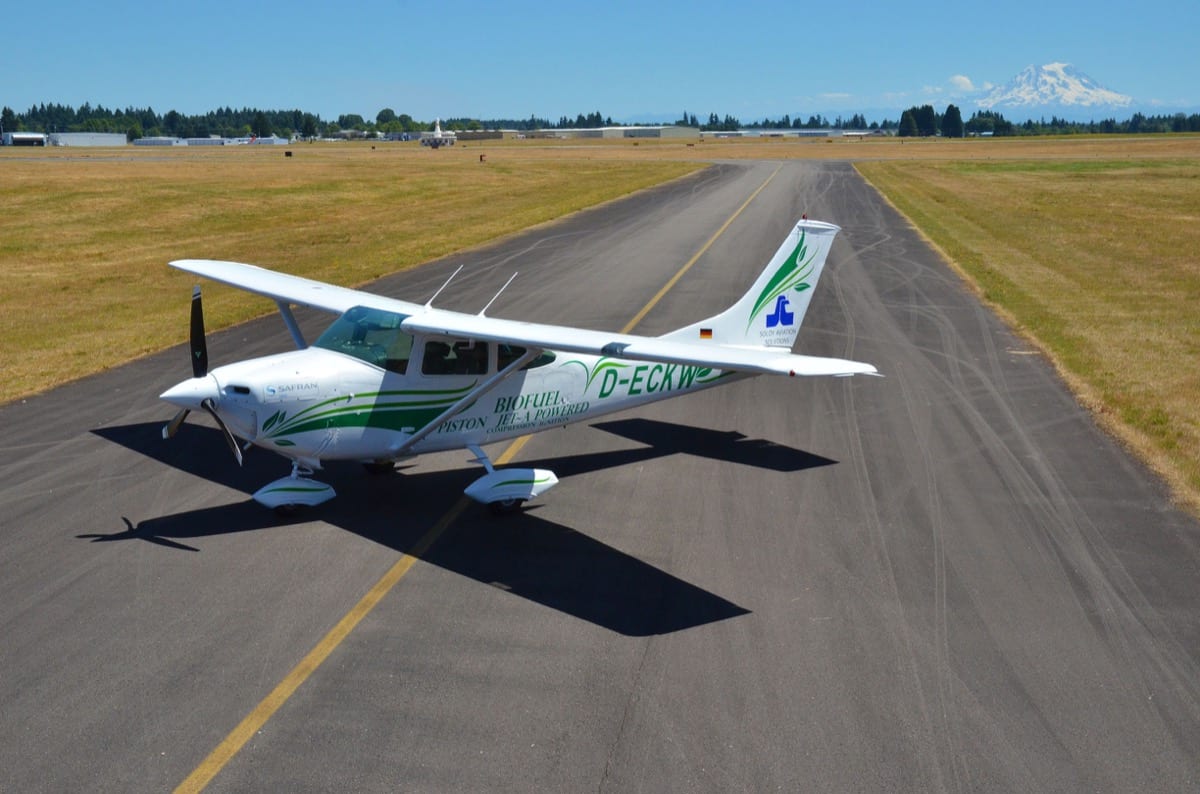
Company officials report that flight testing is proving the aircraft’s performance is on track to meet the projected goals of higher, farther, faster performance, as well as improved fuel economy and engine reliability.
According to a company spokesman, Soloy Aviation will become the STC holder of the engine conversion program.
“We’re almost there; certification is close,” said James Cowan, Soloy’s CEO. “The future of current 100LL aviation fuel around the world is in question. We view the opportunity to use and improve upon SMA’s Cessna 182 engine installation STC as a valid solution to the thousands of operators of Cessna 182 aircraft around the world. At the program’s completion, we will offer a wide variety of Cessna 182 owners the chance to convert their current avgas engines to this efficient and powerful engine platform either at overhaul or anytime during TBO under the revised Soloy STC. Our special initial pricing option should encourage sales activity on our first 15 kits as our pricing will be very advantageous.”
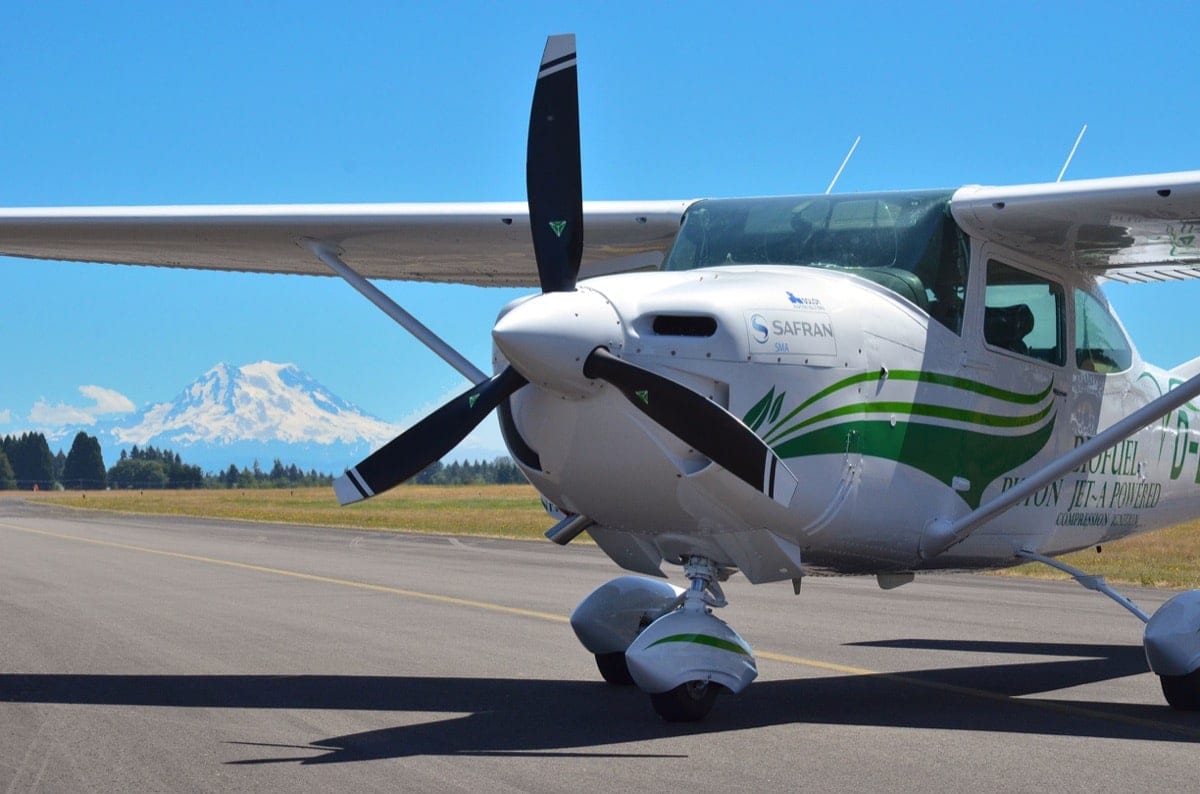
Soloy is offering limited special pricing on the program’s first 15 positions.
EASA STC approval is anticipated during the fourth quarter of 2017, with FAA approval following in early 2018.
Kit deliveries will begin in the first quarter of 2018, company officials said.
Flying non-stop to Oshkosh
Company officials report they flew non-stop to EAA AirVenture in Oshkosh, Wisconsin, from Soloy’s home base in Olympia, Washington, a 1,485 nautical mile flight.

They also report the SMA SR305-230E engine only consumed 80 gallons of Jet-A fuel for the flight.
Crewed by Soloy pilot Tony Uhl and co-piloted by Soloy Chief Engineer Steve Phoenix, the two climbed the re-powered and EASA certified Skylane to a VFR altitude of 17,500 and set the engine power to 60%. With a small tail wind in their favor, the aircraft showed a true airspeed ranging between 150-162 knots throughout the cruise portion of the nine-hour flight.
Flight planning calculated the long single-leg destination of KOSH should have taken eight hours five minutes (8:05), but traffic delays on the arrival to AirVenture required more than an hour in a holding pattern before being given clearance to land.
“Our flight was really unremarkable,” Uhl said. “We simply reached our cruise altitude, set the power and pointed the nose directly for Oshkosh. The flight performance is just what we expected: Great speed with even better fuel economy. During our post-flight inspection, we discovered the engine consumed less than 250ml of oil for a flight lasting over nine hours. That’s less than ¼ of one quart. We couldn’t be happier.”
Can this engine be installed in a Cessna 182 RG (R182) or is it only for fixed gear 182’s?
Again, what is the required warm up time for the engine to operate at safe temp? @ 60 deg F? @ 40 deg F? @ 20 deg F? Has anyone yet solved the warm up time problem? With a ‘compresion ignition engine’, that would be a ‘Diesel’ engine to you and me, proper ignition is partially dependent on the engine temp and it takes a while for a diesel engine to reach that temp, especially in cool and cold climates. How long will I have to sit on the ground before I can safely take off?
Thanks
Our 305-230 first gen engine generally took 5 minutes at 1500 RPM with the cowl flaps closed when it was around 32F. This is including a 20 minute preheat prior to start.
Consider it a long run up as the run up is very quick. RPM up to 1800, check gauges and instruments, cycle the prop 3 times and idle check, then preheat switch off.
In the summer, the engine is usually warm enough to takeoff by the time you reach the run up area.
The first gen engine had a limitation of keeping power at a minimum of 45″ and CHT above 100C to avoid the risk of a flameout until the runway is made. We never had a flame out in hot or cold weather, but it does make the approach a tiny bit flatter, it’s not a big deal.
I imagine the second gen engine will be similar.
Good reliable engine, and I am curious to see if another OEM will finally pick it up and put on on the market where economy of scale can work to bring the price down. With current US fuel prices it’s a very thin margin, though it is cheaper than Avgas, at least on the first gen engine.
That is great news that Soloy has come up with an engine
that is that effiecent . Great news for GA.