

By DEREK ROBERTS.
With miles of unmanned wilderness, the backcountry of Idaho is an untamed expanse that begs to be explored.
A mix of jagged and rolling alpine peaks, vast glacial lakes and canyons as grand as any that claim to be, it’s an aviators paradise, open to all those brave enough to explore it.
Of course, bravery alone is short lived. For those who seek immersion in their exploration and many a returned journeys, guidance is key. Knowing where to go is one thing, knowing how to come back is another.
Stationed at the gates of the vast wild, in McCall, Idaho, Lori MacNichol has been teaching fellow aviators the necessary advanced “stick and rudder” skills for more than 25 years.

With nearly 12,000 hours of total time, MacNichols estimates that “more than 80%” has been flown in the backcountry.
While her journeys as a pilot have taken her around the globe, in more than 100 different aircraft, it’s Idaho that reigns as her favorite flight destination and the headquarters of her renowned flight school, McCall Mountain Canyon Flying Seminars.
Operating out of the McCall airport, close to dozens of backcountry airstrips, students have the opportunity to learn from MacNichol and a cast of expert instructors, whose mountain flying teaching skills continue to be called upon by individuals, aircraft manufactures and the United States military.
In the most comprehensive four-day course, MacNichol notes that we “treat high altitude-confined area flying as a rating.”
Emphasizing that although the FAA does not recognize it as such, “there are goals, objectives, tasks, and completion standards.”
It’s a rigorous syllabus, intended for rugged country and delivered by an instructor whose passion is to teach aviation.
If, on the off chance, MacNichol’s enthusiasm isn’t enough to excite one for the challenge, it’s safe to say that a single backcountry landing would — the moment when an unmanned wilderness temporarily becomes manned.
What do you fly?
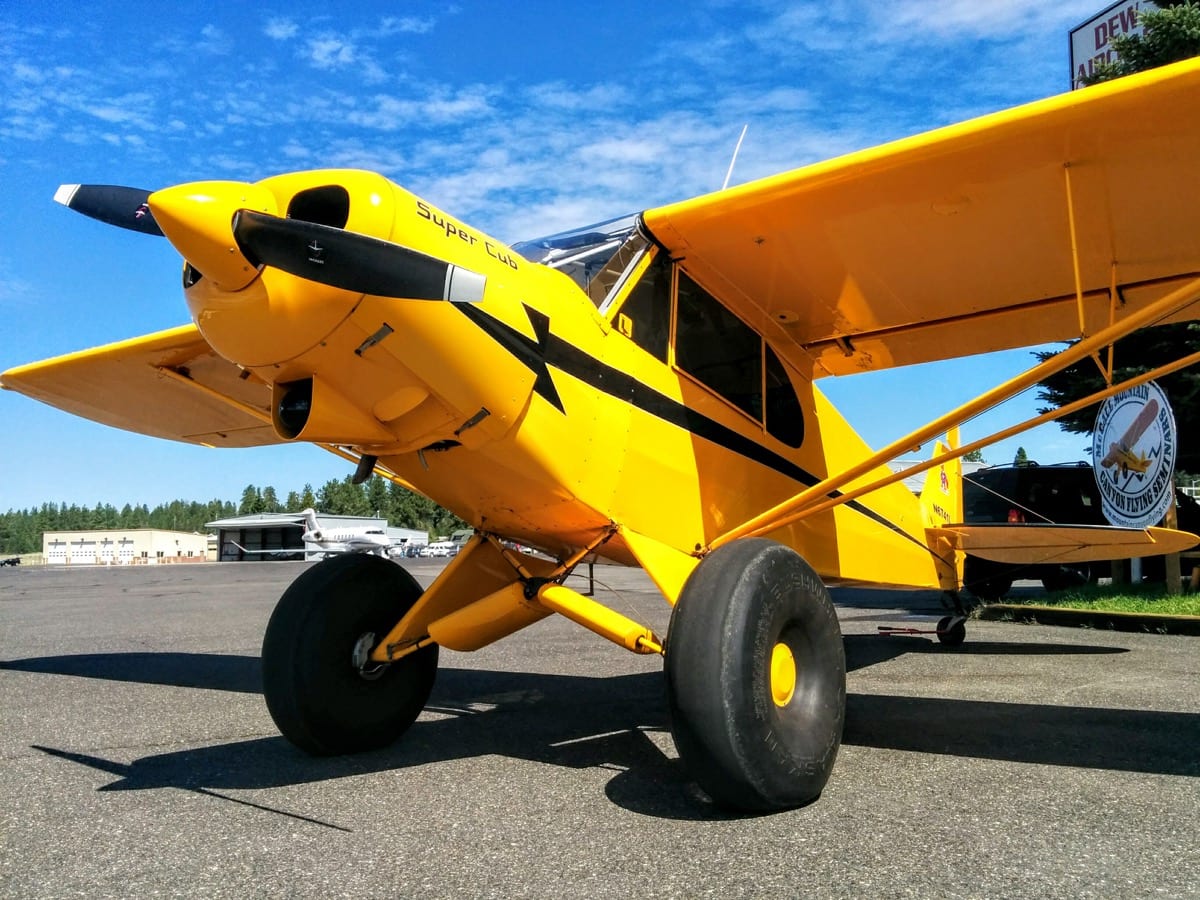
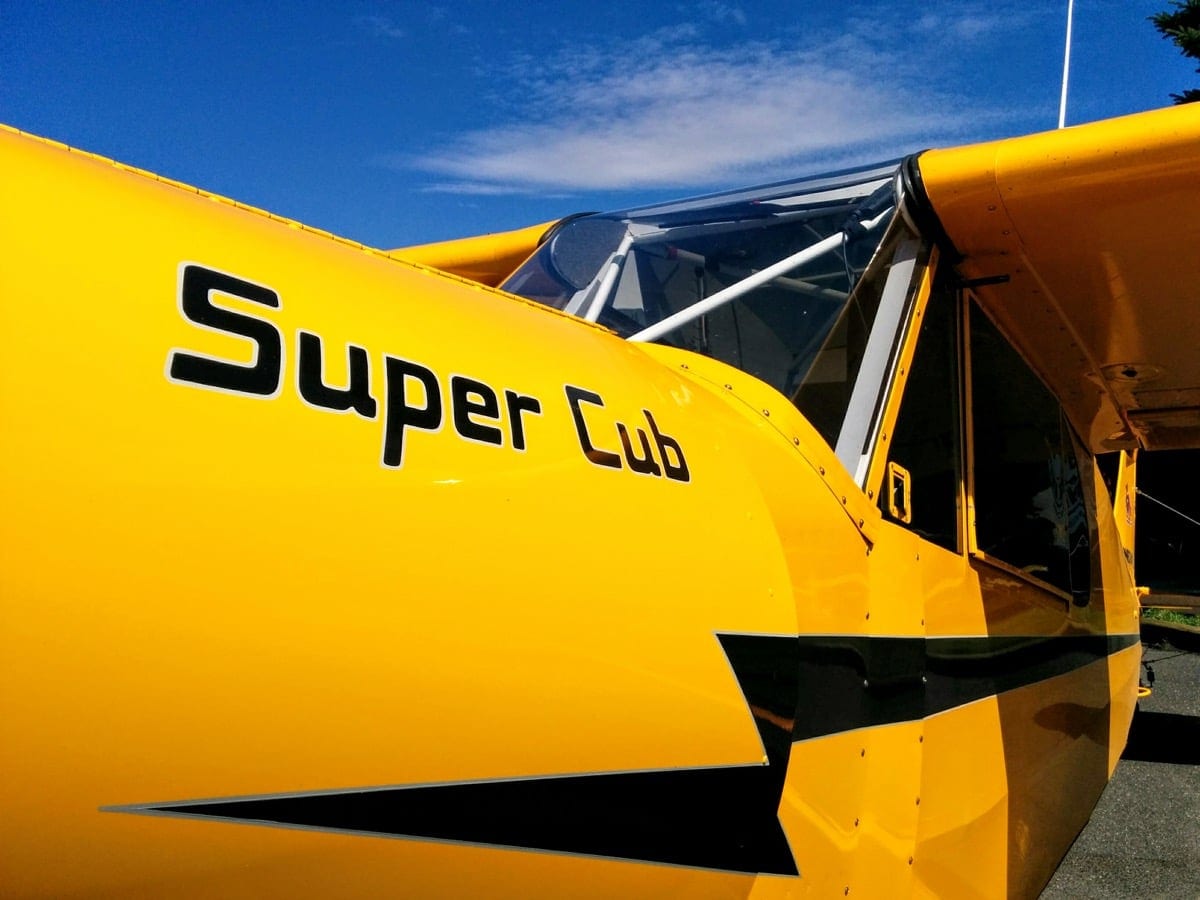
A certified 1974 PA-18 Super Cub with VGs on the wings and a strake near the tail. Other than that it’s stock with 31-inch bushwheels.
Why do you fly it?
You can barely get killed in a Cub — sorry that’s bad! It’s an honest airplane, it has good stall speed spreads, the approach speed is very manageable. It feels like home. It fits man! It’s just an airplane that you can simply ask to do some things — and, with the right skillset, you can accomplish those things.
How do you fly it?
When you work as an instructor for a living, I’ll be in the airplane, yes I’m logging time but I’m not working on my own skills. So, when I fly I work on my own skills. I love to challenge myself on where exactly I’m going to place my wheels. I’m asking people to do hard things, so I go out and ask myself to do hard things.
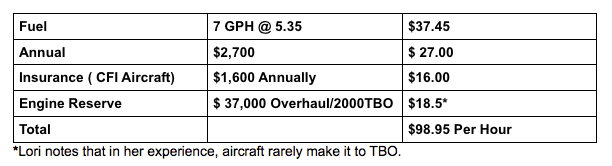
Operating Costs (based on 100 hours per year)
Flying advice
This is a response geared towards the backcountry: Don’t commit to land. To amplify that — and it’s another thing that’s a large part of our program — is overhead observation. To minimize the risk, we have to choose the approach path, an abort path, the decision height. I’ve found over the years, working with the NTSB and the FAA and going to a lot of accidents that the landing was rushed.
I always say overhead look at it and say “I think this might work out” and then fly what you perceive.
Don’t commit to land, fly that abort path, and get back to altitude and then say a ha! I didn’t know what I didn’t know. I got to 200 feet AGL, I made a safe missed approach, and now I can fly it down to 100. Be a technician.
Lori is awesome! The course is exceptional, I too learned things I didn’t know my airplane could do. It gave me more confidence and control of my aircraft. “MORE TOOLS IN MY TOOL BAG”. Thank you guys
I took Lori’s course in June 2017. I am a new low hour pilot with, at the time, 40 hours in a 182. Lori allowed me to take the course even though I hadn’t met the hour requirements. She customized it for me and my needs. I also live near the same backcountry and she felt that it was important for me to know back country and canyon flying. It was the best time and money spent as far as I am concerned! I gained a huge amount of confidence and learned more about my plane than I ever would otherwise! I got to fly with different instructors each day which gave me a taste of different instructor pilot’s techniques and advice. I also got to see and land in some beautifully rugged wilderness and fly deep in the canyons above the waters of the Salmon River and its tributaries! I may consider taking the advanced course once I get a few more hours under my belt. What a great experience, I highly recommend taking the course if you are thinking about flying in the mountains and canyons of the back country or just want the experience of doing so!
I am flying ATR now. I flew Shorts Sky-van, Twin Otter, Cessna Caravan in the mountains of Nepal. I am an instructor too. Flying conditions change every time of the day like seasons. But flying is all the time a great fun. But please remember that besides fun, every flying sortie is a lesson. We must pay attention to details. There is no end to learning. Never hesitate to ask questions and be humble. Happy landings !!
its a great class, every pilot should take it. I will never forget it. thanks Lori, Blake
Blake hurry back to the Mountains
Awesome course. I flew F-16s, I own a P-51 and took Stallions’s Course, I go to Flight Safety every year. Her course is that good. If you want to fly in the backcountry, it’s a must do.
She is a great instructor. I took her course in 2004.The skills learned in the mountains of Idaho are very helpful for flying in most any terrain. She teaches you to pay attention to the details and the importance of discipline while flying. Thanks Lori!