

Redmond, Oregon – Dave Morss is a test pilot. He made the first flight in the Stratos 714 prototype last November, but that was not a new experience.
He has made the first flights in 43 prototype aircraft.
Morss has logged more than 4,000 hours in jets and has flown north of 27,000 hours total time in everything from J-3s to P-51s to airliners and a wide range of rotorcraft.
However, every first flight, especially in a new design, has its own challenges.

A prototype is usually someone’s idea of how to go higher, faster, and further by combining known technologies with new ideas that expand the box.
Given today’s computers and software, plus the knowns of wind tunnel testing, first flights these days come with a much higher probability of success: A safe landing.
Still…
Morss has his own formula for approaching the first liftoff in any new design and, understandably, it is pretty thorough.
Caution is more than a motto for Morss, an ATP-rated pilot, A&P mechanic, DAR, CFI, who also holds a low level airshow waiver and is a member of the Society of Experimental Test Pilots.
He also is the founding president of Myriad Research, a test flight engineering and consulting firm in San Carlos, California.
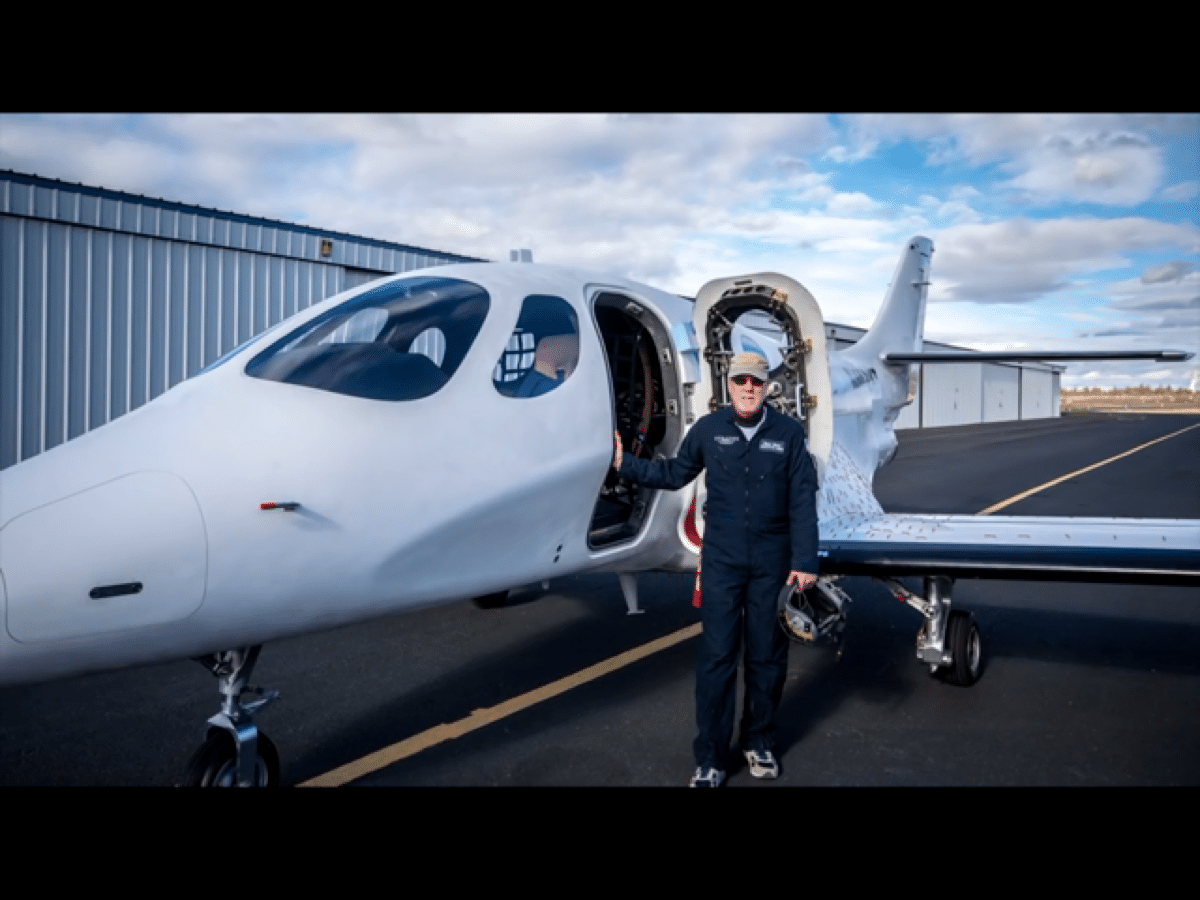
Morss says his 1,200 hours of flying aerobatics has made him very sensitive to control inputs and unusual attitudes.
His input starts well before the first flight by viewing the aircraft while it is under construction, noting every component and system.
He often provides input on ergonomics and human factors when it is still easy to make changes.
Then he takes an incremental approach: He starts by pulling the aircraft out of the hangar, listening to the sound the tires make, focusing on any scrubbing sounds that could exert undue stresses on the gear.
Next comes a slow taxi, checking brakes and steering. When satisfied, he takes the active runway for ever-increasing taxi speeds.
Eventually, he’ll reach 75% of the predicted takeoff speed. From that point on, he focuses on lift off.

“I like to do a runway flight, where you lift off, fly a few seconds and then set it down,” he said. “Many feel that it’s safer to just get away from the ground and sort it out in the air, but this debate is like high wing versus low wing. Both sides have merit, but I’ve settled on an initial short flight over the runway.”
Predictably, his first flight in the Stratos 714 went off safely without any surprises or problems.
“The thrust to weight ratio is awesome,” he said. “It accelerates and lifts off very quickly.”
Morss set it down after a brief period of gentle maneuvers and called for a few refinements, but had no significant squawks or recommended design changes.
“About the only issue was fine-tuning the controls and we were able to do that on the ground with taxi tests,” he said. “What makes it so easy now is using Go Pro cameras that record voice and visuals. They’re an amazing tool.”
Since that first flight, Morss has been slowly expanding the performance envelope of the 714. He flew it out to AirVenture 2017 and back.
Gradually, he has increased speed and raised the ceiling. The goal is to expand the performance envelope to 400 knots, FL 420, with 1,500 miles range and he is getting close.
Needless to say, his temporary offices bring with them a level of excitement few people ever experience.
The Stratos promises to be an amazing product if not price too high and actually makes it into production.
The incremental approach is key to successful flight testing with a slow build up to an end point while expanding the flight envelope.