

By DEREK ROBERTS.
Celebrating the period of aviation from 1927-1957, the Historic Flight Foundation in Mukilteo, Washington is a museum about more than just aircraft technology — it’s a museum about the best of mankind.
Striving to share the enthusiasm not only of engineering, but of an era, each aircraft in the collection is complemented by a noteworthy story or personality.
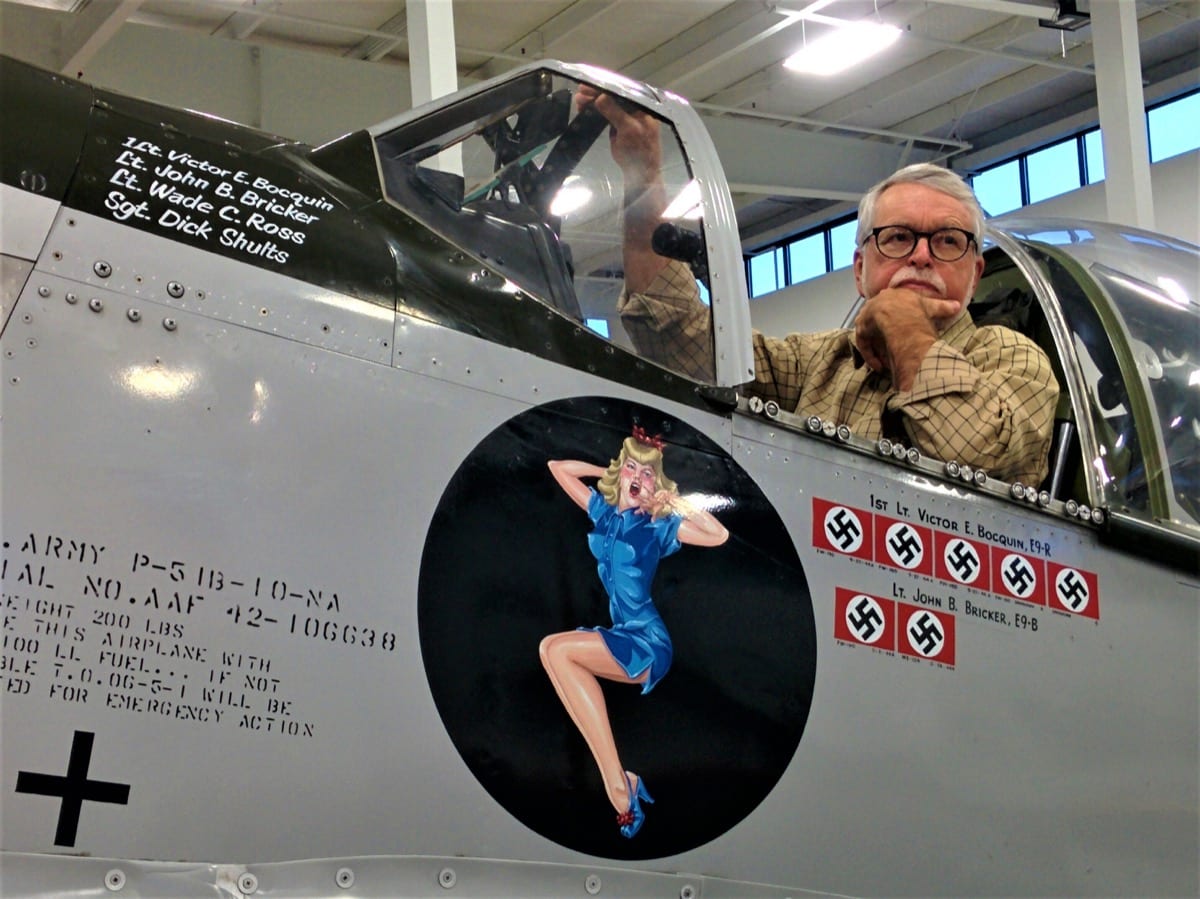
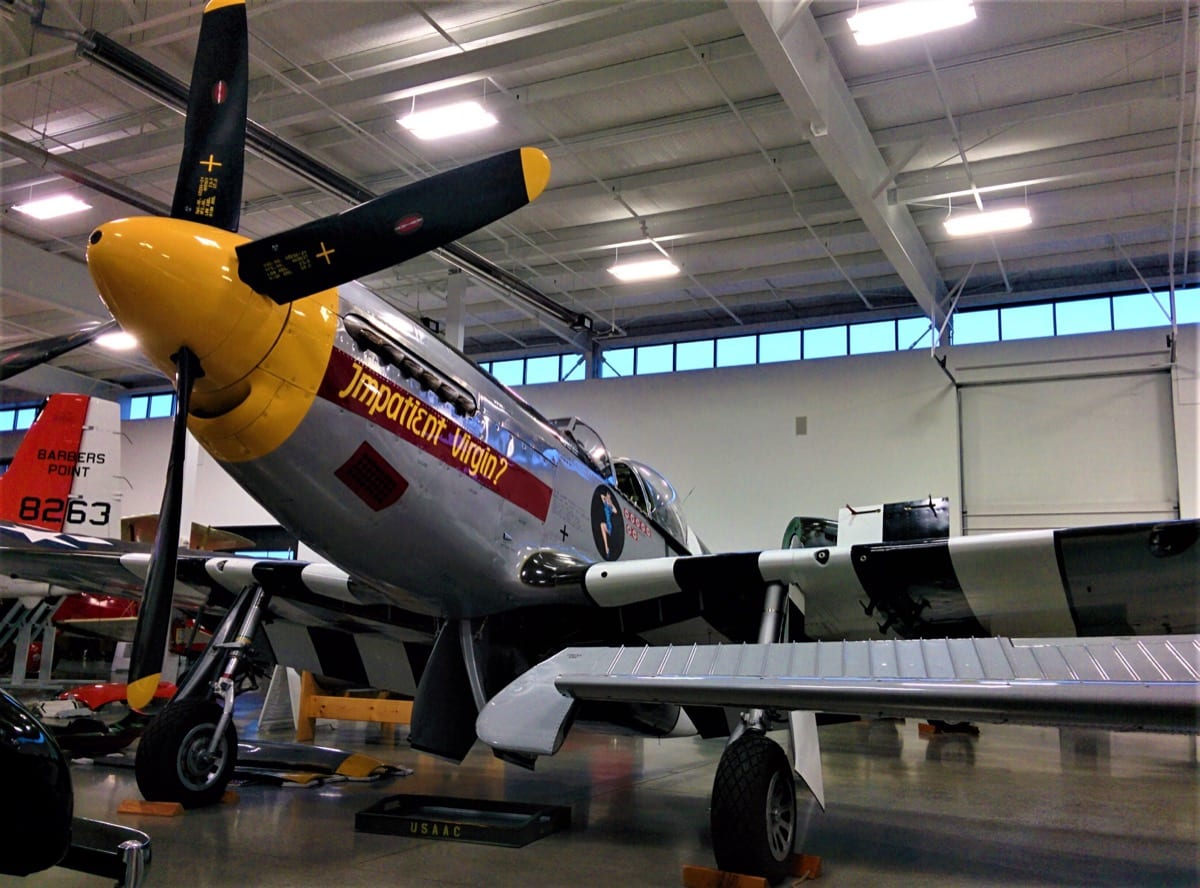
Take for example, the P-51 Mustang that sits at the center of the hangar floor. While this P-51 has a combat history that would rival perhaps any other Mustang flying today, the journey of the “Impatient Virgin?” post active duty is almost as remarkable.

The path to restoration for the classic warbird starts in 1945 in Great Britain, where it was being flown on a routine training mission over the English countryside. With the war winding down and the prospect of air to air combat looking less and less likely, the young pilot in command that day sought out a low-level flight to test the aircraft’s merits.
As the young aviator skimmed along the surface, reports are that the cabin began to fill with steam, necessitating an emergency bailout (further deduction would indicate that the aircraft’s cooling intake, located on the belly, likely sucked in vegetation as it passed just above the ground). Trading speed for altitude, the quick-thinking pilot pulled the Mustang into a half loop, before safely bailing out above a beet field.
A short distance away, the now unmanned aircraft rocketed downward and met a not-so-forgiving fate, shattering into pieces and embedding itself in the earth.
For decades, the P-51 remained untouched. Though many were aware of its location, the land-owning farmer’s state subsidy required that the field not be out of production for more than 50 consecutive days. Understandably unwilling to forgo his income, the beet producer limited access to the crash site.
That is until 2002 when a group of enthusiasts had the vision to negotiate three summers worth of access to the field and began to painstakingly excavate the legendary aircraft piece by piece.
Remarkably, by 2008, 63 years after the crash, the airplane had been fully restored and was being awarded “Best Mustang” at the annual AirVenture in Oshkosh, Wisconsin.
It was just another notch in the proverbial belt for the resilient aircraft and further testament to the enduring enthusiasm of the men and women that aviation attracts.
Which is, in part, the reason that the P-51’s current owner, John Sessions, was drawn to the aircraft.
As the founder and chairman of the Historic Flight Foundation, it’s John’s vision that directs the museum’s story-driven ethic.
And though not featured within the museum itself, the long-time pilot has quite a story of his own.
Getting his start as a young lawyer, Sessions was introduced to aviation via his client Boeing and its associated flight club. Starting with the normal Cessnas and Pipers, his interest in aviation immediately took off and he became an airport regular, quickly advancing in ratings and skills.
By the mid 1980s professional success and the purchase of a Cessna 185 led John to a variety of entrepreneurial and aviation pursuits. While continuing to practice corporate finance law as the president of a small law firm, the now accomplished pilot headed for southeast Alaska, where his various business endeavors and floatplane earned him a reputation “for showing up at board meetings and tying off at the dock.”
John upgraded to a deHavilland Beaver and recalls that “I did lots of exploring and camping. My basic rule was to spend the night at a lake that wasn’t on the chart.”
“If the bears were friendly or nonexistent I’d camp out,” he adds with a laugh. “If they were numerous and animated, I’d sleep in the Beaver.”
After a decade in and out of the Alaskan bush, Sessions began considering new professional challenges and set his sights on California and the growing home building market of the mid 1990s. Partnering his legal skills with an experienced construction partner, John co-founded a company that within a decade would become one of the nation’s 200 largest home builders, churning out a peak of more than 400 homes per year.
As his business grew, so did his need for more frequent air travel, driving a succession of high performance aircraft including a Beechcraft 58 Baron, a King Air and, ultimately, a Cessna Citation CJ2.
“Because of the business, I had the need to improve…get faster, get higher,” he says.
On the strength of that business, in 2003 John sought to expand his philanthropic efforts, founding multiple charitable organizations, including the Historic Flight Foundation.
“We decided the period from 1927-1957 — the Lindbergh crossing to the same flight in a Boeing 707 full of passengers — that aircraft from that period told the story of aviation evolution,” he recalls.
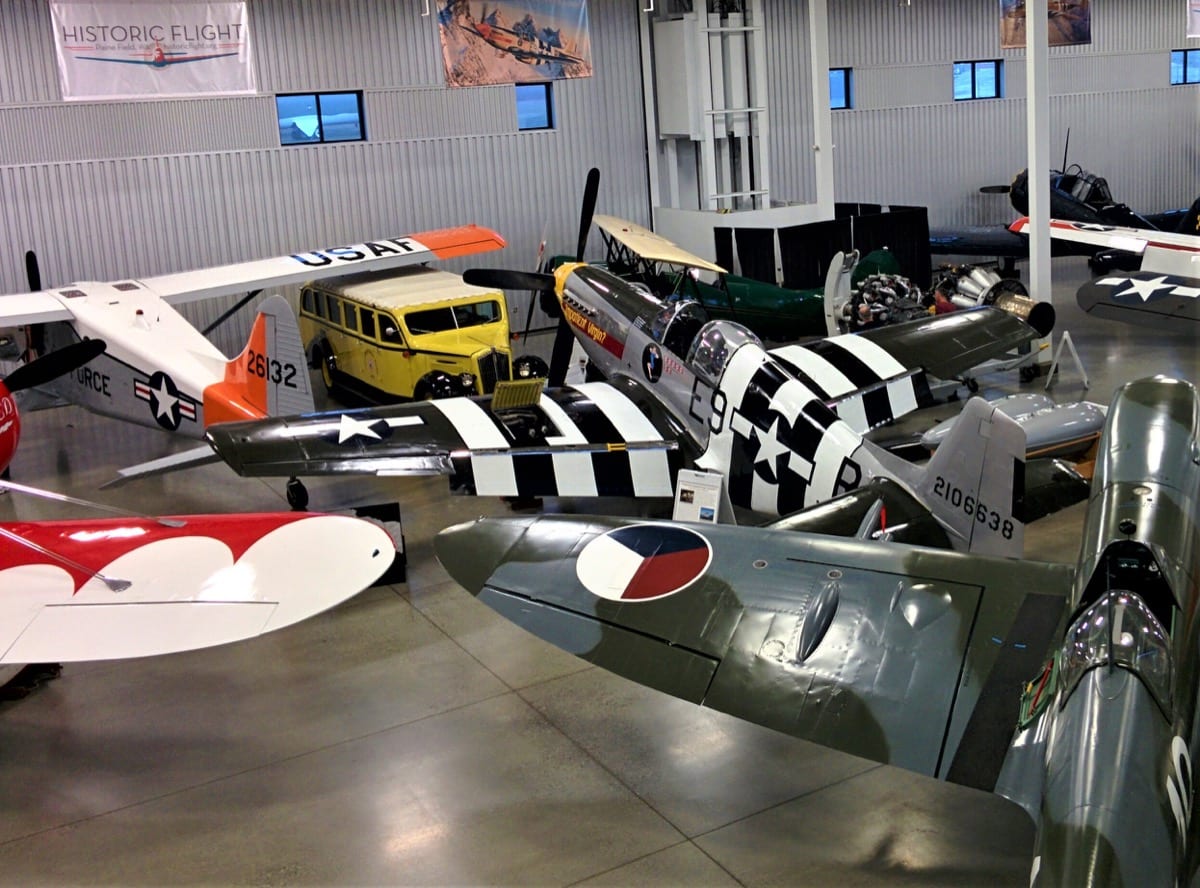
Heading into its 15th year, the museum has plans for a second location that the foundation’s chairman hopes will further it’s ultimate mission — to inspire.
“It’s a way to share,” Sessions says. “We don’t have to pitch the veterans or the pilots very hard, but for the young people, it’s really a metaphor for what might translate to another field.”
Speaking metaphorically, he adds that, “There is still the opportunity of 1927 aviation…whether it’s medicine, telecommunications or outer space…it’s the blending of technology with something romantic and exciting. Finding that version of aviation in your life.”
Indeed.
Though the best of aviation may be in the past, walking through the museum’s Paine Field hangar it’s easy to find inspiration for what it takes to ensure that the best of mankind lays ahead.
What do you fly
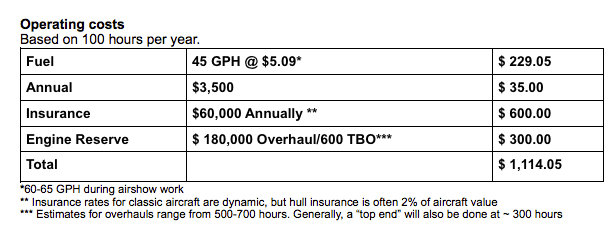
A 1943 P-51 Mustang B Model. It saw about 750 hours of combat and had seven air to air victories. Lt. Victor Bocquin became an ace in the airplane, he had five of them. The airplane saw four sorties on D-day. Three of the victories came against the Focke Wulf 190, which was supposed to be a superior fighter.
Why do you fly it
It’s just an all-around fabulous airplane.
How do you fly it
We do quite a bit of demonstration work — airshows, occasionally a movie or something like it. I also like to do the celebration of life, memorial type of flying. If you come in and do the four points of the cross, there isn’t a dry eye in the place.
Flying advice
Sometimes it takes courage to pass up an opportunity to fly. Whether it’s the weather, whether it’s something that went wrong at the breakfast table that morning, whether you’re thinking about money or your job…whatever.
Perhaps even with the best pilots there are one or two days a year when you really shouldn’t be strapping in. Learn to recognize those and learn to congratulate yourself that you have the presence of mind to sit one out.
Wonderful story, John is a great guy!
Amaz;ing museum, must see. And John Sessions is a real stand-up guy. Great article.