

In my June column “Concern for the bottom line hurts general aviation,” I talked about the bottom line concerns of GA manufacturers. I received a significant amount of feedback, both positive and negative. I appreciate both types of feedback and I would like to address one of the comments.
Gbigs wrote: “There was never a time when the bottom line was not first order for a real business. Sure companies blow money on R&D if they can afford it, but make no mistake — there is no R&D without a bottom line.”
An axiom of this is that, in most cases, there is no bottom line without first having research and development (R&D).
A good example of this is the Ford Motor Company in the 1920s. Ford had risked all to produce the Model T and it was hugely successful. But in the late 1920s Ford refused to spend money to develop a replacement for the Model T.
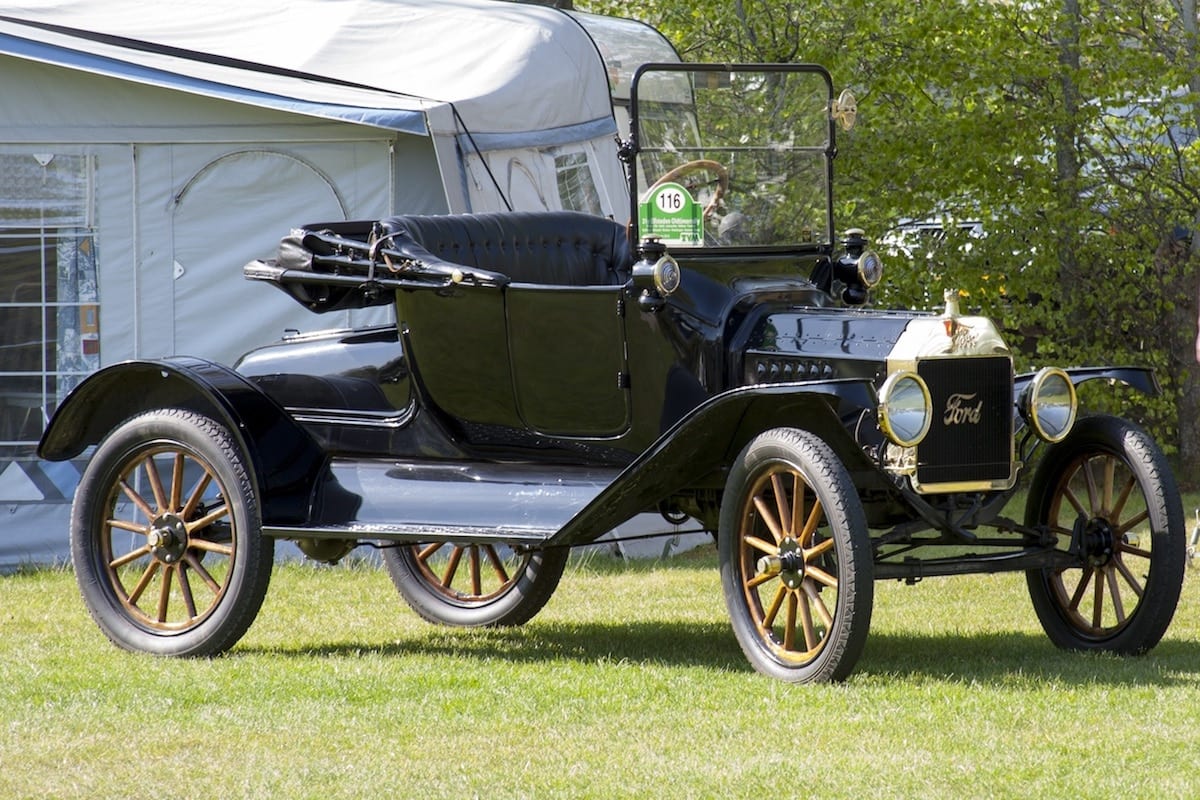
Meanwhile, the other car companies made improvements to their cars and in the late 1920s Ford was losing market share and almost did not recover. Finally R&D came up with the Model A and the company recovered.
So R&D is very important to the long-term health of a company and an industry.
In general aviation, Lycoming Engines and Continental Motors do compete some, but both use mainly 1940s technology.
The most important point here is that the GA industry needs to compete with the recreational vehicle market and, to some extent, the commercial transportation market as well.
In the recreational vehicle market, there are snowmobiles, jet skis, ATVs, motorcycles, and much more.
I have a 200-hp 4 stroke snowmobile that I can go out on a -20°F morning and turn the key and it will start right up and run with no problems. In addition, it is a thrilling ride and will get your juices flowing when getting a $10 hamburger. And it is very dependable and easy to maintain.

By comparison, to start an aircraft engine, I would need to pre-heat the engine for a significant period, which cost money. Then I would need to hit the primer numerous times, set the carburetor mixture, and hope that it starts. Then baby the throttle to keep it running, check the mags, and then after warming it up for a while, go flying to get a $100 hamburger.
There are a few problems here. First, young people want instant gratification. They want to go now, not after preheating for an hour or so. Young people have also grown up with only fuel injection cars with electronic ignition and controls. They have no idea what a carburetor is or what leaning the mixture is all about, let alone what a magneto is. There is also the cost thing and where to store the vehicle.

For an industry to survive, it must target its products to meet the needs and expectations of the end users.
The general aviation industry is focused on meeting the needs of lawyers, insurance companies, and old retired males. We need to wake up and realize that the good old boys are dying off at a significant rate.
And maybe, just maybe, we need to focus on newer technology and try to expand the marketplace to include people born after 1950.
In most businesses today, if you are standing still, you are being passed by others. The general aviation industry has been standing still way too long.

“40s technology” “largely made by hand” “lack of innovation” “lack of automation” Is this the GA world?
While I have a new-found interest in aviation, I’m not a pilot and I have to say that this is frightening to hear. This is the 21st century, right?
I love driving my car and don’t know a thing about what’s under the hood. While I’m sure safety requires a better understanding of the airplane than it does of the car, but I don’t want to take an hour before I roll or have to be a certified mechanic to fly the damn thing.
Come on GA industry, you can do better.
Ben, et. al,
I like some of what you wrote, and for the most part agree with your assertions. As manufacturers, we must try to meet the needs of our end users. Wait……needs or wants? Too many co-mingle those two words not realizing the dramatic difference in the two.
I really, really want to fly, but I don’t need to.
That being said, I previously mentioned that fundamentally agree with you and your comments about R&D and modernization. Its not that it doesn’t need to be done, or that it can’t be done, its that is very expensive to do. Making it easier on the manufacturer doesn’t relieve manufacturers from the testing and certification efforts required to introduce new technology.
So rather than being another writer telling another story about the same argument that has been voiced during the consumption of $100 hamburgers for the past 30+ years, why don’t you help us find the money to do it?
Keep in mind, it is over $100M to bring a new aircraft to market today, and nearly $100M to bring a new powerplant to market as well. Some STC’s, TSO’s, PMA’s etc, etc, cost 10’s 100’s and even millions to bring to market, to a now shrinking market.
The level of engineering required to do this, far exceeds that of your snowmobile.
A bold opinion piece Ed — and accurate in my view. As an old-ish, newly retired guy re-entering the GA flying world, after a 36 years absence, I am amazed how much the non-USA manufacturers have product-innovated while I was working/raising a family over that period. Rotax, Pipistrel, Flight Design (full disclosure I recently bought one of these), Diamond, Tecnam… fuel efficient, capable, proven technology. And all, from what I can determine, make money and will be around for another umpteen years supporting their customers and building new, improved products.
The USA GA innovators… Cirrus, Garmin, Dynon, Carbon Cub, Vans, et.al… fine companies with great products and loyal customers.
The GA companies who gave their share and brand equity away? Cessna and Piper… a perfect example of this point is how both of these former GA leaders took short term risks in the LSA space only to retreat. They still make GA prop airplanes but at what cost? Imagine making the same product like the 172 for as long as I have been alive and the consumer pricing continues to escalate… gee Cessna, here is an idea, keep the same fabulous design (who doesn’t love the 172?) , but build a more productive manufacturing process using robots, etc. not unlike the auto industry to drive costs down, quality up and prices down. Create a see-through patrol door, a decent-priced diesel engine, etc… lots of ideas that never make it out of the board room.
Attract NEW customers instead of the same “old guys”. Get on YouTube, there are lots of new “kids” buying nice new airplanes, they are there, they are making money and they want to go places not just stand in a field flying drones.
Can they blame fully blame the FAA? The insurance companies? Those forces are real, but it doesn’t fully explain Cessna’s and Piper’s share issues. Bottom line, they failed to innovate and attract customers. It boils down to company leadership.
Cessna and Piper aren’t stupid companies, they just aren’t courageous or innovative. Their Return on Investment hurdles weren’t attractive enough given the same old model that has been employed since I was born. Blockbuster Video’s model was extremely successful, right up to when they rented their last video. Meanwhile, real innovators like Vans, Carbon Cub and the non-American companies drove right up the middle while the non-innovators were huddling in a conference room figuring out their next price hike .
“All truth passes through three stages. First, it is ridiculed. Second, it is violently opposed. Third, it is accepted as being self-evident,” Arthur Schopenhauer (1788-1860)
The FAA is a huge organization of bureaucrats. All are sincere but have no idea what each other are up to. Basically, if nothing is changed there is no justification for accepting responsibility and possible lawsuits.
70 years old or not, what makes us think that GA products do not meet the needs of its end users. In the 1950’s thru 80’s Well payed people may have considered owning an aircraft was a practical way to get around easily. In the past 30 years is much easier to buy, lease, or block time with turbo prop & jet aircraft. Families don’t require any ownership because there a businesses that accommodate their travel needs. … Do young adults truly desire spending their money on piloting an airplane? We live in a developing technology era. Aviation is not their passion. Based on my observations, The greatest aviation passion is found at EAA. Oshkosh provides a hands on view of; aircraft construction, why things work, and a realistic potential to own your own flying creation. This may not be a large audience but it reflects growth in aviation at a practical level. For instance,
Electric powered vehicles are the latest Fad, great, at least it’s another aviation path …. I’m tired of being insulted because I’m old; I have no problem observing these changes; What’s your problem? …
Exactly what I’m saying, Phillip. I’m still 70 years young. At least that’s what my mind is telling me 🙂
Snowmobile engines in experimental planes is being done now. Google it. Great idea. Turn on the engine and the prop stays still at idle. Increase throttle and prop engages.
I agree with the tone of your article and a lot should be done to improve technology.
Love the “Old Retired Males”…..Which, is about 90% of who I see at Paine Field most of the time and come into my place for training. Fortunately, that is changing a bit, but, almost all the young are going airlines with very little interest in a Super Cub.
Also, A young man who spent five years “flying” hot fighters and space craft on video games comes out and gets in an old Cessna 150……Yeah, not the hook we were looking for.
But, for a whole lot less he can get an awesome drone and do cool stuff. And if he wants to see the world from above? Google Earth, which, if I want to see something “from the air” has been a go to item. From the comfort of my home or office, sometimes with a cocktail, and, none of the noise.
I’ve been hooked for 48 years, but can not get my 17 year old to think about it.
Thanks to the FAA, what costs thousands to develop in other industries costs hundred of thousands or millions in aviation. With so few sales to amortize the large investment, investing these large sums just does not make financial sense, so nobody makes the investment. An exception was Continental and their Tiara engine, or Mooney with their model based on a German car engine. Both were unsuccessful, with millions of dollars down the drain. Perhaps if their losses were more modest, they would be willing to try again. But because of excessive regulation, the cost/benefit ratio of aviation development all but assures a loss, and this is why we are at a standstill.
Marc you hit the nail on the head! ATV, smowmobiles, jet skis, etc. do not have the FAA regulations and certs to deal with and that’s what stalls out GA.
My take away from your extension of an earlier comment I made was that if you wait too long to spend money to innovate you will miss the window and cease to exist. I agree with that assumption.
There are two ways product development is funded…money from initial investments in a new or existing business (public markets, private venture money) or money (hopefully from profits) from doing business selling existing products.
Aviation is suffering from both a lack of innovation and a lack of automation (GA planes are still largely made by hand).
So for the industry to truly survive outside of a shrinking niche market, money must be spent to fix both problems. The first is harder (invention) the second is easier (robotics and 3D printing).
Ben, I resent your assertion about “old guys”. I’m 70 years old and I want change in aviation that will allow anyone who wants to fly or maintain airplanes, can. The brightest light in aviation is experimental aviation because of the innovations that have come from that segment. Allowing products developed in other industries to be used in aviation when they don’t involve structural issues can go a long way to improving the cost of aviation.
Automobile engines are used in experimental aviation with great success. Attaching some redundancy to the engines to satisfy the FAAs concern for safety can do wonders for the industry. But let’s get real, the reason we don’t have more creative ways of innovation in aviation lies at the feet of the FAA. Many in that organization are set in their ways and are unwilling to stick their neck out to revitalize aviation to make in more attractive to more people. Bureaucrats never lead in an industry.
Being old doesn’t always make you set in your ways, indifference does.
Ben, you are correct. In the case of Lycoming and Continental plus a few others like Superior and Titan, there is only rehash of the same old technology.
It is Rotax, Adept Airmotive, EPS Graflight, and P2M that have come up with stellar engines.
The finest though is Adept which has eliminated a tremendous number of moving parts through 3D Printing and spent untold money on processes that allows parts to really last. Plus it is 150 lbs lighter than legacy engines. Not one engine can touch the quality and price.
I’m not sure how you untie this Gordian knot. Airplanes are expensive so they can only be purchased by the rich (old guys). They are expensive because of lawsuits. They can’t get new technology because of lawsuits. Until lawsuits become a second order vice first order effect one is trapped in an undertow that makes it too expensive to adapt new technologies for general aviation.
Perhaps the US FAA can make it easier to import a foreign certified item, engine or aircraft for Part 91 use.
Well said! I couldn’t agree more. The FAA needs to be more friendly in allowing type certificates GA aircraft to incorporate more recent technologies.