

By MARTY STEINER
As has happened frequently in our nation’s history, we were not ready for a war that we entered. This was particularly true with aviation in World War I. It is ironic that the country that claimed the invention of a powered, heavier-than-air aircraft did not have a single conflict-ready warplane.
But our friend and ally, England, did have such a design, but lacked the production capability to get many into the air. The deHavilland 4 was a state-of-the-art aircraft bristling with effective weapons that could truly be called a warplane.
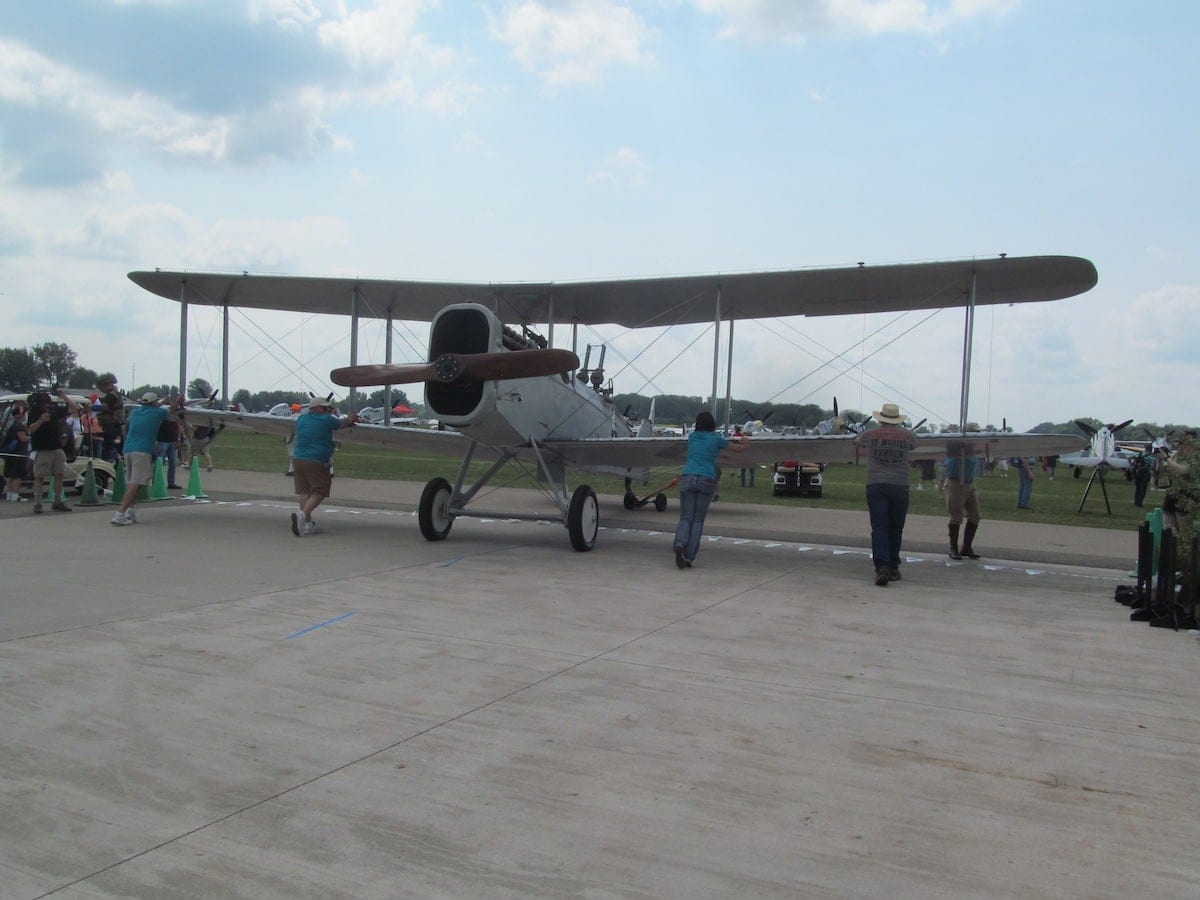
Fast forward 100 years and the only totally restored DH-4 in the hemisphere made its public debut at EAA AirVenture Oshkosh 2018, capturing an enthusiastic following in the aviation world that rivals that of a rock star.

While the restored airplane has not flown yet, it still drew large crowds at a series of different venues at Oshkosh. Even Dorian Walker, her pilot in waiting, can’t wait to see her do her stuff.
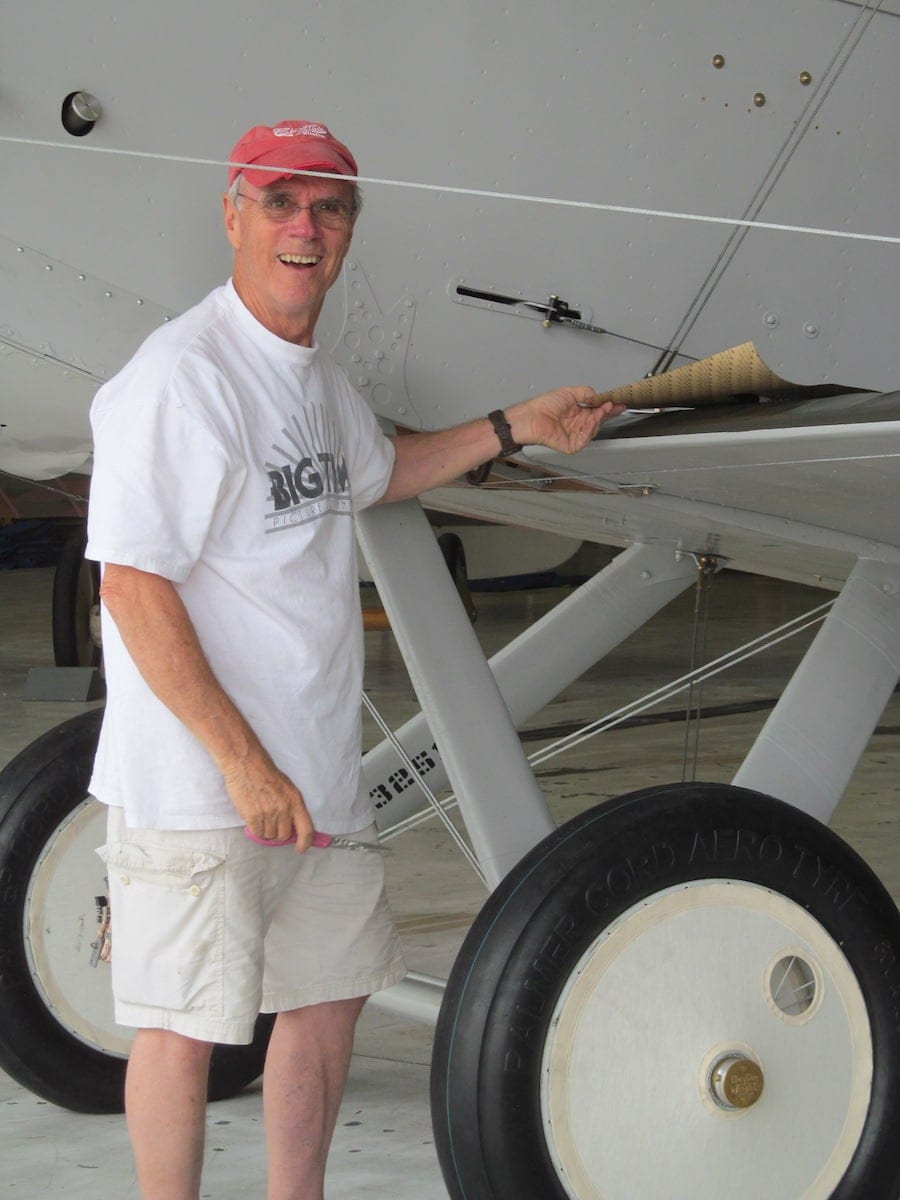
The DH-4 Restoration
How did the restoration of this DH-4 begin?
Friends of Jenny (FOJ), based in Bowling Green, Kentucky, has taken its Curtiss JN-4D training aircraft to many aviation events over the years.
The perennial question they would be asked was, “Where are the guns?” An explanation of the role of the Jenny as a training aircraft would then follow.
As the centennial of World War I approached, the association’s board of directors considered, “why not locate, restore and tour an authentic World War I warplane?”
Their research pointed to the DH-4 as the very best example, being America’s first actual warplane.
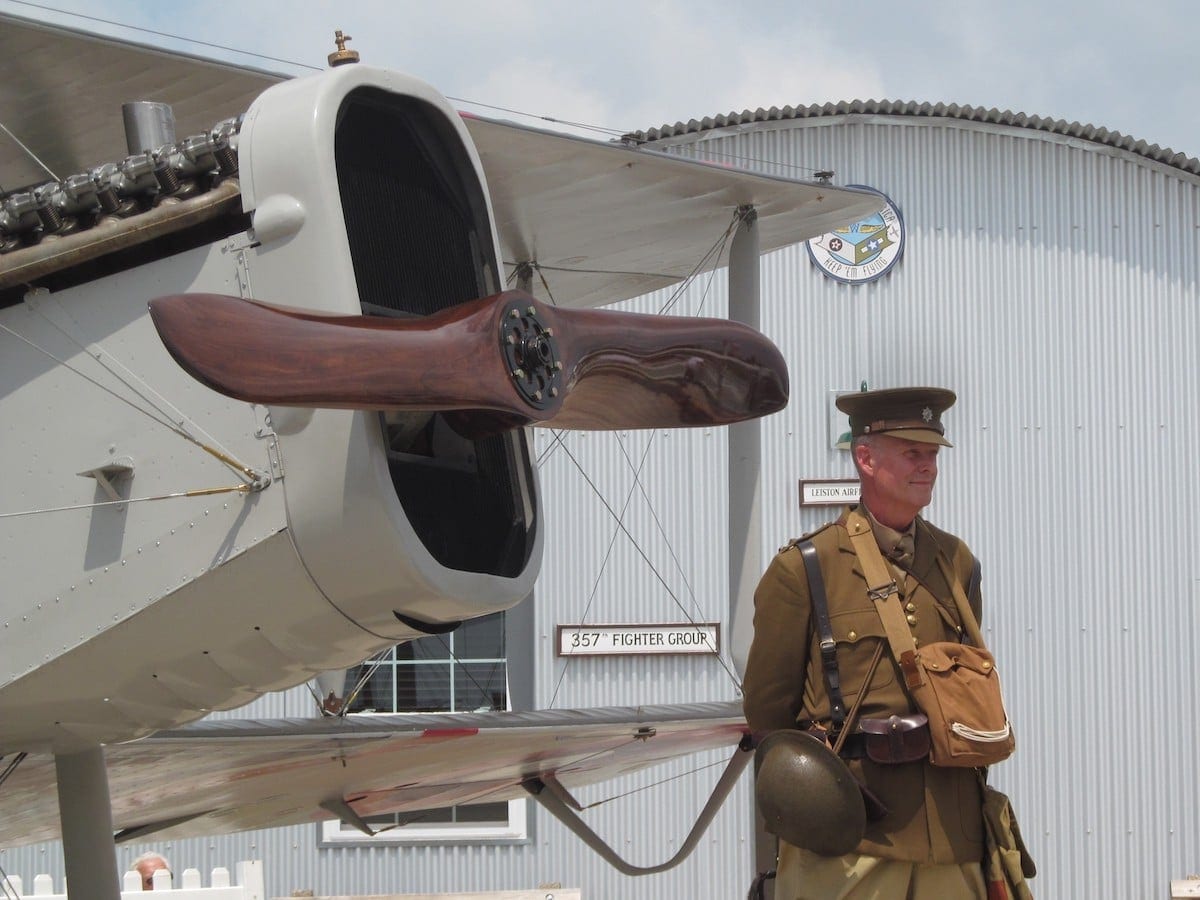
As anyone involved in aviation understands, networking is critical. Getting in touch with their contacts throughout the aviation industry, the folks behind FOJ found an original airframe in Washington state.
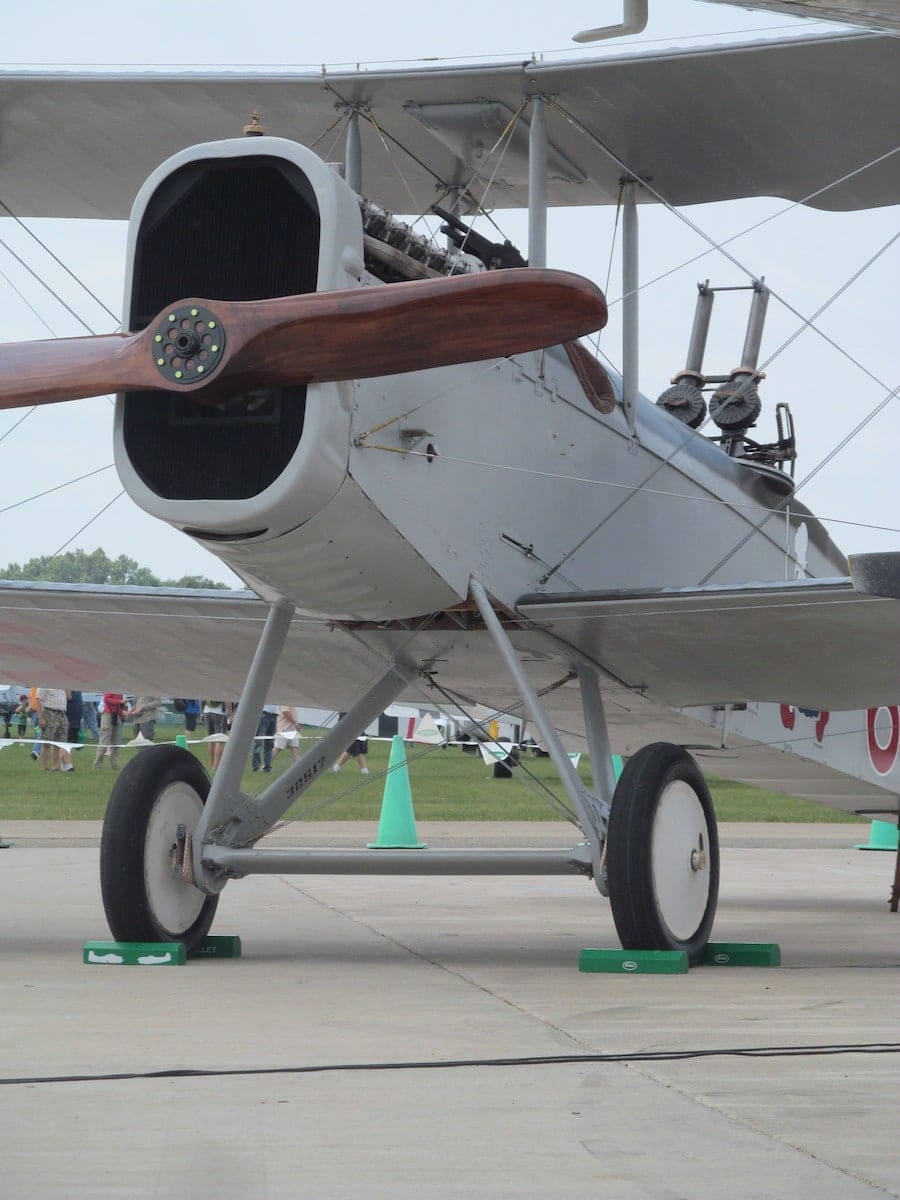
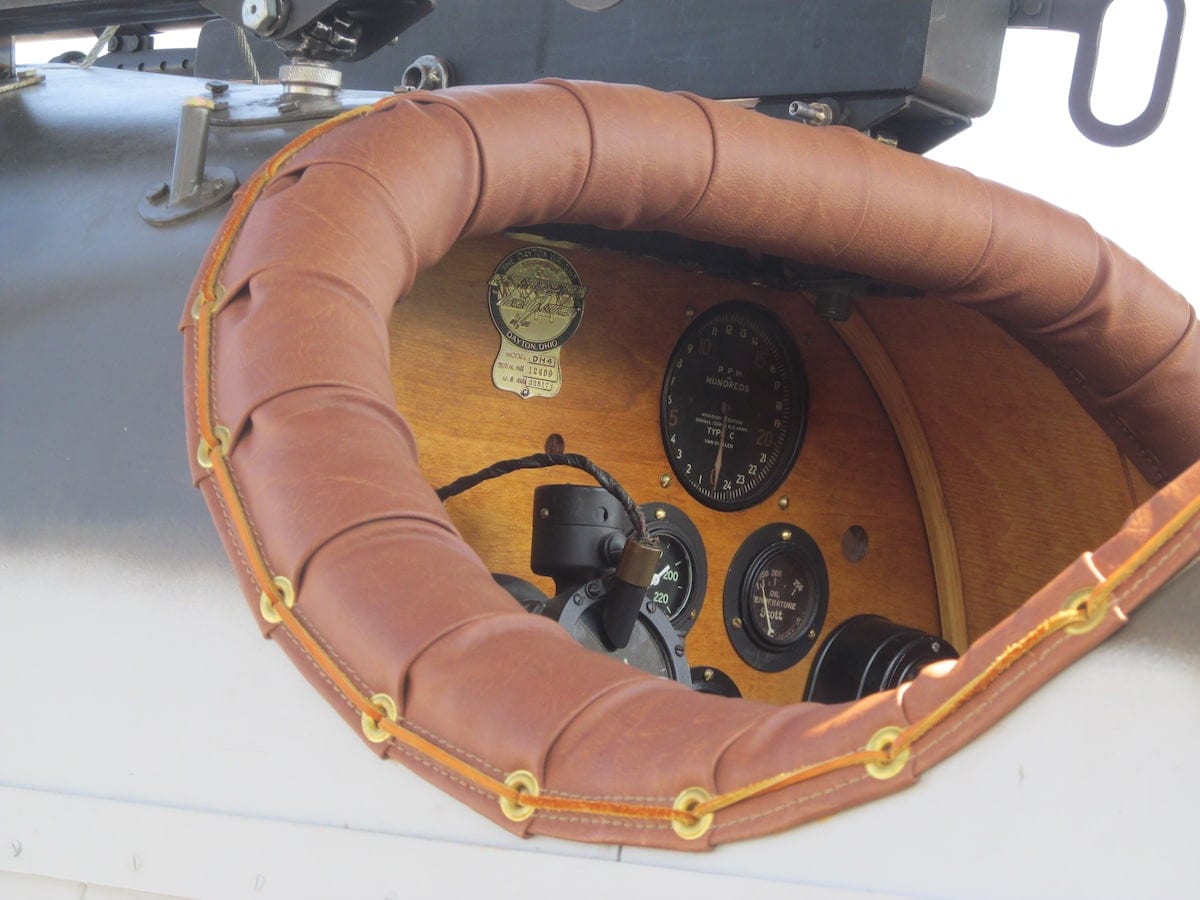
The appropriate powerplant for a DH-4 is the American produced, liquid-cooled Liberty V-12. This engine epitomizes American genius and “can-do” attitude.
The Liberty V-12 Engine
On May 29, 1917, one month after the United States entered World War I, two engine designers were summoned to Washington, D.C. Their challenge was to provide a modular design, high power-to-weight ratio engine suitable for mass production.
They produced a design in just five days. A V-8 prototype was produced in July for testing, with the 400-hp V-12 tested and accepted in August. The DH-4 became known as the “Liberty Plane,” named after this legendary engine.
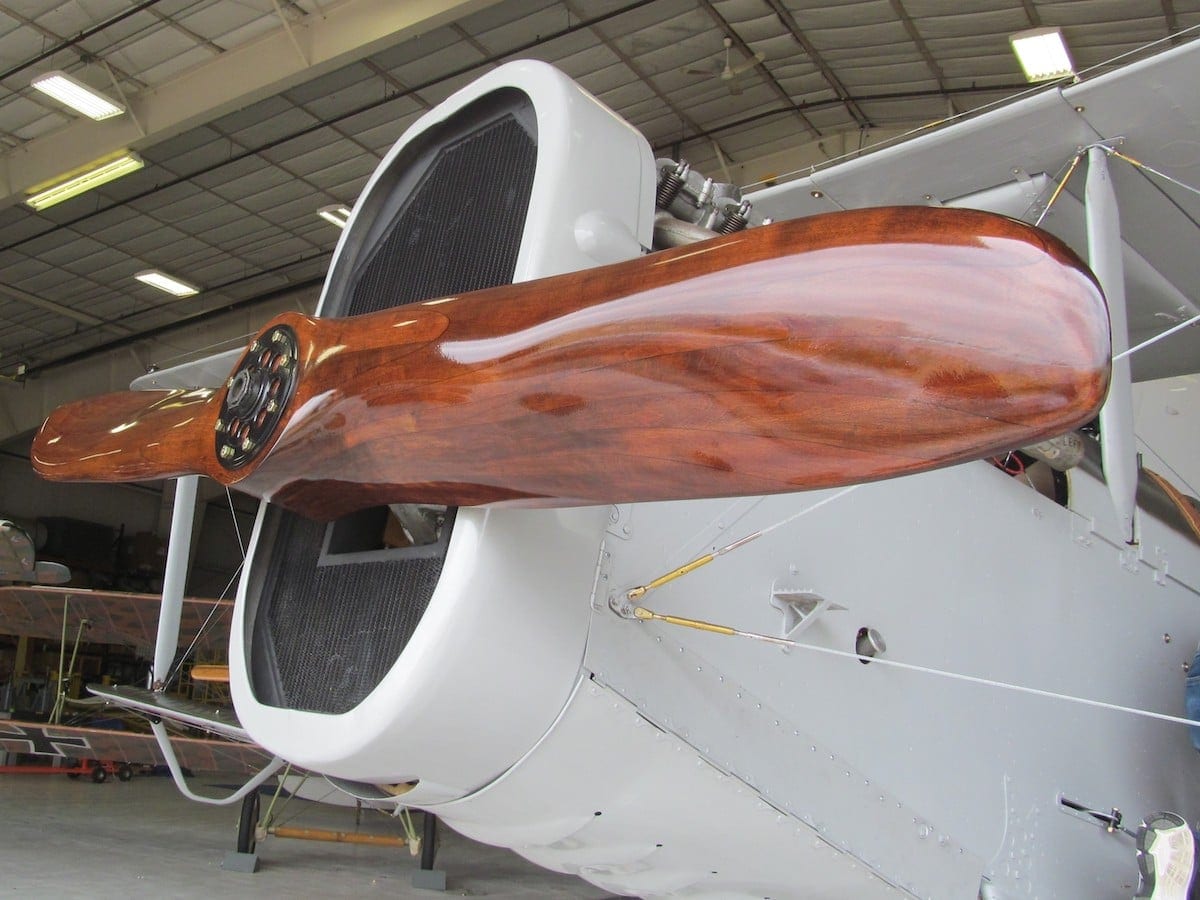
An aggressive contract for 22,500 engines was awarded to a consortium of six automobile and engine manufacturers with more than 20,000 eventually produced.
In spite of this high volume of production, only three available examples were located by the DH-4 restoration team. An engine from a private collection was selected and acquired for this restoration project.
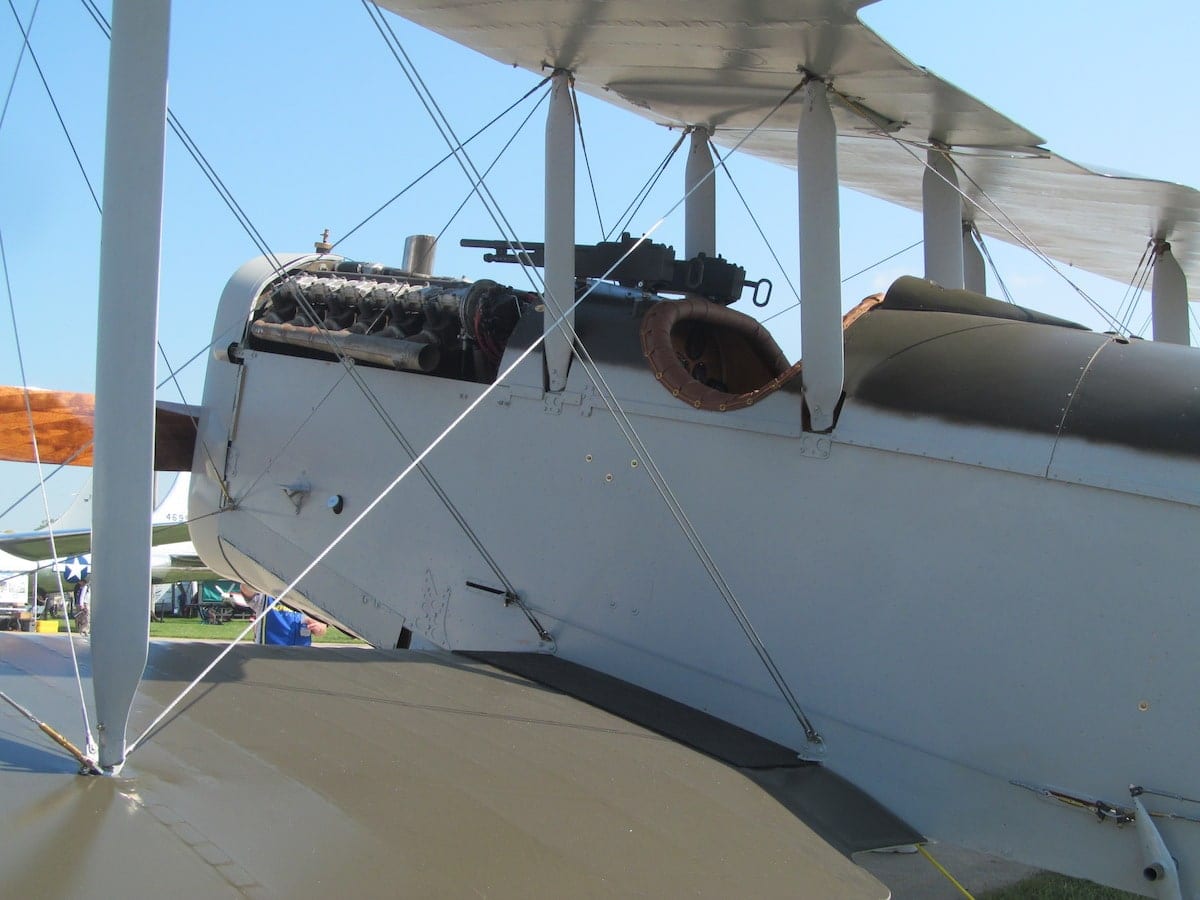
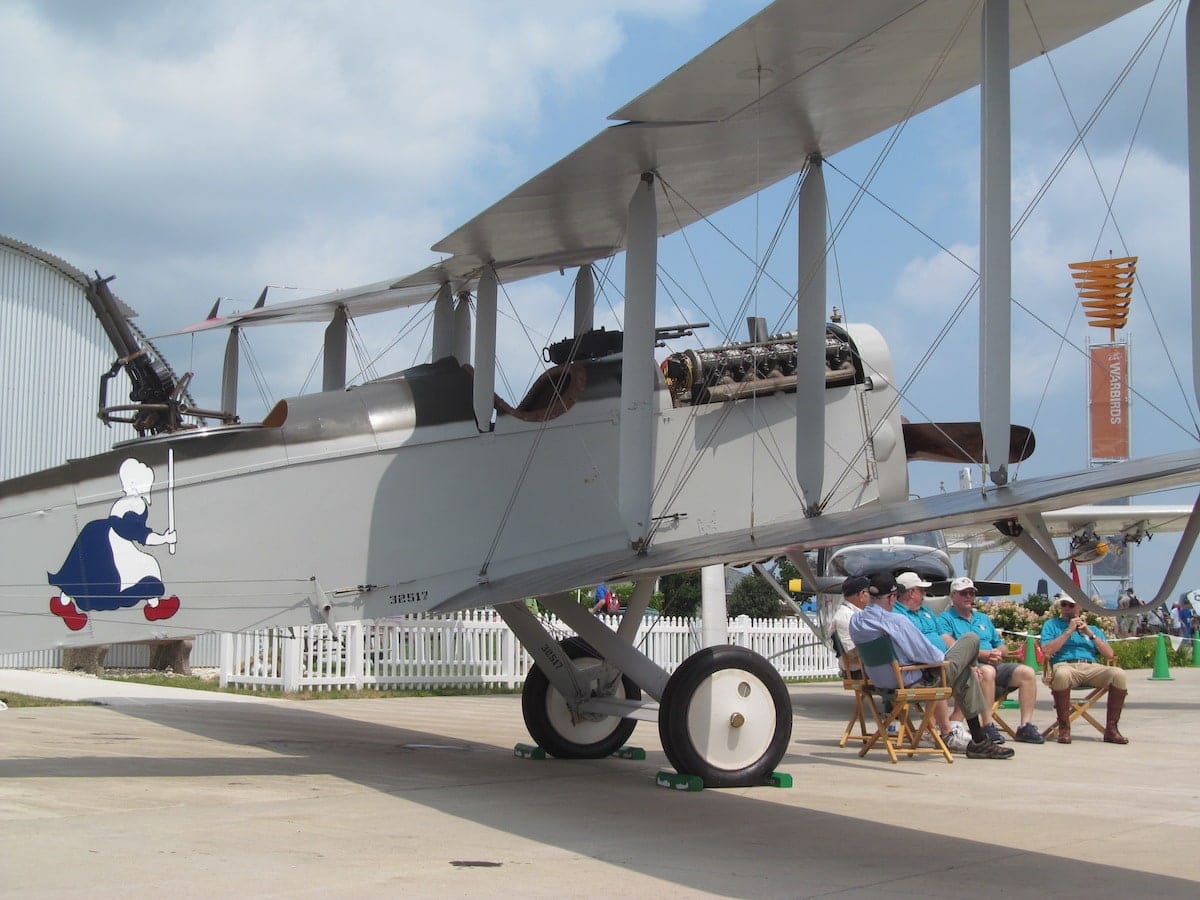
Armament also was American produced. The Savage Arms Company in Utica, New York, produced the 30 caliber Lewis movable machine guns, which were mounted on a rail around the rear cockpit. These would be operated by the observer/photographer in that position.
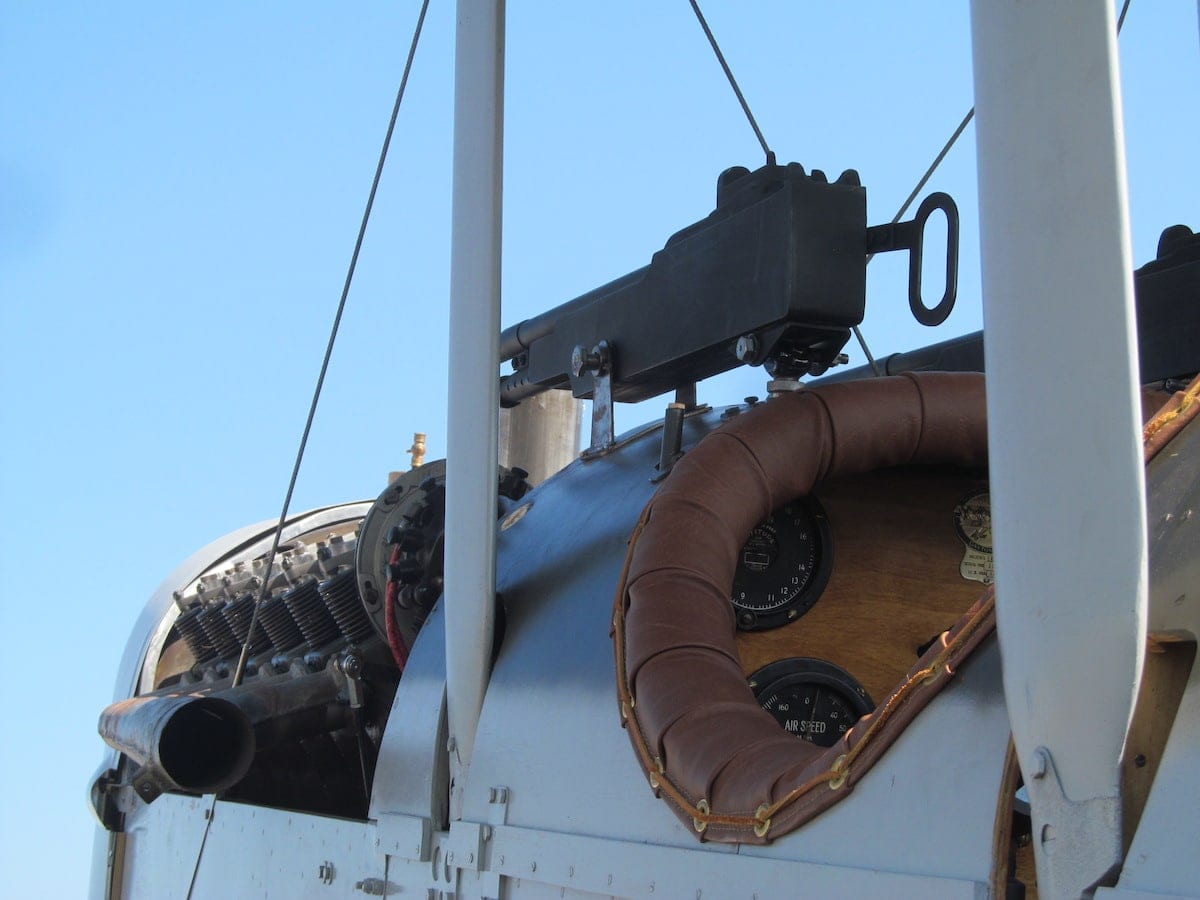
A brace of Marlin 30 caliber machine guns were fixed mounted to fire forward by the pilot from the front cockpit.
The American designed and Marlin-Rockwell built Marlin Aircraft Gun Model 1918 was the first totally successful gas-operated synchronized weapon used on aircraft. Prior to that, attempts to allow forward fire without either shooting your own propeller off or deflecting fire erratically had truly been “hit or miss.”
The entire restoration effort was accomplished in two years (centennials don’t wait!) with a team headed by four individuals.
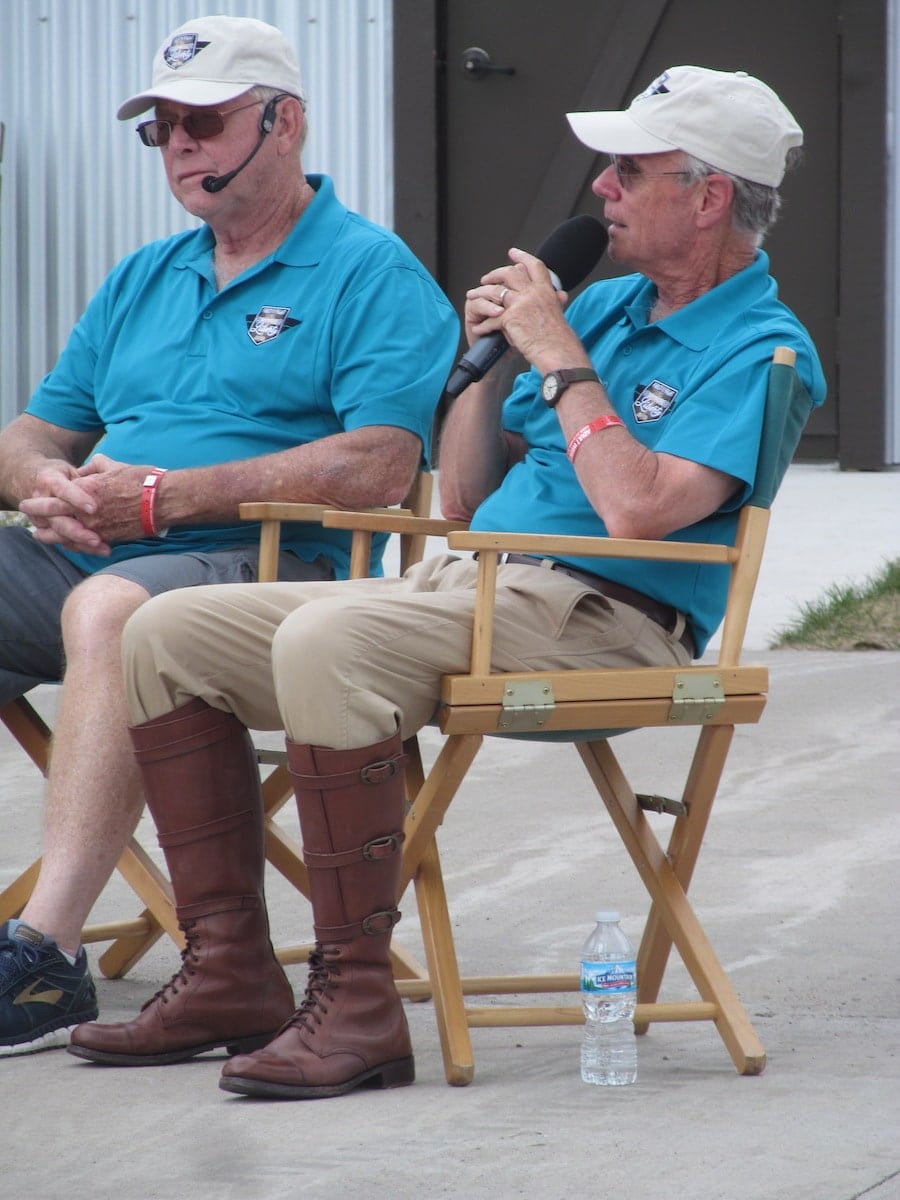
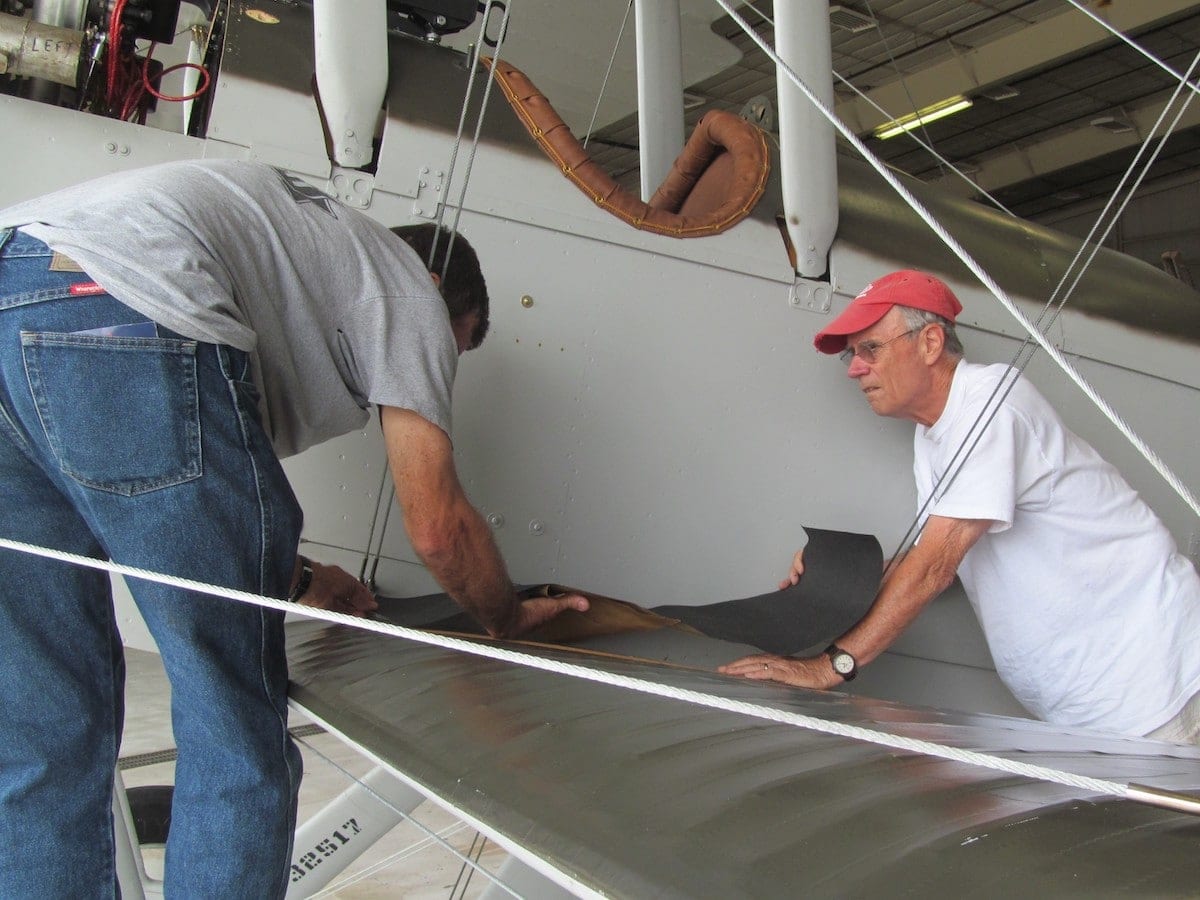
Dorian Walker, CEO of FOJ, served as wood constructor, project coordinator, and will be the flight test pilot. Jon Foote of Elevation Inc. in Winchester, Tennessee, provided the hangar shop and was responsible for final assembly, all fabric covering, paint and rigging. Gary Wycliffe managed the engine and metal work portion of the project, and Steve Sachs was responsible for the wing structures and their assembly.
This project was actively supported by EAA Chapter 699 with many of their young members involved. One young lady, Lissa Self, even accompanied the restoration team to Oshkosh.
“It’s important for us to understand the history of flying, not just participate by flying,” she said.
EAA Chapter 699’s Richard Lehman enthusiastically added, “this restoration project has re-energized our chapter and generated a number of new activities. The young volunteers on this DH-4 restoration have started our Young Eagles program and are now looking ahead to a possible Curtiss Jenny restoration for a museum!”
The Dutch Girl
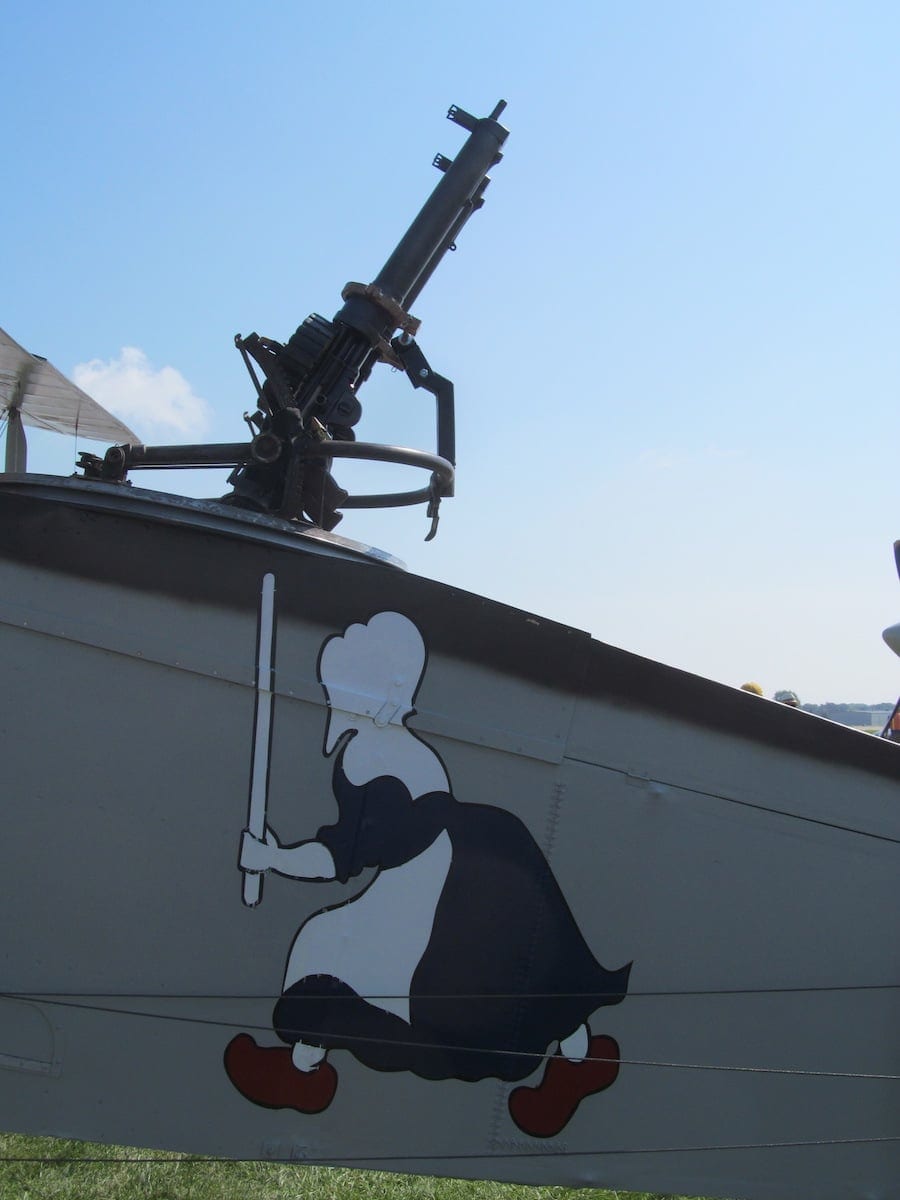
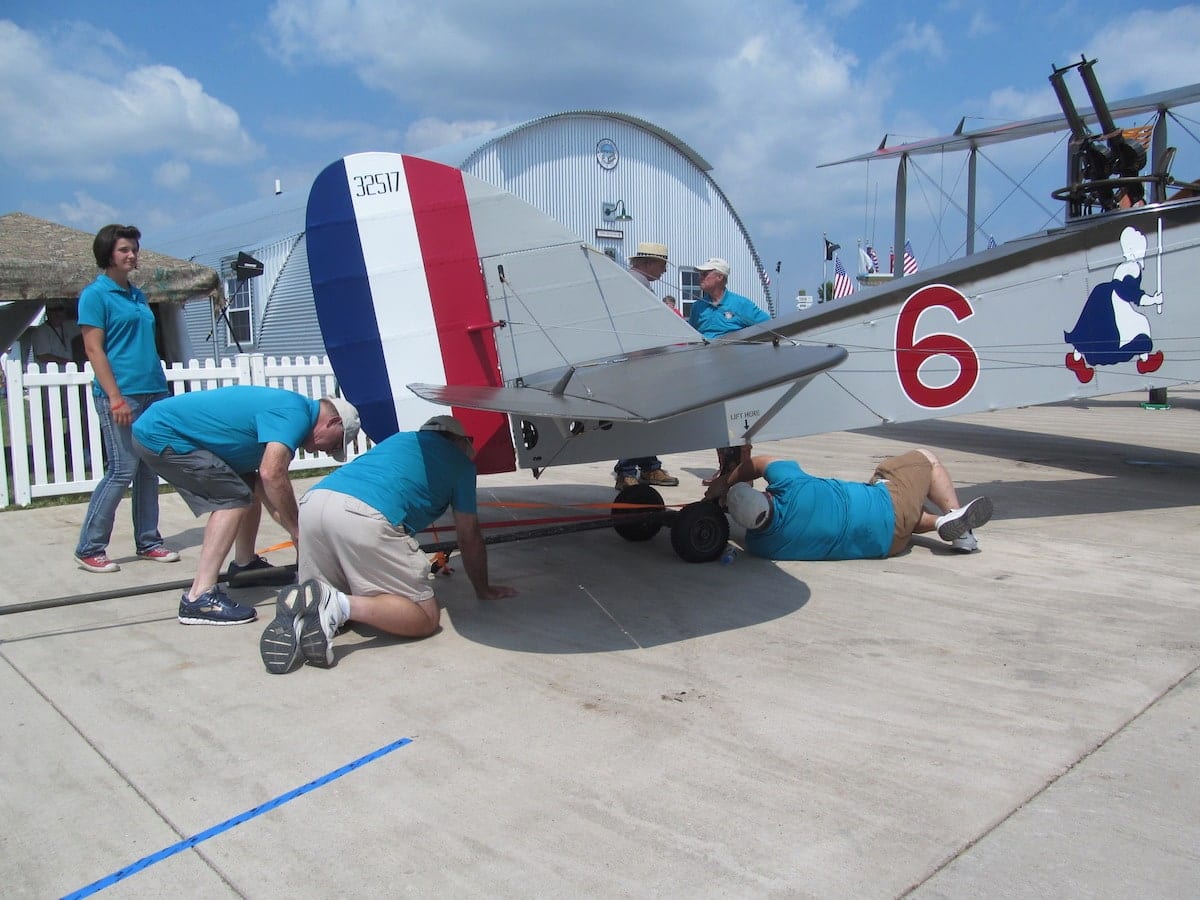
The aircraft was restored with the livery of the 50th Aero Squadron, known as the “Dutch Girl” squadron. The image of the Dutch Girl was taken from Old Dutch Cleanser, a popular powdered scouring bathroom cleanser back in the day, with the concept of “cleaning the skies” of German enemy aircraft.
The 50th Aero Squadron was originally formed at Kelly Field in Texas as a school squadron trained in mechanics and rigging. It later became a service squadron, with flight training done in standard Curtiss JN-4 aircraft.
As the American DH-4s were shipped first to England and eventually on to France, the pilots did not meet up with their DH-4s until just before assignment as an Observation Squadron nearly a year after the squadron was formed.
The unit’s primary role was visual and photographic reconnaissance. It was in this role that a two-man DH-4 crew from this squadron earned two of the four Congressional Medals of Honor presented to World War I Army Air Service personnel.
Pilot Harold “Dad” Goettler and his observer/gunner Edwin Bleckley were shot down while attempting to re-supply the “Lost Battalion” with ammunition, rations, and medical supplies. Deep behind enemy lines, they drew deadly fire. These medals were awarded posthumously.
The other two Medal of Honor Air Service recipients flew French- and British-built attack aircraft.
Today, the 50th is still a pioneering unit, now known as the 50th Attack Squadron of the United States Air Force. Based at Shaw AFB in South Carolina, they now “pilot” unmanned aerial vehicles, also known as drones.
Needless to say, restorations of this nature are incredibly expensive. Financial support for this successful Liberty DH-4 project can be provided through SavingLibertyDH4.org.
More DH-4 Photos
Thank You to all who were involved in her restoration. A magnificent beautiful aircraft !!
Gentleman: I think I speak for many pilots and aviation people when I say thank you for preserving an important part of our aviation heritage. To see an old warbird strutting her stuff is good for the soul. Many thanks!!
Love the article.
THANKS !!