

My husband, Maury L. Fisher, and I were on an IFR flight from Bartow, Florida, to Asheville, North Carolina, for Labor Day weekend in a Cessna 210 when we had an engine problem.
“When we first took off from Bartow, I noticed on the engine analyzer, which is an EDM 700, that we were having some abnormal temperature readings,” Maury said. “I assumed that it was a loose probe connector on the engine analyzer. And after about 60 seconds everything totally normalized.”
We had just had a new oil temperature probe installed on the EDM 700.
While we were climbing from 10,000′ to 12,000′ over the Okefenokee Swamp, the engine shook hard and sputtered. Maury managed to aviate, navigate, and communicate for over 28 miles on three cylinders to the nearest airport, Lake City Gateway Airport. Emergency crews greeted us. (A full account of the unexpected landing is online at GeneralAviationNews.com and was published in the Jan. 10, 2019, print issue).
We had a little more than 200 hours since major overhaul on the IO-550-L Continental engine.
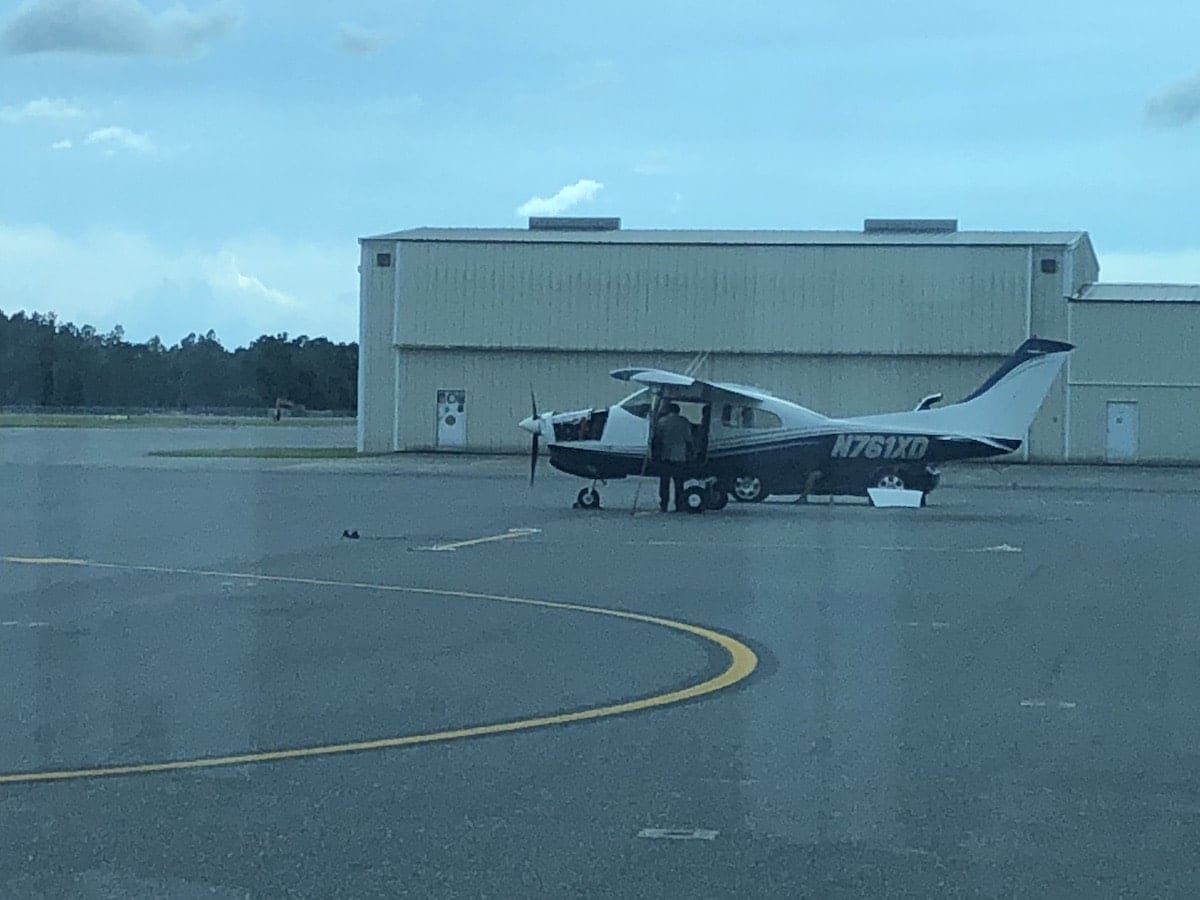
From there, we called our mechanic, Bill Turley, owner of Aircraft Engineering, in Bartow, Florida. He then spoke with the local mechanic, Eric Muro, about the engine. The day before our flight, Bill had completed a 50-hour inspection and an oil change.
Next, Bill asked pilot Bob Ohlinger to pick up mechanic Herman Vollrath from Zephyr Aircraft Engines and take him to Lake City.
Examination
“I went up there and pulled the plugs,” Vollrath said. “Pulled the injector nozzles to make sure they were all clean, then did all the preliminary stuff first, put it all back together and fired it up. Still, one whole side was just dead, so we got to thinking maybe it’s the magnetos because you wouldn’t think of a stuck valve doing that on a brand-new pair of cylinders.”
“So, we pulled the mags and had them checked out. The mags were good,” he reported. “We went back up, reinstalled the mags, and checked the harness was good. Nothing breaking down with the harness. We took some new plugs just to stick them in. All that was done. We ran it. Still dead.”

The EGTs on cylinders 2, 4, and 6 would rise and die. Vollrath pulled the number 4 valve because it seemed the worst. He said there was no clearance or space between the rocker arm and the exhaust valve. He pulled the push rod out and discovered it was broken.
“I came back the next week with another push rod, a new push tube, and a new spring and everything, a new lifter, and changed it all and put it back together,” he explained.
It was repaired enough to fly to the shop for further work.
The owners of the aircraft — John Sugar, Susan Sugar, Oren Dowdy, Maury, and I — were concerned because the two-year part of the two-year/500-hour warranty had run out. Zephyr Aircraft Engines had overhauled our engine in 2015. John “L.J.” Warren, the owner of Zephyr Aircraft Engines, said he would honor the warranty.
I wanted to know what caused a push rod to break. I visited L.J. and Herman at Zephyr Aircraft Engines and emailed John Sugar, who had become the contact person for the repairs.
He had communicated with the mechanics at the engine shop and with Bill Ross at Superior Air Parts, the manufacturer of our cylinders and the valve guides.
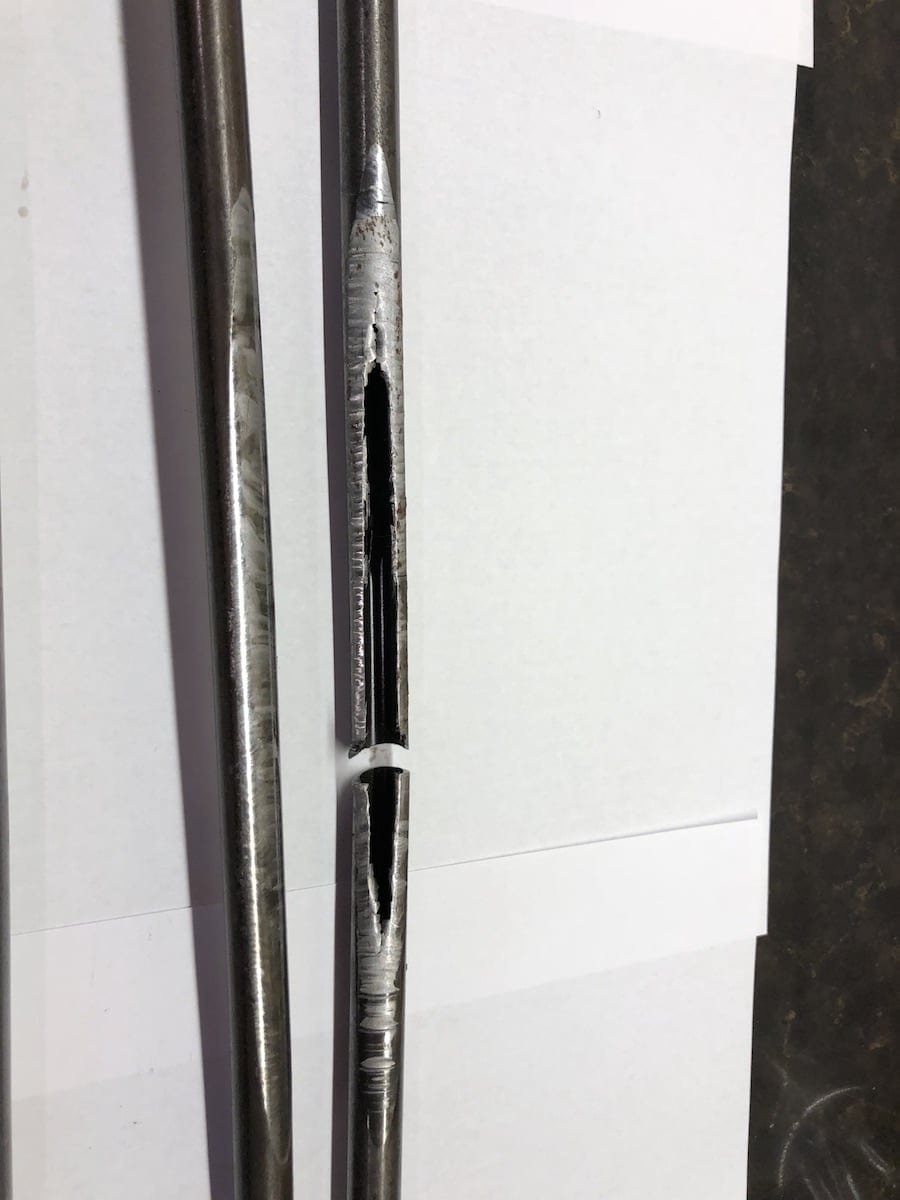
“There are two pushrods for each cylinder that facilitate the operation of the valves, one for the intake valve and one for the exhaust valve,” Sugar explained. “The issue with our engine appears to be this gap between the valve guide and the valve stem. It was too tight in two cylinders.”
It turns out we had one broken push rod and two bent push rods that were wearing.
I asked L.J. what causes broken push rods.
“I do about 500 to 600 cylinders a year,” he began. “And I would say I probably get on average about five cylinders a year with stuck valves. The ideal stuck valve to have is one that sticks and stays open. Then you know something went wrong. You got a dead cylinder with no compression. When you get one that’s just a little sticky, and it sticks momentarily, that’s the kind that will bend push rods. It bends the push rod and then comes unstuck — you wouldn’t even know it.”
L.J. noted the cylinders are “hand-built and valves are hand-fitted, not just dropped in and run down an assembly line.”
The exhaust valve and the cylinder, he explained, expand at different rates until they reach optimal operating temperature.
In the case of our airplane, “Everything came back to deposits in the valve guides causing the valve to stick, most likely due to too-cool operating temperatures,” he said.
“Back in 1979 or 1980, we did a 310 for a guy, and he went to Greenville, South Carolina. It got cold in January. It snowed actually. He didn’t let his engine warm up. He just got in it and took off. I had to go up to pull that engine and bring it back,” Vollrath, the mechanic at Zephyr Aircraft Engines, added.
L.J. nodded and tugged the bill of his ball cap.
“We tend to see the most of these in surveillance aircraft and law enforcement that do a lot of slow flight and the engines don’t get pushed hard just because of the line of work they do,” he said. “A lot of flight school airplanes, too, by trade. They get shock-cooled, and things get done to flight school airplanes that should not be done.”
“Keeping the cylinder head temperatures too low and stuff like that allows it to build up deposits in the valve guides that lead them to sticking,” he continued. “You want them to get hot and, I know this is a nasty word, but you want them to wear. Through the life of the engine, it’s a balance of wear and deposit buildup.”
Why, I asked, would one stuck valve cause other cylinders to stop working?
“When that exhaust valve quits working, the whole engine goes out of balance,” L.J. said. “It killed the one side because that whole side is now breathing combustion gas that didn’t get burned.”
Sugar explained the cascade failure this way: “The exhaust valve fails to open after the push rod breaks. The intake valve is still working, as it should, taking in fuel and air. The cylinder goes through its combustion cycle, however it can’t get the combustion gases out due to no operation of the exhaust valve. So, it skips that step and when the intake valve opens the next time, the cylinder is still under pressure, so to speak, and the exhaust gases are released into the intake system. This sends the combustion gas and unburned fuel into the other cylinders on that bank.”
Symptoms of Sticking Valves
How can pilots detect sticking valves? Both L.J. and Vollrath talked about the importance of getting an oil analysis done at every oil change.
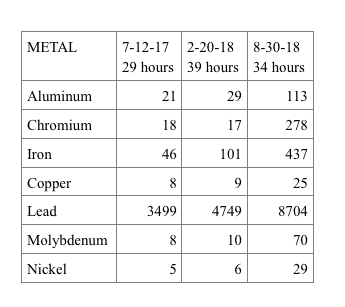
In the break-in stage of an engine, they said the oil analysis will show high levels of metal. The metal count should decrease between 50 and 100 flying hours.
They also recommended changing the oil and the oil filter at regular intervals and to watch for trends of increasing metal or a sudden jump in parts per million of metal.
Moisture can also damage an engine.
“The most common airplane buying story that you hear from the seller is that, ‘Well, I lost my medical three years ago and it’s just been sitting in the hangar, but man, I’ve taken really good care of it. I pull it out of the hangar once a month, and I crank it up here on the ground, and I run it, and then I push it back in the hangar. But I ran it once a month.’ That’s the one you turn and walk away from. It needs to be in the air for at least an hour to cook the moisture out,” L.J. cautioned.
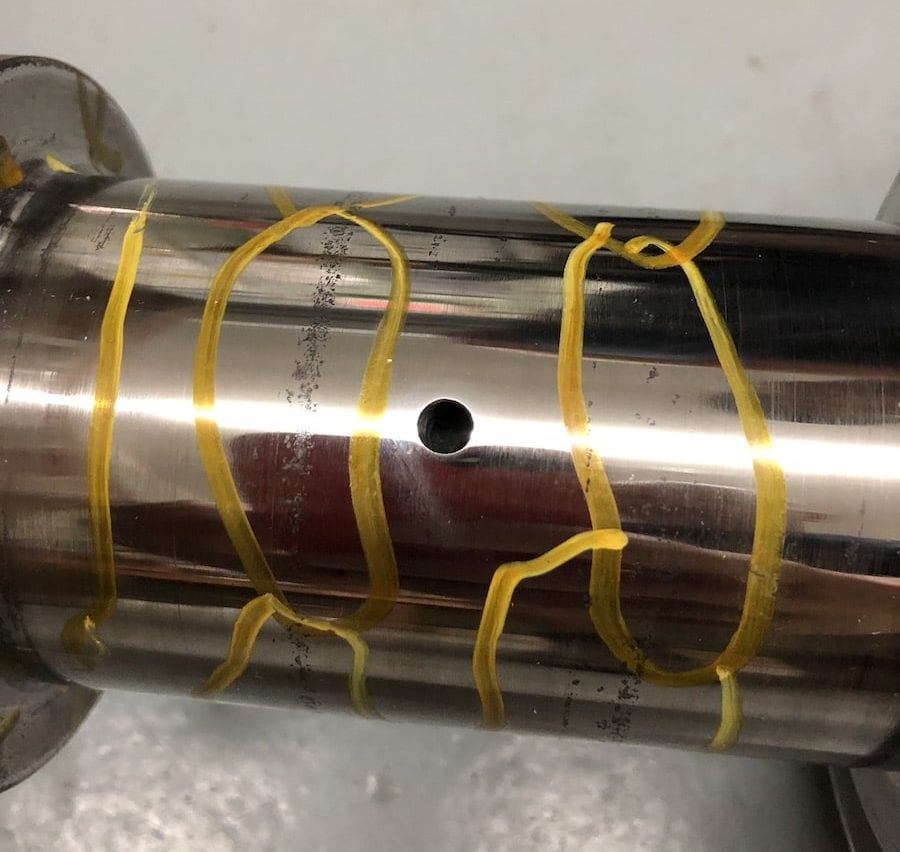
The day after we returned home from Labor Day weekend, our mechanic, Bill Turley, called. He said someone from Blackstone Laboratories called warning him not to let anyone fly the plane.
Turley replied, “Too late.”
Here are key readings from the Blackstone Laboratories’ oil reports:
I’m not going to dwell on the what-ifs, but I will learn from this experience. I’m sharing our story, so others don’t have to learn by their own experience.
Treatment
We paid to replace the crankshaft due to corrosion and for the mechanics’ three trips to Lake City. Zephyr Aircraft Engines covered the cost of all other parts and the engine overhaul under warranty. It took eight weeks to complete the repairs.

Zephyr has overhauled 3 of my engines and has always done an exceptional, thorough job. Their expertise and knowledge are one of the best in the industry. I have always done oil analysis on a regular basis as it does show trends on higher time engines and “red flags” when there is a problem that would otherwise be undetected until there is a failure. I fly to Miami regularly over the everglades from Tampa and have the same thoughts about going down in the swamp especially when Miami center puts me down low under Miami traffic 30 miles out.
Great to hear a shout out to blackstone labs. We use them at every oil change and highly recommend them. They REALLY know their stuff, right down to what part may be wearing based on the metals seen.
I really appreciate this follow up article and the detail. I learned something new ; specifically, how an exhaust valve that won’t open will affect the other cylinders on that side of the engine (and possibly the others) due to exhaust being expelled into the intake manifold. It would be interesting to see engine monitor data to see what that looks like with regards to CHTs and EGTs. If you have that and can upload it to https://savvyanalysis.com/home (and share the link), that would be great! Even better if you can post the flight before the failure flight.
Regarding this part of the article: “Vollrath pulled the number 4 valve because it seemed the worst. He said there was no clearance or space between the rocker arm and the exhaust valve. He pulled the push rod out and discovered it was broken.”
That has me a little confused. I would expect the rocker associated with the broken pushrod would move easily while all the others would be “snug as normal”. If anyone can help me understand this better, I would appreciate it.
Looking at the damaged pushrods, my best guess is that the rod must come out of the “pockets” at the rocker and lifter and that’s how the wear appears; from the pushrod wearing on the side of the rocker tube. I’d like others’ opinions of that statement.
As to these statements about causes of this sort of sticking: deposits, fitment and rapid temp cycling.
Deposits – make sense. We hear stories about lycomings with their sodium-filled valves and cooler stems having “morning sickness”, however, I don’t hear about them dropping out pushrods. Do they? On your engine, it would be interesting to see the stems of the other exhaust valves, specifically the portion that sees the exhaust (between guide and valve face), to see if they have accumulated any deposits.
Fitment – this seems like the big one to me, but this is pure speculation. I could see how a marginally tight assembly could bind up when getting to operating temp. Is Zephyr going to check the others?
Rapid temp cycling – I’m not so sure here. He comments about flight school airplanes. All of the anecdotal evidence I’ve heard has flight school airplanes flying well beyond TBO. Perhaps they are having issues like this between major overhaul. I just have not heard of it.
Early in the article is this, “…because you wouldn’t think of a stuck valve doing that on a brand-new pair of cylinders.”
Are those the same cylinders with the damaged push rod tubes? Were those “newer” than the other 4, or are you calling them “new” because the motor has just over 500 hours on it?
You put in the comment about the crank near the end of the article – do you suspect it was infrequent use and lack of getting oil up to temp that caused the corrosion?
Good on Zephyr for standing behind the engine.
I appreciate you putting this out there. There will be lots of good conversation as a result.
Jim, I don’t have engine monitor data before or after the push rod problem. I watch it in flight, but I don’t run ground tests. As for the rest of your questions, I’ll refer you to John and Herman, because I don’t know the answers.
Thank you for this article- a scenario that no one wants. This added to my motivation to make sure every oil change includes oil anaylisys. Thanks for writing in such an informative and thoughtful manner.
Lincoln, I think of oil analysis as similar to drawing blood. The oil contains so much information about what’s going on out of sight that it’s worth the small fee to get it analyzed regularly. Compare the old analysis report to the new one and watch for differences. Blackstone Labs delivered highly detailed reports that helped us determine when it was time for a new engine and when the engine was developing a problem.