

A highly anticipated ASTM International standard is designed to satisfy the growing demand for better identification and tracking of unmanned aircraft systems — commonly known as drones.
Similar to the function of a car license plate, the Remote ID standard supports technology that allows the general public and public safety officials to identify a drone using an assigned ID, while preserving the privacy of the drone pilot’s personal information.

The standard, which will be published in the coming weeks with the designation F3411, was developed by the ASTM International unmanned aircraft systems (UAS) committee (F38).
According to Gabriel Cox, a drone system architect at Intel, the new specification outlines how drones will transmit the assigned ID, location, speed, and direction by broadcasting over the air or sending over a wireless internet connection to a UAS service supplier (USS).
“A receiver could be a common smartphone that will be able to associate the ID with the location of the drone,” he explains.
“Remote ID is paramount for the continued integration of drones,” says Mike Glasgow, UTM Architecture and Standards, with Wing, a subsidiary of Alphabet, Inc. “We believe that this new standard, that supports both broadcast and network solutions, promotes growth while maximizing the safety of our airspace and the communities where drones and drone companies will have a growing presence.”
“Working with standard bodies like ASTM International on unmanned traffic management interoperability helps build a future ecosystem that fosters safety, efficiency, and scalability,” he adds.

Cox notes that this development will help civil aviation authorities, public safety officials, drone manufacturers, service suppliers, independent software vendors, and hardware solutions providers by providing a common standard. He also says that Remote ID is key to unlocking the next step of more advanced drone operations.
“This new standard is yet another example of how technical standards are crucial to driving innovation on a global scale,” says Katharine Morgan, president of ASTM International, which recently signed a Memorandum of Understanding with the Global Unmanned Traffic Management Association. “We look forward to seeing even more groundbreaking standards come out of the hard work of our unmanned aircraft systems committee.”
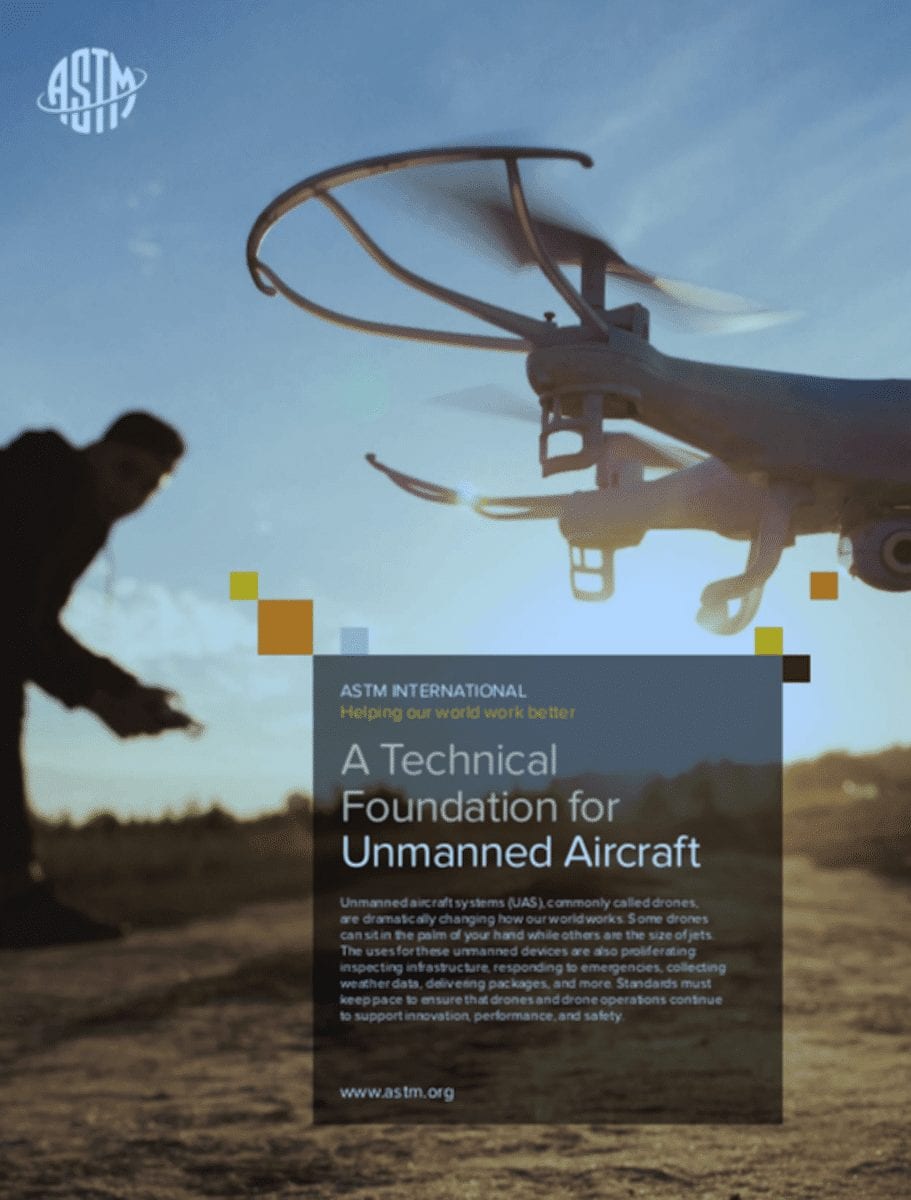
For more information on ASTM International’s efforts in the drone sector, read this overview.
Total yawn. UNTIL THEY ARE DETECTED VIA ADS-B THEY ARE A HAZARD TO AVIATION.
Will this interface with ADS-B?