

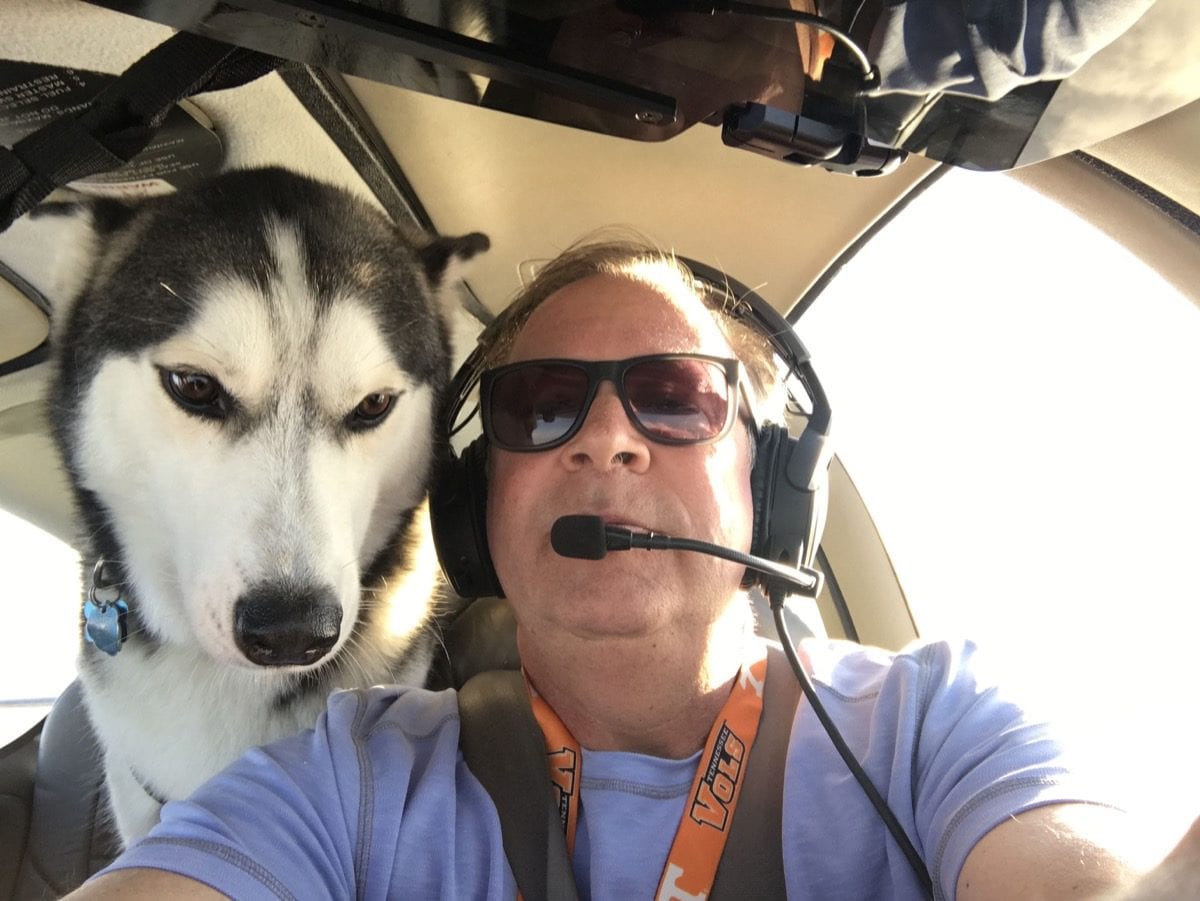
For many people, our pets are part of the family. That means when it’s time to go flying, they are right there with us.
But there are a lot of things you need to do before you put your pet in your airplane for a three-hour flight.
1. Prepare Your Pet
The first thing you need to do is determine if your pet is a good candidate for flying. Does he obey your commands? Or does she ignore you while happily going her own way? Is your dog nervous or skittish? Flying may not be the best thing for him — or you and your airplane. Even though you’ll miss your pet during your travels, it may be best to leave her at home.
If you determine your pet is good to go, you need to train them for how to behave in the plane.
Before that first long cross-country, build your pet’s tolerance for flying slowly. First have the pet sit in the plane, with the engine off, recommends Gary Lanthrum, a Maule driver who flies often with his dog, Barna. Once she’s comfortable with that, taxi with your pet in the plane. Finally, take off for a short trip around the patch. Do this several times so your pet gets used to all aspects of flying.
Once you determine your pet is ok with flying, then you can start planning a longer trip.
2. Before The Flight
Limit food and water intake about four hours before your flight. This will reduce the chances of your pet making a mess all over your beautiful airplane. Give them smaller meals than usual to reduce the risk of vomiting or an upset stomach.
Make sure your pet gets lots of exercise before the flight — wear them out so they’ll be calm (or asleep) during the flight.
Don’t drug your pet. The American Veterinary Medical Association discourages giving pets tranquilizers during a flight because they can increase the risk of heart and respiratory problems. Tranquilizers can also interfere with your pet’s natural ability to react to the environment, according to veterinarians.
3. Keep Your Pet Safe
You wear a seat belt while flying and so should your pet.
Some owners outfit their pets with harnesses that connect to the aircraft seat belt, while other owners transport their pets in crates that are secured to the airframe inside the cabin.
Lanthrum notes he keeps his dog’s harness secured to the plane as a precaution against doors opening inadvertently and for restraint if there is turbulence.
“It’s easy for us because our tube and rag airplane has a lot of exposed tubing to secure her harness to,” he said. “We also block off the very back of the plane so she can’t get back there and cause upsets to the weight and balance while we’re flying.”
If you want to keep your pet in a crate, be sure to choose the right one. In this case, size matters. You don’t want one that’s too small, but you also don’t want one that’s too big. If it’s too big, your pet may bounce around — and get hurt — during the flight.
When putting the crate in your plane, make sure it is secured in the aircraft by putting the seatbelt through the handle. If you have a large pet, you may want to remove a seat to make room for the crate.
4. During the flight
Your pet should have access to water during the flight. On short flights, pets might be able to make the entire trip without needing to relieve themselves, especially if they’ve received a limited amount of food and water beforehand. However, it’s best to have a plan in place should the need arise. Depending on the animal, owners may choose to bring a litter box or training pads.
Add that litter box or puppy pads to a special in-flight kit for your pet that includes blankets, favorite toys, and treats.
There are also special first aid kits and life vests you can bring on board for your pet.
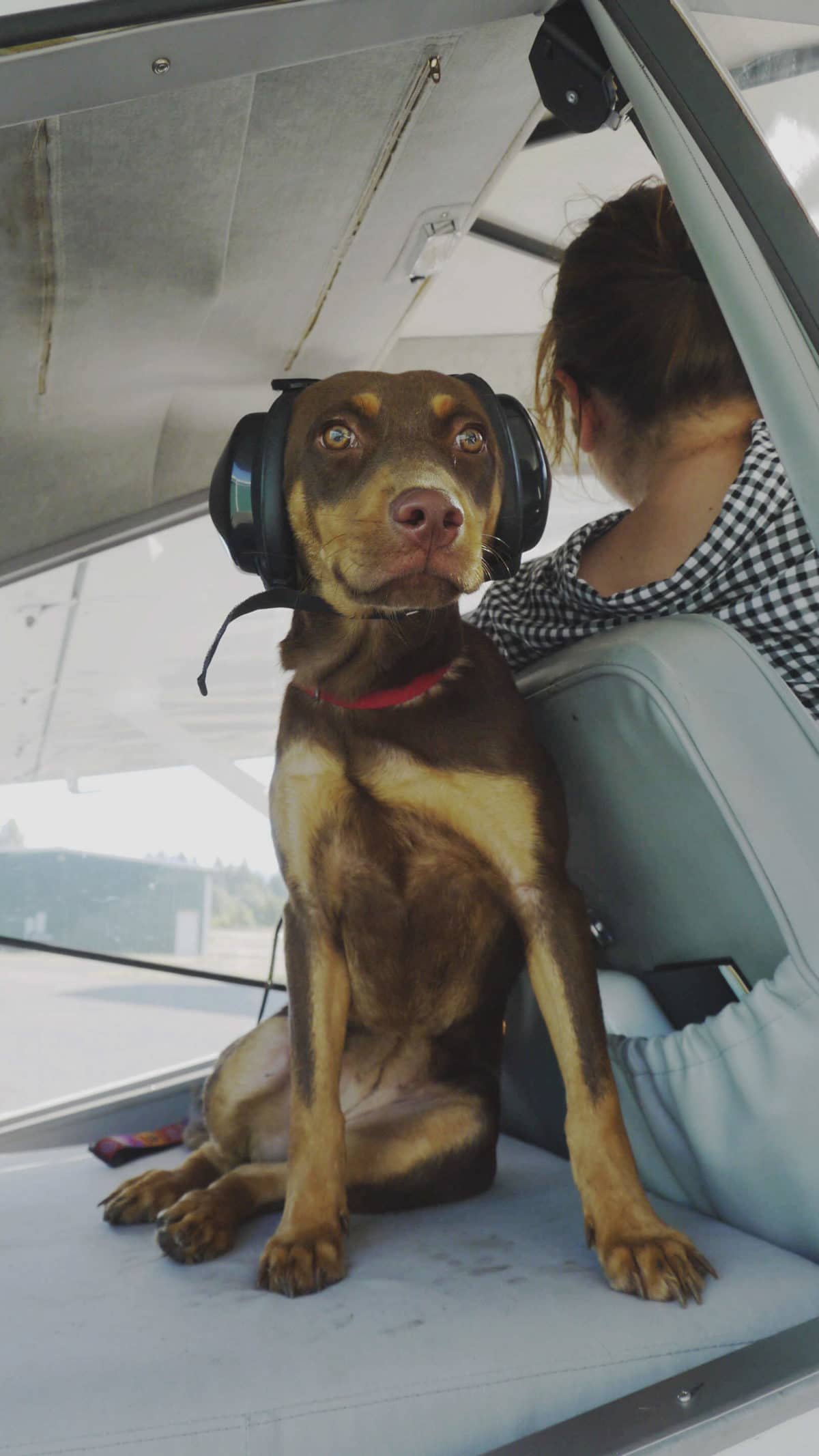
Consider some kind of hearing protection for your pet, such as Mutt Muffs. Some pets won’t tolerate something around their head, but others will, especially if you accustom your pet to them before a long flight.
Speaking of ears, vets offer another tip: Give your pet a treat every 500’ or so as you takeoff and descend. The chewing will help their ears pop.
5. Protect Your Plane
Have a cover for the seat the pet will sit on (or the crate).
“Dog feet and fur pick up all kinds of nasty stuff as they explore,” Lanthrum notes. “We pull the back seat out and put in a custom-made bed in the back of the plane. The bed gets our dog up high enough to enjoy the view out of the observer doors on our Maule.
If your dog gets motion sickness in the car, then expect it to be worse in your plane and plan accordingly. Be sure to have something to clean up any messes (paper towels, wet wipes, garbage bags, etc.)
If you prepare both your plane and your pet well beforehand, your travels will be much more enjoyable for everyone.

We use crates for our hunting dogs. Adding Hearing protection is important, so we add blankets over and around the crate plus front openings. This reduces sound levels below 80 dB inside the crates. … The crates allow them to rest as they would in our car. Otherwise they do not settle down if allowed to look around.