

A memorial park at Lowcountry Regional Airport in Walterboro, S.C., is hallowed ground for U.S. military aviators and the nation.
The park commemorates the World War II combat training activities of the Tuskegee Airmen at the airfield.

More than half of the approximately 1,000 Tuskegee pilots received their advanced training at Walterboro Army Airfield. The memorial park tells the story of that training and the struggles Black military aviators faced before going overseas, most notably as members of the famed 332nd Fighter Group, the Red Tails.
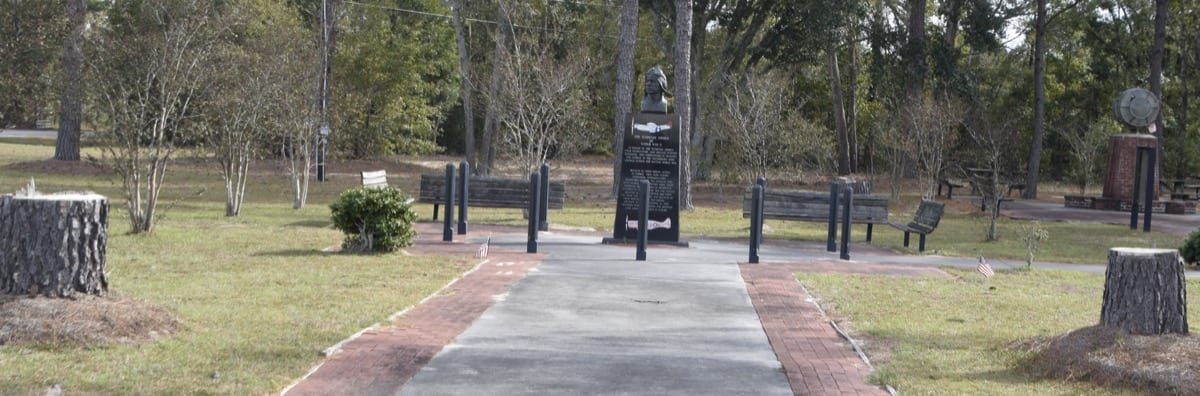
The memorial park across the street from the Walterboro airport terminal has been put back into display condition after an April 2020 tornado ripped across the airport, destroying at least two dozen aircraft and numerous hangars and other airport structures. A number of pine trees spread throughout the memorial park were also downed during the storm. Today, all is in order again in the park, with only a few low-cut pine stumps acting as reminders of the wind damage.
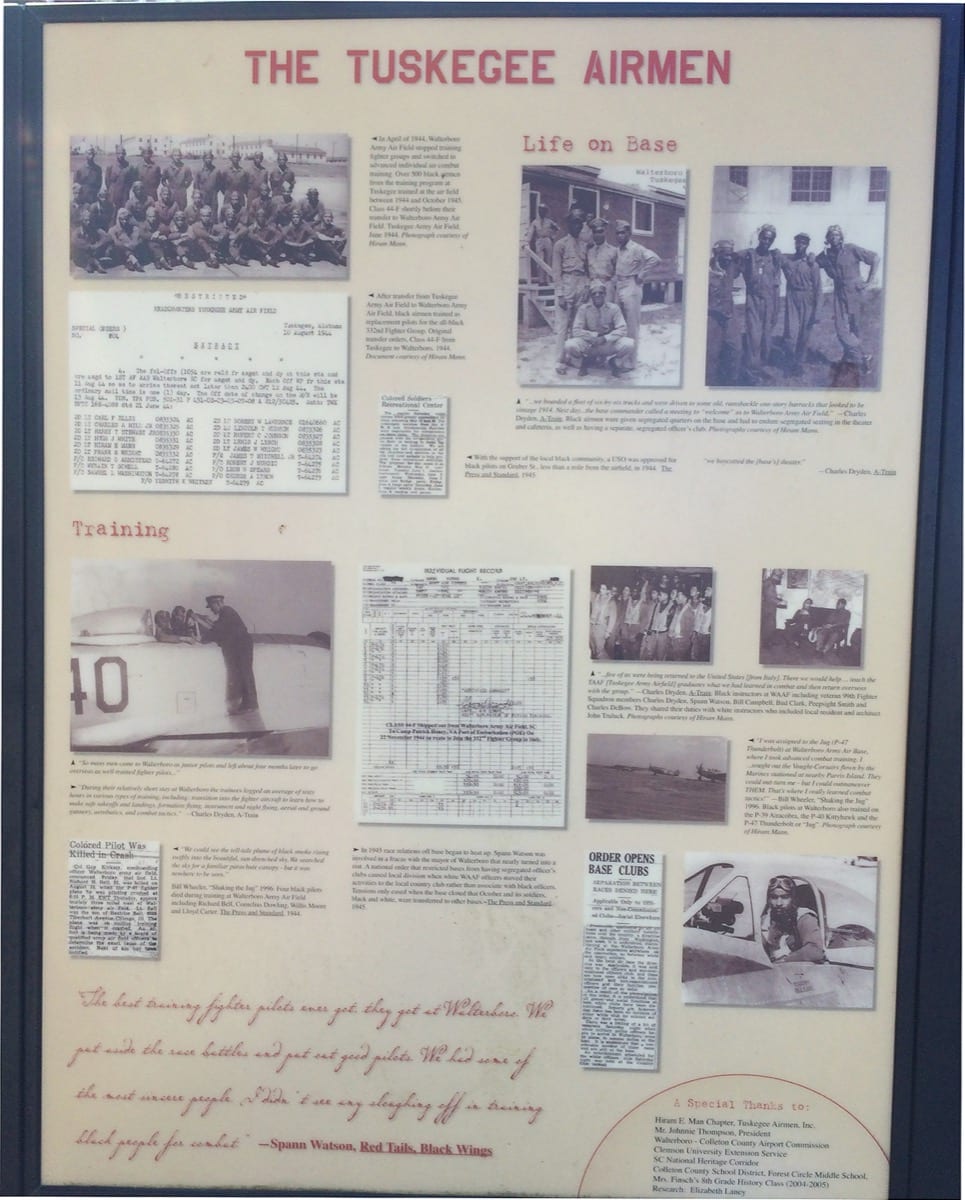
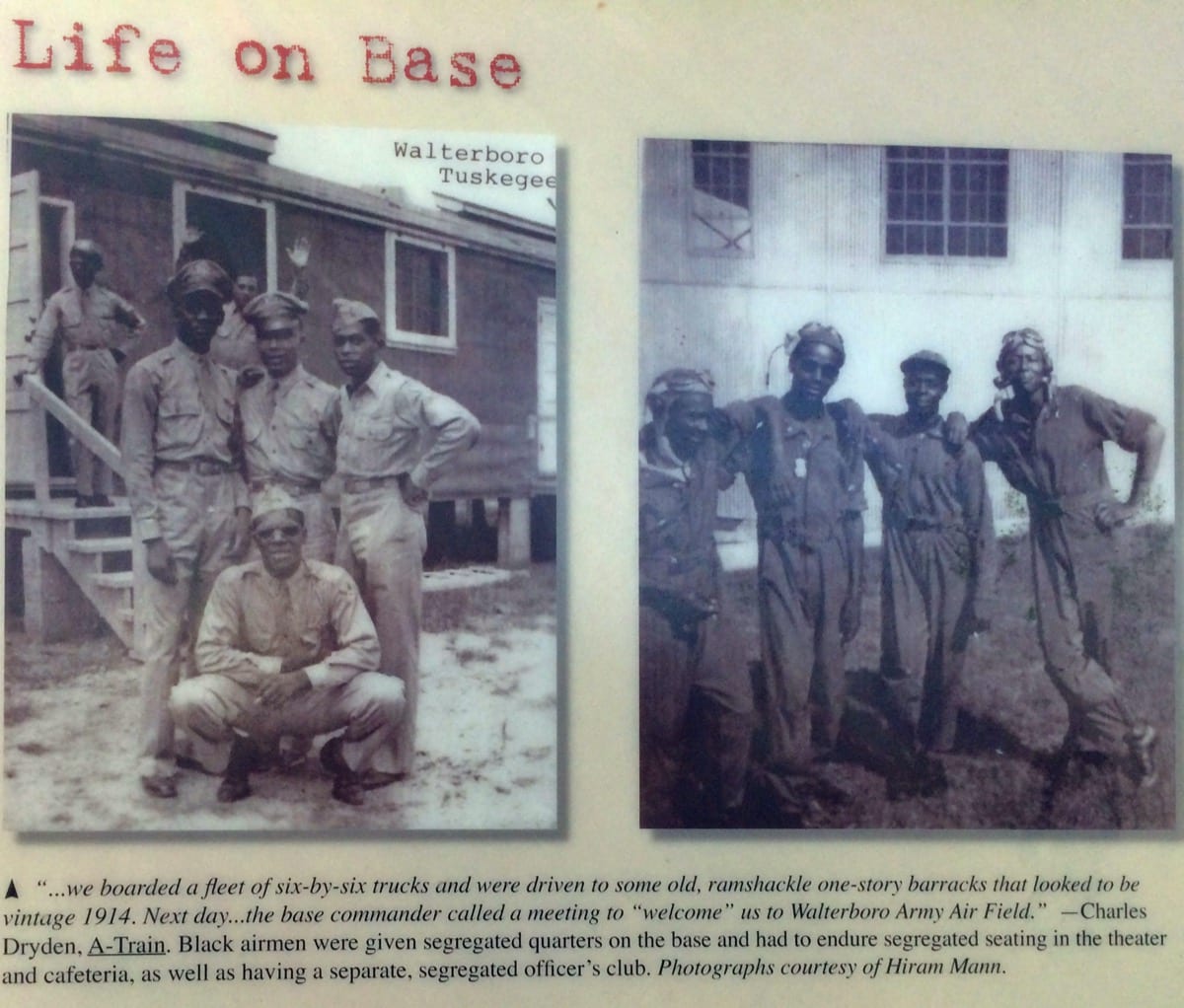
Information boards along the park walkways explain the training and conditions at Walterboro where pilots received instruction in P-40, P-47, and P-51 fighter aircraft in preparation for combat duty. One of the storyboards notes: “Black airmen were given segregated quarters on the base and had to endure segregated seating in the theater and cafeteria, as well as having a separate, segregated officer’s club.”
Walterboro’s Lowcountry Regional Airport (KRBW), about 30 nautical miles west of Charleston, was a World War II military training base, a German Prisoner of War camp, and a bomb storage depot. In 1945 the base was returned to city and county government control.
Walterboro, with a population of approximately 6,900, is about one mile west of the field. It is home to the Hiram E. Mann Chapter of the Tuskegee Airmen. The chapter, founded in 1998, is named in honor of Lt. Hiram E. Mann, who received his combat training at Walterboro Army Airfield in 1944 and flew 48 combat missions during World War II. Mann, who rose to the rank of Lieutenant Colonel, assisted in early efforts to establish the local chapter by contacting other Tuskegee Airmen who trained at Walterboro. He died in 2014 at the age of 92.
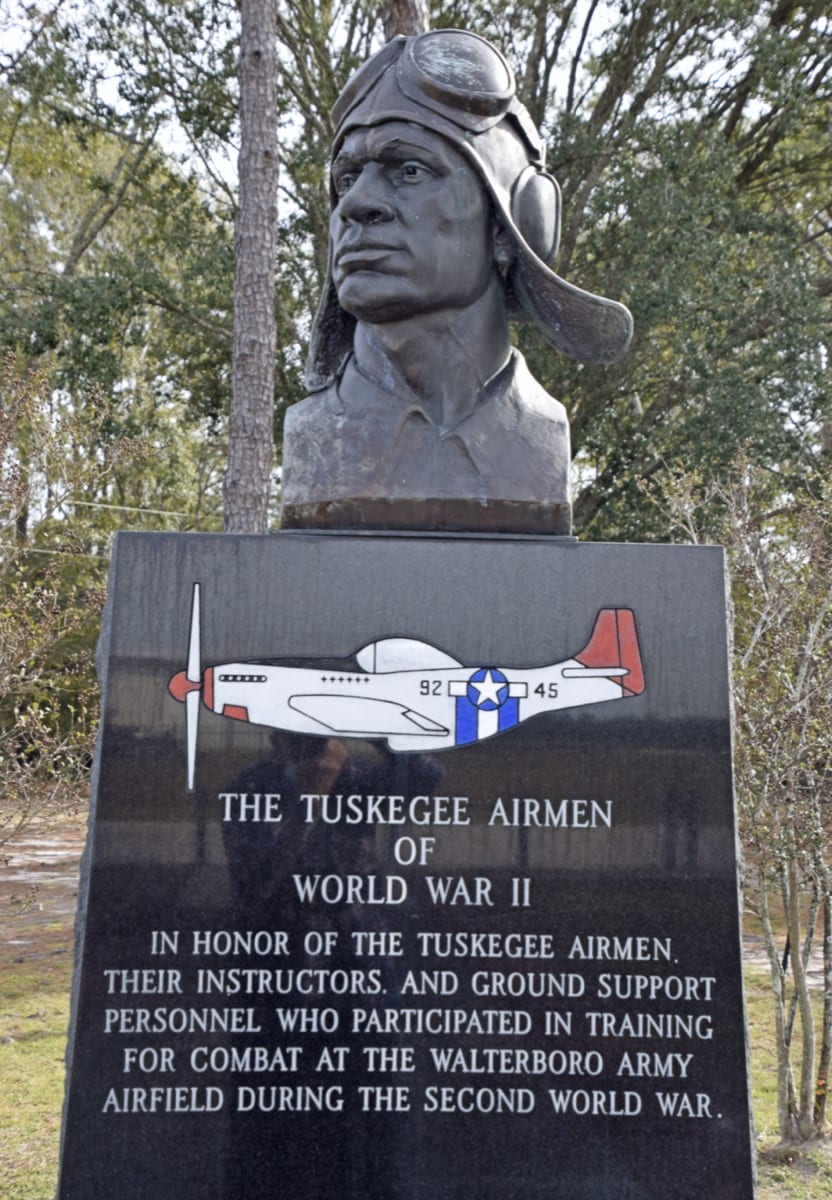
Centerpiece of the memorial is a bust of a Tuskegee Airman atop a pedestal with the inscription “In honor of the Tuskegee Airmen, their instructors, and ground support personnel who participated in training for combat at the Walterboro Army Airfield during the Second World War. Because of their heroic action in combat they were called Schwartze Vogelmenchen, ‘Black Bird Men’ by the Germans who both feared and respected them. White American Bomber Crews in reverence referred to them as the Red Tail Angels. Because of the identifying Red Paint on their tail assemblies and because of their reputation for not losing aircraft to enemy fighters as they provided fighter coverage for missions over strategic targets in Europe.”

In March 2007, President George W. Bush awarded the Congressional Gold Medal to the Tuskegee Airmen as a group.
Read Bill Walker’s story about the airport’s recovery from the tornado here.
A special thanks to writer William Walker for his article on the Memorial Park, SC where theTuskegee Airmen were stationed and trained. I live in Germany and I wanted to learn more about the missions the Tuskegee Airmen flew. I learned the bombing the Mercedes Benz factory making tanks in Berlin was a successful one. I found what I was looking for and more.