

At 950 feet on climb out the engine in my Cessna 180 Skywagon sputtered momentarily and went silent.
Runway 22 at Marion County Airport (KMAO) in South Carolina was a little over a mile behind me. Below, several hundred acres of mature pines stretched from one corner of the windscreen to the other. A turn to the right meant crossing over a 500-foot-high radio tower. Banking left was the least-threatening option, despite a flight path that would cross dangerously low over a residential area thick with house trailers.
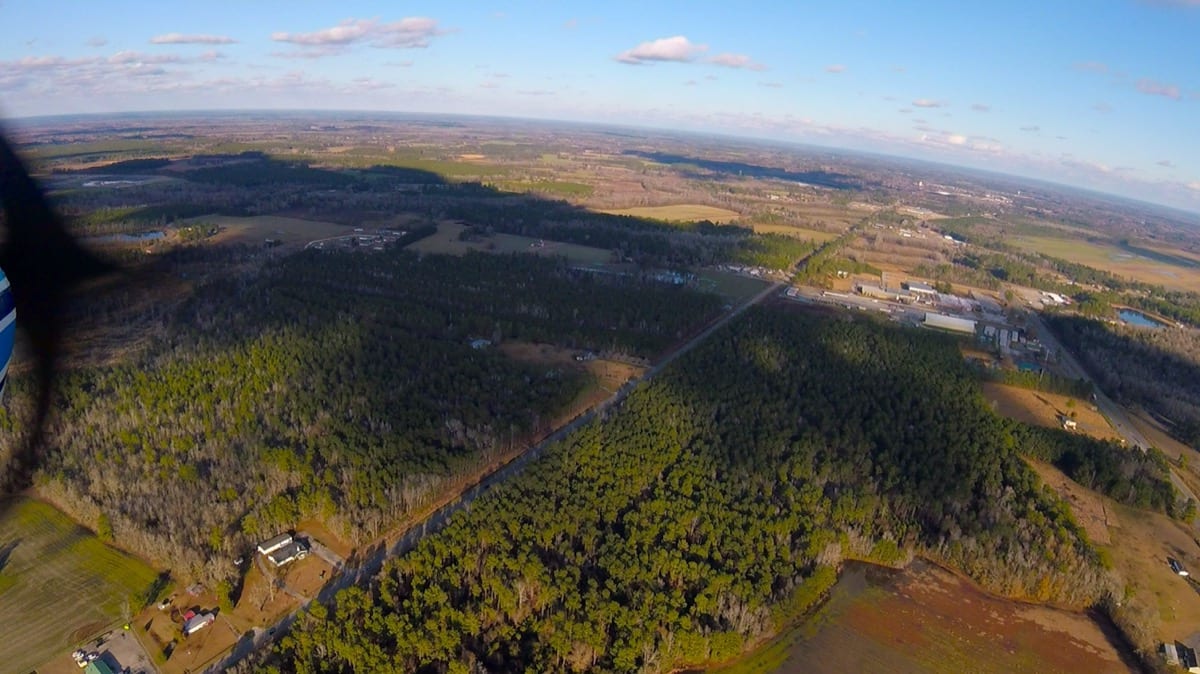
I should have acted immediately, but I didn’t. I wasted at least five seconds questioning how my engine could fail me. I found no answer while scanning the JPI 830 engine monitor screen. The runup had been perfect as usual. Then full power on takeoff and climb out at 1,100 feet per minute on a cold January morning. I expected nothing less from the highly dependable — until that moment — 225 horsepower O-470A Continental engine.
After the momentary delay I pushed forward on the yoke to hold 80 miles per hour and began a gentle left turn, searching beyond the houses and trailer homes now in front of me for the space to make my first forced landing in more than two decades of flying.
I can be quite precise about the timing throughout the emergency because two GoPro cameras and ForeFlight precisely recorded my track, speed, banking and altitude, providing a full record of the aborted flight.
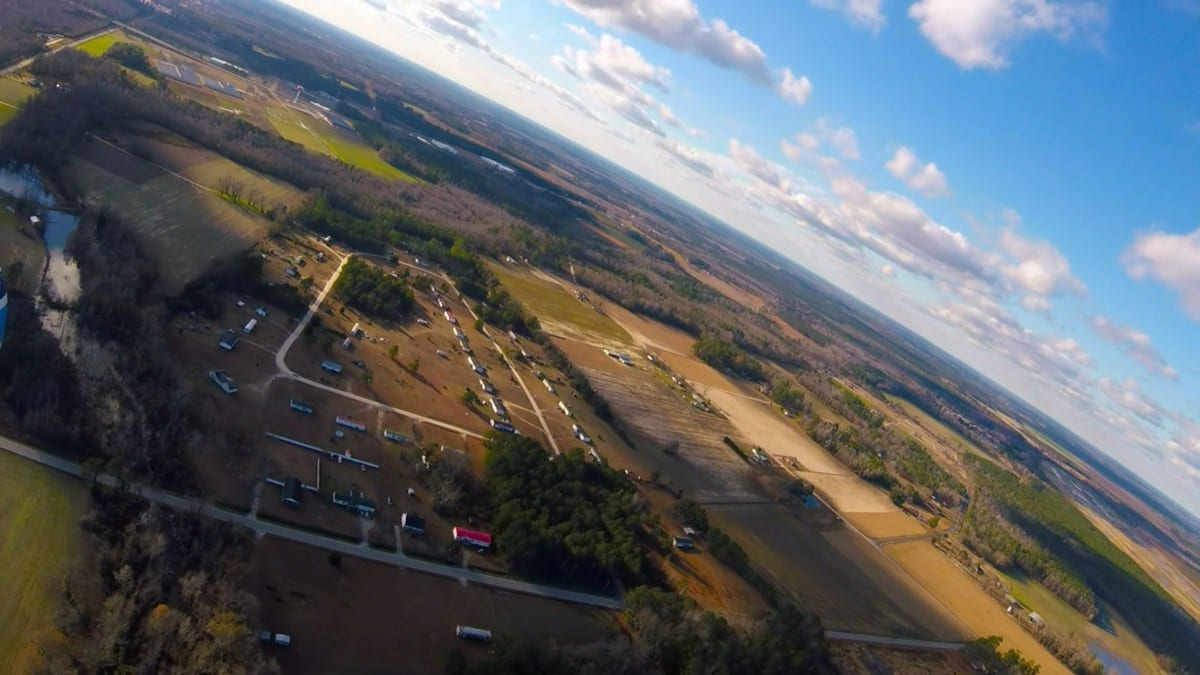
From almost the moment my engine failed my mind raced along dual tracks.
One I’ll call the survival track. I was consumed with the thought of getting down without hurting myself, going through a checklist to determine why the engine would not develop power beyond idle, trying to logically think myself out of the situation and back onto the runway.
On the non-analytical side I worried about the perceived embarrassment of an accident and about that account appearing in General Aviation News, the publication I have written for the past two decades. This stream of thought I call the big picture track. Almost immediately I could hear the advice from an old mentor who said he came through a forced landing unscathed by remaining calm and avoiding the woods directly ahead of him.
My thoughts switched seamlessly between the survival track and the big picture track. I pulled the throttle slightly and then advanced it again. This produced more sputtering, a continuous shuddering of the airframe, plus mini backfires and no real power. I pushed the mixture knob, but it was still full in and the full-in prop continued to spin at about 600 rpm.
At the 25-second mark and now into my left turn I could see under the wing a flight path back toward the airport. Years before I had picked out potential forced landing spots beyond the end of each runway at KMAO and I lined up for my chosen place, a pasture off the end of 22. Now, 35 seconds into the emergency, I was at 800 feet and banking to set up for a landing off the airport.
My thoughts raced again, this time about articles I had read, particularly by Barry and Brian Schiff about the impossible turn, and about my Alaska friend Will Johnson’s account of a far-more threatening forced landing in the bush.
Ironically, despite doting on my Skywagon, never did I worry about hurting the plane. That’s why you have insurance another mentor reminded me in that rush of thoughts.
Almost simultaneously I repeated my effort to restore full power. Rightly or wrongly, I decided not to switch between magnetos. Once, two decades before, I had experienced a rough engine event over a populated area along the Rhine River in Germany and when I switched mags the Cessna 172 shook violently. So I stayed with the ignition on both this time. I tried the throttle again and there was another splutter, a two-second surge of power, a larger backfire and then nothing but windmilling. Again, I pushed against an already full rich mixture knob. Inexplicably, I forgot to pull the carburetor heat.
I lost another 150 feet as I finished my gentle bank back toward the 4,500-foot runway at KMAO, now three quarters of a mile distant. The emergency landing spot I had picked out a half mile from the airport was there, directly in front of me.
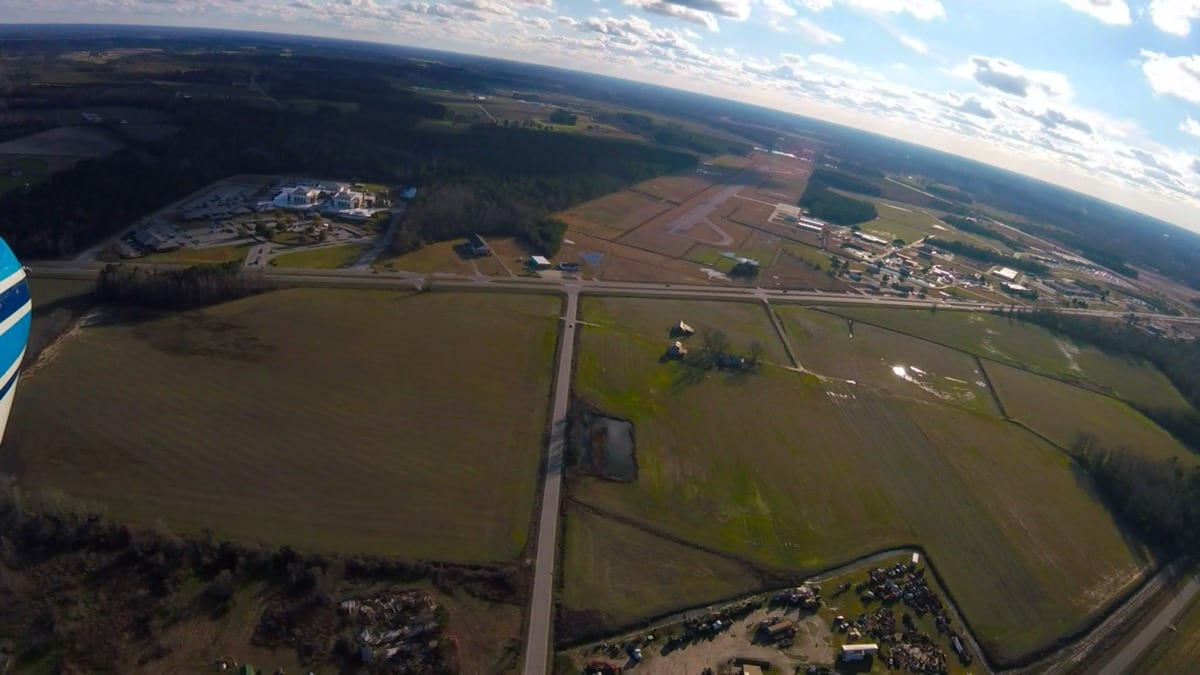
But recent rains had turned my ideal spot into a mud flat. Why had I not considered that possibility in emergency planning? I had more than 50 gallons of fuel on board and desperately wanted to stay upright. Now my best option seemed the high and somewhat dry side of an adjacent field where the 6.50 main tires might not sink in at first. Why had I not put bigger tires on the plane to prepare for such an off-field landing?
I set up for a downwind landing onto the muddy left edge of the farm field. It had not been planted the previous year and at first glance appeared to have no ploughed rows. However, as I got closer I could see that only the first thousand feet was a pasture. The second thousand feet had been cultivated and the rows, once parallel, were directly across my landing path. I would have to make a perfect approach only a few feet above power wires, then descend rapidly to successfully get into the first 1,000 feet.
Landing long almost certainly meant tearing up my gear legs and probably flipping upside down with all that fuel. And a fast descent without the ability to put in a last second burst of power to cushion the landing would certainly lead to a typical Skywagon bounce thanks to the springy steel gear legs. That I had learned from tailwheel guru Damian DelGaizo and his instructional video after training at 12N in Andover, N.J. Yes, I even had time to think of the lessons learned during two cold days in Andover.
At that moment my two tracks of thought seem to join. “Bad option,” I shouted out loud looking down at my intended landing spot.
There, 2,000 feet from the airport and 500 feet above ground I decided despite all the advice against trying to stretch a glide that my best choice was to cross over the four-lane highway ahead and go for the 400 feet of grass preceding the runway inside the airport fence. I had practiced power off 180s at this runway at least 50 times before taking my commercial check ride two years before and had an excellent feel for what it would take to make the airport boundary.
At 400 feet, with the nagging feeling I might have to slice through the chain link boundary fence, I recalled a safety article I had read about using the constant speed prop as a gliding aid. Just as I had done before in power off 180 practice to avoid landing short of the 1,000-foot stripes, I pulled the prop and the aircraft actually surged ahead momentarily. I cleared the fence with 100 feet to spare, made the runway and finally bounced down in a poor landing.
With only minimum power I turned and taxied slowly back to the hangar. Any additional throttle resulted in the same stutter and power loss.

Once stationary at the hangar, I tried the things I had not in the air. I switched to left and right tanks from both. The engine ran the same in all three positions. I tried both magnetos without any change in the sputtering. I applied carburetor heat, as I should have done immediately in the air, and was able to get about 750 rpm, or about 150 more than full idle. But the power increase lasted only momentarily, then back to idle. All exhaust gas temps and cylinder head temps on the engine analyzer looked fine.
The following day I reviewed the Go Pro video and ForeFlight track log of the two minute 35 second flight and wrote down my numerous failures. For starters, I did not immediately try carburetor heat or switch tanks or do a magneto check. I did not communicate at my non-towered airport to announce engine failure and my intended emergency landing. Perhaps worst of all, I did not pull my prop to extend my glide once I gave up on the engine. I’m not sure on that one because the engine was producing idle power.
I did some things right, however. Thanks to all the good instructors I’ve had and all the safety articles read I remained relatively calm. All the thoughts racing through my head after the initial negative one about my aircraft betraying me were positive ones on how to carry out a forced landing. That was training kicking in in the best way.
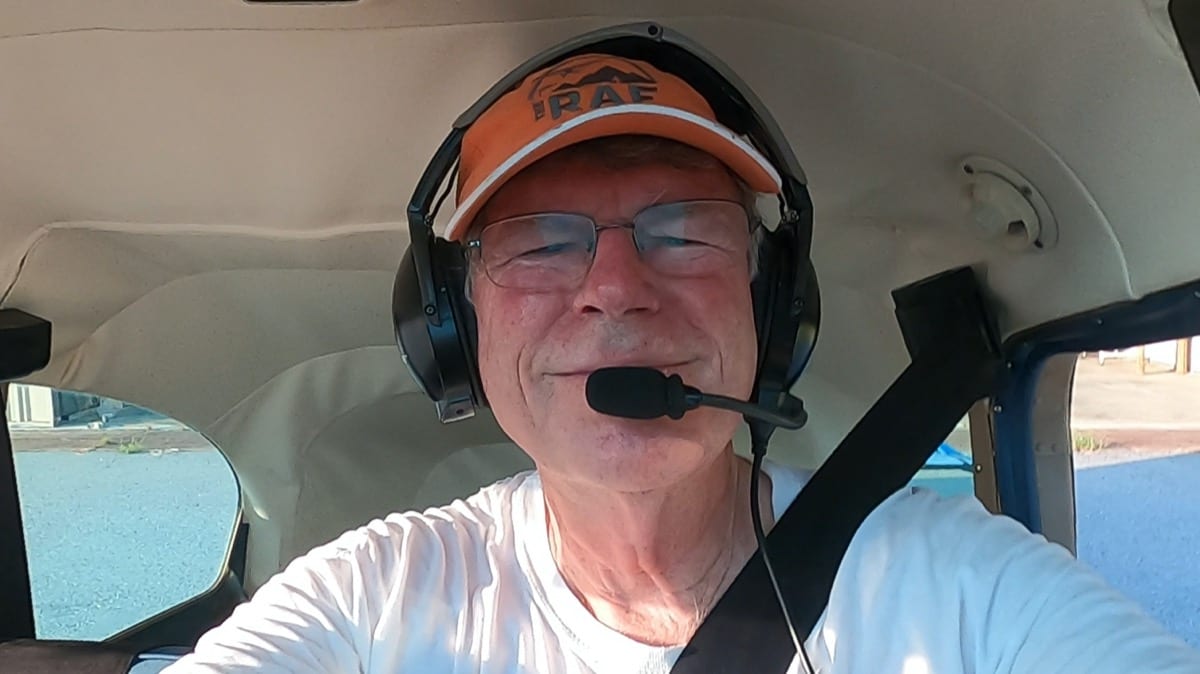
Since nothing bad happened to the plane or the pilot, you could say this account is much ado about nothing. No smoke in the cockpit, no oil-smeared windscreen, no dramatic cornfield landing flip or worse.
It is worth noting, however, that I gained much from the emergency. I am certain that heeding the advice of mentors and keeping a cool head proved to be the difference between something serious and a non-event.
One postscript. After a check of the electrical and fuel systems my A&P found no trash in the fuel lines and gascolator. The fuel was fresh and clean. No trace of water. He removed the 67-year-old Marvel-Schebler carburetor and said it appeared to be supplying fuel only intermittently. I ordered an overhauled carburetor from the Marvel factory via Aircraft Spruce and the engine now runs to full power and maintains it.
One final observation. I am humbled by my failures during this forced landing but hopeful I will do better if I face a similar situation. And I am flying — and learning — once again.
Nice job, Bill. I’ve been at this flying thing for 52 years and one thing I know is if you have another incident with an engine it won’t be anything like this one. They are all different.
Success or failure depends on the altitude (AGL), the position relative to any runway, lots of specific aircraft factors, lots of environmental factors, and of most importance the individual’s learned response. Just as there is a minimum recommended altitude for departing from runway heading, each individual should develop a minimum altitude at which they will ignore troubleshooting and simply land the aircraft somewhere.
As an example, below 500′ in a lot of aircraft is too low for a lot of pilots to spend time troubleshooting the engine problem (5 seconds?) before committing to a landing. Below this altitude rote response has to occur to hope for any kind of success. If that means an off airport landing, that’s okay – it’s still success. If that means a turnback and landing, that’s okay too – that’s still success. The important thing is to rely on rote reactions triggered by a predetermined decision point.
15 seconds may be all the time available from engine failure to impact, so to allow 1/3 of that time to go by deciding you need to land can’t be a good thing. In this case, reaction must be learned and become a rote response.
Glad that you made it safely back Bill. Just what mechanically failed in your carburetor, was it a throttle linkage, stuck butterfly valve or what? After a successful run up, it doesn’t seem plausible for such a failure.
Tom,
Thanks for the question. You’ve hit on the area that we never cleared up. After the carburetor was taken off the aircraft and my A&P said it was delivering fuel intermittently I just decided on the spot not to pursue the suspected carburetor problem further for a possible repair but to replace the carburetor. Thus the order for an off-the-shelf overhauled carburetor. I did not get an answer from Marvel-Schebler on what was wrong but I only received partial credit for the carburetor so I suspect found a problem. Your question reminds me I should have had a closer examination done of the carburetor before shipping it off to Marvel Schebler. We also emptied both tanks and used a borescope-like camera to look inside and determine that both bladders were in order and there was no apparent contamination. We added new fuel and checked the drain flow. It was normal. The gascolator was clean, but it still feels like it was contamination of some kind. The almost new plugs were not fouled. I don’t think it was throttle control linkage but I now have a new vernier throttle which I am more accustomed to after using one for almost 20 years with my old 172. I flew the 180 for a little over a year with the standard throttle but did not like it for precise adjustments. Also, during the tests we diagnosed a failing starter and I ordered and installed an overhauled starter although it had no bearing on this problem. You know those times when your engine hiccups in flight and runs rough, then everything goes back to normal and there is no explanation? Well, this has been like a long version of that but with far more threatening possibilities. In the end I have to admit it bothers me that we didn’t precisely pin down the reason why this occurred but I know we have systematically tried to eliminate every potential source of trouble. You are right to ask why this would occur after a successful runup, but I don’t have an answer. I don’t think it was carburetor ice after rechecking the weather history on that day. Answering your comment gives me a chance to add that it has been encouraging to read the thoughtful responses to the story and to everyone’s contributions on what might have gone wrong. It confirms for me yet again what a great pilot community we have reading General Aviation News.
Great article, AND flying!
Panic is a pilot’s worst enemy.
Air speed, air speed, air speed, is your best ally. Without it, you’re not flying, you’re falling.
Great lessons. Confirms that it takes about 5 seconds to realize what just happened. As a side note, for us fixed pitch prop guys, going full throttle minimizes the drag of the engine and can extend the glide.
Uh? If the engine is already windmilling because of engine failure, I don’t see how pushing in the throttle will make it turn any faster to reduce drag. Sure, if it’s still producing some power, that’ll work, but if it’s producing none, pushing in the throttle won’t magically create any.
Pulling the prop control on a CS prop definitely works to reduce drag, as long as there’s still oil pressure. I was taught that trick by an FAA Inspector during my first ATCO (Part 135) check ride, way back in the mid-70s.
Heavy dose of carb ice?
Wish we could see the videos of the event. Would be a good teacher.
Bill did a great job getting this plane down. I enjoyed reading his experience. As I’m reading, it feels like I was in the plane with him as he discussed the chronological sequence in safely getting this plane down. We will all have some form of emergency if you fly long enough. Like Bill, I’ve been humbled a few times the past 30+ years of flying. Thank God our training kicks in and our muscle memory takes over (in most cases).
The last time I lost an engine was on take off in a Baron many years ago. Luckily, Fresno has a great ATC and two long runways. As mentioned, we can continue to fly and learn. Thx for sharing Bill.
After climbing upwind at 1000 fpm, doing a 180 and returning to the airport should have been a snap.
At what point was the picture taken from your wingtip showing flaps extended?
Alex,
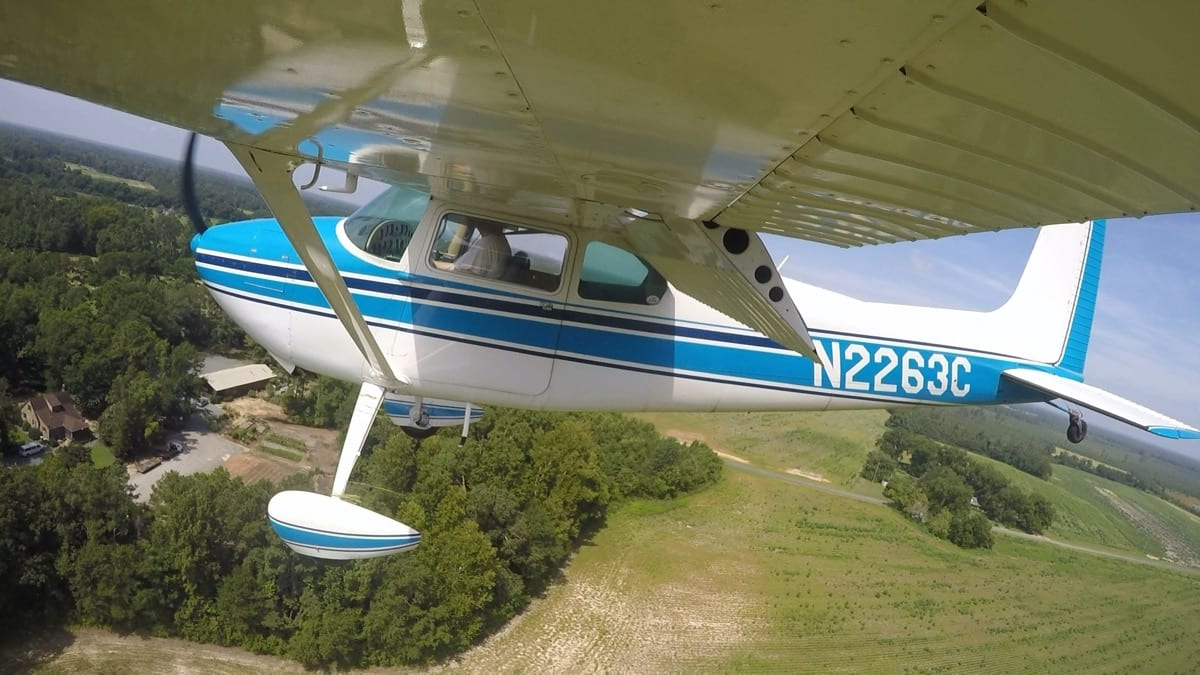
Thanks for the question and for reading the article. I should have written a longer caption on this photo to explain it was a sideview of the aircraft pictured on a regular approach to landing a few days earlier. On the day of the engine out I did not apply flaps until passing over the airport fence. I only used two notches instead of four (40 degrees) and kept my speed up. I touched down at 70 mph instead of the usual 60.
Who ever heard of Andover, N.J.?!?!
I DID.
In the middle 70s I had a farm in Tranquility, N.J. and an Andover R.F.D. address!
I flew out of 12N on July 4, 1976 to fly the Hudson River to see the Tall Ships docked in N.Y.C.
Great step by step scenario. It will make me more attentive when I go up in our C-182P.
Don’t criticize yourself for all of the things you “should” have tried to restore power. Even though we practice engine failure scenarios in training, when it happens in the real world, it never goes as scripted, And you now know that none of that would have helped. You did the most important thing correctly- you flew the airplane. I can’t emphasize that enough- in an emergency, the most important thing is to FLY THE AIRPLANE. I recently walked away from an emergency landing with limited controllability, and there was nothing in any checklist that would have helped me. I went through some of the same thoughts as you- “Why won’t this airplane fly like it should? What can I do to get control back? Since I can’t make it back to a runway, where can I put the plane down and survive?” But I walked away because, like you, I flew the airplane. Good Job!
I fly a 60 year old Cessna, and during the annual, I remove the carb bowl drain plug and flush the bowl into a cup. I sometimes get nothing and other times I get a number of grit particles that look to be big enough to block the main jet, which happens to draw fuel from near the bottom of the bowl.
If I see any grit, i’ll remove the bowl from the gascolator and clean it and the screen.
I also remove the fuel line from the carb and check the fuel flow, [ gravity feed] to be sure it flows 20 gph from each tank.