

Warbird Roundup in Nampa, Idaho, has a reputation for bringing World War II warbirds to town for a commemoration of 20th Century warriors and their classic aircraft.
This year, a 21st Century F-35 Lightning II jet fighter flown by Air Force Maj. Kristin “Beo” Wolfe came up from Hill Air Force Base, Utah, each day to fly as a modern counterpoint to the classics.
The message remained the same: Pride and respect for the people and planes who have done so much to protect the United States in two centuries.
Major Wolfe and her F-35 were joined overhead by World War II P-40 Warhawk fighters belonging to the Warhawk Air Museum, host of the 19th iteration of Warbird Roundup, on Aug. 28-29.

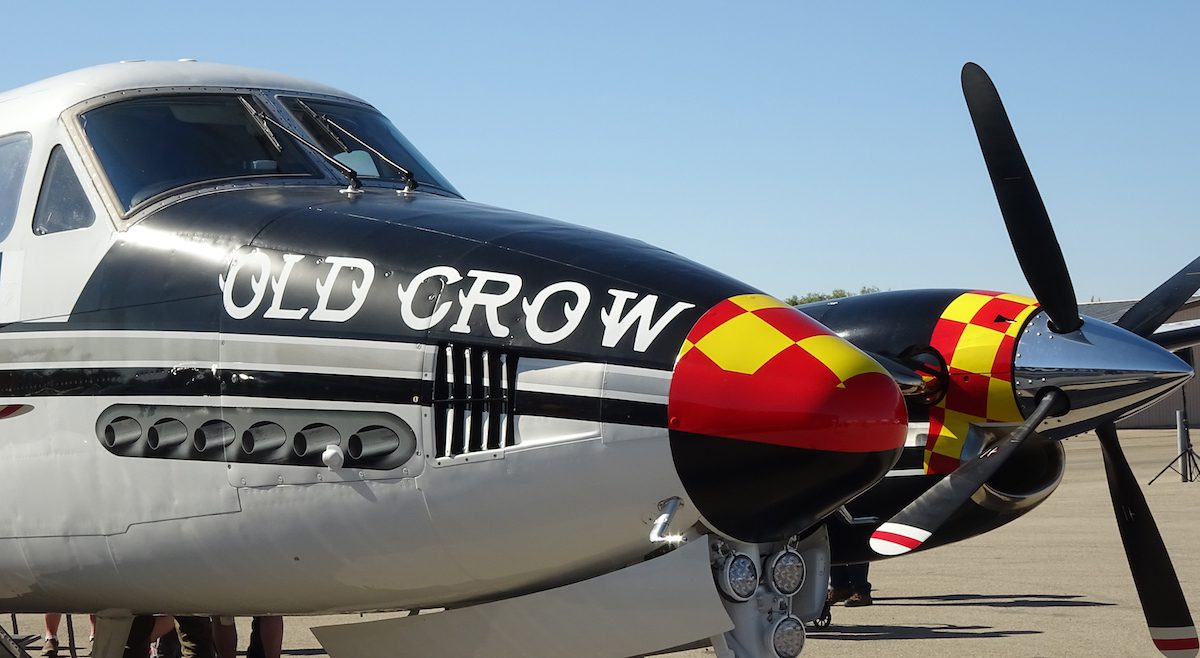
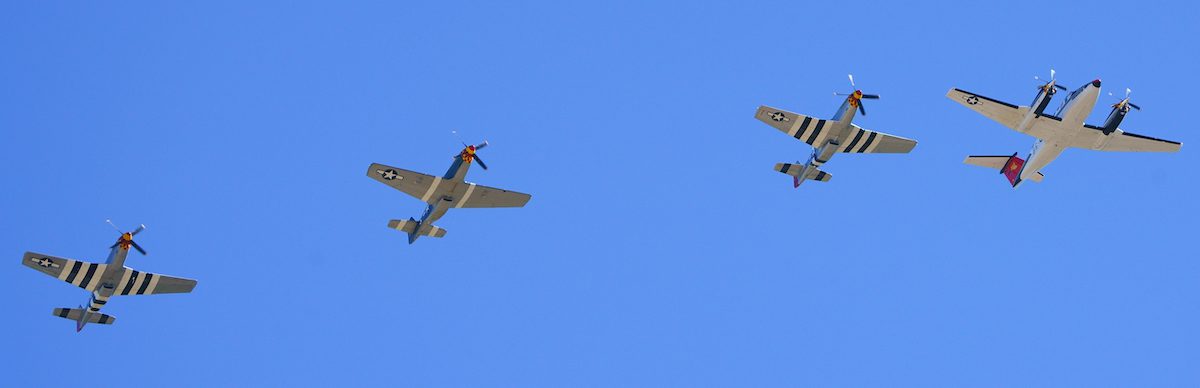
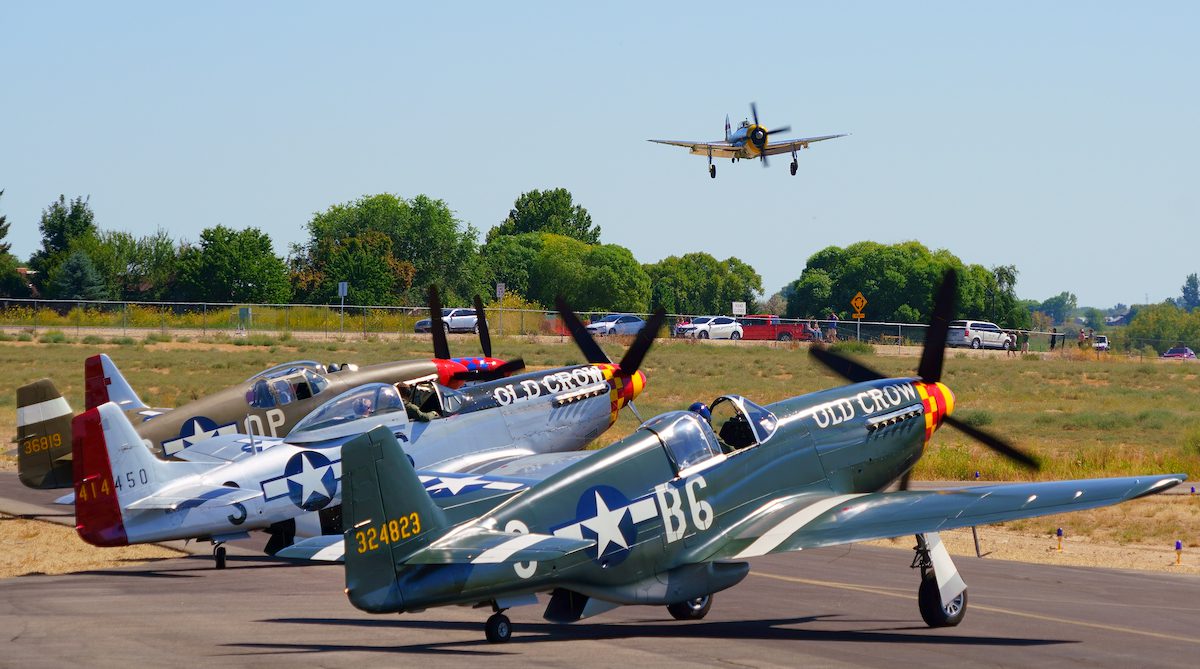
The crowd at Warbird Roundup was also treated to a special presentation by beloved World War II fighter ace and postwar test pilot Col. Bud Anderson. Anderson arrived aboard a Beech Super King Air marked with the artwork and colors of his World War II P-51 known as Old Crow. Two of the P-51s in attendance were restored to represent Mustangs Anderson flew during his tenure over Europe.
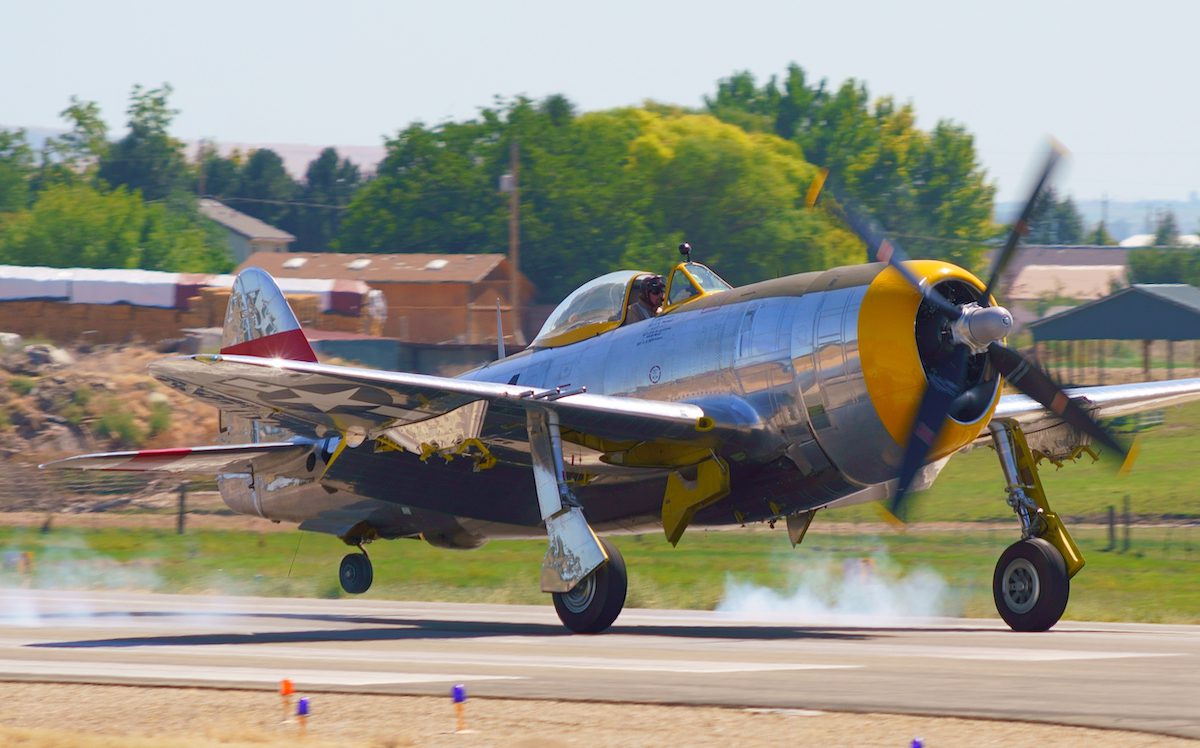
In addition to Warhawk Air Museum’s perennial favorites — two P-40 Warhawks and a P-51C Mustang — warbirds flying repeatedly in the show included at least five other Mustangs, the combat veteran P-47D Thunderbolt nicknamed Dottie Mae, a scarce F4U-1A Corvair up from the Planes of Fame Air Museum of Chino, California, and a sporty F8F Bearcat fighter.
Gary Peters’ very authentic P-40N called Suzy flew from Lewiston, Idaho, for the Roundup and joined the other P-40s in three-ship flights.
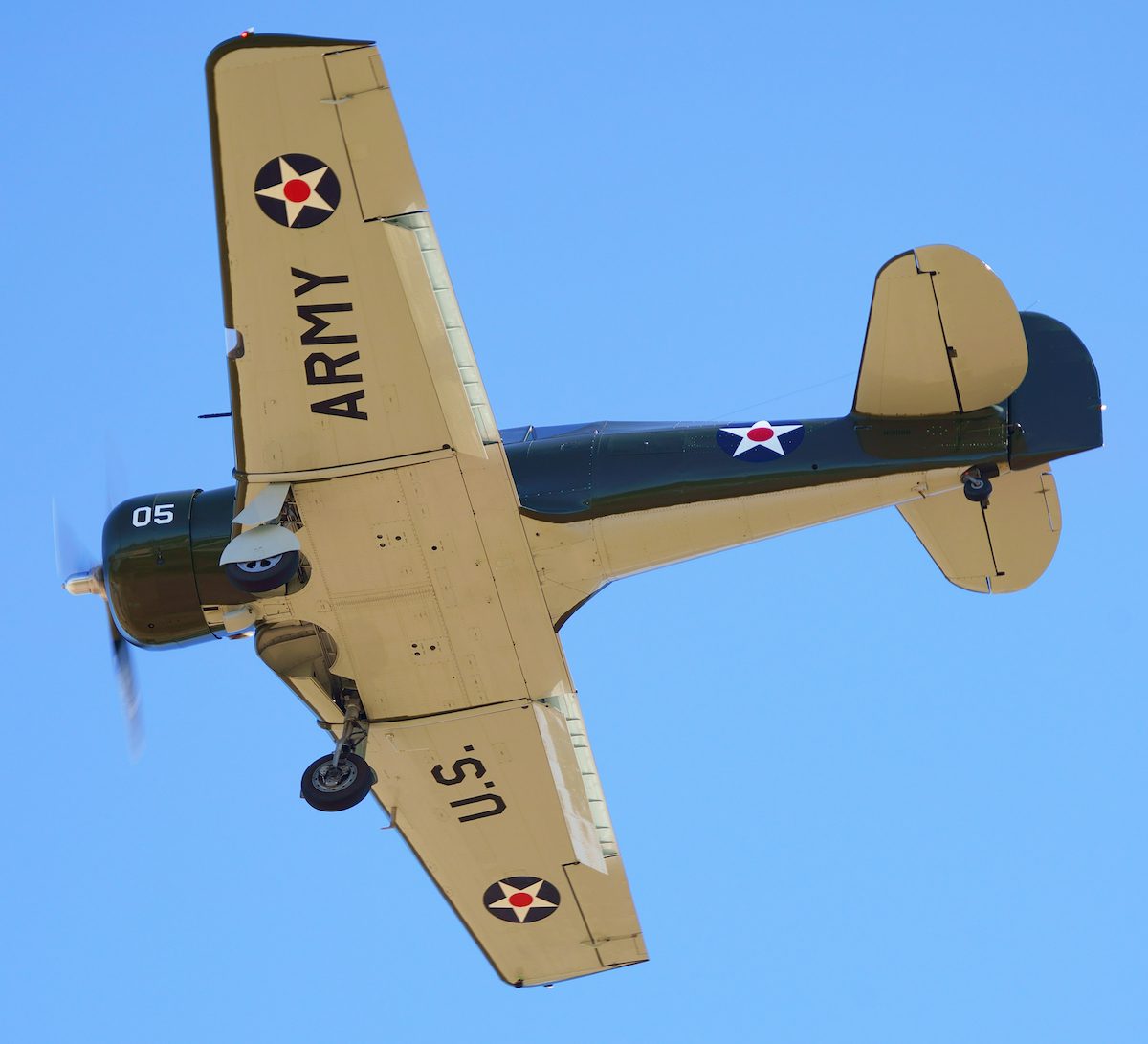
Trainers included a pair of modified SNJ Texans (one representing a North American NA-50 export fighter variant) and a postwar T-28 Trojan. Liaison aircraft were two scarce Taylorcraft L-2s and a Piper L-4.
The flying, with engine start-ups made where attendees could appreciate the sights and sounds, is part of the successful formula of Warbird Roundup for nearly two decades. There’s also a healthy dose of patriotic appreciation for veterans, a core value of Warhawk Air Museum, and visitors enjoyed the varied exhibits inside the museum’s large building.
For pilots and aircraft owners, there’s a strong sense of camaraderie and collaboration. Founders John and Sue Paul foster that. It’s not unusual to see John moving aircraft or digging into his stash of spare parts if a warbird needs fixing to fly. Sue handles master of ceremonies tasks with a warm sincerity that telegraphs her earnest love of this museum and the veterans it honors.
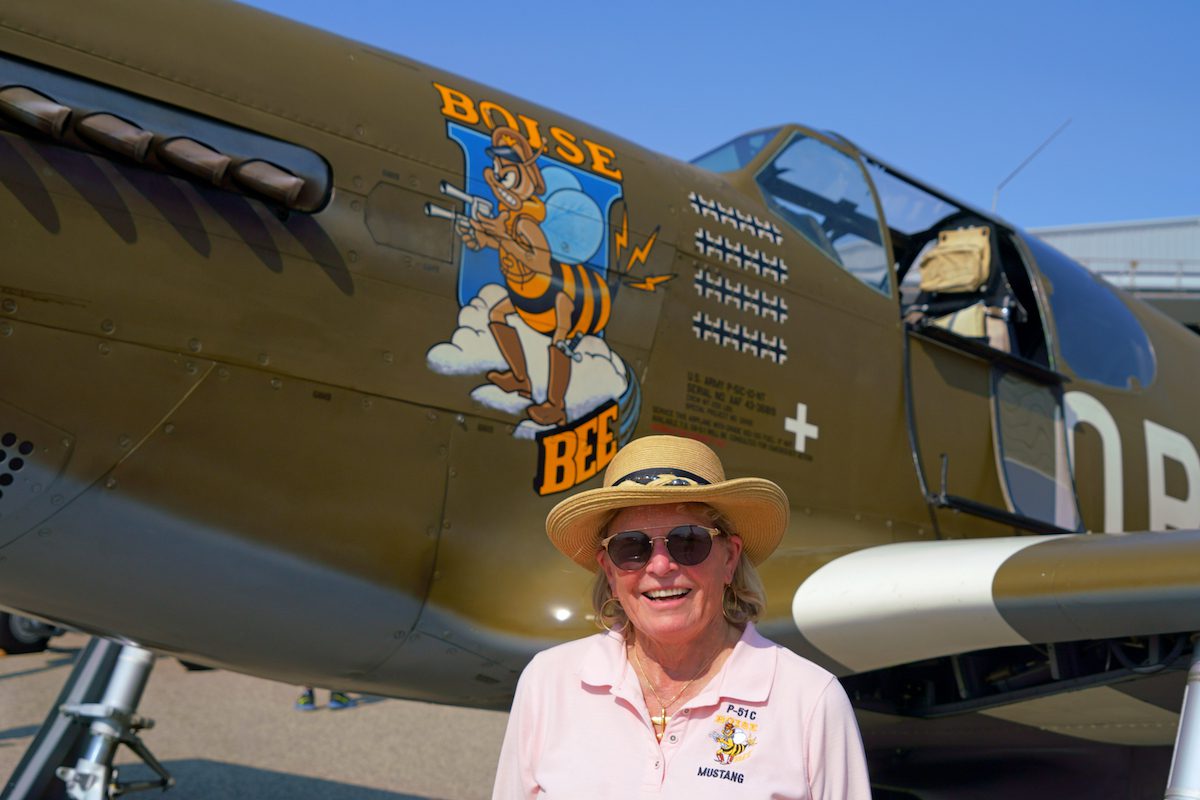
Museum director Pat Kilroy has worked on growing the event, and takes pride in the presence of the F-35 demonstration. Retired from Army aviation, Kilroy moves with the quick assuredness of a colonel on a mission.
And the volunteers in museum shirts answer questions, take tickets, sell memorabilia, work the flightline, and keep things humming in a traditional Idaho-friendly way.

This year for the first time, Warbird Roundup needed the services of a sanctioned air boss for the F-35 flights. That’s because the request for an airspace waiver for the jet demonstration invoked FAA regulations that spelled out the air boss’ role. From western Washington, pilot Jim Gibson answered the call.
Jim says he has long been “an admirer on the other side of the rope” with spectators at air shows. He began helping out at the Olympic Air Show in Tumwater, Washington, in the early 2000s, when the air bosses needed a break to fly in the show.
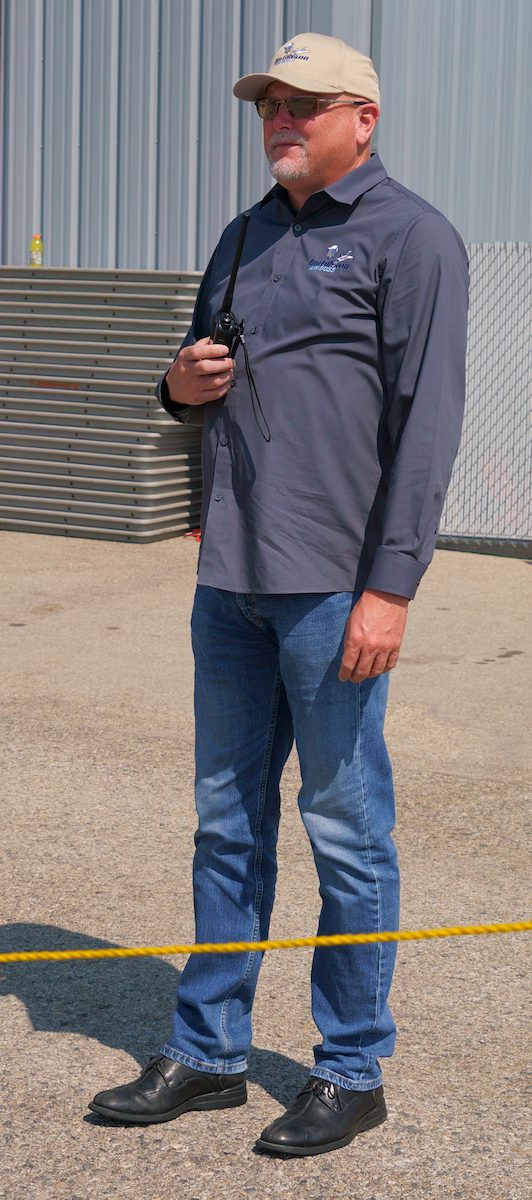
A good air boss needs to have a plan of action for smoothly sequencing flying acts, while staying lightfooted in the event an airplane can’t fly and extemporaneous activities need to fill the gap. In the unlikely event of a mishap, the air boss needs to quickly coordinate with first responders, as well as the air show announcer, to keep things as safe as possible, Jim says.
Jim figures his profession as a civil engineer, plus his knowledge as a GA pilot, have helped with his air boss rationale, giving him the tools for project management, attention to detail, and problem solving. For a weekend air show like Warbird Roundup, Jim typically arrives on the previous Thursday to meet with fire and safety workers. The goal is to have a 60-second response time for emergency vehicles to a mishap scene anywhere on the airport and firefighters test this in advance.
Friday is practice and arrival day, and the weekend is the big show. For Warbird Roundup, the FAA airspace waiver blocked an hour each day, but the actual F-35 demonstration flight started promptly at the beginning of the hour and ended probably 20 minutes later with the departure of the jet. That’s the only time Jim was required to work the event, but his presence was a necessary and mandated component of the show.
Jim has worked with the International Council of Air Shows (ICAS) and the FAA to help create standard expectations for air bosses. He says it is a field in which a number of active air bosses are likely to be retiring over the next few years, and the need for new accredited air bosses could be an incentive for those who think they have the interest and skills for this dynamic air show position.
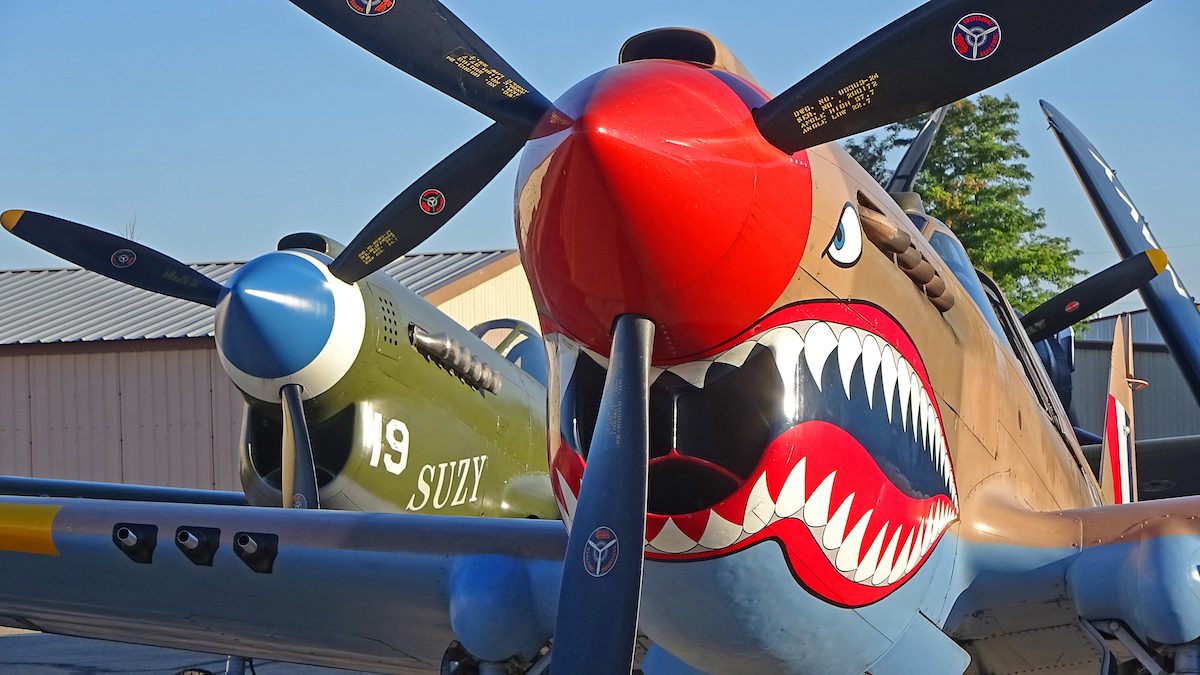
Throughout Saturday and Sunday, flights of warbirds took off to make several formation passes over Nampa Airport, routed in a way that gave museum visitors a chance to see and hear the vintage mechanical marvels in flight. With the addition of the new F-35 jet to the lineup, Warbird Roundup 2021 was a metaphor for the whole Warhawk Air Museum — respectfully honoring the past while looking to the future.
