• Skip to primary navigation
  • Skip to main content
General Aviation News

General Aviation News

Because flying is cool

  • Pictures of the Day
    • Submit Picture of the Day
  • Stories
    • News
    • Features
    • Opinion
    • Products
    • NTSB Accidents
    • ASRS Reports
  • Comments
  • Classifieds
    • Place Classified Ad
  • Events
  • Print Archives
  • Subscribe
  • Show Search
Hide Search

A patriotic start for California airshows

By Hayman Tam · June 8, 2022 ·

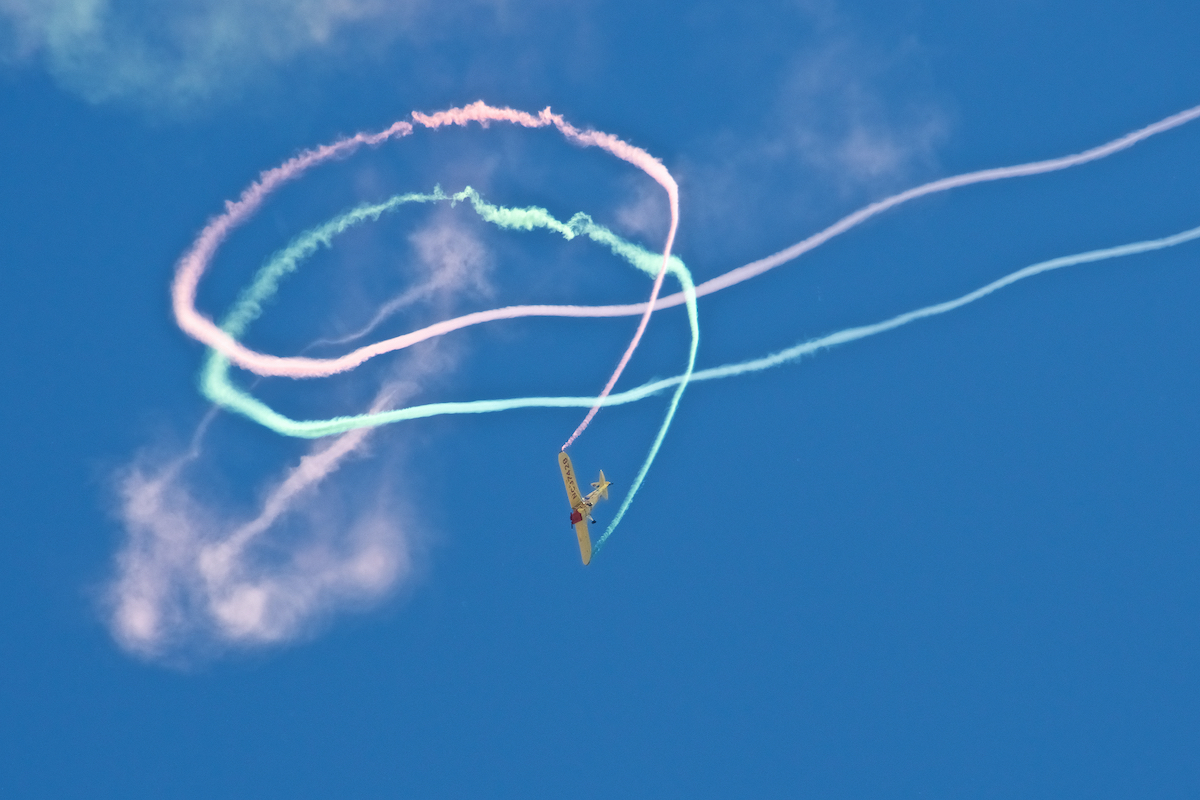
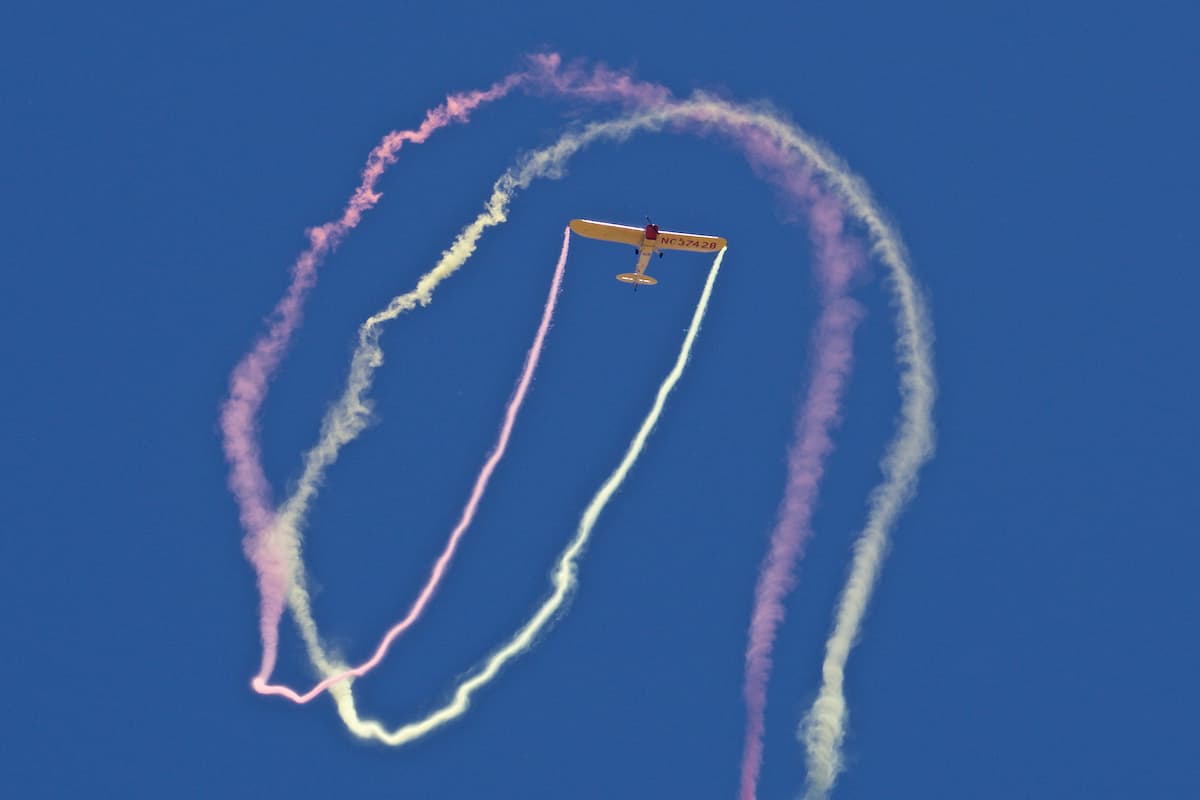
Kent Pietsch paints the sky with his Interstate Cadet at Wings Over Solano.

Travis Air Force Base, located in Northern California, kicked off the 2022 California airshow season with Wings Over Solano. The 90° temperatures did not deter more than 110,000 visitors from roaming the sprawling tarmac and enjoying the sights and sounds of aviation on May 14-15, 2022.

Travis is home to the 60th Air Mobility Wing, the largest wing in the Air Force’s Air Mobility Command, with a fleet of C-5 Super Galaxy, C-17 Globemaster III cargo aircraft, and KC-10 Extender aerial refueling aircraft. The annual open house and airshow is a great way for the local public to learn about the vital missions performed by this base.

The U.S. Air Force Academy Wings of Blue skydiving team opened the show, exiting from a C-17 instead of their usual Twin Otter aircraft. Civilian aerial acts included Kent Pietsch and Vicky Benzing, both performing multiple times.

Kent Pietsch performing in his Jelly Belly Interstate Cadet, minus some parts and streaming FOD.

Kent started out with his comedy routine in the Jelly Belly Interstate Cadet, shedding parts along the way, followed by a landing on top on a moving truck and lastly a power-off demonstration of energy management.
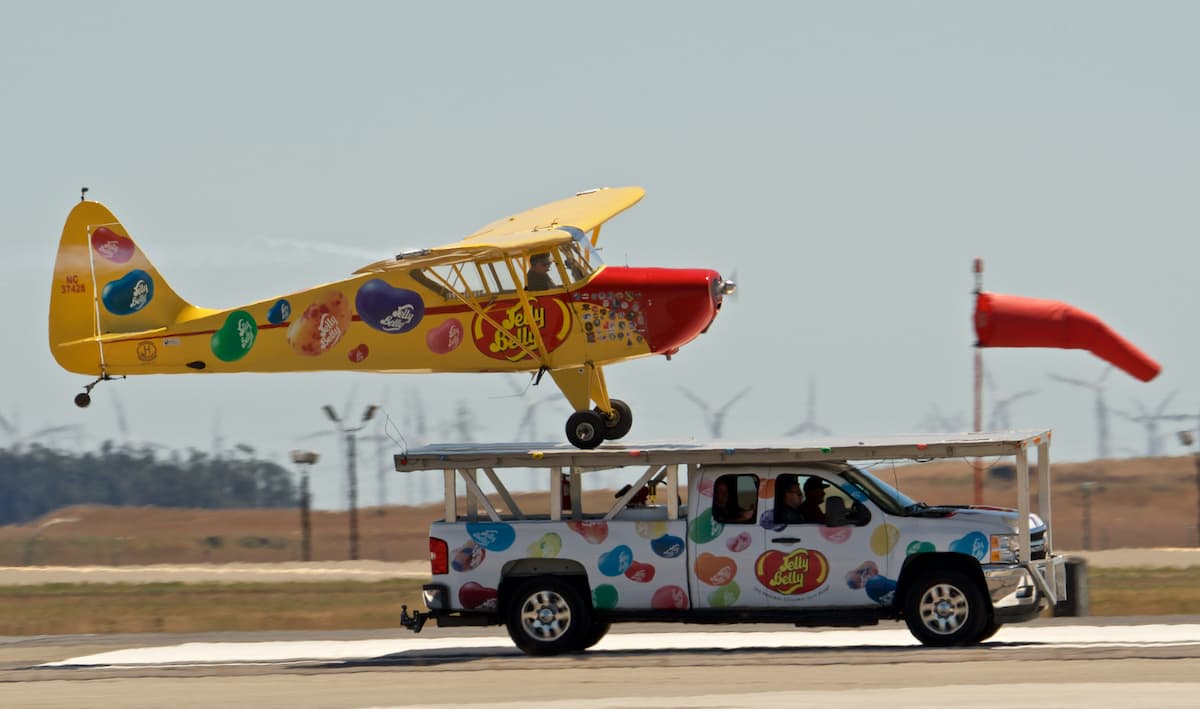
Kent Pietsch gingerly makes contact with the world’s shortest runway in his Interstate Cadet.
Kent Pietsch paints the sky with his Interstate Cadet during his unpowered energy management routine.

Vicky Benzing took to the air in her 1940 Boeing Stearman to escort the skydivers of the opening act, followed by a full aerobatic demonstration later in the show.
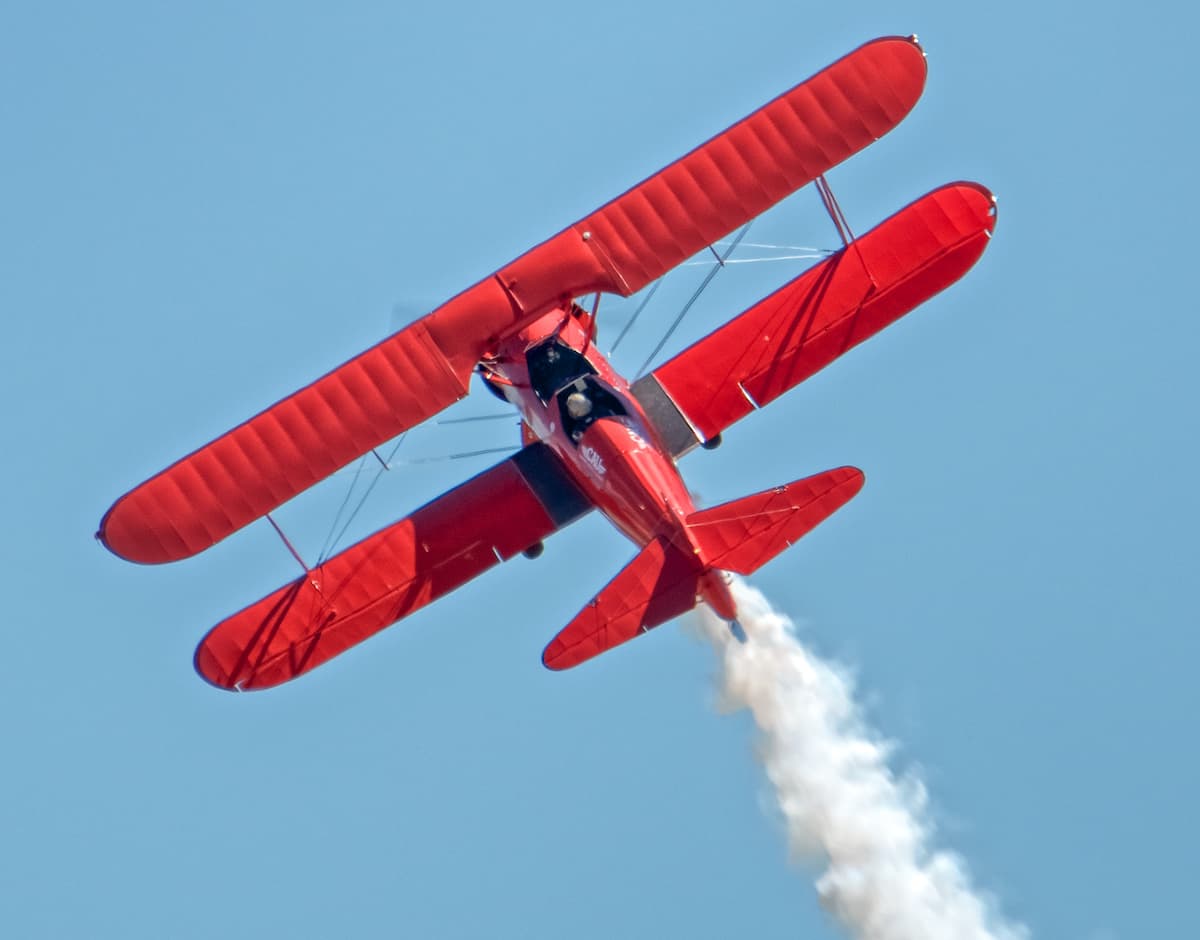
Vicky Benzing zooms upwards in her 1940 Boeing Stearman. Vicky has owned this former crop-duster for 20 years and loves performing with it.

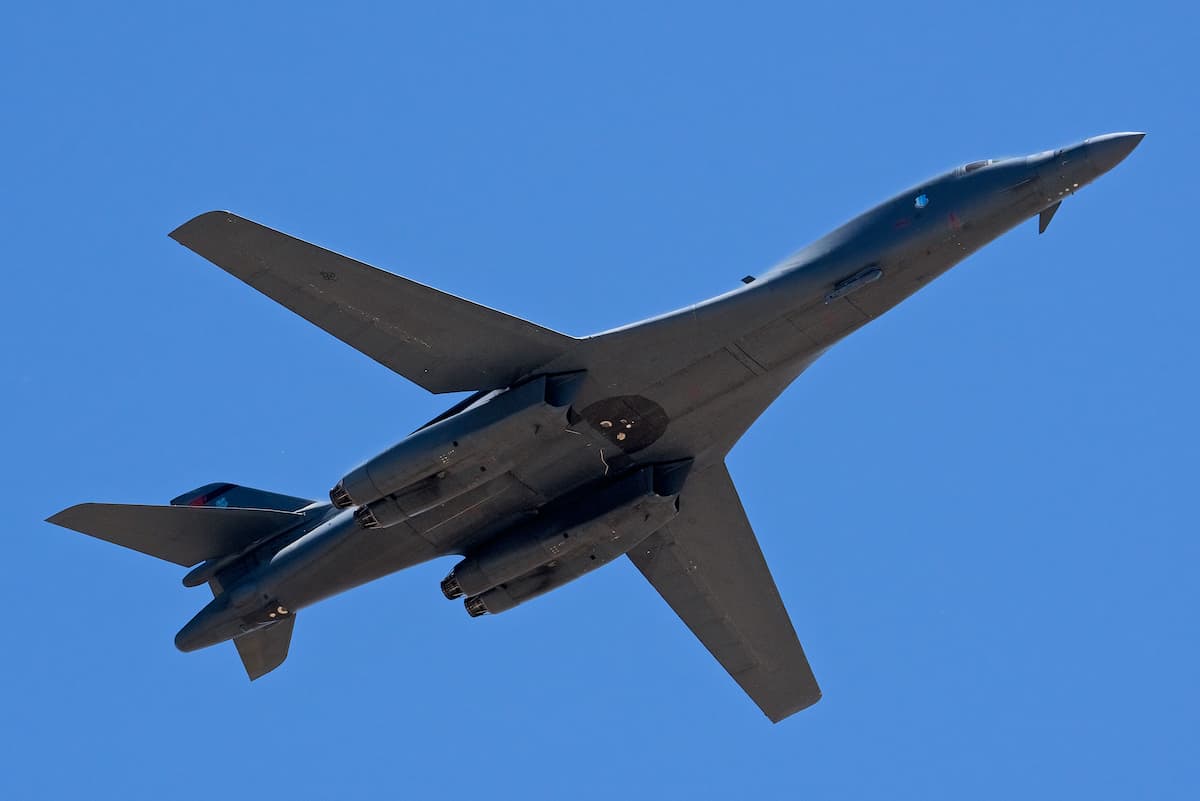
A special highlight for the Saturday show was the “Global Strike Fly-By,” courtesy of a USAF Northrop B-2 Spirit and a Rockwell B-1 Lancer. The Air Force made the best use of these aircraft by having them fly over three different airshows on the same day.
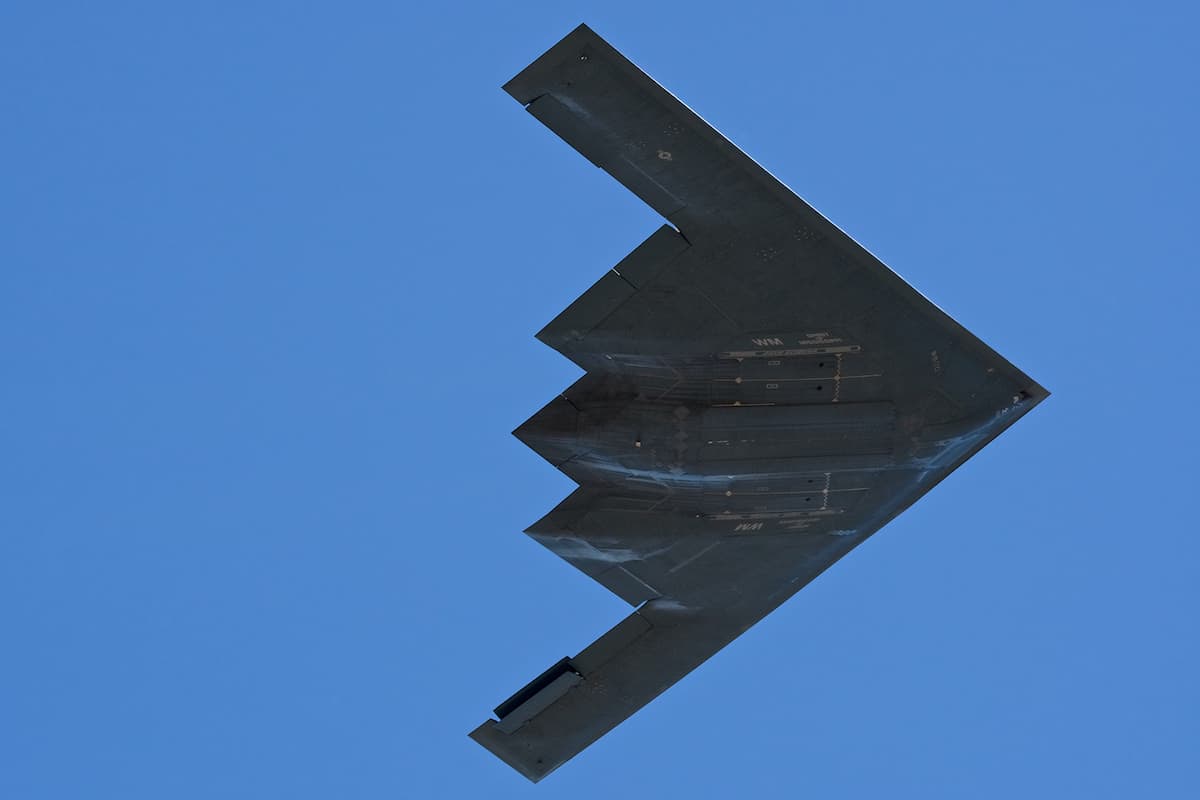
This Northrop B-2A Spirit, the “Spirit of Mississippi,” makes a non-stealthy photo pass.
This Rockwell B-1B Lancer flew all the way from South Dakota to appear over Travis AFB.

High-energy military demonstrations were provided by the F-16 Viper Demo Team, piloted by Capt. Aimee”‘Rebel” Fiedler, and the F-35 Demo Team led by Major Kristin “Beo” Wolfe.
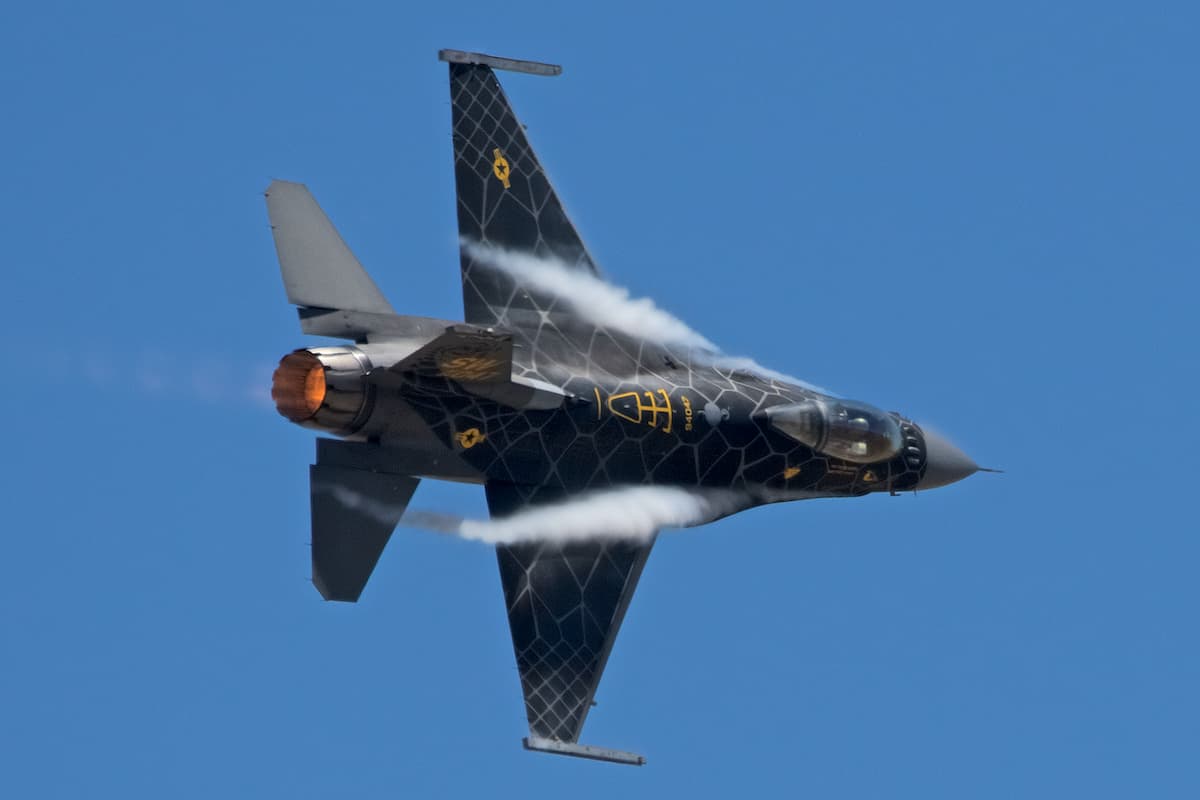
Captain Aimee ‘Rebel’ Fiedler lights the afterburner and pulls some hard Gs in the Viper Demo Team Lockheed Martin F-16. Note the snakeskin inspired livery.

The F-16 sports a dramatic snakeskin livery that fans enjoyed seeing in person.

The fifth-generation F-35 has an uncanny ability to extract moisture from the air and “Beo” had a great time showing what this new jet is capable of.
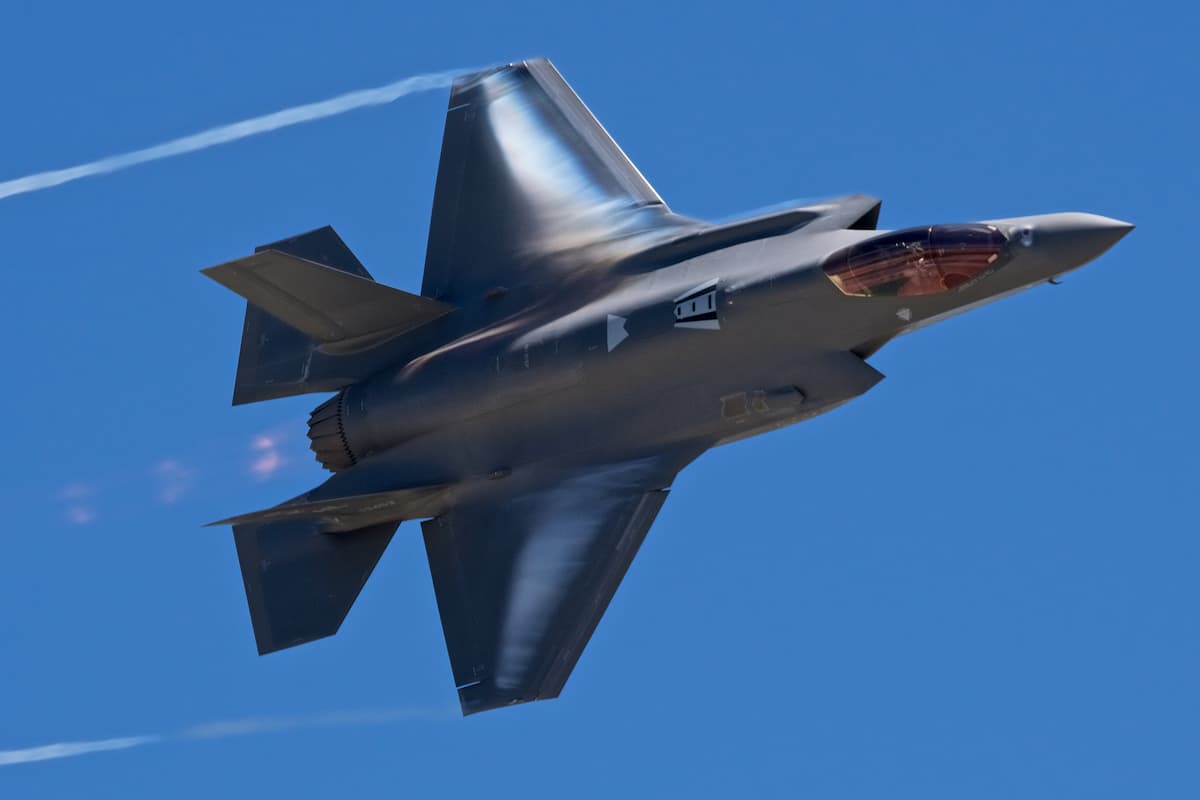
A lot going on here with afterburner shock diamonds, vapor forming on the wings, and wingtip contrails as Major Kristin “Beo” Wolfe hauls her F-35 Lightning II around for another pass at show center.

The Travis airmen got a chance to show off their own aircraft to the home crowd with the Parade of Heavies.

A massive C-5M Super Galaxy took to the sky for one circuit and landed.
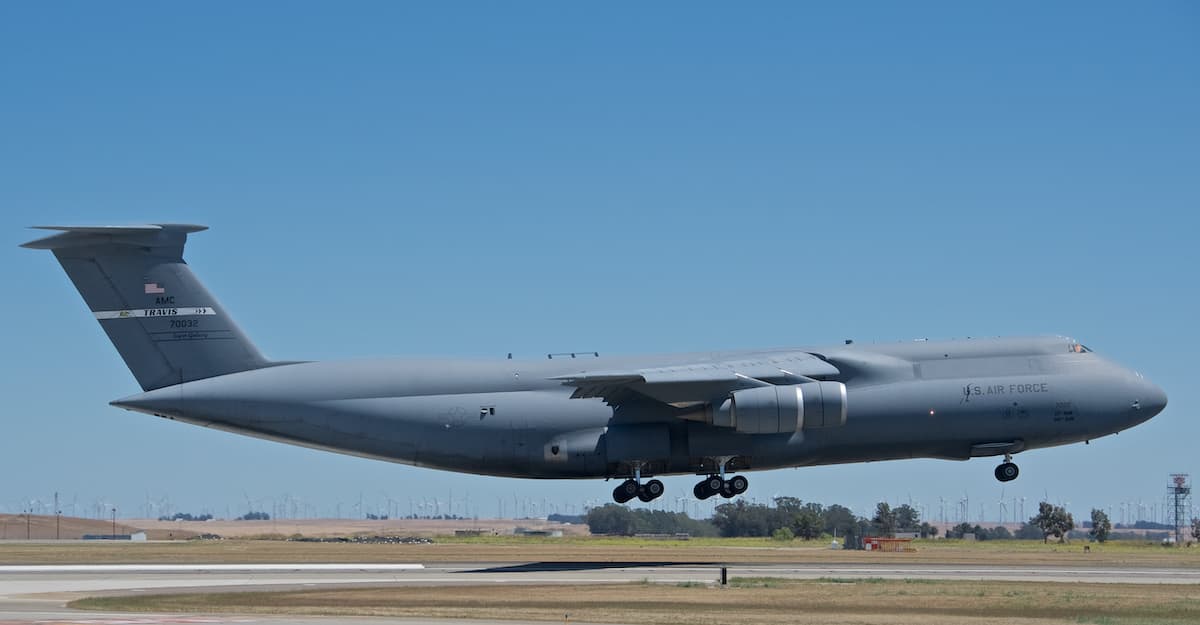
The ginormous Lockheed C-5M Super Galaxy approaches touchdown after the Parade of Heavies flight demo. After serving for 50 years, recent upgrades to the C-5 fleet will keep them around until 2040, if not longer.

The C-17 flight demo included an “assault” landing, bringing the big jet to a stop in 3,000 feet then taxiing in reverse.
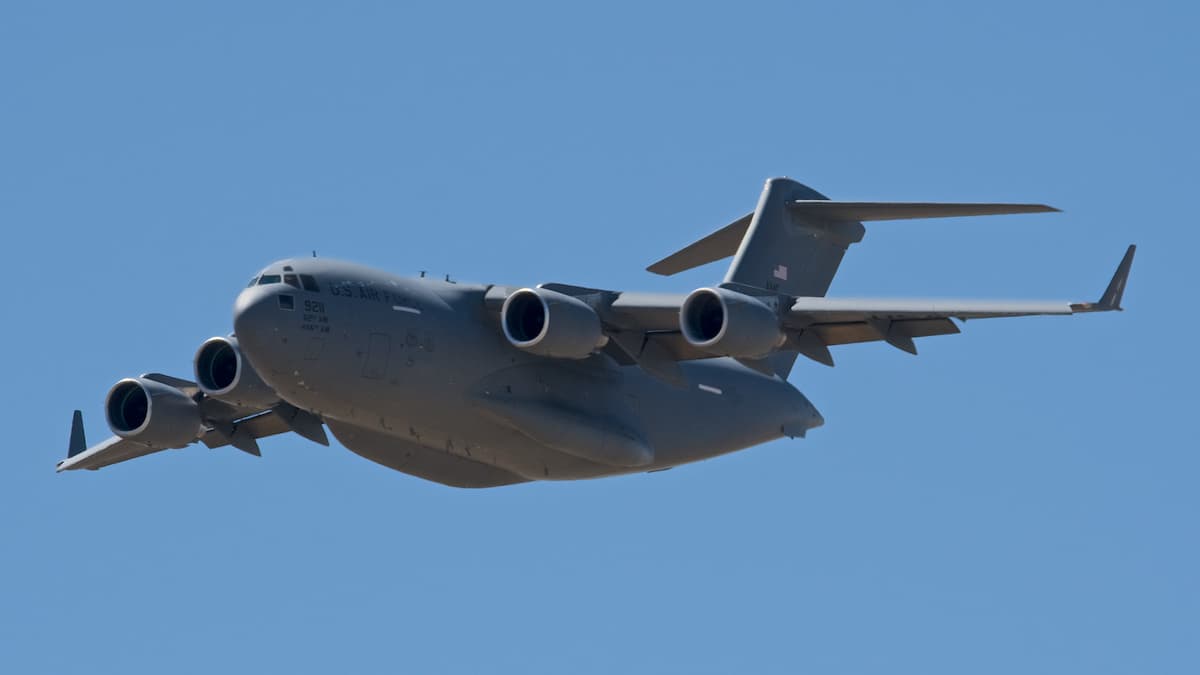
A Washington-based Boeing C-17 Globemaster III performs a high-speed pass over the crowd at Travis AFB.

Aerial tankers are not seen flying at airshows that often, so it was a treat to see a KC-10 Extender aircraft making passes over show center. This aircraft carries a combination of cargo and fuel for overseas deployments.
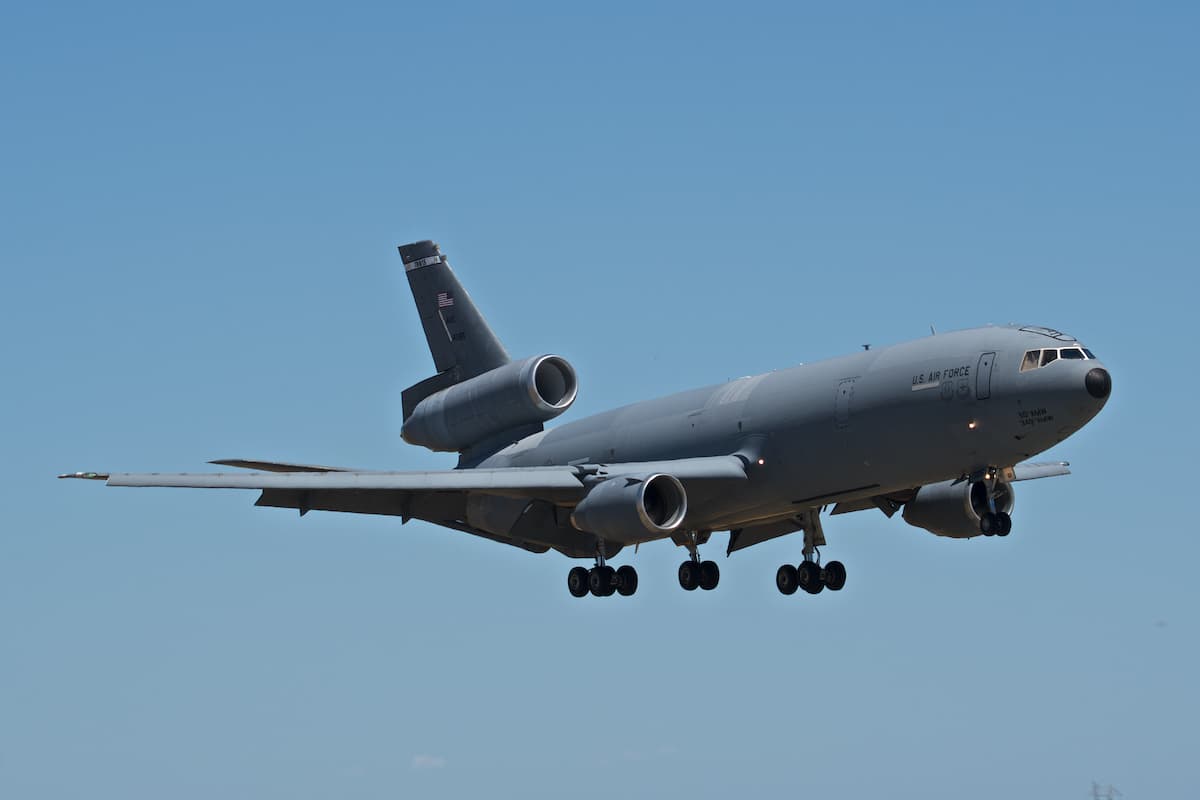
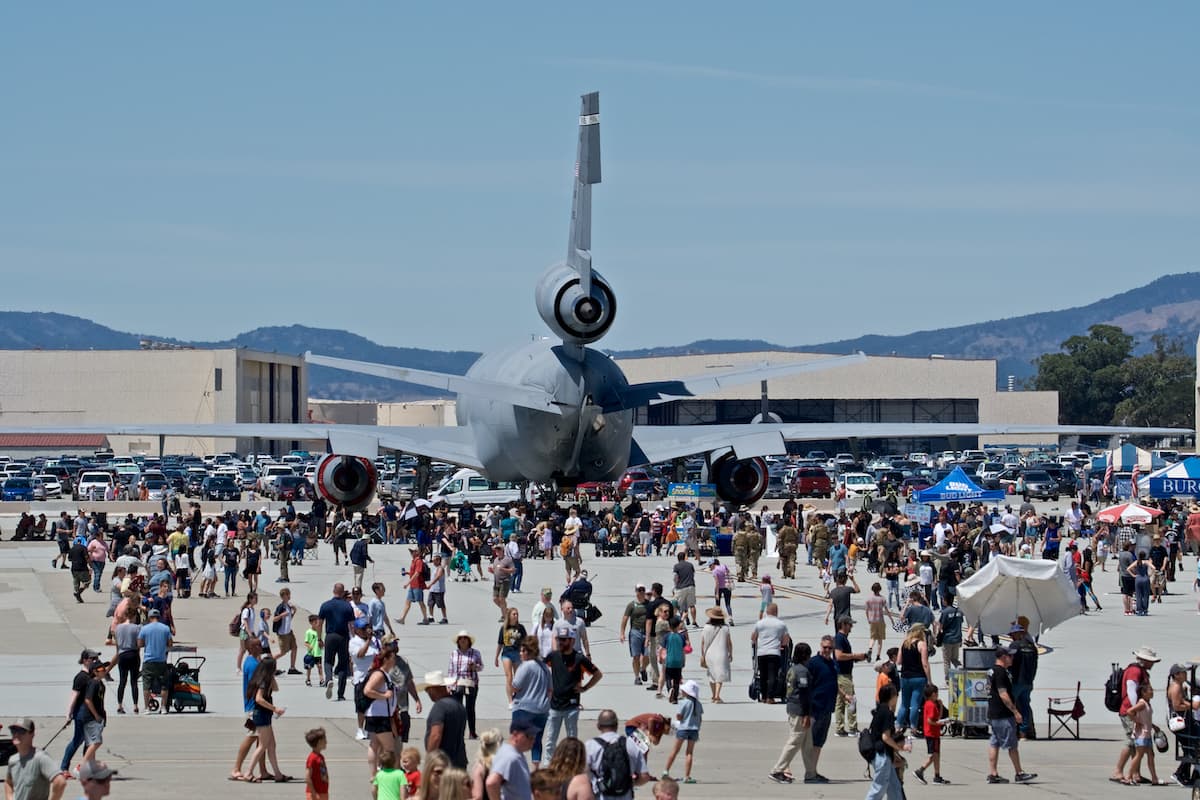
A McDonnell Douglas KC-10A Extender getting ready to land after a flight demo. The KC-10 is nicknamed “Gucci” in the USAF community, due to how luxurious this aircraft is compared to the KC-135.
As the temperature rose, many sought shade wherever they could find it, like underneath this McDonnell Douglas KC-10A Extender.

Warbird fans were treated to fly-bys of a North American PBJ-1 (a navalized B-25 operated by Marines during World War II) flying formation with a P-40 Kittyhawk.
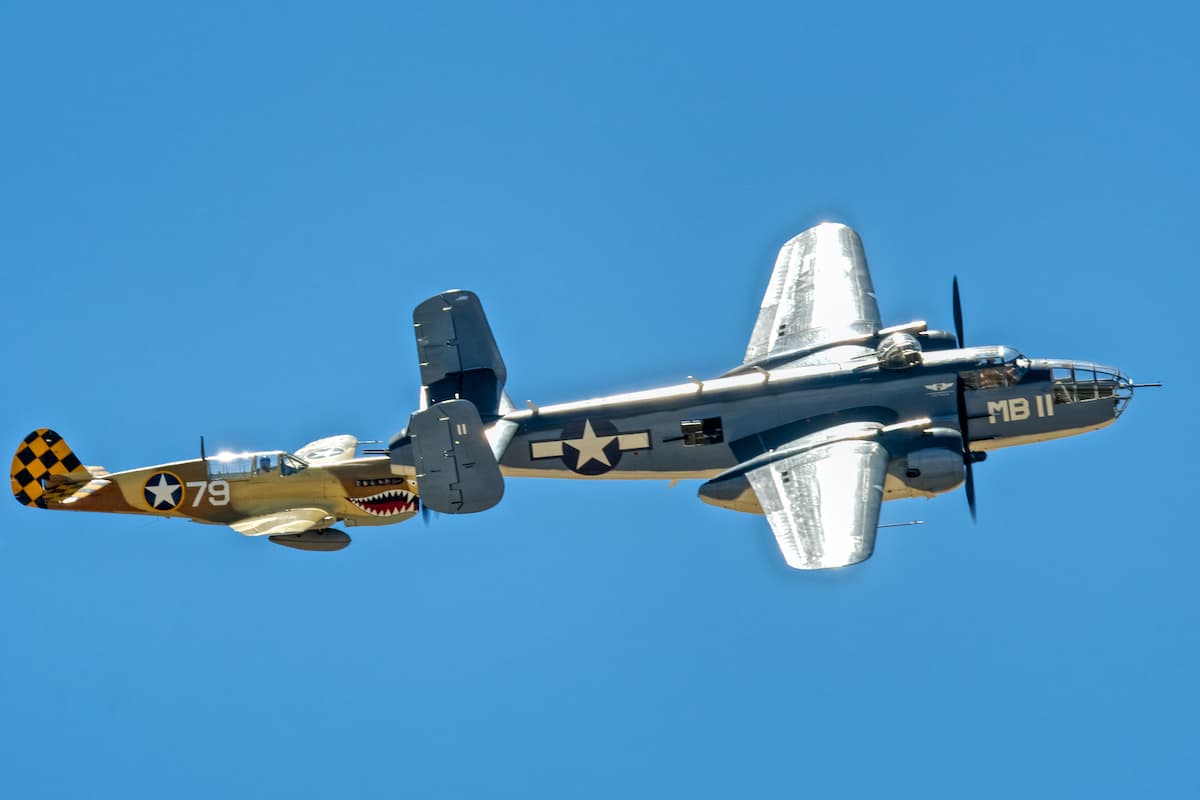
The Commemorative Air Force’s North American PBJ-1 Mitchell bomber leads the Planes of Fame’s Curtiss P-40N Kittyhawk on a warbird fly-by.

Later on, a P-38 Lightning and P-51 Mustang would take to the air as part of a Heritage Flight. Most Heritage Flights are two-ship affairs, but Wings Over Solano featured no less than four aircraft with the F-16 Viper and the F-35 Lightning II Demo Team joining the vintage warbirds for several fly-bys.
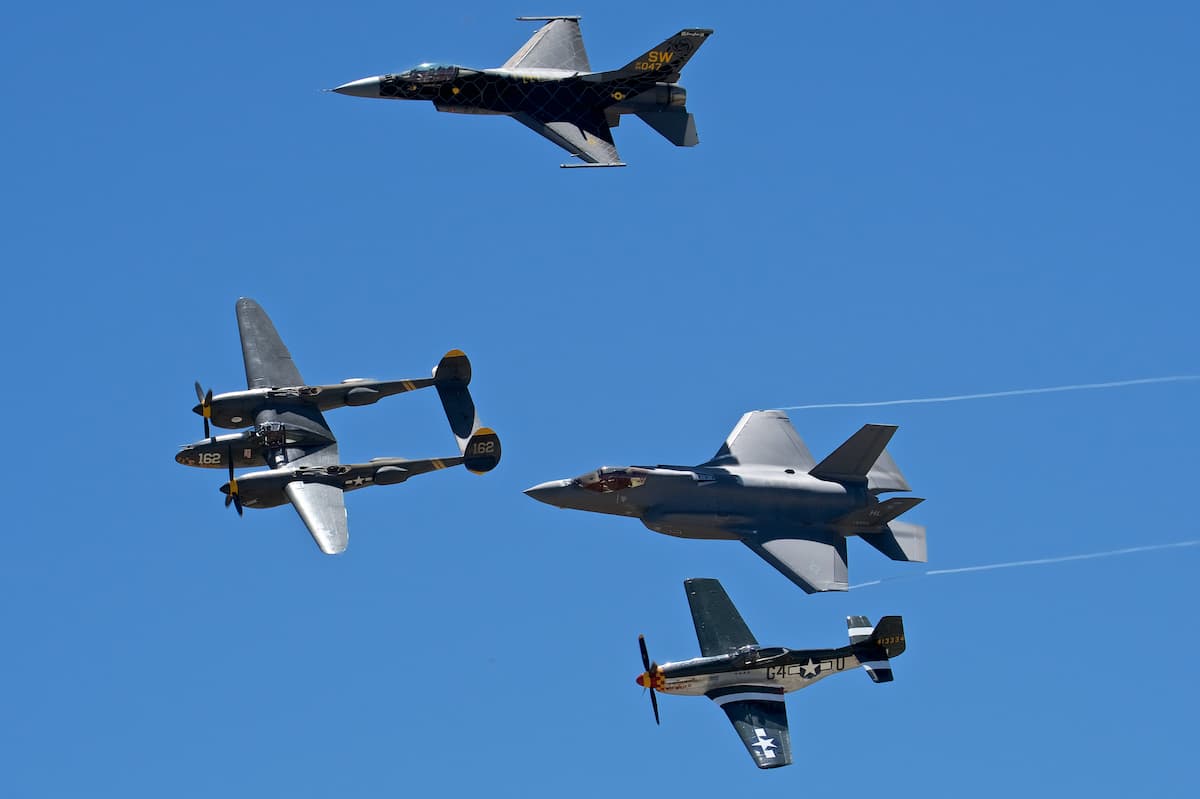
The Heritage Flight included (starting at the top) the F-16 Fighting Falcon, P-38 Lightning, F-35 Lightning, and P-51D Mustang “Wee Willy.”

The secretive folks at Beale AFB performed a flight demonstration with the iconic Lockheed U-2S Dragon Lady, along with one of its black T-38 Talon trainers on static display.
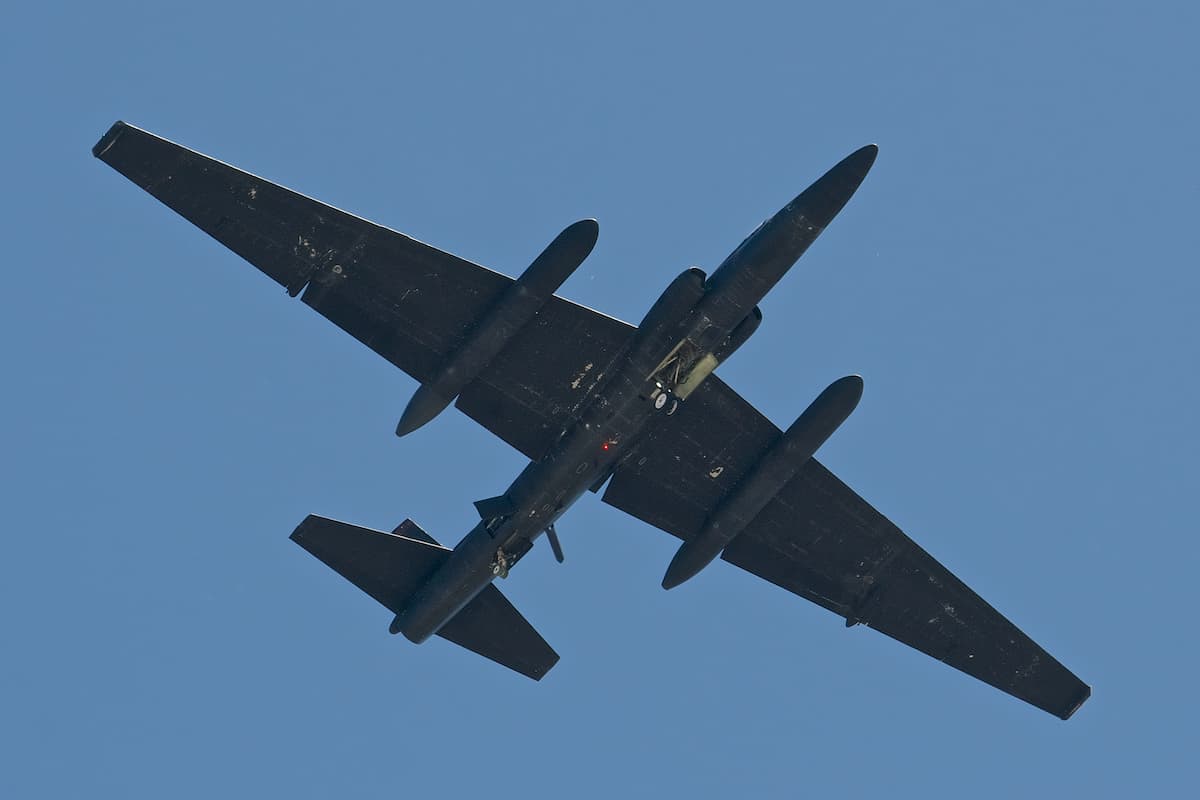
This Lockheed U-2S was originally delivered to the USAF in 1982, then loaned to NASA as an ER-2, then recalled back to the USAF due to a shortage of U-2s.

The headliner act was the Patriots Jet Team, a West Coast-based civilian-owned aerobatic jet team flying six Czech L-39 Albatros trainers. Formed in 2002, the six-jet Patriots Jet Team features many pilots who have flown with the Thunderbirds and Blue Angels.
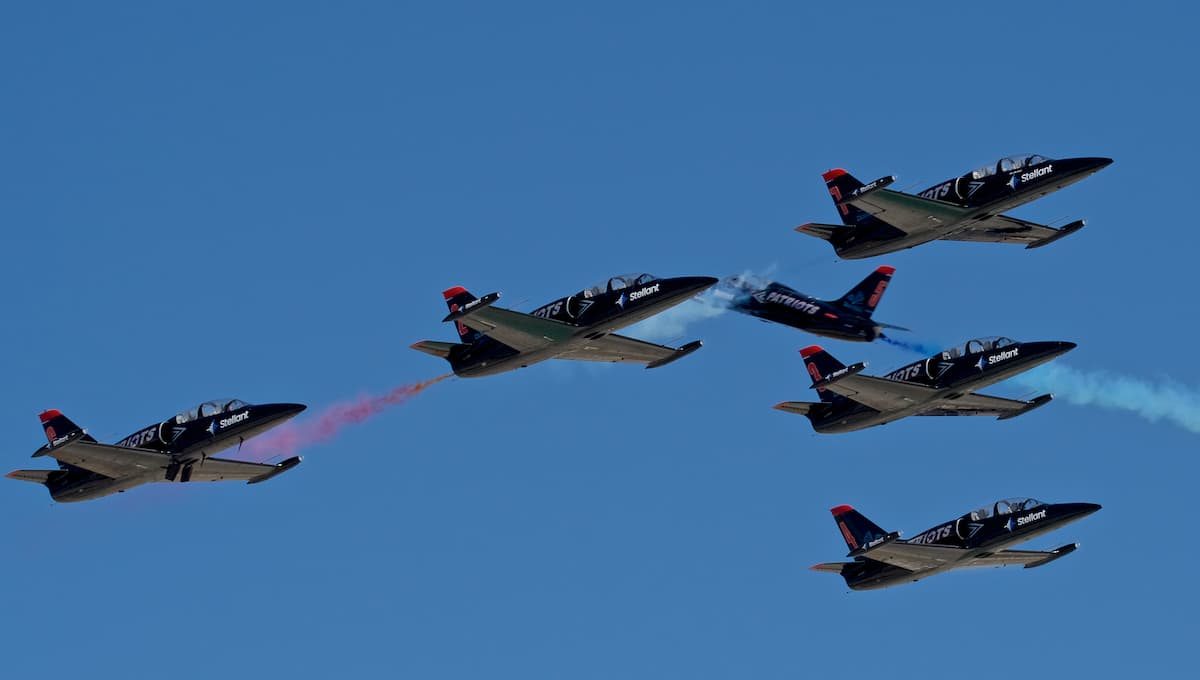
The Patriots Jet Team pilots are unfazed as #5 zooms by after a head-on pass.

The team has performed at more than 1,500 shows. The performance put on by the Patriots is every bit as impressive as the military teams and was very enjoyable to watch.
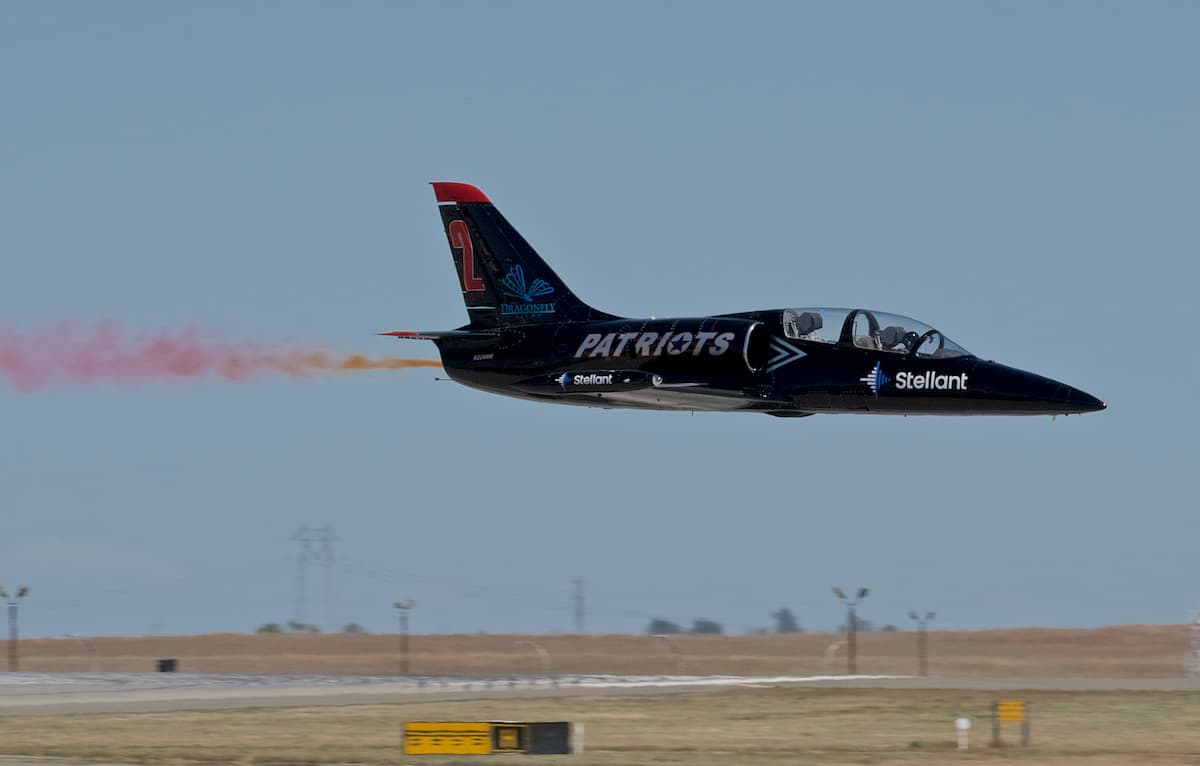
The Patriots Jet Team #2 makes a high speed pass down the runway in a Czech-built Aero L-39C Albatros.

Static display aircraft included a pair of F-15 Eagles, two EF-18 Growlers, a KC-135 Stratotanker, a KC-10 Extender, a C-17 Globemaster III, and a C-5M Super Galaxy.
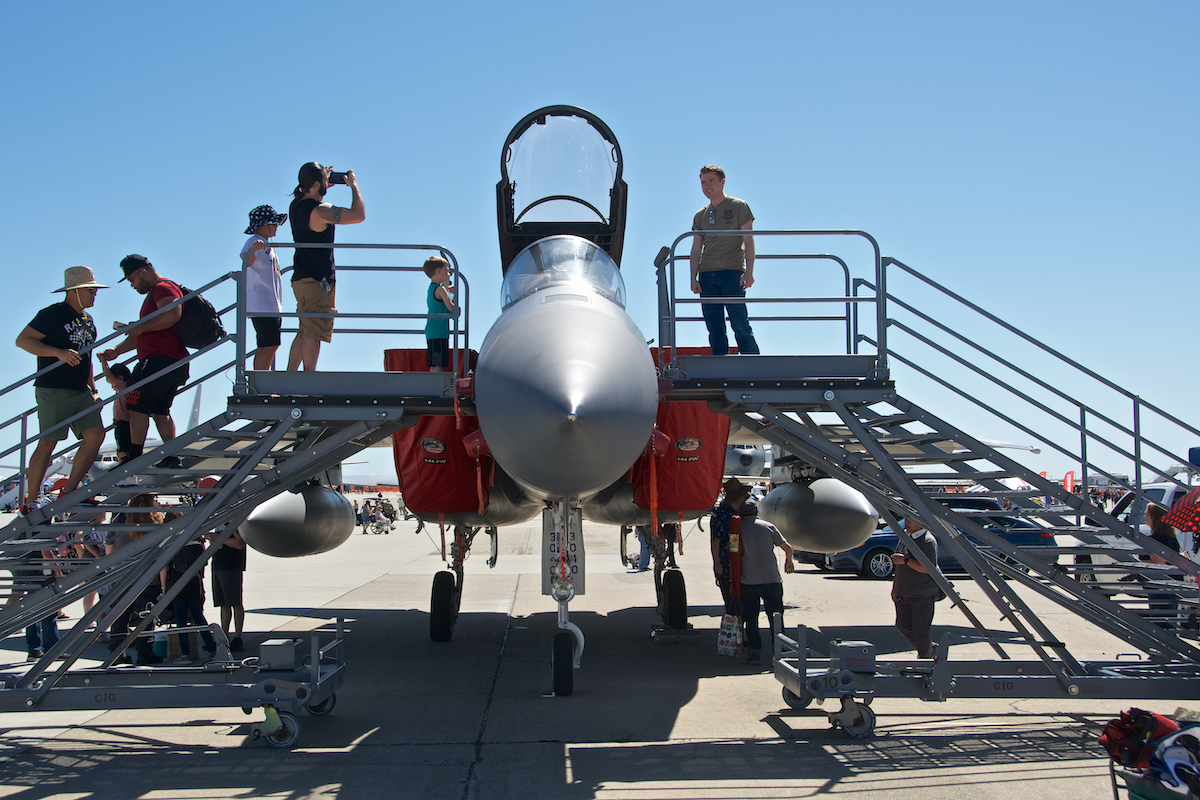
This F-15C Eagle was one of many military aircraft accessible to attendees of Wings Over Solano. The Eagle is one of the most successful fighters developed, with more than 100 victories and zero losses in aerial combat.

A Boeing KC-46 Pegasus was also there to round out the USAF tanker fleet. This is the new tanker based on the 767 airliner. Technical issues only allow limited operational use of the KC-46 at the moment, so it was good to see one make an appearance here.
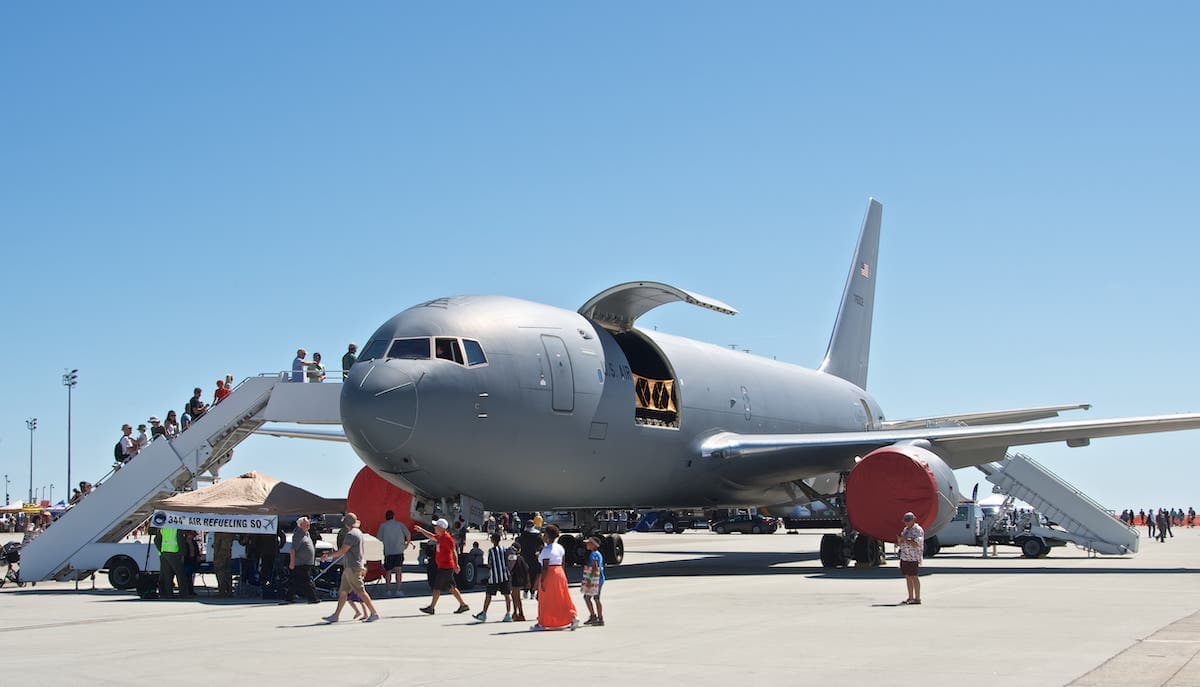
My first sighting of the new Boeing KC-46A Pegasus aerial refueling tanker, currently in limited operational use. The KC-46 has triple the cargo pallet capacity of the KC-135 that it will replace someday.

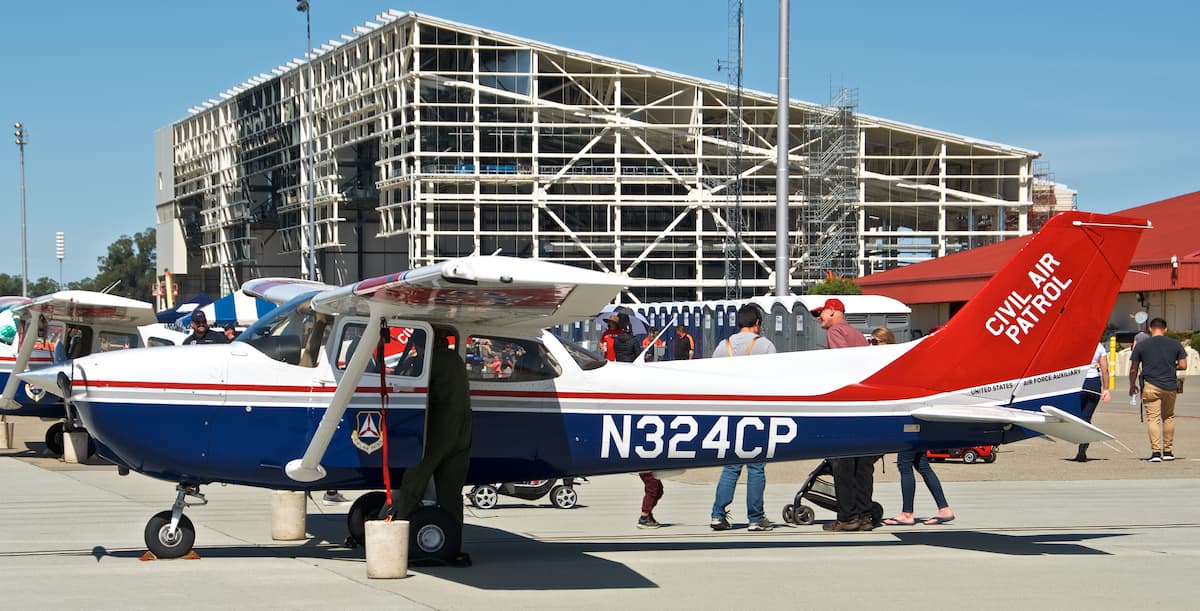
Both California Aeronautical University and the Civil Air Patrol put Cessna Skyhawks out for display.
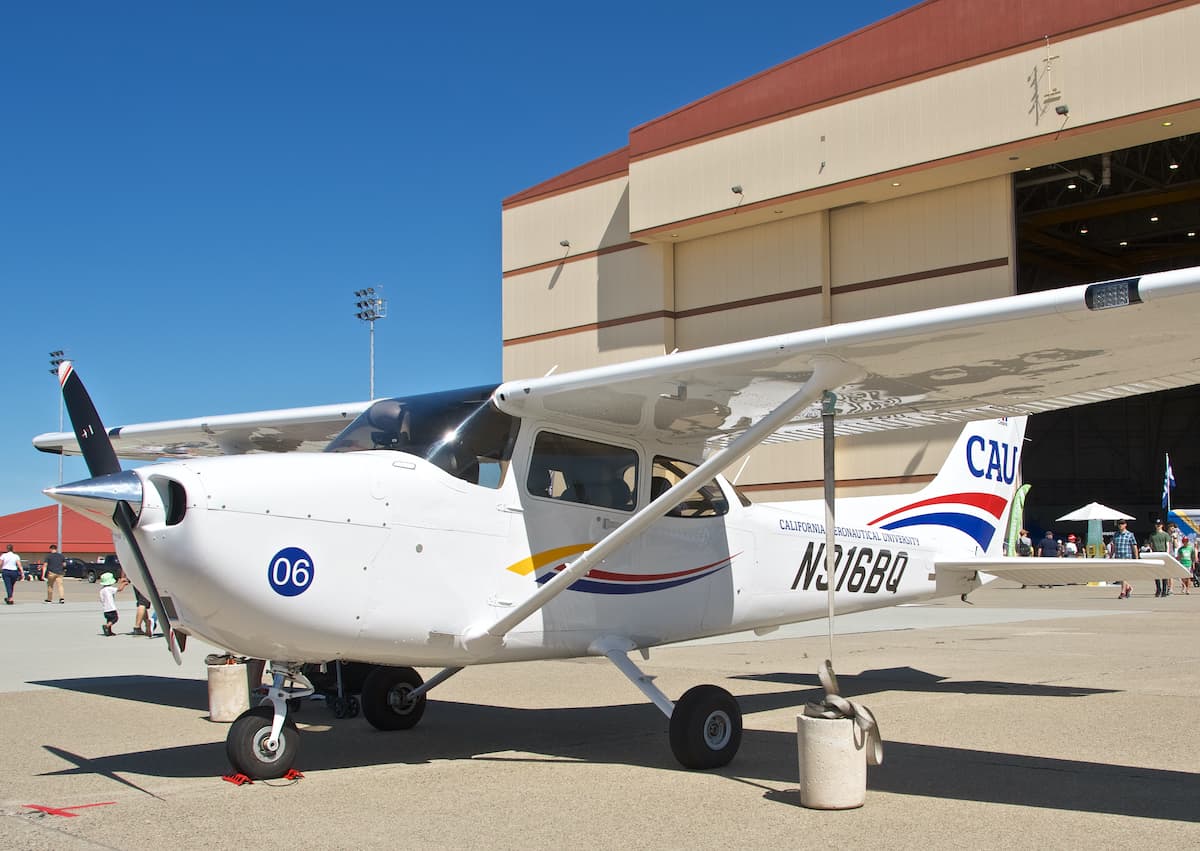
California Aeronautical University recently added six new Cessna 172S aircraft to its fleet, replacing older models.
The Civil Air Patrol operates one of the largest fleets of single-engine piston aircraft in the world, numbering 560 planes, including 190 of these Skyhawks.

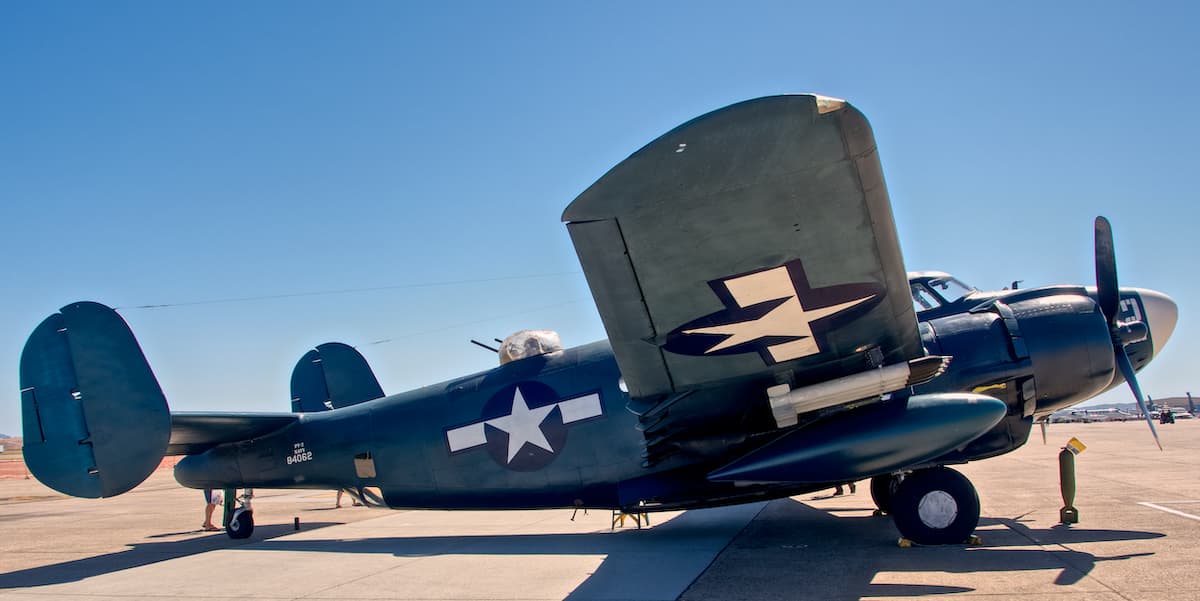
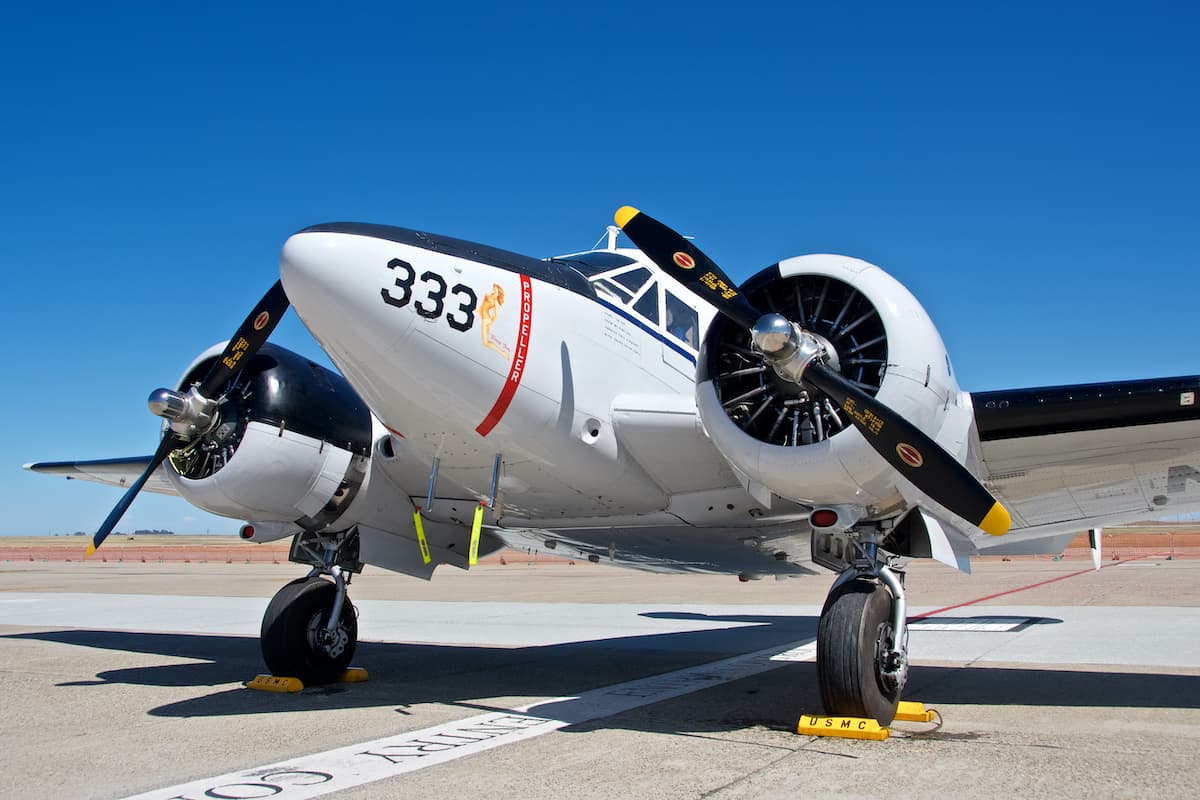
There also was a varied assortment of warbirds staged on the tarmac, including a rare P-51H Mustang, a pair of Twin Beech transports, and a Lockheed PV-2 Harpoon patrol bomber.
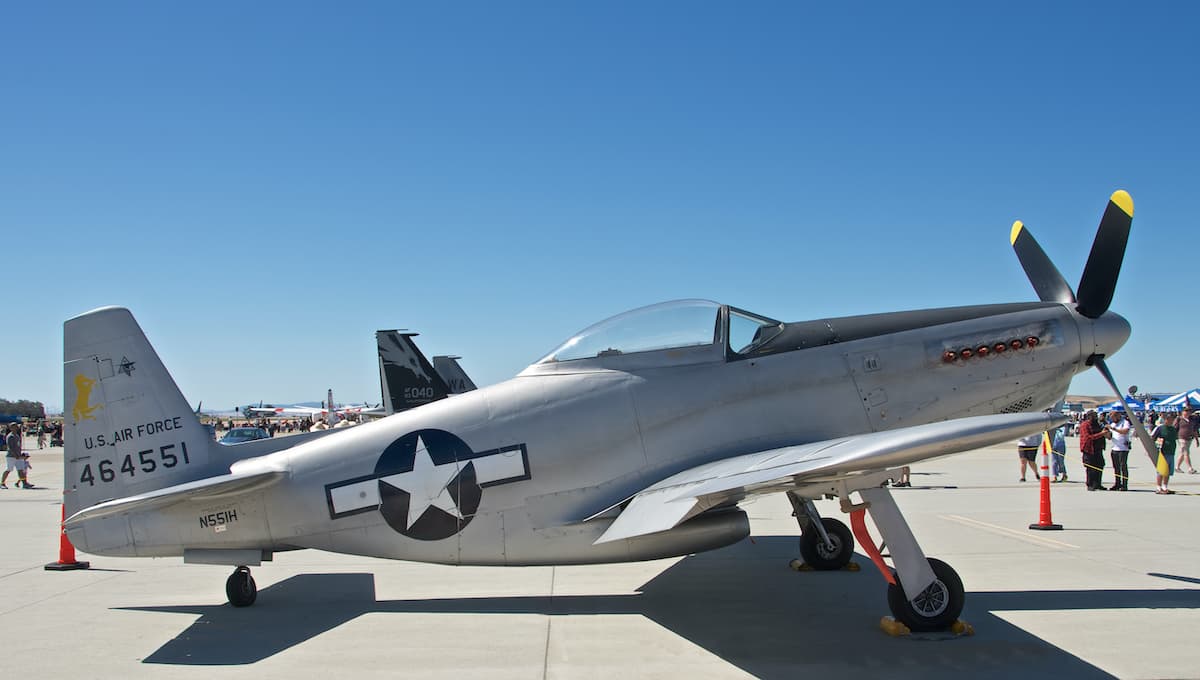
Owned by Steve Coutches, this P-51H was the last version of the Mustang to be produced, lighter and faster than its predecessors.
This Beechcraft E18S was a post-World War II variant of this aircraft. Known as the “Twin Beech,” more than 9,000 of these aircraft were built during continuous production from 1937-1970.
The Stockton Field Aviation Museum brought its rare Lockheed PV-2D Harpoon patrol bomber, one of only 35 produced. It was surplussed in 1959 with only seven flight hours.

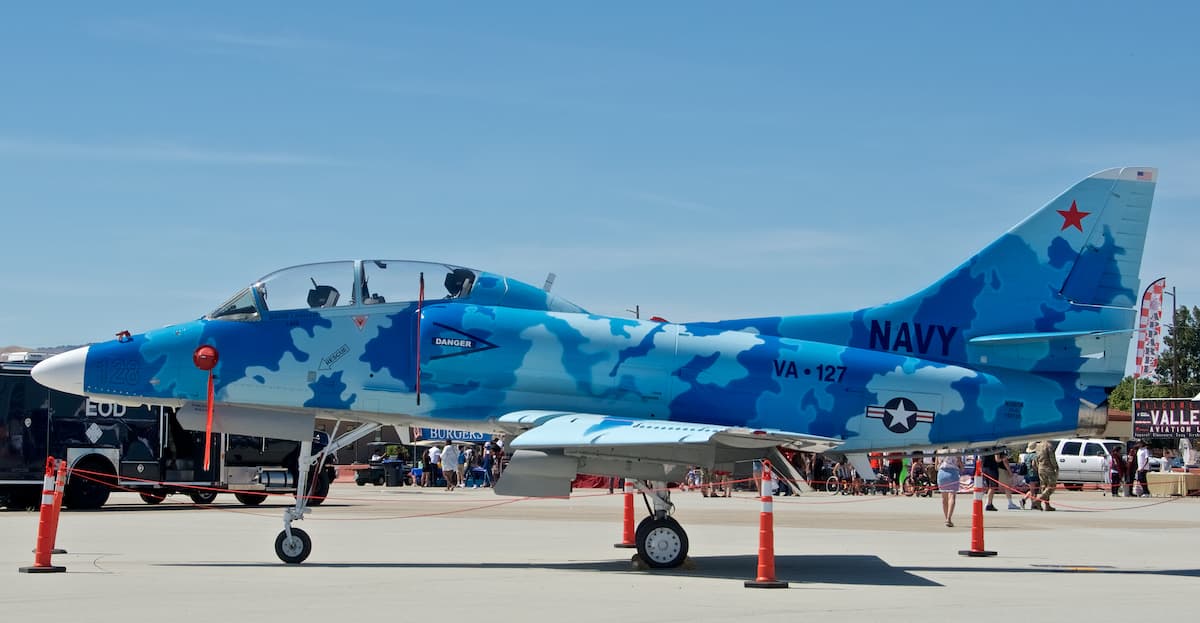
A huge technical and chronological advance was represented by a 1943 Fairchild PT-19 Cornell trainer and a beautifully restored 1992 McDonnell Douglas TA-4 Skyhawk jet.
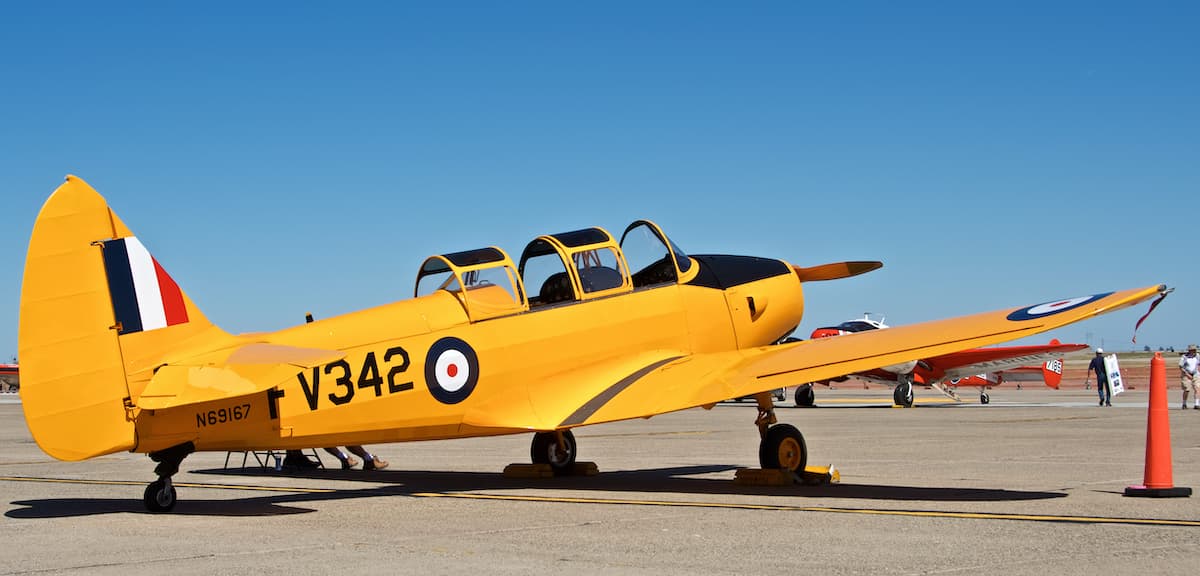
A pretty Fairchild PT-19A Cornell on static display. This aircraft was a mainstay of pilot training programs in the U.S. and Canada during World War II. This one is Canadian due to the enclosed cockpit.
This beautifully restored 1992 McDonnell Douglas TA-4J Skyhawk was recently listed for sale for $3.2 million.

The California Highway Patrol brought one of its AS350 helicopters, competing for attention with the brand new S-70 Firehawk firefighting helicopter that Cal Fire displayed. Cal Fire filled out its display area with an OV-10 Bronco spotter aircraft and a S-2 Tracker airtanker.
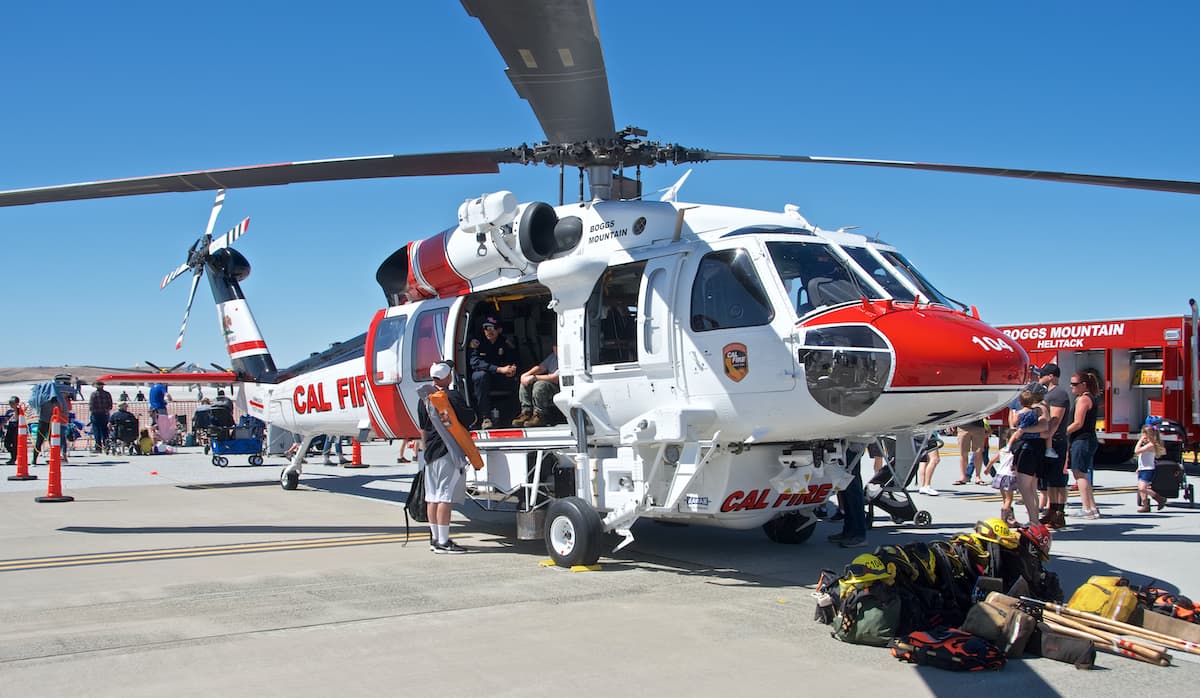
One of 12 new Sikorsky Firehawks that Cal Fire has ordered to replace its fleet of firefighting Hueys.

Located 40 miles southwest of Sacramento, California’s capitol, construction began on Travis AFB in June 1942. The base is named for Brigadier General Robert F. Travis, who died in the crash of a B-29 Superfortress while transporting a nuclear weapon.

Reader Interactions

Share this story

  • Share on Twitter Share on Twitter
  • Share on Facebook Share on Facebook
  • Share on LinkedIn Share on LinkedIn
  • Share on Reddit Share on Reddit
  • Share via Email Share via Email

Become a better informed pilot.

Join 110,000 readers each month and get the latest news and entertainment from the world of general aviation direct to your inbox, daily.

This field is for validation purposes and should be left unchanged.

Curious to know what fellow pilots think on random stories on the General Aviation News website? Click on our Recent Comments page to find out. Read our Comment Policy here.

Comments

  1. flyboy guy says

    June 15, 2022 at 9:41 pm

    GREAT PHOTOS

© 2026 Flyer Media, Inc. All rights reserved. Privacy Policy.

  • About
  • Advertise
  • Comment Policy
  • Submit Press Release
  • Contact Us
  • Privacy Policy
  • Writer’s Guidelines
  • Photographer’s Guidelines