


By YVES A. DIDIER
Talk to someone in their 70s, and they’ll most likely remember exactly where they were when they first heard that John F. Kennedy was shot.
“You will never forget your first love,” my mother used to tell me.
And a friend of mine swears that a US Marine will never forget their service number — ever.
And pilots? I bet there’s a good chance you still remember the tail numbers of some, if not all, of the airplanes in your life, and the flights and adventures surrounding them.
Granted, if you have flown hundreds of aircraft, this may be a little more challenging. But for most of us, the numbers are much smaller, and even if it wasn’t a Hellcat, Stearman, Fieseler Storch, or some other exotic bird you were piloting at the time, you will remember.
Full disclosure: While I do not recall what my wife wore for our wedding, even without looking at my logbooks, memories come flooding back just by recalling certain tail numbers.
N734DN
The first time I sat in the left seat of this 172 Skyhawk in 1991, there was nothing but excitement. I had just signed up for flight training at Wings Aviation in Fullerton, California, with no clue about, well, anything.
The plane, a tired 1977 Cessna, had already been (ab)used by students for years. But none of that mattered to me as my CFI exuded endless confidence. Which was good, particularly when it came to working the radios (which were often not working).
Most of the time, the only thing I picked up on those battered Bendix-Kings was garbled static, further distorted by deafening cockpit noise as my instructor insisted we fly without headsets.
“You must be able to understand all radio traffic in case of a headset failure,” he argued.
I later learned that this was actually not based on some noble, higher training goal — the guy was simply so broke that he couldn’t afford a headset. And if he couldn’t have one, neither could I, of course. My hearing deficit today is living proof of that buffoonery.
On top of that, training flights often had to be postponed because of mechanical problems.
However, I still managed to solo in Delta November, and a few months later I also passed my check ride in it at a nearby airport (missing a helicopter’s turning rotor blades only by a hair while taxiing back for takeoff to return to my home field in pitch-black darkness).
N3823F
This 1978 Great Lakes was simply marvelous, whether inverted in a loop, while I was practicing a hammerhead, or attempting another barrel roll.
3823F belonged to my friend and pilot mentor Jack Harloe, and up to this day, I miss open cockpit flying and my friend’s presence terribly.

Jack had more than 50 years of experience as an aviator, but I still succeeded in providing excitement and some memorable moments he didn’t see coming.
Primarily whenever I fell out of a loop, unintentionally turning 23 Foxtrot into a bright orange dive bomber.
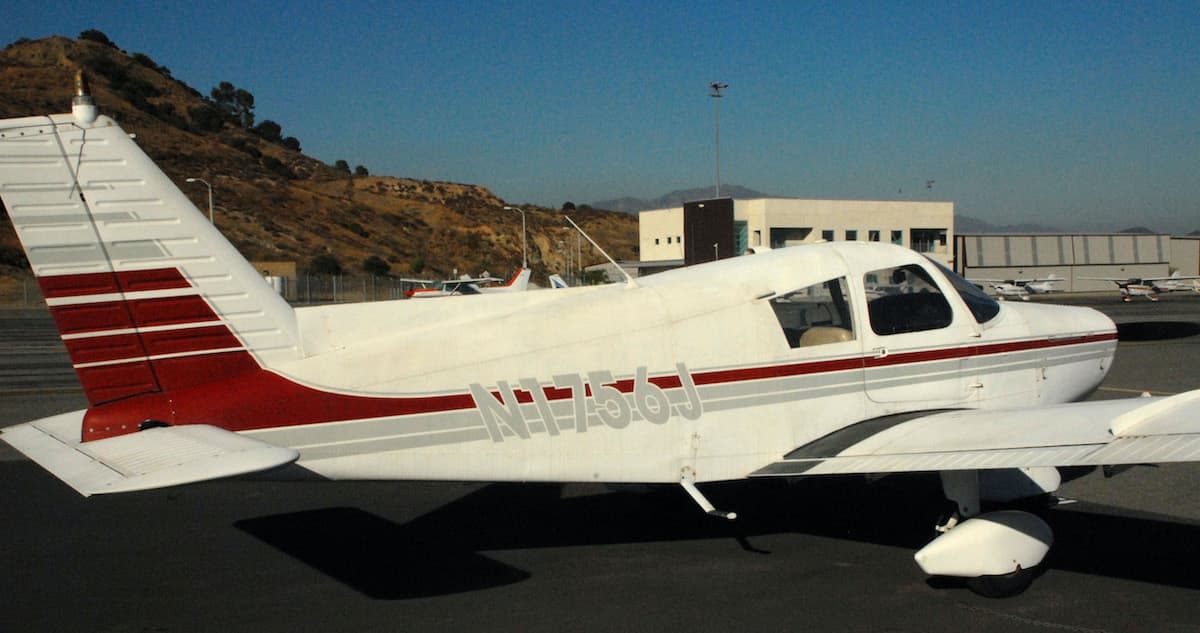
N1756J
I had never even flown a Cherokee before buying this 140. But the price was right, I liked the seller, and the plane seemed well maintained.
I kept Juliet for over a decade but never figured out why she notoriously refused to start on me, even with all the new batteries I kept buying. Eventually, jumper cables became a constant companion on board, which paid off quickly.
I took countless friends flightseeing over the years, patting myself on the back for being such proficient pilot, as none of them ever got sick on me.
Except once: On a particularly smooth day, my passenger discreetly carried her bursting barf bag while exiting the plane, which she then promptly dropped on its wing. Urghhh. We later learned that — surprise! — she was pregnant but didn’t even know herself then.
Juliet was a great plane, but being 6 foot, 3 inches tall, I eventually tired of having to climb on the wing to then carefully fold myself into the cockpit through its single door.
Almost losing an engine shortly after takeoff was another interesting experience, but that’s a different story.
N3134T
Feeling guilty for not flying enough, I eventually decided to sell 1756J. Plus, airplane ownership seemed way too costly at a time when I was just about to embark on a new career.
Through a chance encounter, I met the owner of 3134T, a 1967 Cessna 177, at Whiteman Airport (KWHP) in Los Angeles. He agreed to let me use the Cardinal on occasion.
I loved everything about that plane: Its looks, spacious cockpit, visibility, reliability, and ease of access through its generously sized doors. Flying the 177 was a joy (yes, it had the 180-hp engine conversion).
Unfortunately, this ended way too soon when the owner sold the aircraft only a year later. Darn!
N5411T
After being without wings and not flying for three years, something was clearly missing in my life. When I stumbled over a “For Sale” ad for a 1964 Cessna 172E at Santa Monica Airport (KSMO), I went to take a look.
Nothing else, I swear.
With no intention whatsoever of buying another plane, after a short test flight, my self-control immediately went out the window and I signed on the dotted line. (Yes, coming home, I had some explaining to do).
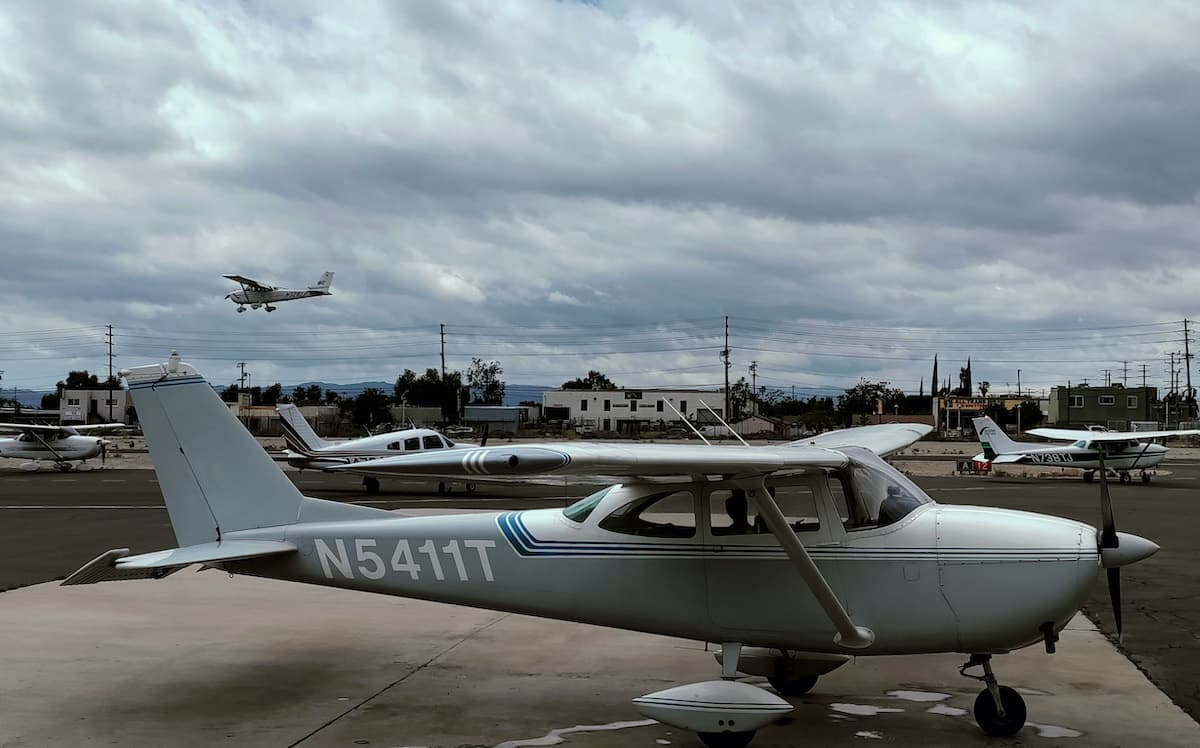
Eventually, though, the Skyhawk would be my reliable flying companion for seven years, until I lost my medical.
Only after spontaneously reminiscing, did I actually look up the above tail numbers to check on their planes’ current status. To my great joy, all of them are still flying today.
They all were remarkable in their own ways and I have no doubt that every single one of them continues to create new, lasting memories for their current and future owners and pilots.
Most of my instruction and my PPL check-ride was in 5411T. Very cool article to run across.
I had just been talking with my neighbor’s kids about my flying days in my younger years (much younger years), and decided to look back through my old pilot log book to reminisce. I was curious to see if any of the wonderful planes I had flown during my brief piloting days back in the late 1980’s were actually still around. I did a Google search on the tail numbers and was pleasantly surprised to get a hit on one of them, N734DN, and finding your posting of your experience piloting that very aircraft. I had flown that particular 172 Skyhawk a few times, but one of my most memorable flights was piloting it on a cross-country flight out of Liberty Aviation in Fullerton, CA to Furnace Creek in Death Valley on 6/28/1987. Both my parents were my passengers, with my dad recording much of the flight with a VHS camera. I still have that video, just watching it again (yes, it has been transferred to digital format 🙂 ) before writing you this message.
I very much appreciate you sharing your flying experiences, especially that of 4DN. I hope I was not one of the pilots turning it into “a tired 1977 Cessna, had already been (ab)used by students for years”. ::)
Ralph
Super article!
Soloed a 172 while 15yro at a small municipal airport in Western Kansas.
Only soloed once after on return from university due to discovery that one should not pilot unless current having barely returned to base safely subsequent.
It’s amazing that N1756J’s painted registration number is legal (or not). I doubt the number’s contrast meets regulatory requirements!
‘Been flying 55+ years. An old pre war Chief, 31899 was like our own when I was teaching at Mother Rucker after my tour in VN. From late ‘68- Dec ‘70 “Ma” Baker had it on her 141 cert and in the VA program. No one wanted to fly it but me. Scott? Was a crewman when on duty but an excellent CFI I needed fw time and he challenged me. We landed using the doors and pitch trim He made a hot rod Dustoff pilot into a hotrod tw pilot. There have been literally thousands of tail numbers since including hauling C model ‘Cats to Surinam (before GPS or LORAN) and flying DC3s “down Island” but that one is “my number”. I look it up every once in a while. Last it was stagnant in CT. If I didn’t have my Wife’s Citabria, my PA22/20 and a lovely old KR34C waiting on my to fix ‘em I’d reach out.
There’s little worry Mrs Didier will read this , luckily she has her own interests which don’t appear to include aviation. We enjoyed reading about your airplanes , Yves . Flying is a discrete portion of a person’s life . Your essay conveys the linear progression and development of your experiences away from home and up in the sky …well done .
Fantastic walk through your aviation career !!! I am grateful to have been a small part of only two of those aircraft!! We had a great deal of fun whenever we went up! Thank you very much for every moment of those experiences !!!
Your friend,
Jeffrey
Wonderful stories! And hopefully Mrs. Didier will not read this, or you might have some more explaining to do…..
N5278Q.