


It was a pretty little thing, the Cherokee. Liquidly gloss white, with two-toned red stripes on the wings, fuselage, and tail — its gear wrapped in wheel pants.
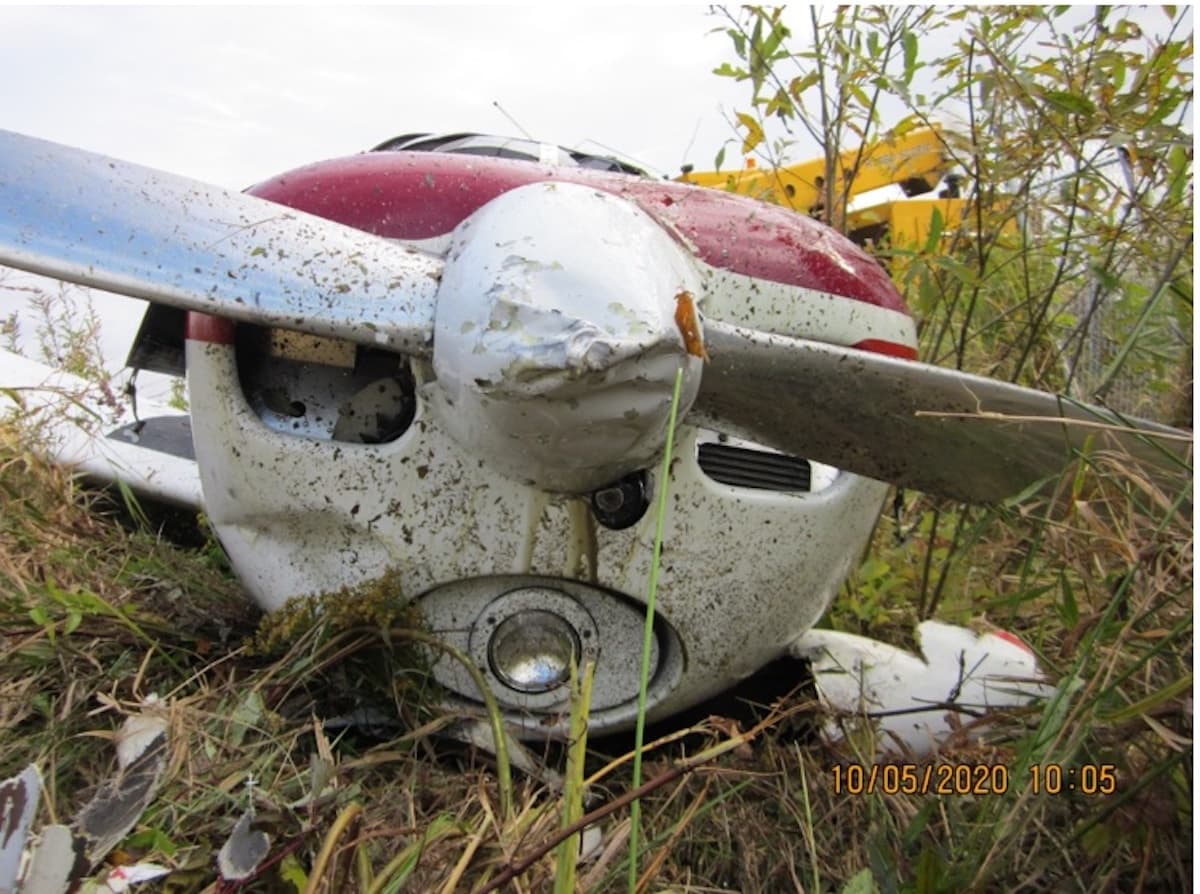
It had been owned by one man for the previous 20 years without incident, and yet, nine months after its sale to a new owner, the Cherokee was a crumpled pile of junk lying in a ditch off the end of Runway 24 at Oswego County Airport (KFZY) in Fulton, New York.
The NTSB put the blame for the wreck solely on the shoulders of the A&P/IA who completed the plane’s first annual under the new owner a mere three days before the crash.
However, a closer look at the details surrounding the destruction of the airplane shows that there could well be more than enough fault to spread around.
The Flight
We don’t have a record of how long the plane was in annual, but as any owner can tell you, all annuals are too long — and in this case there was quite a bit of additional work done, so it probably wasn’t a fast turnaround.
But after the annual, the owner picks up his plane at Cortland County Chase Field (N03) in Courtland, N.Y., and starts a ferry flight to his home base of KFZY some 46 nautical miles away.
On takeoff, he notes a film of oil starting to form on the windshield. It starts at the bottom of the glass near the cowl, mainly on the copilot side, and rapidly migrates 5 or 6 inches up the glass. But then it seems to stop, so rather than turn back and return to the maintenance shop — which is still the closest airport — he decides to continue the flight home instead.
You thought this was when the crash was going to happen, didn’t you?
No. Not yet. The gods of flight smile upon our hero and he makes it home safely.
The next day, he calls his IA, who tells the pilot not to fly the airplane and that he’ll come over and check it out.
But the pilot decides to check it out himself. He opens the cowl and sees no oil. He cleans the windshield and does a run-up. Then, according to his cursive handwritten statement to the NTSB, “I saw a few specks of oil, so I decided to do a takeoff and landing.”
You thought this was when the crash was going to happen, didn’t you?
The Pilot and the Accident
No, nothing bad happens as the gods of flight once again smile upon our hero — a 68-year-old male with a private pilot certificate and about 170 total hours, only 13.3 of which were in the make and model.
On the third day he decides to do the same thing again. But this time, his luck runs out.
After takeoff, “oil started covering the windshield,” he told investigators.
He’s lifted off from Runway 15 at KFZY, and makes a hard left bank to come around and land on the perpendicular Runway 24. He comes in high and hot, touching down beyond the halfway point of the nearly 4,000-foot runway and is unable to stop before the end.
His runway excursion extends for more than 360 feet beyond the threshold, where he plows through the chainlink airport perimeter fence — taking out three vertical posts in the process — and comes to rest in a ditch 30 feet beyond the fence line.
The pilot sustains only minor cuts and bruises. The airplane, however, is fatally injured.
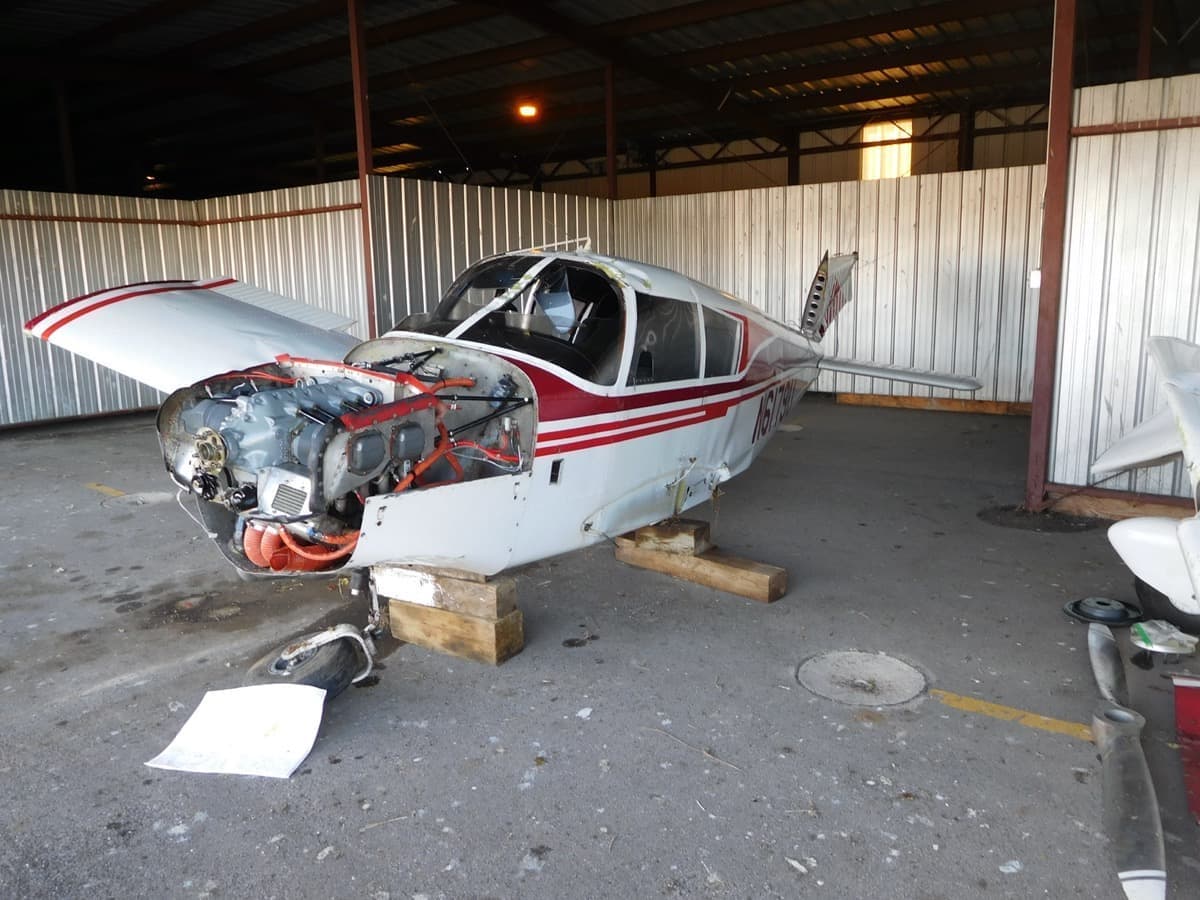
The Oil Leak
At the accident site, an FAA inspector reported that there was no significant amount of engine oil on the cylinders or accessories inside the cowl, but that oil covered the surface of the fixed-pitch prop, spinner, and nose cowling.
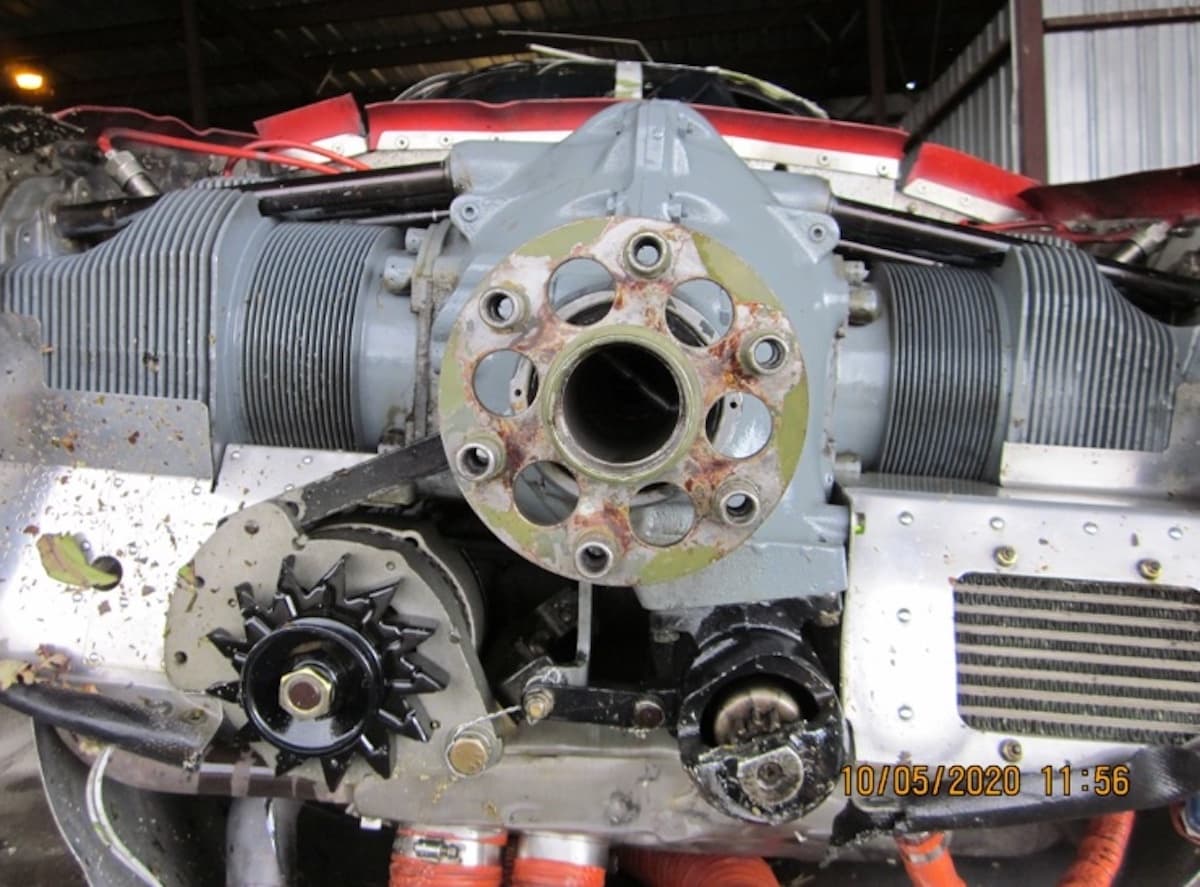
The aircraft is moved to a hangar where the inspector removes the oil-covered parts “to attempt to determine the source of the engine oil leak,” and when he does, “the plug that is installed in the front opening of the engine crankshaft fell to the ground.”
The NTSB investigators determined this loose plug was the cause of the oil leak and, therefore, ultimately, the cause of the crash.
The plug is formally called a crankshaft expansion plug, and if you picture it as a cork in a wine bottle, you won’t be far off. Only the bottle, in this case, is the hollow crankshaft of the Lycoming O-320.
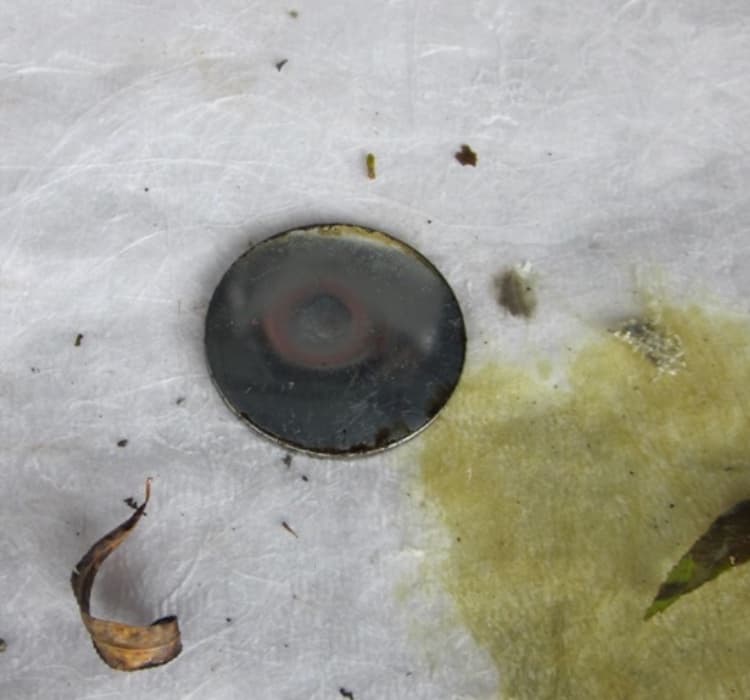
Why did it become dislodged?
The NTSB’s final report on the crash states that, “The mechanic who performed the maintenance stated that he installed the crankshaft plug using a ball peen hammer, instead of following the procedures outlined by the engine manufacturer, which called for the use of a special tool to properly deform and seat the plug.”
The Mechanic
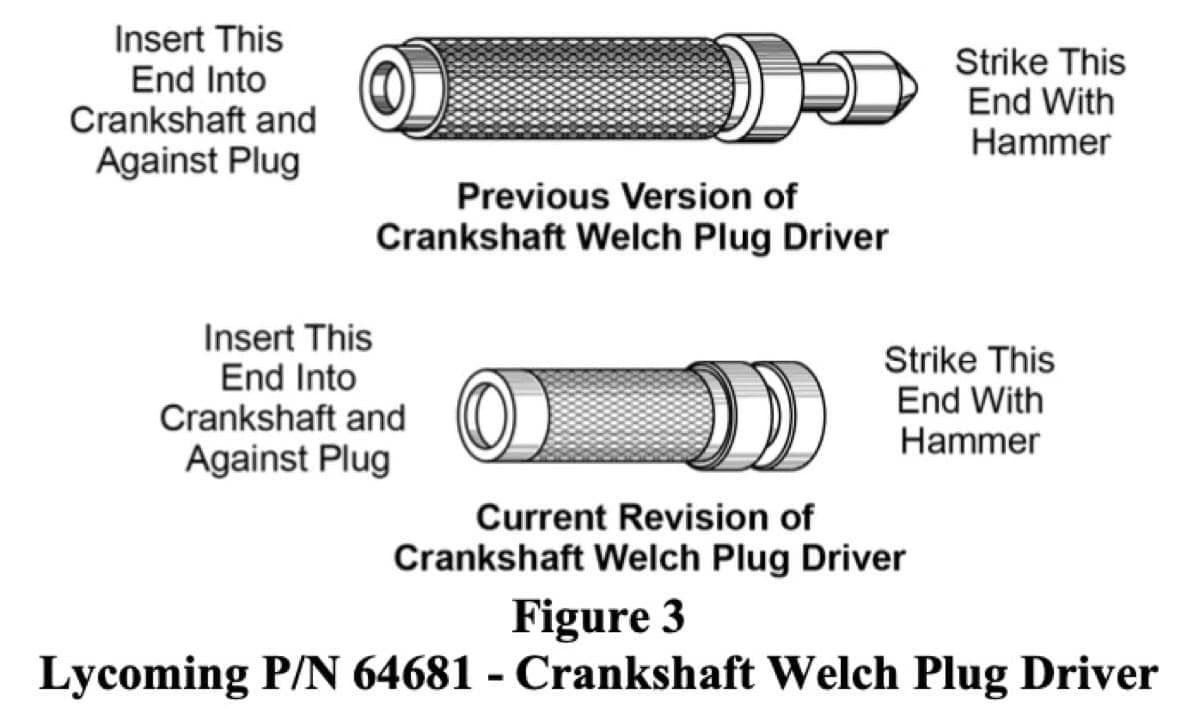
The special tool is called a Lycoming Driver Crankshaft Welch Plug, which Aircraft Spruce lists for an eye-popping $1,677 each.
It’s sort of like those tools you use to install clothing snaps, you know, the ones you whack with a hammer to close the metal. And you whack the $1,677 tool with a hammer, too, but apparently the mechanic decided to cut out the middleman and just use the hammer.
When the FAA inspector arrived at the shop to interview him, the inspector described the mechanic as “polite and cordial.” But then things start to get squirrelly.
When the inspector asked to see the technical publications he used, the mechanic “replied that all the tech data for the shop was on a computer at his home, and not readily available.” When asked for his IA and A&P certificates, the mechanic “advised inspectors that he did not have them with him, even though he was actively exercising their privileges and was in the process of performing an annual inspection on another aircraft.”
The mechanic’s bad day ended with the FAA inspector giving him a copy of the Pilot’s Bill of Rights and being told to expect a Letter of Investigation from the FSDO.
Ironically, in the accident aircraft’s engine logbook, above the standard, “I certify that this engine was inspected in accordance with an annual inspection and has been determined to be in airworthy condition,” the mechanic entered the following disclaimer: “The below statement in no way implies or guarantees that this engine will continue to function for any period of time after this inspection.”
The NTSB dropped the ball peen hammer on the mechanic, listing the probable cause as “the mechanic’s improper maintenance, which resulted in the crankshaft expansion plug dislodging in flight and a subsequent forced landing.”
The pilot wasn’t called out for his actions by the NTSB.
Analysis and Discussion
The mechanic used the wrong tool, apparently didn’t keep his tech data in the same building that he worked in, and didn’t know the regulations well enough to understand he was required to have his certificates in his wallet. There’s no defending any of that.
Sure, the tool is expensive, but it’s used for an every-five-year AD on a large family of engines found on a wide array of airplanes, including Cherokees, Super Cubs, and Cessna 172s.
But balancing that, he did tell the pilot not to fly and that he would come to the pilot’s location to check out the airplane.
So now we need to look at the pilot.
Bear in mind the Spiderman Rule, 14 CFR 91.3, which says “with great power comes great responsibility.” Well, actually it says the PIC “is directly responsible for, and is the final authority to, the operation of the aircraft.”
So did the pilot show a good responsibility quotient when he flew home with oil creeping up his windshield, rather than aborting the flight and returning to the field? Did the pilot show a good responsibility quotient when he disregarded the mechanic’s urging not to fly the airplane? Did the pilot show a good responsibility quotient when, despite more mystery oil “specks” on the windshield, he flew again. Twice?
Now, granted, this is a tricky oil leak. It’s coming up the hollow crankshaft and exiting behind the spinner, leaving the engine compartment clean. It’s a fixed-pitch prop, so it’s possible the pilot didn’t even know the engine had a hollow crank.
But still, the airplane was talking to the pilot, and the pilot — the final authority — wasn’t listening.
The Takeaway
We pilots often find ourselves between a rock and a hard place with 91.3. Consider the newly minted private pilot. Even though likely not the aircraft’s owner, barred from doing most of the maintenance, and probably not understanding the deep inner workings of the airplane’s systems, that new pilot is still the final authority on its airworthiness.
The NTSB, somewhat uncharacteristically, hung the hat solely on the mechanic in this accident.
But the question for discussion is: Should this all be on the mechanic or did the pilot — in this case — share some of the responsibility?
Want to learn more?
Download the NTSB’s final report here or view the items on docket here.

I wouldn’t be surprised if the mechanic sues the pilot for loss of income. The pilot is totally responsible for this crash and write off of the plane.
Granted, the A&P however does bear some responsibility but not the loss of the plane because he messed up the inspection. He told the pilot not to fly it and the pilot disregarded him. This could be a big Court Case. Personally, I would have put it back on the ground asap and gone back to the A&P.
I’ve been flying for 30 years now and have owned 2 aircraft in that time. For those of us who are NOT mechanically inclined, we depend on those performing the maintenance to know what is required and necessary to keep our aircraft airworthy. That being said – we also need to listen to them and heed their instructions/directions. Having crawled around on the ground for over 60 years, I’ve also learned that even the “experts” in ANY field, can make mistakes. Perhaps if the new/inexperienced pilot/owner had waited (as directed) until the mechanic took another look at his airplane, the collision would’ve never occurred. He may have even been referred by the IA, to the shop right there at KFZY. Maybe that shop would’ve even had the right tool(s)! Therefore, from what I’ve read in this article, I formed the opinion that the NTSB made the wrong call by hanging this incident entirely on the mechanic/IA.
The headline of this article should be: “Pilot flies airplane after A&P told him not to. Then NTSB blames A&P for the crash.”
You have to be kidding. The crash is the mechanic’s fault? NO WAY. He is only responsible for the engine repair.
I feel bad for the pilot for his loss. The psychological damage could be devastating.
John King of King flight schools says it best. Paraphrased, ‘pilots are usually smart people who from time to time do some dumb things.’ We all do.
It’s common to read NTSB report headlines like “Pilot takes off with aircraft outside of W&B envelope” and “pilot departs with insufficient fuel to complete the flight,” or the classic “continued VFR into IMC.” The NTSB needs to show a little common sense here. That airplane should have never lifted off after the first oil leak. They need to re-read their own reports.
Let’s say you had your car safety inspected, and then the very next day you call your car mechanic with symptoms of a broken ball joint (let’s spare the details for now). It is still driveable, just sloppy steering. No real problem to you . But he says “do not drive the car until I have a chance to look at it.” Then you drive the car anyway, and wreck. You were already told not to drive it and you deliberately drove the car in defiance of sage advice. You thought you could do it, and found out the hard way that no, you cannot. Smart person doing a dumb thing.
Yes, I suffer like anybody else with the withdrawl symptoms of owning a hangar queen. To my dismay, I have had my airplanes grounded more than once when I thought I could fly them, but I listened to people smarter than me. It hurts, emotionally and financially. But…
If any A&P tells you don’t fly your airplane, here is just a small hint: do not fly it. If you do, the mishaps are on you.
By saying the A&P bought the airplane, you just increased the cost of annual inspections exponentially, and decreased the number of mechanics who would be willing to work on your airplane. That is the opposite of personal responsibility.
In fairness, nowhere in the article does it say the pilot blamed the mechanic. He may have accepted the blame for the crash. My heart goes out to him.
Yes lot’s of finger pointing here. No one pointed a finger at Lycoming which also had part in this accident. Why is this plug not redesigned out of slightly heavier or stronger metal so it won’t distort when installed? Why is this tool required to install the plug astronomically over priced that is only used occasionally by the mechanic to do the installation and would take years to recoup the cost of the tool? Looking at the picture of the tool a very expensive plug driver at $1677.00 to tap a plug in also a big part of the problem. If the tool was affordable I’m sure he would have had one in his tool box. As he mentioned an old time AME had shown him how to put the plug in with a ball peen hammer. Since the AME told him not to fly the airplane until he inspected the oil leak problem the accident is really the Pilots fault. Had he heeded the AME’s instruction not to fly the problem would have been found and no accident would have occurred. It is the Pilot’s responsibility to make sure the aircraft is safe and airworthy before a flight is undertaken.
AS an AME Canadian equivalent to an A&P AI. I have several expensive tools that only get used on a rare occasion, but that is the cost of being in business. Speaking of business, if you don’t want to purchase the tools reqired for your business you have no business being in business, period.
In addition to the aforementioned issues, the pilot failed to follow a basic aviation rule: “Fly the airplane first!”. He got distracted by an oil leak, and failed to perform the most basic of tasks, landing a Cherokee on a 4,000 ft runway.
An oil leak of any kind is an emergence in my book. You have no idea where the leak is coming from and how fast the oil will leak out. The thing to do is get on the ground as fast as possible to find and repair the leak. Then flying the acft with a known leak is insanity. The pilot must not be well versed on mechanics to continue to fly with a known leak. I would not start the engine of an acft with a known leak until the leak was located and repaired.
A twin engine aircraft would have made all this a non-event:
1) You never get oil on the windshield
2) If one engine starts looking like it got a few from a Me-109 on your tail, you feather, shut down, and fly home (for this case of a few miles) on the good engine….
I had mechanics do all kinds of worse things, like cross-threading oil return lines that fell off in flight after an new engine install, but thanks to a twin, was only angry, not scared…
And lastly, this is another perfect example that we need to get a repairman certificate for owners of our legacy aircraft. The moment your plane has reached 40 years, it should be an option. Type clubs are called up to set this qualification up. And if you own an aircraft, you better get to know it at least as good as your spouse. Why should you learn 80% of what you not need doing a full A&P/IA? (And little of what is really important for YOUR aircraft?) And I understand that IA too… Doing it all and having all tools is simply impossible for most. So everyone should specialize of a few aircraft, and advertise it.
Once the mechanic who performed the maintenance stated that he installed the crankshaft plug using a ball peen hammer, instead of following the procedures outlined by the engine manufacturer, on a certified aircraft, his goose was cooked. The responsibility for the plug failure is all his. However, the accident is entirely the pilot’s fault. Oil on the windshield and he didn’t immediately return to the airport? You gotta be kidding me! On top of that he flies patterns around his home airport the following two days after the mechanic told him not to fly the plane again until he fixed the problem. Until the second morning flight the issue was a faulty annual requiring a free repair and probably a report to the FAA, but on that last day the pilot ended up flying his airplane all the way through the aircraft’s destruction.
IMHO, mechanic bought this aircraft. There have been commercial airliners crashes where the mechanics skirted the procedures. If you can’t afford the tools, get out of the kitchen. Makes zero difference that others are also negligent doing this procedure. There is some fault on the pilot who ignored a problem that should have grounded him. Not wise.
This is going to be a controversial comment, and will probably stir up a hornet’s nest.
In 46 years as an A&P/IA, granted 25+ of those with jets, I have only performed this AD three times, two in the last 10 years, and the VERY first time 45 years ago, shown to me then, by an old mech, using…you guessed it, a ball peen hammer! I have called around to most of the local, to me, A&P’s, and none of them have this tool. How can I justify a close to 2000 dollar tool purchase (after tax and shipping) when I MIGHT need it 1 more time before I give this up.
Will someone please inform me why a CUP TYPE plug was not specified by Lycoming in this application?
From cross sectional drawings in the Overhaul Manual, there appears to be a generous lip in the crank bore at that point which would easily accommodate a much more secure cup type plug that would not require a hideously expensive installation tool or a ball-peen hammer and prayer to get it right.
IMHO, that “hideously expensive installation tool” is not foolproof, the A&P will still need a prayer. All that tool does is transfer the force of the hammer to the tool and does the exact same thing to that plug that the rounded end of a ball-peen hammer will produce the exact same result . This plug is nothing more than a thin piece of stamped steel. In my earlier comment I mentioned 45 years ago and the AD did not exist then, however the mechanic, 45 years ago, was showing me how this crazy, lame, thing on this crankshaft, can develop a leak.
While there is a “special tool”, there are always other methods that have been used for eons…even installing freeze plugs.
It’s a quirk of human nature to disregard warning signs of trouble, such as chest pain or cancer signs elsewhere. Nobody wants to admit to those threats to their lives. But they surely are. Doobie Brothers’ song “What a Fool Believes” contains this truth so succinctly written: “A wise man has the power to reason away what he sees.” And so it is for much of humanity. The pilot in this story is lucky to have escaped with his life. Oil on the windshield would terrify me.
Regards/J
There were two red flags for the pilot to be concerned. Shortly after takeoff the pilot saw oil accumulating on the windshield. He should have immediately returned to the field where the annual was conducted, and had the mechanic check it out. The second red flag was when the mechanic said do not fly the plane until he came over and inspect the engine. So, the pilot does indeed bear the responsibility for the accident, for he made a high approach, landed long on a 4,000′ runway and ran off the end. This was not the fault of the mechanic. The question about the mechanic is this. Upon reinspecting the engine and he found the plug leaking, how would he have fixed it without the proper tool? Not having the engine data and his certification on hand was in itself not a cause for the accident. Not have the proper tool was the root cause for the oil leak. Sounds like both parties lacked training and experience.