

The NTSB has issued a Safety Alert warning pilots about the importance of proper inspections and maintenance of aluminum propeller blades.
SA090, released in April 2024, notes that aluminum propeller blades can be susceptible to fatigue cracking and fracture if a small nick, pit, or corrosion on the surface or edge is not found and repaired during preflight inspection or maintenance.
“Such damage can concentrate stress from normal airplane operation loads, resulting in fatigue crack initiation and growth followed by propeller blade fracture,” the safety alert warns.
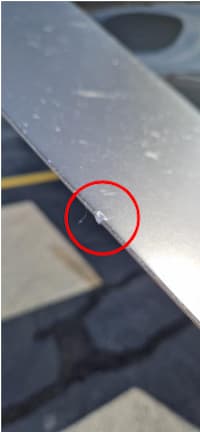
Fatigue cracking and fracture of a propeller blade can lead to airframe and engine damage and a possible loss of control, it continues.
The safety alert also notes that airplanes used for aerial application and coastal operations may be at higher risk for propeller blade damage because they can be exposed to chemicals or salt-laden moisture, which can cause corrosion that leads to a propeller blade fracture from fatigue cracking.
“Any airplane operating on an unimproved or backcountry airstrip is also at high risk for propeller blade damage because loose rocks, gravel, or debris on unimproved airstrips can create small nicks on aluminum propeller blades that can turn into large fatigue cracks,” according to the safety alert.
The NTSB released the Safety Alert after investigating several accidents and incidents where a failure to properly inspect and repair small damage to aluminum propeller blades resulted in propeller blade fatigue cracking and fractures.
Some of the accidents include:
The left-side aluminum propeller blade of a Beech 58 separated from the airplane in flight. The pilot was able to land at the nearest airport where an examination of the propeller blade fracture surface revealed signatures consistent with high-cycle fatigue.
It is likely that damage associated with the fatigue fracture origin was present during the last 100-hour maintenance inspection, about 28 flight hours before the incident, and during the subsequent preflight inspections, though the presence of black paint covering damage in the fatigue origin area could have made it more difficult to detect.
Though obscured by paint, the defect would have been detectable with careful visual inspection, which should have prompted further inspection and repair. (CEN22LA250)
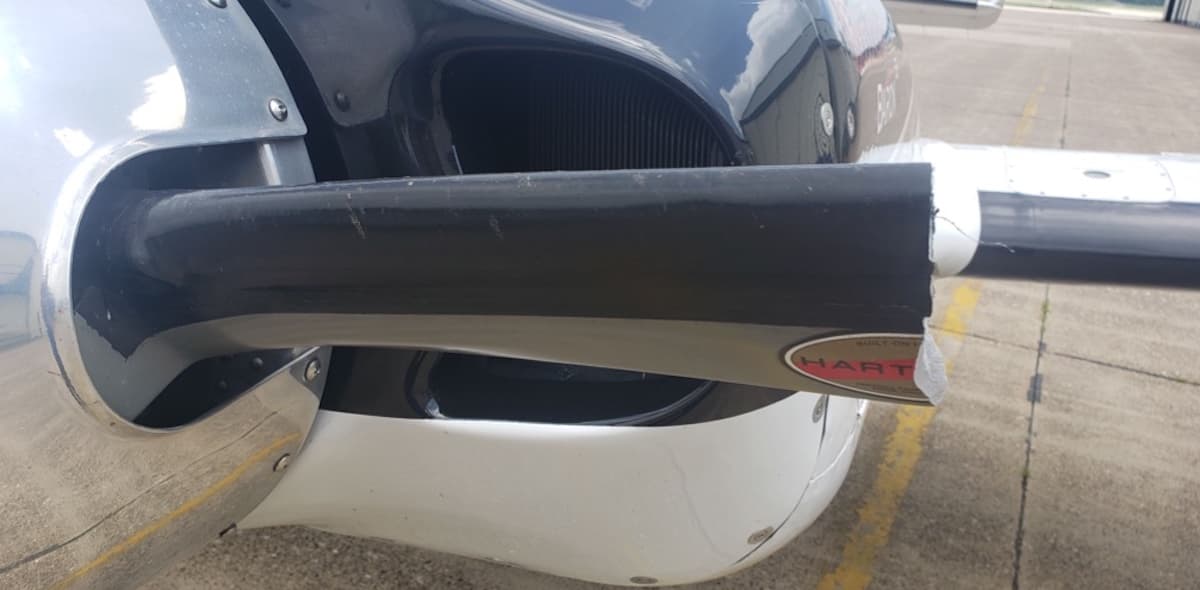
In another accident, a portion of an airplane’s aluminum fixed pitch propeller blade separated during takeoff, and the pilot performed a 180° turn to land back to the runway.
An examination of the propeller blade revealed fatigue cracking initiating from corrosion pits on the camber or front side, near the propeller blade tip. Maintenance records indicate that the propeller had not undergone a manufacturer-recommended overhaul in the eight years since it was installed on the airplane in 2015.
If the recommended overhaul had been performed, the corrosion pits that led to fatigue crack initiation would likely have been detected and removed, preventing the blade separation. (CEN23LA218)

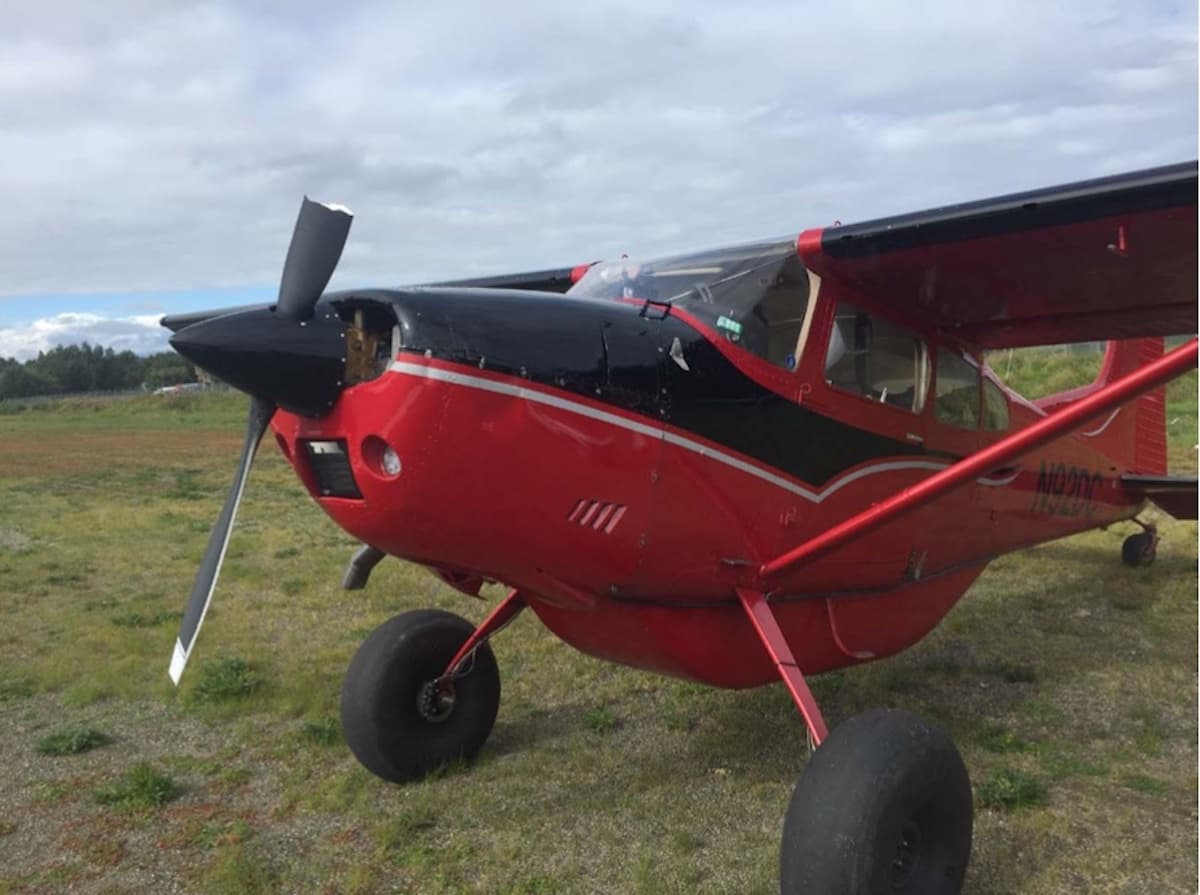
In a third accident, the aluminum propeller blade on a Cessna 185 fractured while the pilot was taxiing for takeoff, leading to excessive vibrations that substantially damaged the engine mount.
A post-accident examination of the fractured propeller blade revealed that a nick in the leading edge, likely from frequent operation on unpaved runways, led to fatigue cracking and fracture.
It is likely the nick was present during the preflight inspection and the pilot did not adequately inspect the propeller blade. Had the propeller blade been adequately inspected during the preflight inspections and repaired, the airplane likely would not have sustained substantial damage. (ANC17LA052)
What Can Pilots and Aircraft Owners Do?
The Safety Alert includes a number of suggestions, including:
- During preflight inspections, inspect all areas of the propeller blade for damage, such as nicks or corrosion. Include the back/face side of the blade and pay particular attention to the leading edge. Refer any findings to a qualified mechanic for inspection and repair before further flight.
- Following any propeller work, have a second person inspect the work. If any propeller blades need to be repaired, ask another mechanic to inspect the work if they are available or inspect the work yourself. Depending on the type of repair, another pilot may also be able to inspect the work.
- Consider increasing the frequency of propeller blade inspections by maintenance personnel for airplanes that are used for backcountry, aerial application, and coastal operations because they may be at higher risk for propeller blade damage.
What Can Maintenance Personnel Do?
“Always properly and comprehensively inspect aluminum propeller blades,” the Safety Alert recommends, adding some tips:
- Inspect all areas of the propeller blade, including the back/face side of the blade, paying particular attention to the leading edge.
- Inspect the propeller blades section by section; consider marking off sections of large propellers to ensure complete coverage.
- Use the best possible light and at least 10 times magnification for any questionable areas.
- Be aware of any cosmetic painting that may obscure underlying surface damage that needs to be repaired.
- If any propeller blades need to be repaired, ask another mechanic to inspect the work as well. Depending on the type of repair, a pilot may also be able to inspect the work.
- Increase frequency of propeller blade inspections for airplanes that are used for backcountry, aerial application, and coastal operations because they may be at higher risk for propeller blade damage.
You can find the full Safety Alert, which includes links to a number of other resources, at NTSB.gov.
Titanium propellers would have a better life span that aluminum but they would be expensive.
Thanks Michael.for your reply.
John.
Is there a source for data with regards to number of aluminum propeller blade failures from each propeller manufacturer-?
If the FAA; NTSB; the propeller manufacturers or any other reputable sourch have tabulated comprehensive lists, it would be helpful to see.
The only info that I could find is a search of the NTSB database for ‘propeller failure’.
It returned 49 reports over 50 years, but some are not prop failures.
So, there appears to be few reports.
see;
https://www.ntsb.gov/Pages/ResultsV2.aspx?queryId=8ae7dde5-19cc-4ba0-8f94-77e3976468ca
I guess we are to assume the nick or scratch that caused the Beech blade to separate was not under the deicing boot.
For the want of a nail the kingdom was lost!
or maybe, ‘a stitch in time, saves nine’.?
FAR 43 Appendix D (h)(1)
It’s been there… forever! Why are we having a problem with this?
So, what’s new? Metal blades have been in service for decades with the understanding that
they should be checked before each flight for chips and cracks along with dressing them by approved repair people when irregularities are noticed plus inspection at annual time. Ever have the feeling that this “alarming” lengthy article consisting of old news is a possible precursor of manufacturers applying for ADs on metal props to promote the sale of new composite props?
As I commented on this, on another website;
I removed the 4,000+ hour and 60 year old prop on my Cessna and sent it for overhaul. They found a crack in the center bore, adjacent to a bolt hole, and red tagged the prop.
I got an overhauled prop and the shop suggested that I apply ‘prop guard’ tape to the leading edge, a pma part.
So, after 3 years now, the prop looks new with only a few ‘dings’ in the tape, which can be replaced in 2 inch segments, if it is damaged.
So, no more ‘sand blasting ‘ of the paint or nicks on the leading edge.
BTW, a structural engineer that designed props, indicated that my prop was 10x that number of stress cycles for aluminum to likely failure.
I might consider a composite prop, if one is STC’d for my engine/aircraft.
Note that the reduced prop inertia will put added load on the starter motor.
Ask not what pilots and maintenance personnel can do, ask what manufacturers can do!
Why are we still building propellers from one of the most fatigue prone materials?
Hartzell and others have demonstrated the vastly superior properties of composite materials for propellers.
Klaus Savier
Light Speed Engineering
Then there is the FAA tax for the STC to use a different propellor. sigh.