


Not really general aviation, but cool nonetheless: Skydweller Aero has just successfully completed the first flight of its solar-powered aircraft.
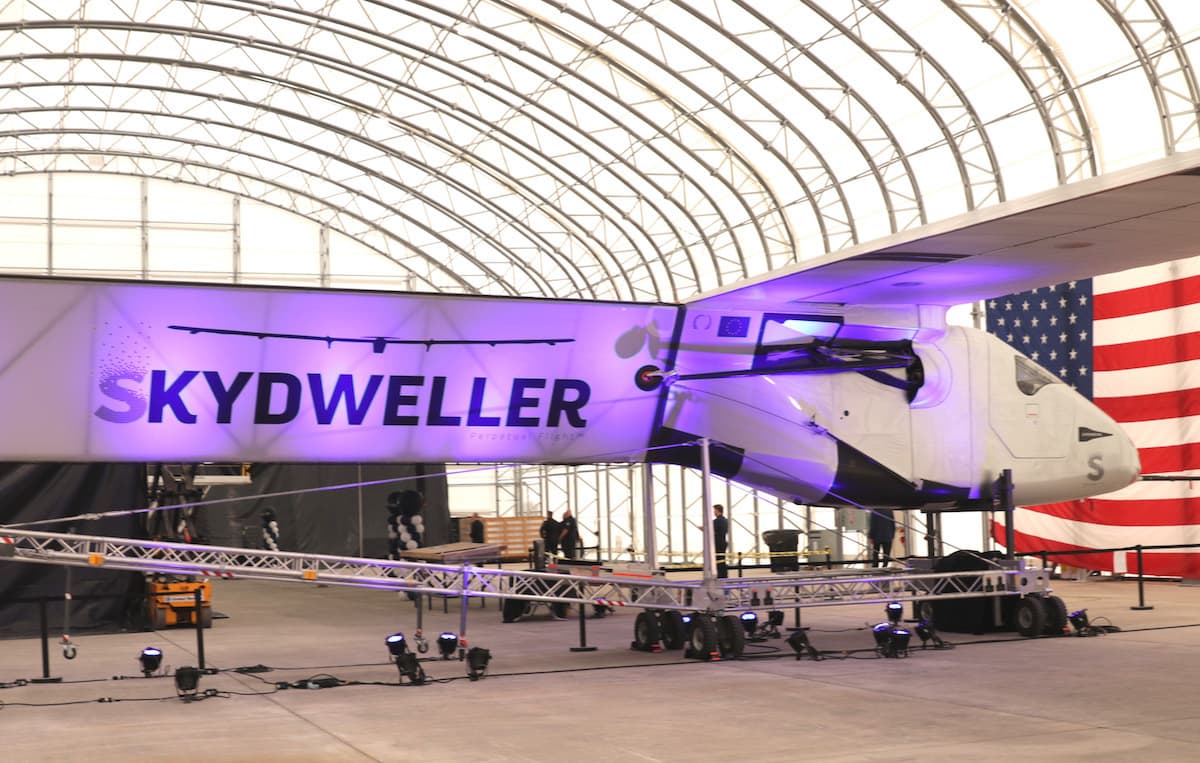
Skydweller, an uncrewed solar-powered aircraft that has a wingspan greater than a 747, completed its first flight April 4, 2024. According to company officials, the aircraft took off, flew, and landed by itself, without humans on board or in control, from Stennis International Airport (KHSA) in Bay St Louis, Mississippi.
Skydwellers can be deployed for long-duration missions such as providing continuous aerial coverage above conflict zones, surveilling naval activity in contested waters without risking pilots’ lives, detecting drug smugglers and pirates at sea, and tracking wildlife migration and poaching in Africa, according to company officials.
Skydweller aircraft are capable of what the company calls “perpetual flight,” staying aloft for 90 days or more, at altitudes of up to 45,000 feet.
“In contrast, current combustion-powered aircraft, including piloted aircraft and drones, are limited to approximately 40 hours maximum flight time, limited by the endurance of pilots, the amount of fuel a conventional aircraft can carry, and the need for frequent maintenance,” company officials said.
“This is a true, world-changing first in the aerospace industry,” said Robert Miller, CEO of Skydweller Aero.
“We are applying cutting-edge, 21st century materials science, artificial intelligence, and software development to an industry that has spent more than 100 years building piloted, combustion-based aircraft,” he continued.
For more information: Skydweller.aero

My deepest congratulations to the skydweller creators. Would love to see this concept materialize in the GA world. I feel that, while this is the product of past experiments (failed and successful), skydweller epitomizes the real beginning of the solar powered aircraft concept.
I personally have a real attachment with bush flying, and, combustion powered aircraft (I’m a total fan of the DeHavilland Beaver and fly in them semi-frequently in the Alaskan bush), but I also am not opposed to breakthroughs in other, more fantastic realms, especially where there is practical application. Thanks for sharing General Aviation News!
Amazing accomplishment. I would love to read a transcript of a flight to and from 45,000 ft. The materials must be tougher than they look. At 45,000 ft., what is the maneuverability specifications? Thin atmosphere, slow speed, low thrust…? Absolutely amazing. Congratulations!
There’s no mention of the cruise airspeed on the website, but from the videos it looks to be slow…maybe 30-40 kts.
So, it may be ok so a long surveillance flight, but useless for moving folks or things from place to place.!
The other electric aircraft are limited use with the very heavy, low energy capacity batteries.
The sage comment by Ms. Bjorkman is of value, most of the other focus so the here and now, see but problems and are laced with negativity.
I suspect we’d find the same crew hooting down Orville and Wilbur.
The nowadays reality is that the words of Mr. Kent Misegades, unfortunately, are true. In fact, what has happened in a successful daily work for aviation since the flight of Betrand Piccard’s Solar Impulse?
What’s the fun in that
Seems like a waist of time. Solar power creating energy for batteries is one thing. For getting aloft by solar is another. The CEO’s words ,”100 years of building piloted, combustion -based aircraft”, were used as if the past century has been some kind of backward experience. I suppose I may sadly exist in a dwindling crowd,,,, a crowd of pilots at the controls of flying machines that make some loud noises that thrills our soles, who are getting oh so tired of reading about solar flight, drone flight, unmanned flight and electric air taxi services, etc. I stay subscribed to “General Aviation” because of the exciting but dwindling stories of real pilots and airplanes. I don’t think I’m the only one in this crowd.
Maybe not GA now, but it’s exciting to see an aircraft with solar power that has some practical application, unlike previous solar aircraft that have been mostly demonstrators. And the technology may eventually work its way into GA aircraft. To the inevitable naysayers, just remember that the earliest jet engines weren’t as powerful as the best recips of the 1940s. New tech almost always takes time to catch up.
what’s the payload, and radar cross section, any idea?
They don’t seem to be advertising performance numbers beyond endurance just yet. I’m not going to try to make any guesses about RCS, but from the photos it looks like the payload is at least that of a Global Hawk, and probably more. Their website is here: https://www.skydweller.aero/ — looks like a very interesting company, partly based in Spain.
from the website, 800 pounds; more than a Cessna 172 with full fuel.!
I assume that to fly continuously, day and night, that it either climbs to some altitude during the day and then glides during the night…or, there a batteries aboard to supply some night flight power. ?
Either way, it is a demonstration of the advanced materials and power system in a drone configuration.
Congrats to them.!!!
Total waste of money, talent and time. No wonder we are becoming one of the worlds back water nations!
It is interesting and could be used as somewhere?
Maybe the Chinese will buy it and fly it across the US the way they did with that powered balloon??
What is new here? Betrand Piccard’s Solar Impulse looks very similar and first flew in 2009. I visited the project in their hangar in Switzerland back then. It is impressive, but flimsy. It served no real purpose beyond a few record flights and is highly impractical.
This is a fascinating development in the aerospace field. The Skydweller’s successful first flight showcases the potential of solar power in advancing uncrewed aviation technologies. It’s exciting to think about the environmental and operational impacts this could have, especially for long-duration missions. Truly a remarkable step forward!