

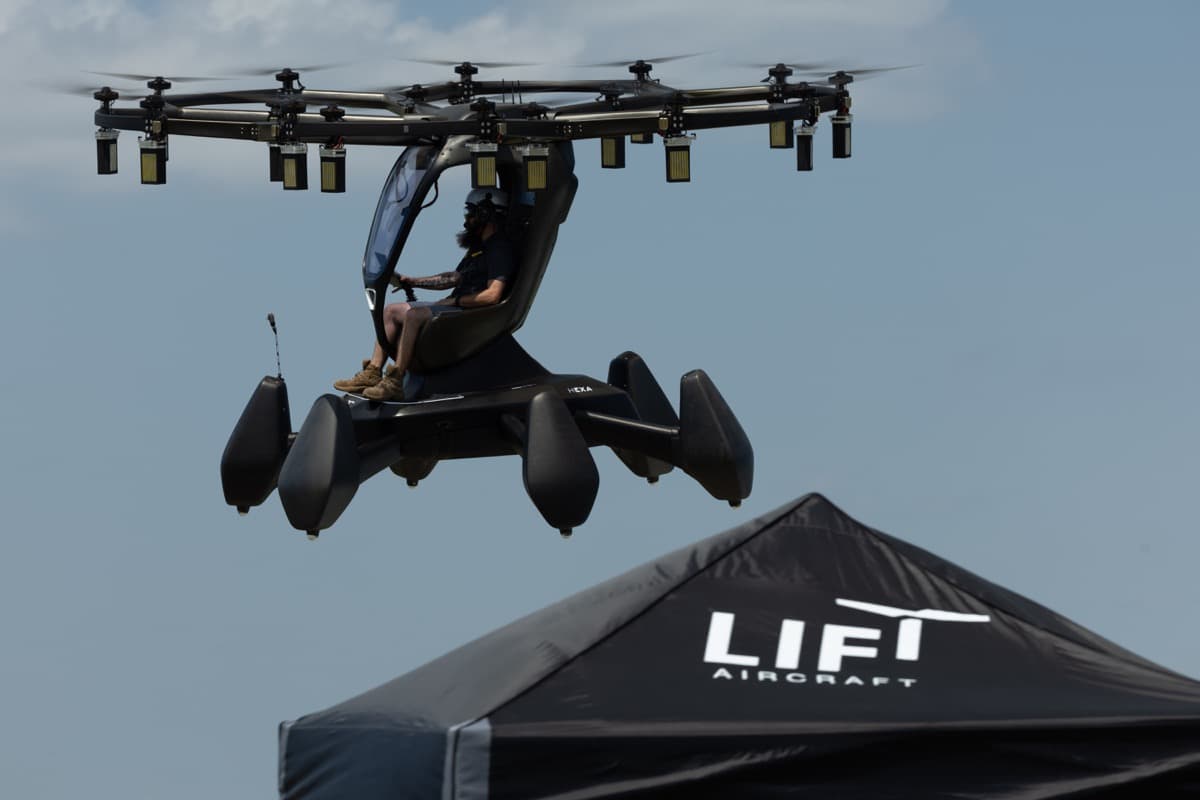
The future is now.
That’s according to Jace McCown, chief pilot of LIFT Aircraft, when he talks about the company’s Hexa, which looks like an oversized drone but can be flown by almost anyone.
“This is not future tech. It is now tech,” said McCown. “This is not a prototype. This is in production and you can book a flight today. This is happening.”
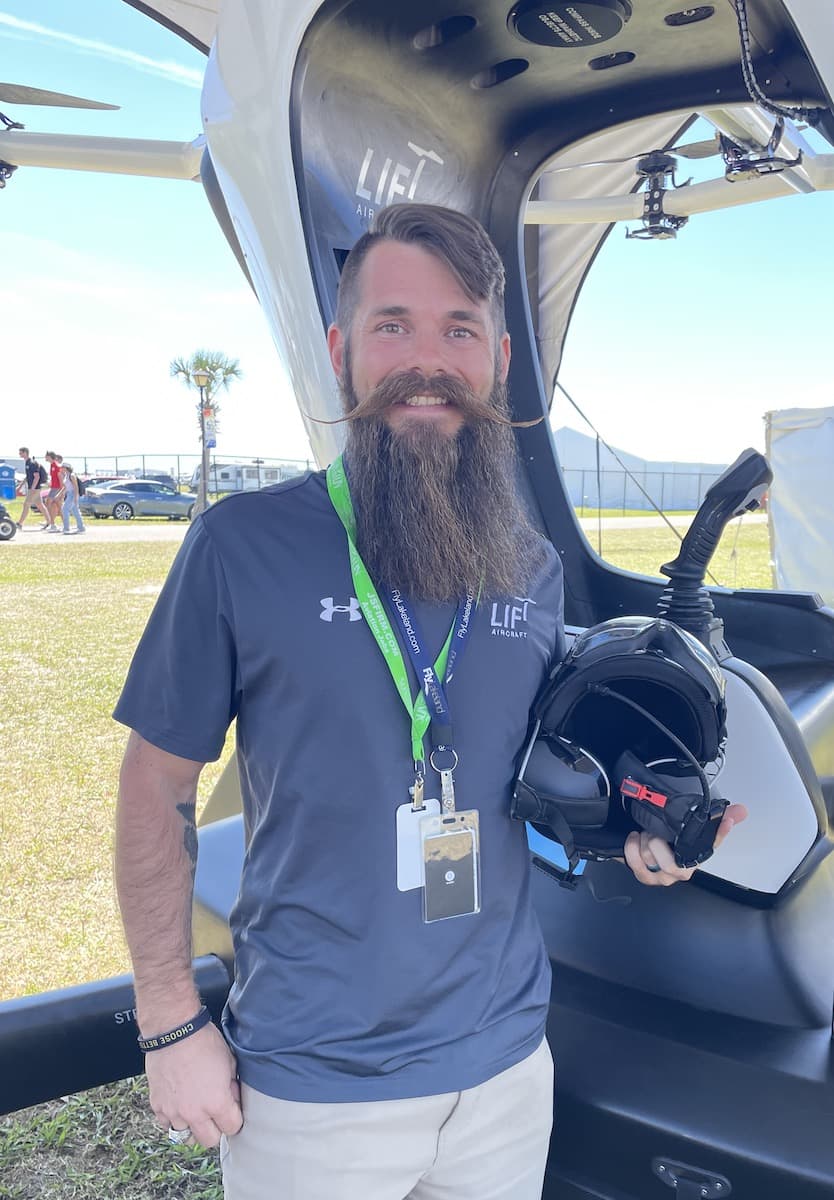
According to company officials, there is a 1,500 person waiting list to take Hexa aloft for a hover flight.
Hexa captured a lot of attention at the 2024 SUN ’n FUN Aerospace Expo, where the company offered demo flights as part of a 25-city United States tour.

LIFT officials actually got to Lakeland, Florida, home to SUN ’n FUN, several weeks before the show opened.
“We were here for a month in advance of SUN ’n FUN, and we flew about 70 people,” McCown said, adding the company also stayed in the area another two weeks after the show closed April 14.
For the 50th anniversary of the show, LIFT Aircraft brought two vehicles, one for demo flights and one for static display in the new Future ‘n Flight Plaza.
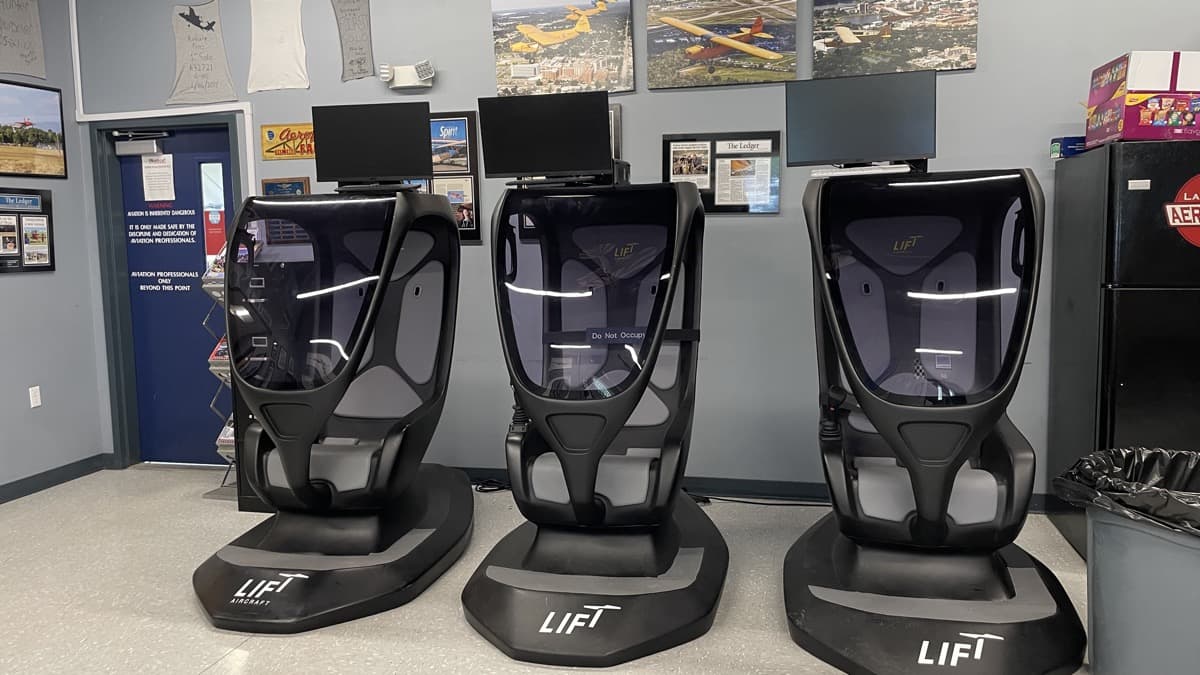
The company also brought four flight simulators. One was at the Future ‘n Flight Plaza, while the other three were placed in the Lakeland Aero Club, near where the demo flights were conducted.
What It Is
Hexa can be operated like a drone or manned like an ultralight on floats. This single-seat, FAA Part 103 vehicle, which weighs 488 pounds, is powered by 18 lithium battery electric motors.
“We are constrained by technology and regulation, so this is an ultralight class aircraft,” McCown said, adding that because it is classified as an ultralight, a pilot certificate is not needed to fly the Hexa.
And while he says the future is here, he acknowledges that the Hexa is also constrained by today’s technology.
“We are all electric, which means we are stuck with the battery life that we have today, which is on the order of six to 12 minutes, depending on the payload,” he said.
Because of that, the company’s “whole business model” is based on offering recreational flights to the general public, he explained.
How To Fly It
Anyone interested can book a flight on the company’s website, LIFTAircraft.com.
If you can’t make it to one of the cities on the tour, you’ll need to travel to Austin, where the company is based, to fly the Hexa.
So far, about 170 paying customers have taken the Hexa aloft, according to McCown.
He recommends finding some friends and booking your flights in groups of four for the hour-long ground school training, which is followed by an instructor-guided virtual reality simulator session.
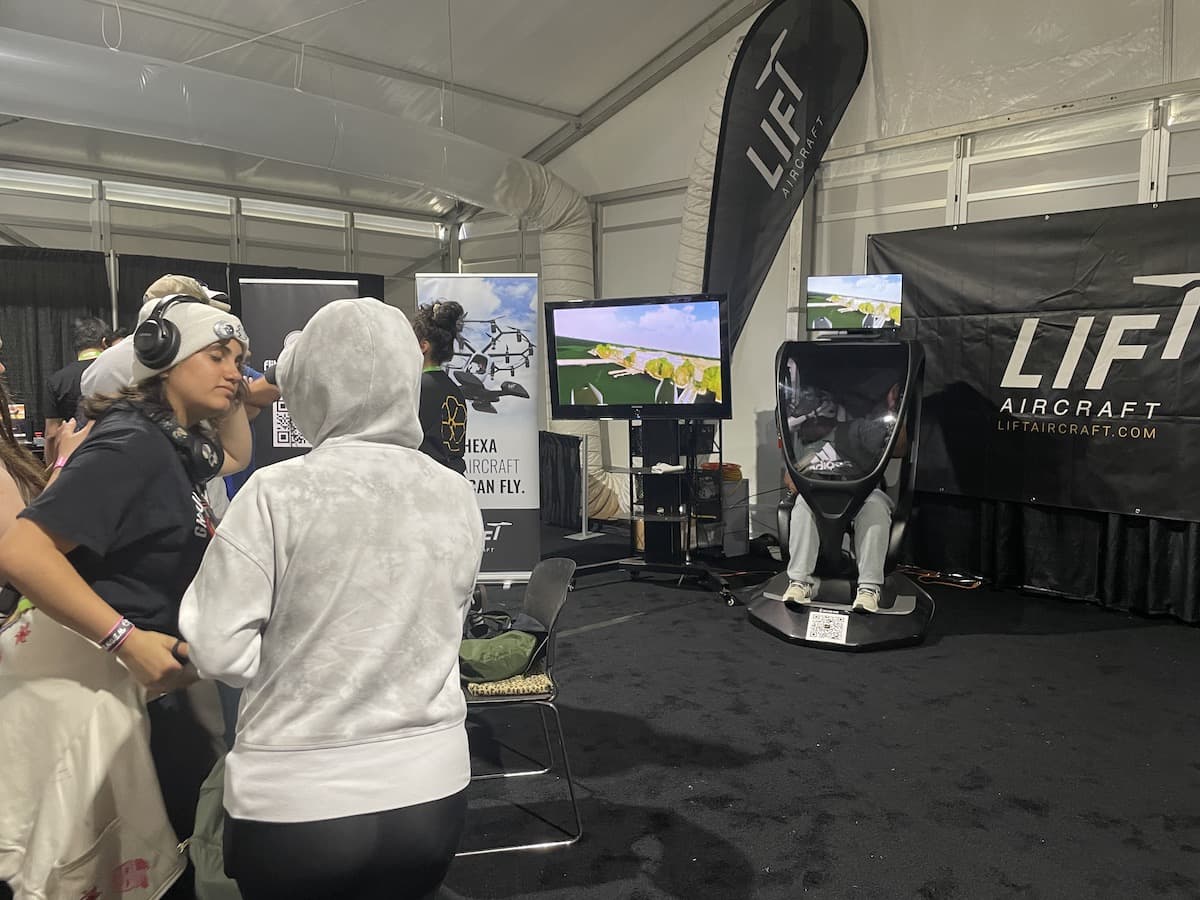
In the VR simulator, prospective Hexa pilots get the chance to practice a sequence of maneuvers.
“After an hour of flight instruction, your group heads to the flight line, where you’ll take turns flying in sequence,” he continued. “It takes between five and 10 minutes to change batteries between pilots and, for $250 per person, that’s the entertainment experience we are offering.”
“People that come to us are from all walks of life,” he continued. “Some are experienced aviators and some people have never played a video game before, much less flown in something like this. So we aim for the least common denominator in terms of what’s going to make you feel comfortable and want to come back again.”
He pointed out that all the controls are on the single joystick.
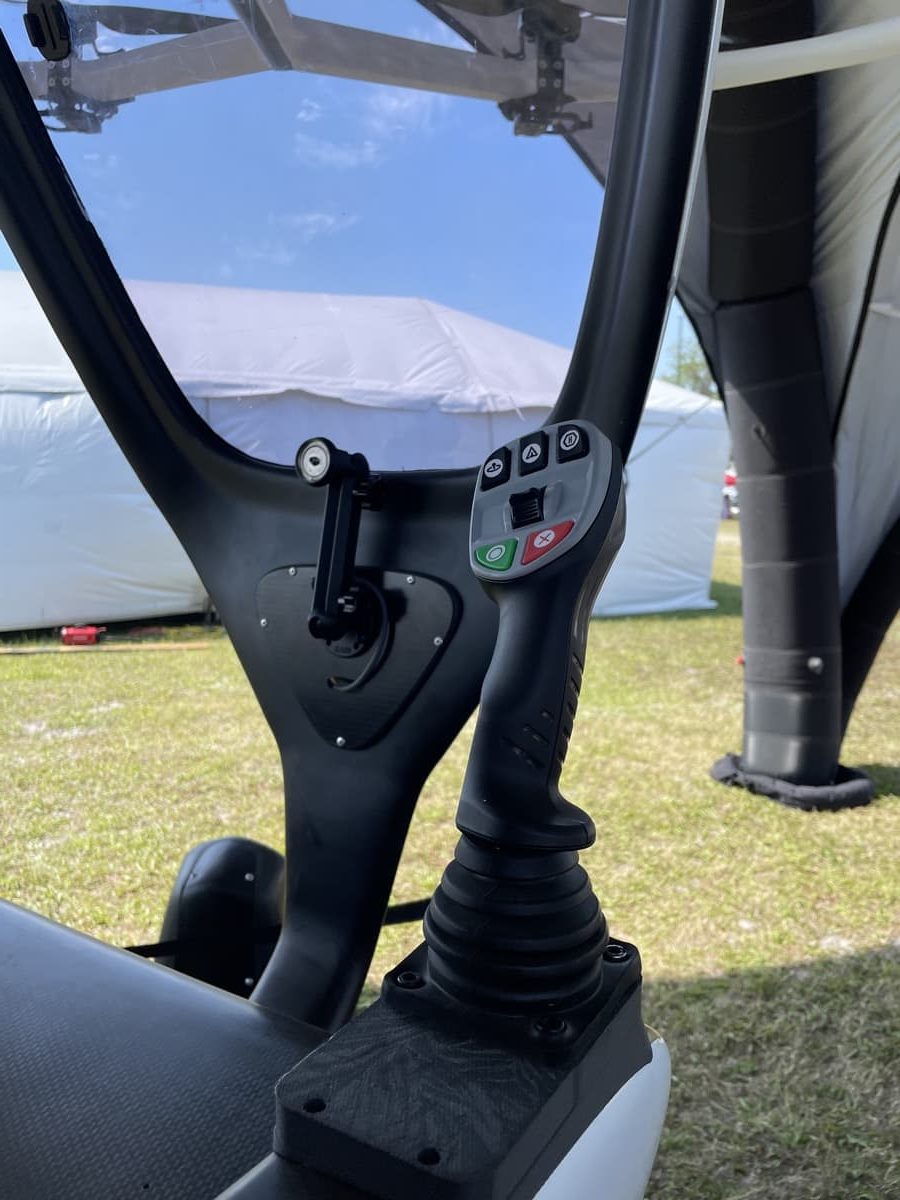
“Across the top we have three buttons: Takeoff, land, and return to home,” he said. “In flight, you have your stick, which controls lateral directions — forward, back, left, and right — and that’s just changing position across the ground.”
McCown pushed the joystick forward, noting, “this isn’t pitch in the way you’d think of traditional aircraft. I’m asking it to go forward. The drone decides what to do to make that happen.”
Safety Redundancies
McCown emphasized the safety of the flights.
“A lot of computer automation and assistance goes into this,” he said. “We have a triple-redundant flight control system — three flight computers that are doing all the math, and a fourth independent computer that decides which one of those computers is actually flying the aircraft at any given time.”
“We have a lot of safety built in from the software side with the limits we program in, but then from the hardware perspective, we also have a ton of safety built in,” he added. “The aircraft can fly with one motor out, but we will bring you back if that happens.”
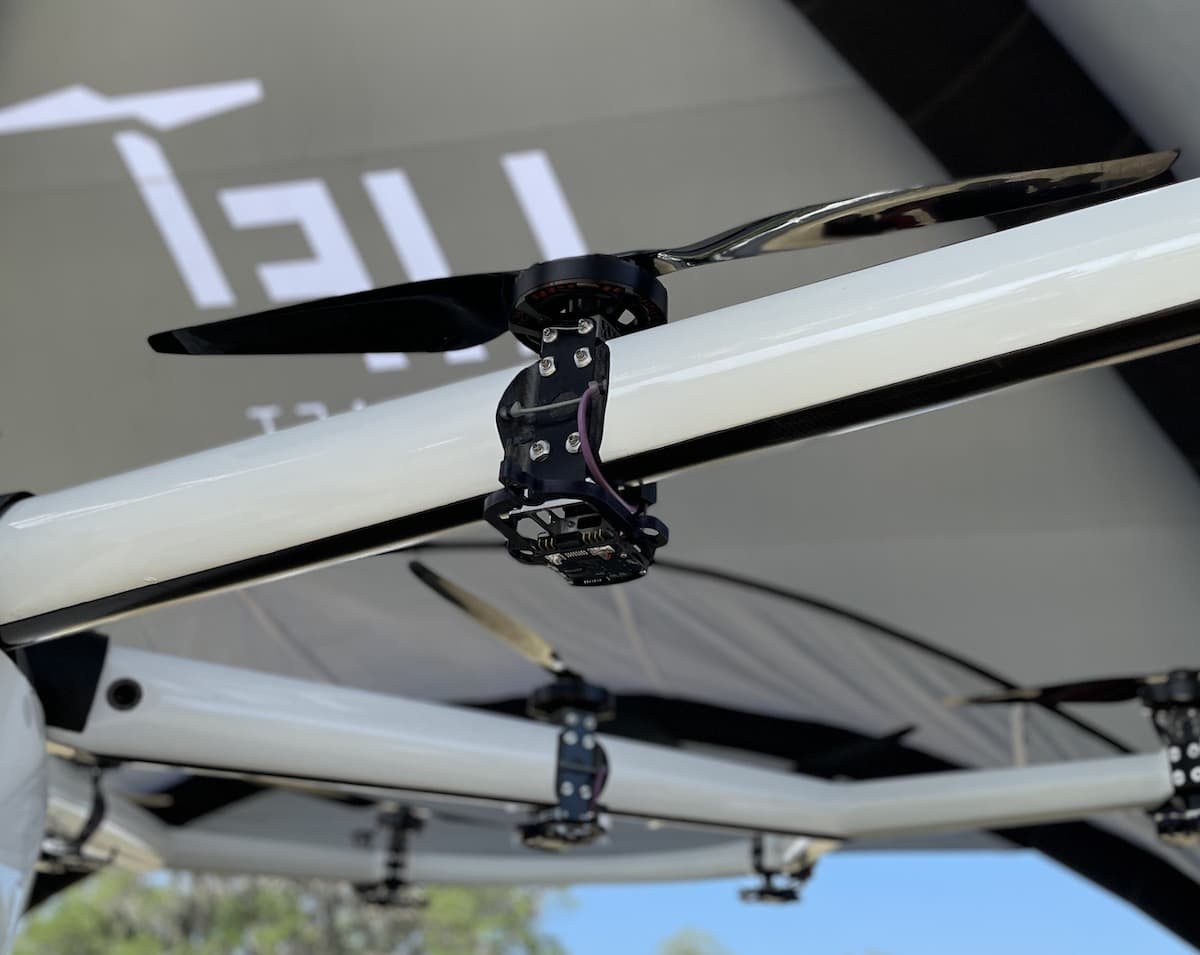
“We did a manned test where we cut a motor on purpose. That video is on YouTube. We’ve simulated that you can lose as many as three adjacent motors and still maintain flight,” he said. “You can lose as many as six, but it has to be the right six. You lose six right next to each other, and it’s not going to be a great day. That being said, each one is independently powered and signaled. From a hardware perspective, there is 18 times power redundancy. Each motor has three different ways to receive a signal, so if one fails, it still has two other ways to receive a signal.”
If the Hexa runs low on battery during your flight, it will bring you home automatically, according to McCown.
“If the power gets really low, it will just land you right where you are,” he added.
Hexa, which can land on water or land, is also equipped with a ballistic parachute, which deploys automatically if it senses an emergency.
As a programmable vehicle, it can, in time, be set to sense and avoid other obstacles on the ground and in the air, McCown said.
Preparing For The Future
The flights being conducted now are just the beginning for Hexa, according to McCown.
“The beginner mode that we have people fly in on their introductory flight is a very small subset of the total capability of the aircraft,” said McCown.
“One of my most interesting flights was on a very windy day, and the steady state speeds were well above our programmed maximum forward speed, so I asked to go forward, but I had a tailwind that was faster than my forward speed would allow. So, when I asked to go forward, it was actually pitched back because it was keeping me from exceeding my forward speed.”
“I knew it worked, but that’s when it sunk in that this is amazing,” he said. “It’s making what you request happen and not necessarily in the way you would think, either. If you’re flying up there and you let go of the joystick, you can wave with both hands — like I do in the demos — and the aircraft will hold position even if the wind tries to push you away. The aircraft will compensate for it without you even asking.”
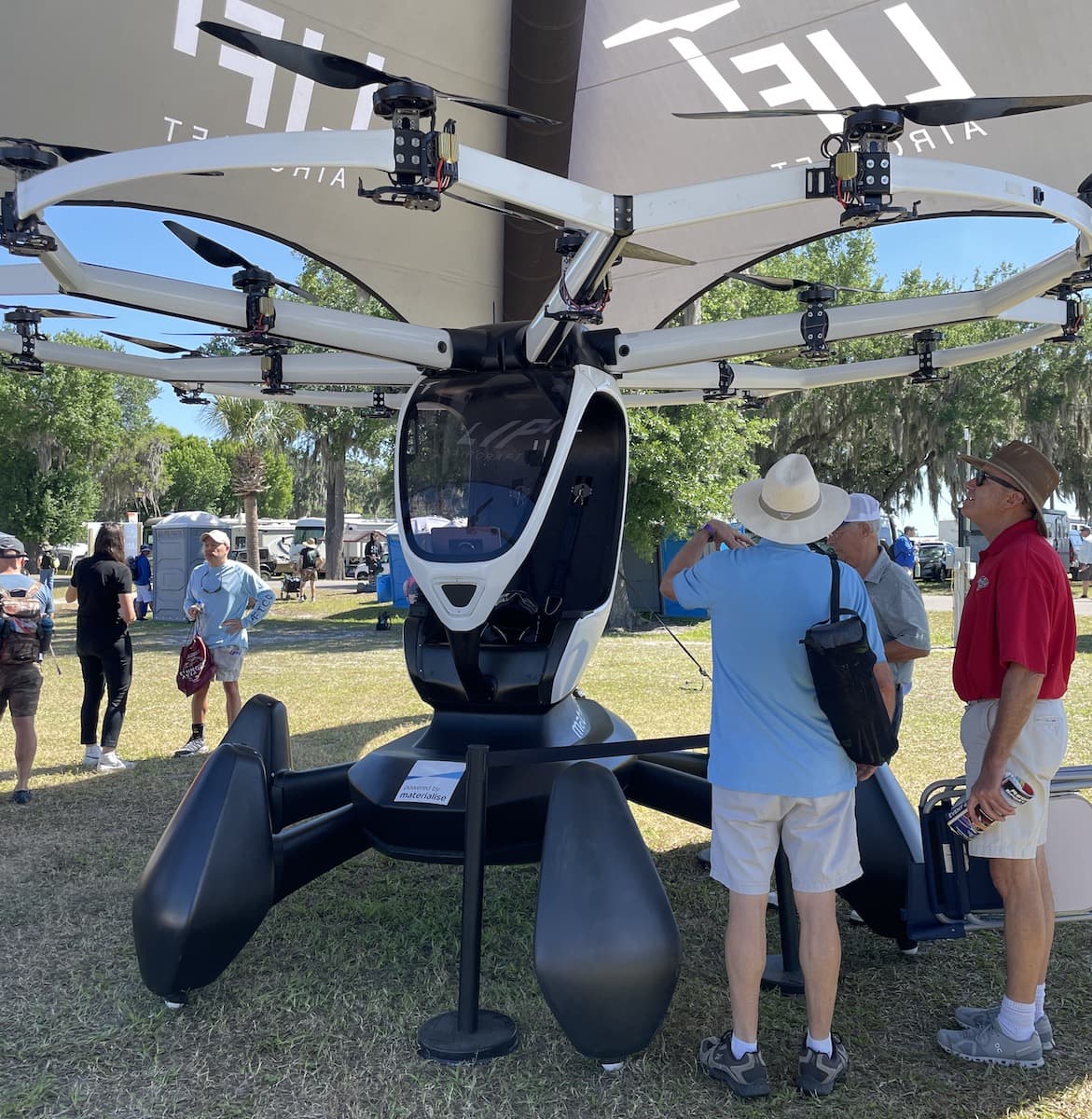
“We have designed this aircraft from the ground up to be certifiable, but we’re using the ultralight regulations to get our customers in the air today,” he continued.
“As regulations continue to change to allow for things like point-to-point transport, that’s when we’ll be ready to go on. Having already been flying customers and having a financial and engineering basis, we have a stepping stone from which we can go into those things as they open up.”
LIFT Aircraft is testing the speed limits of the Hexa vehicle with the United States Air Force Agility Prime program, which is designed to “accelerate development of the commercial electric vertical takeoff and landing (eVTOL) aircraft industry.”
“We’re not targeting inter-city flight with our vehicles, but intra-city flight, point-to-point — more on the scale of an electric scooter,” McCown said. “We like to call that market micro-urban air mobility. There are plenty of places where a ferry is used to cross a river or when the bridges are clogged, and something like this can allow you to hop across.”
Find out more at LIFTAircraft.com.

The weight limit for Part 103 Ultralights is 254 pounds. This weighs in at 488 lbs???
I can’t see why this state fair ride gadget has much to do with General Aviation. Poor choice.
Sounds like a very expensive, very short thrill. In the day one could stay aloft for nearly nothing on a bamboo bomber, a DIY hang glider made from bamboo poles and plastic sheet. Frankly, I think they are safer than this Rube Goldberg rotorcraft. But heck, as long as this contraption is 100% funded by the private sector – go for it! I wish the developers success.