

Henry, a private pilot in Pennsylvania, writes: So with the election coming up, it seems like TFRs are popping up like mushrooms. Those VIP ones are BIG. But here’s my question: I know if you have a TFR over your airport, and you are a GA pilot, you are pretty much grounded — but what about taxiways? Are the movement areas and ground operations also affected by the TFR?
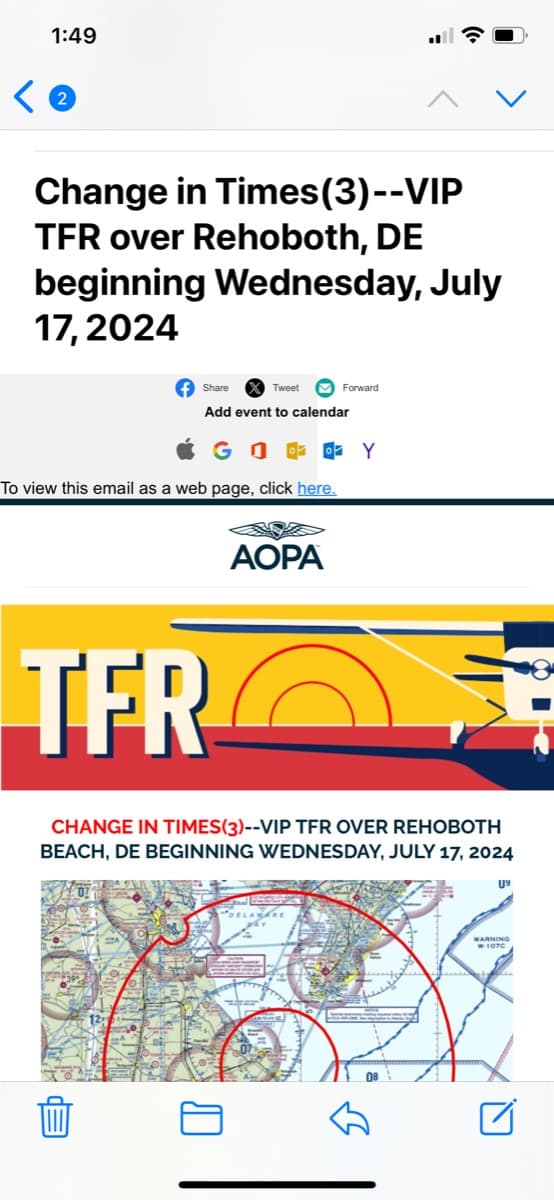
Great question, and hello, neighbor. I just moved to the northeast myself and you’re not kidding about the mushrooms. Holy cow. It seems I get five emails a day from the Aircraft Owners and Pilots Association (AOPA) warning me about TFRs (which I appreciate very much, AOPA, keep them coming).
Now, before we dig into your question, I want to unpack some definitions for our student pilots, non-pilot navigators, and aviation-enthusiast readers.
Working backwards, we’ll start with taxiways and movement areas.
I’m betting most people have at least a general idea of what a taxiway is — but just in case — they are “roads” for aircraft to get from one place to another place on an airport. Most commonly, they serve as routes for airplanes to go back and forth from parking areas to runways.
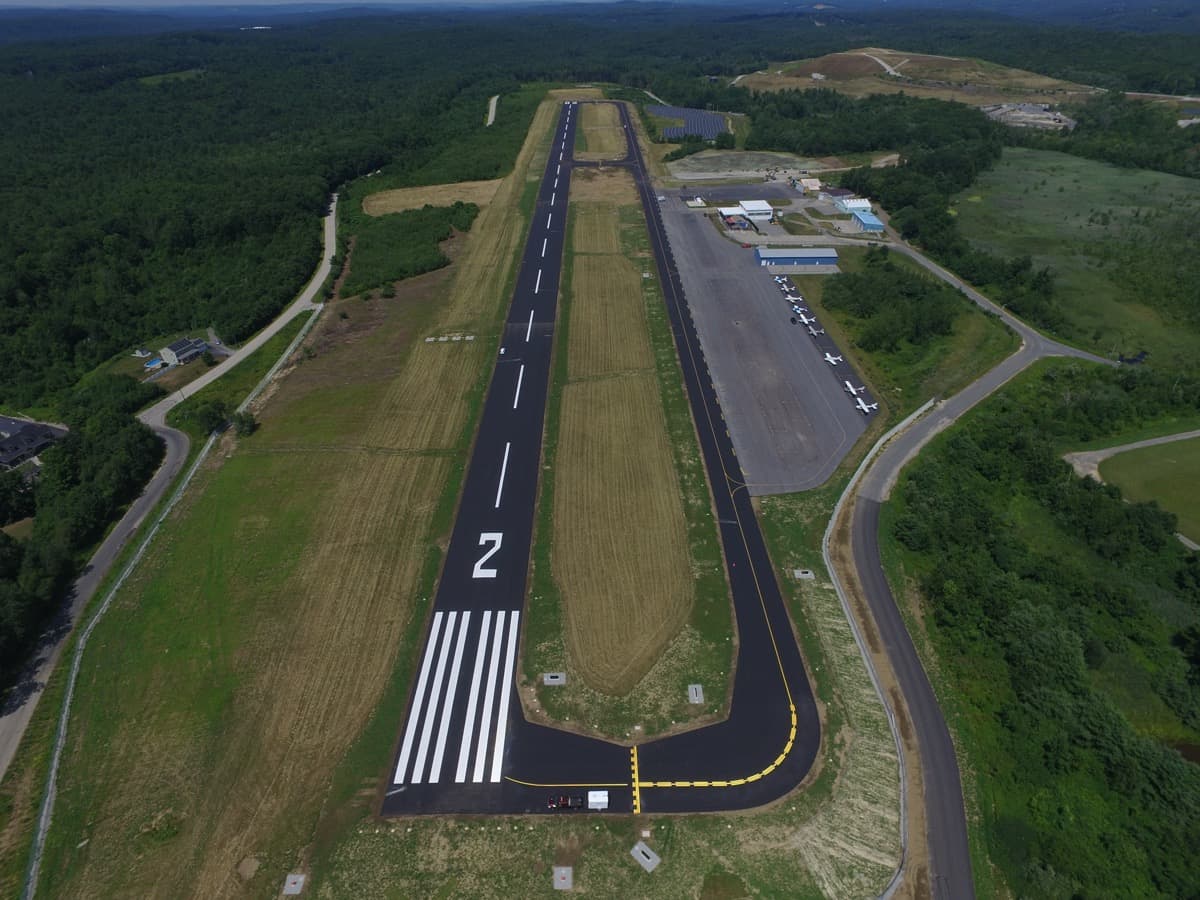
If the runway is the highway to the sky, then taxiways are the quaint little urban roads that take you from your house to the turnpike. Like urban roads, they have names, but the names aren’t as charming as the names given to even the most boring of streets. Taxiways are named with letters: A, B, C, and so on. And often numbers as well, like A3, B4, etc.
At really big airports there are so many taxiways that they run out of letters and have to start doubling them up: AA, BB, CC, and so on.
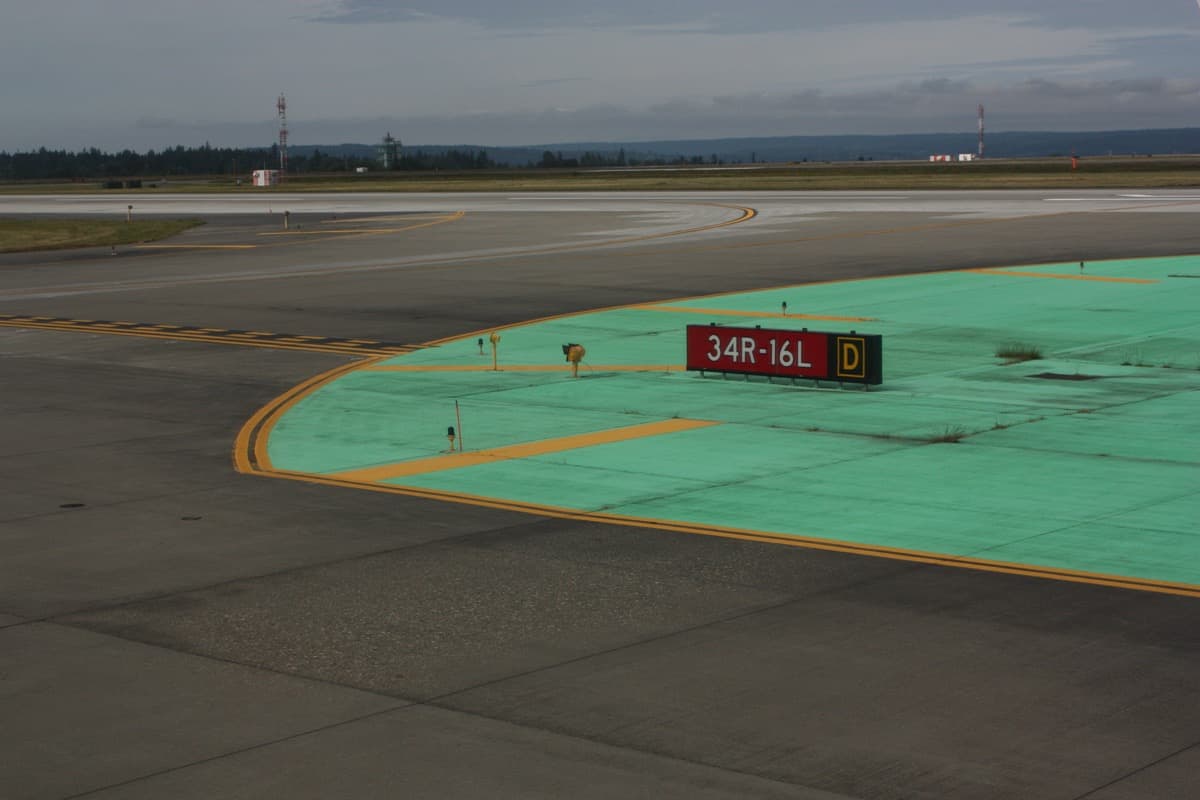
Taxiways are for ground operations and aren’t (generally) used for takeoff or landing operations.
Movement areas are taxiways at controlled airports that require a clearance from ground control to use. Some taxiways are outside of this zone of control and have the rather odd-sounding name of being in the non-movement area and here you can taxi without “permission.”
I think that’s odd, as you need permission to move in the movement area but are free to move in the non-movement area. That just seems backassward to me, but that’s the way it is. These non-movement areas are generally around hangars and fuel farms.
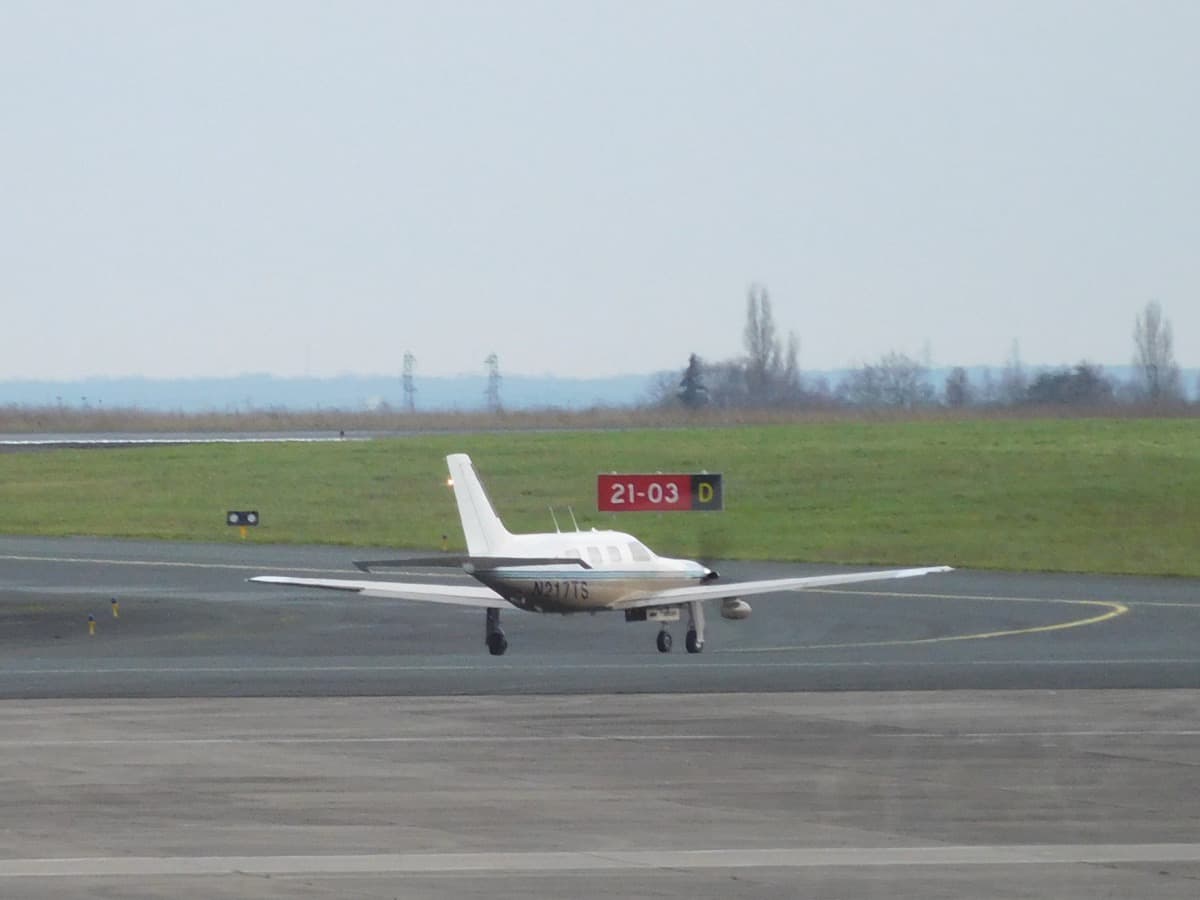
The boundary between movement and non-movement areas is marked with a painted yellow line that looks like a one-sided passing lane on the highway: A solid line (on the free-for-all side, “blocking” the way) and a parallel dashed line (on the air traffic control side). These lines are commonly found at the edges of parking and ramp areas and sometimes “create” a taxiway along the edge of a large apron.
At non-towered airports all taxiways are fair game and there is no movement area. It’s all non-movement, which means you are free to move all you want.
Moving on with the definitions…TFR stands for Temporary Flight Restriction.
It’s a transient re-classification of airspace from whatever it normally is into the restricted category of airspace.
Just so you know, “restricted airspace” is actually a common and normal part of the national airspace system. Not always, but often this airspace is set aside for military or security use. The established ones are essentially permanent and are charted. Contrary to popular belief, you can fly into restricted airspace with the proper permission, hence the name “restricted.” We also have something called “prohibited” airspace and that speaks for itself.
Now, we’ve had TFRs for a long time, but before 9-11 they were usually associated with things like firefighting, disaster relief, and stuff like that, where the restriction was intended to separate the mission aircraft from everyday flights to keep everyone safer.
After 9-11, the TFR became an anti-terrorism tool, as well. They are commonly set up over large open-air assemblies — football games, concerts, and, of course, over large campaign rallies.
There are actually eight kinds of TFRs today, with one flavor being 14 CFR § 91.141 “VIP TFRs” set up as extra protection for, well, VIPs — specifically the president, vice president, and other “public figures.”

These TFRs show up with relatively short warning (on purpose and for security) and, as you say, can be quite large — literally thousands of square miles.
FYI: As an extra alert to pilots based in the so-called battleground states in the presidential campaign, I’ve seen a couple VIP TFRs lately where the times were changed, then re-changed, and re-changed again! Yikes!
OK, so with all of that background, let us consider the impact of a TFR on taxi operations.
And do you know what? Despite all of the (considerable) information that the FAA has put out about TFRs, I couldn’t find anything that addresses ground operations during a TFR — one way or another.
Of course, the “F” in TFR stands for “flight,” so at first blush, you’d assume that, as you are not flying when you are taxiing, a TFR wouldn’t apply to you. But, balancing that, we’ve seen that at a controlled airport, taxi operations can be, well, controlled.
But no worries, at a towered field you’re covered either way. If you ask permission to taxi during a TFR and it’s granted, you are good to go, as even if there was a general ban on taxi ops that I somehow missed, it is legal to operate in a TFR when cleared to do so.
Naturally, you’d need a good reason to be out taxiing around in a TFR, but there are some airports where you do have to enter the movement area to get, say, from a parking area to the fuel pumps, or from a hangar to a maintenance provider.
Of course, TFRs commonly encompass uncontrolled fields too, so that’s a little more interesting. Again, at untowered fields under normal conditions, there is no movement area. So the question becomes: Does the TFR essentially create a movement area?
In the case of a VIP TFR I suspect not, but there’s a small risk that if you are taxiing around, someone might think you are headed to a runway to takeoff and call the authorities, because clearly you are a terrorist.
On the other hand, I do think you could get into trouble at an uncontrolled airport with a different flavor of TFR, in this case one of the § 91.145 variety. Among other events, this type of TFR is the “air show” TFR.
If an air show is taking place, the airspace is closed to everyone but the performers, and a show line is also established as a safety buffer.
I could see how you could get into hot water taxiing around while the Titan Aerobatic Team was smoking the field.
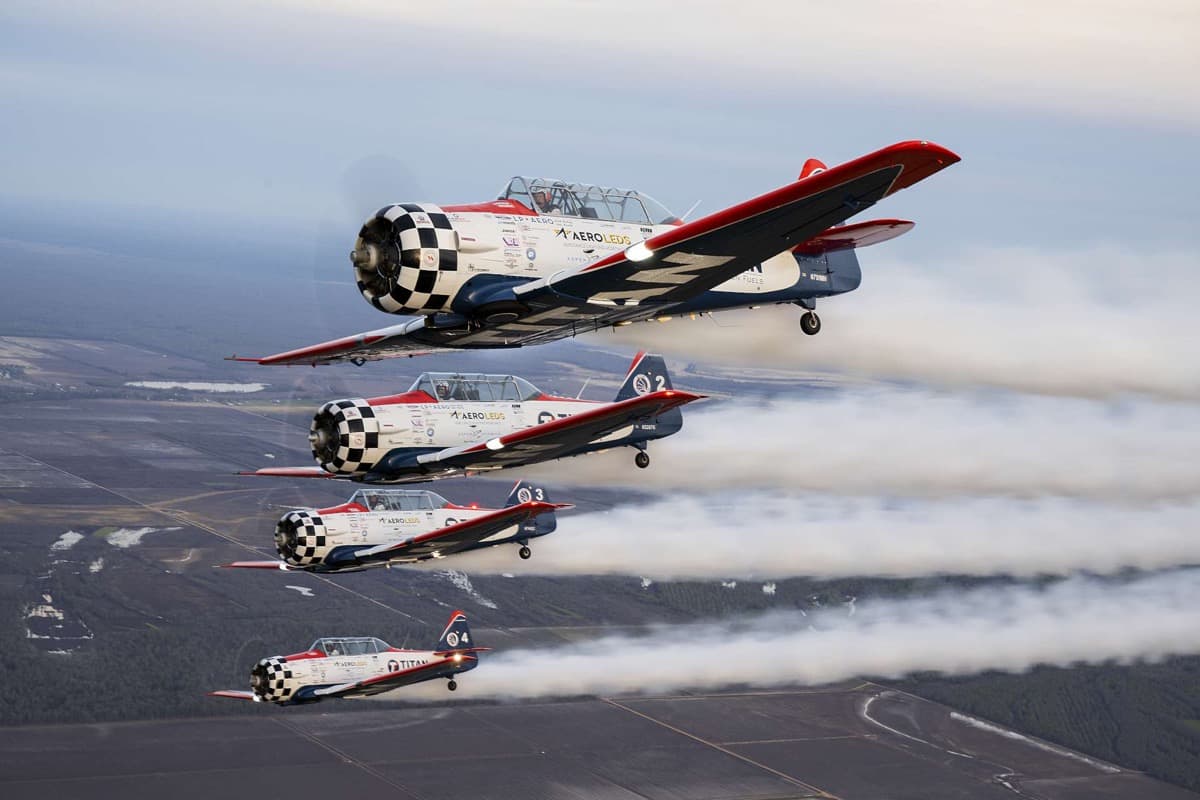
But, that said, any air show worth its salt has an air boss, so just like with the airspace being temporarily reclassified, an air boss becomes a temporary tower at a non-towered airport. If there’s a break in the action and you need to re-position, there’s no harm in asking the air boss for a “clearance.”
But I wouldn’t just go do it. Or you might end up with a temporary suspended certificate.

i should add that during a presidential TFR the tower can refuse anyone taxing on the airport surface and no aircraft is allowed to taxi in the area around AF-1
Check out the TFR going on right now approximately 90 by 60 square miles affecting KSBP, KSMX, KLPC, KIZA, and KSBA lasting for for 7 days.
Biden is on vacation …..for 5 days until after the DNC is over.
There is another around Chicago for the DNC…..
Let them eat cake!
Yes, this VIP TFR will be very disruptive for local and transient aircraft.!!
Aircraft that would fly up or down the coast will be forced to fly over the coast mountains to at least 9,500 ft and into the central valley.
Right after the 9/11 attacks when all aircraft were grounded. No movement was allowed on any airport. Doing so alerted authorities.
A no fly zone existed around the metro area in NY…….NO MOVEMENT WAS ALLOWED ON AIRPORT SURFACES.
Pilots at non towered airports were told not to taxi and police were summoned if anyone did so…..
That is the only time I know of that aircraft were not allowed to taxi on an airport surface