

On average, four planes crash each day in the United States, with almost all of the aircraft involved being single-engine planes.
One in five of those crashes were caused by inflight loss of control, with nearly half of those accidents fatal.
New research from University of Arkansas mechanical engineering assistant professor Neelakshi Majumdar investigates why inflight loss of control occurs in general aviation and how pilots can prevent and recover from it. The work could improve pilot training and save lives, according to university officials.
The paper, published in the latest issue of the Journal of Air Transportation, “is the first rigorous survey to ask surviving pilots why they experienced inflight loss of control and document the human factors that led to the incidents,” university officials said, adding nearly 200 pilots completed the survey.
The researchers noted that many pilots don’t want to talk about loss of control incidents.
“Pilots are too scared to lose their license,” Majumdar said.
She added that the pilots who participated in the study skewed older, with professional pilots more likely to be retired. She speculates these older pilots saw less risk in discussing loss of control incidents.
The researchers noted that pilots cannot always avoid inflight loss of control, as it may result from mechanical failure or unexpected severe weather. However, in this new survey of pilots who experienced inflight loss of control, researchers found errors caused by either a lack of skills or a poor decision often contributed to the incident.
Errors mentioned by pilots included low air speed, trying to take off with an overweight plane, incorrect use of autopilot, overlooking a checklist item, and not recognizing that the aircraft is in a spin.
And while pilots cannot control the weather, often they fail to check the weather or overestimate their ability to handle bad conditions, the researchers discovered.
The most common causes of inflight loss of control, Majumdar found, were poor planning that led to flying in severe weather and pilots recognizing too late that they were in a dangerous situation, which delayed or prevented corrective actions.
“What stood out for me was that around one quarter of the pilots talked about inadequate training for preventing loss of control scenarios,” Majumdar said.
Several of the pilots in the survey said they were never taught how to recover from out-of-control situations like spins and spirals. Even pilots who are taught how to recover from a spin may not have the skills to execute the recovery.
“When it comes to actually doing it, how many people can actually do it within five seconds?” Majumdar said.
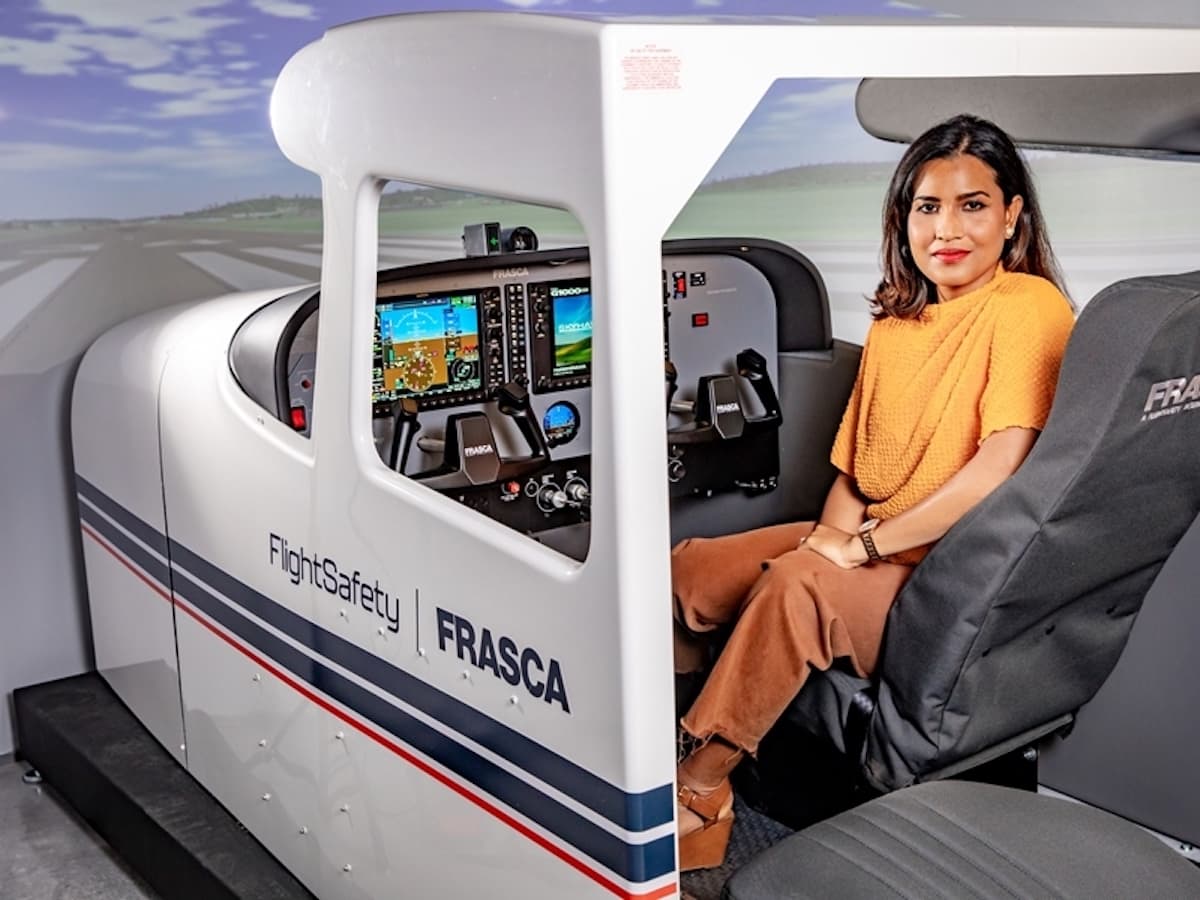
Majumdar, a private pilot, believes that technology like flight simulators could be used to better train pilots how to avoid and recover from inflight loss of control incidents. Flight simulators could also reduce the cost of training.
You can read the full study here.
For more information: UArk.edu
Bad decision making is what kills pilots I think, regardless of training, experience, type of aircraft, etc. If training was the almighty savior, why are the best pilots dead ??? I’ve seen some real doo doo heads do some crazy things in an aircraft and are still living, I have also seen some highly trained pilots do basic maneuvers in aircraft and end up dead, It certainly seems to me that the wrong or bad decision making is what makes things go wrong more so than lack of training or lack of experience.
I am a firm believer that upset recovery training or aerobatics training (they’re different but teach similar skills) are life savers. I’ve had at least two incidents in over half a century of flying in which my basic aerobatics training saved my life.
Currently pilot training teaches to avoid circumstances leading to loss of control but not how to recover if loss of control occurs. Yet inadvertent LOC can and does occur. Things like unexpected clear air turbulence, being caught in wake turbulence, an accelerated stall dodging a flock of birds, etc., can take the airplane out of its normal operational envelope. That’s where aerobatic or upset recovery training is the difference between tragedy and survival.
I agree that aerobatics increases skills – I had an instructor who loved aerobatics and I got a very early exposure (long ago) to it. And I went on to learn a number of maneuvers including some short routines. However, if just the basic recommendations in the Airplane Flying Handbook were followed, I think it would help immensely. The basic recommendations are stall entries with power on and off, and from straight and turning entries. Also recommended are the demonstration stalls – accelerated, cross-control, trim, and secondary. I did all of these with all students. I think one mistake done with stall training is over-emphasis with coordination and avoidance of incipient spins (or when one wing drops before the other). The training needs to include good coordination and not good coordination because in real life that’s what happens. This results in unexpected reactions exactly as what you would see in clear air turbulence, wake turbulence, and dodging birds.
Connected to this is another problem – basic understanding of pitch and power. The regions of command, normal and reversed, are very poorly understood. What I read often is the belief that pitch and power reverse at slower speeds – i.e. below Max L/D, power controls altitude. As I’m sure you know, that will never happen in any civilian airplane. But if that’s what you are taught, then you may use the wrong resource or technique to try to correct for loss of lift. Recovery of lift only happens by reducing the angle of attack and reattaching the airflow.
If the recommendations in the Handbook were followed, then everyone would automatically get this important training. Simulators aren’t too plentiful so I don’t see how they can be a very productive solution in terms of reaching many pilots.
Dodging birds—nope
Loss of control is the result of not practicing the things that will kill you. We teach to the practical test. The accident rate is the failure of good flight training.