

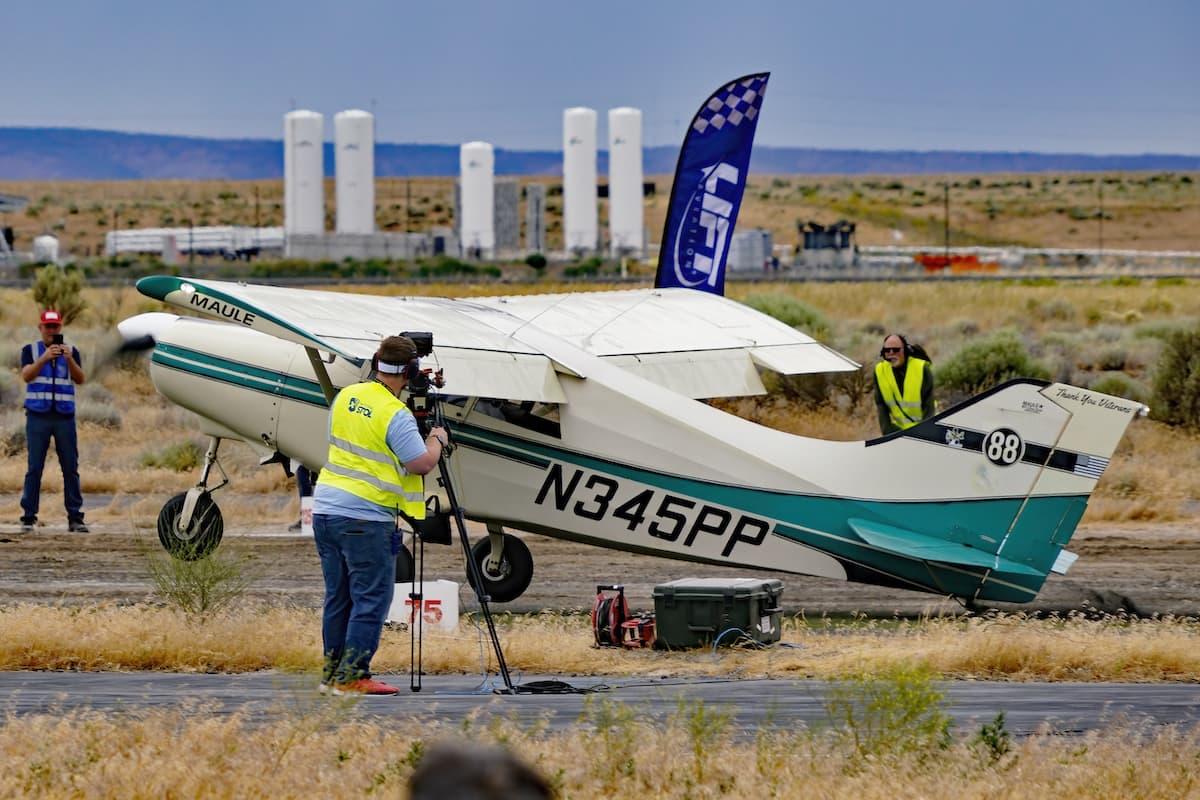
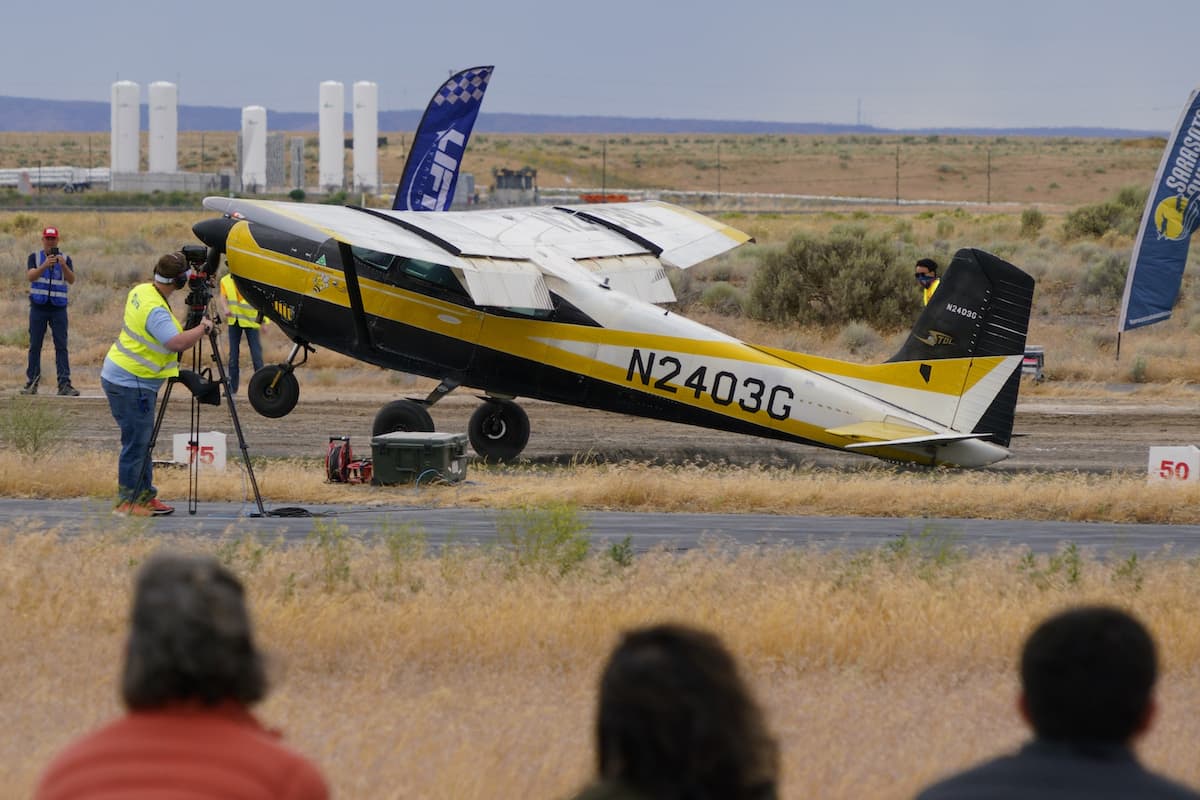
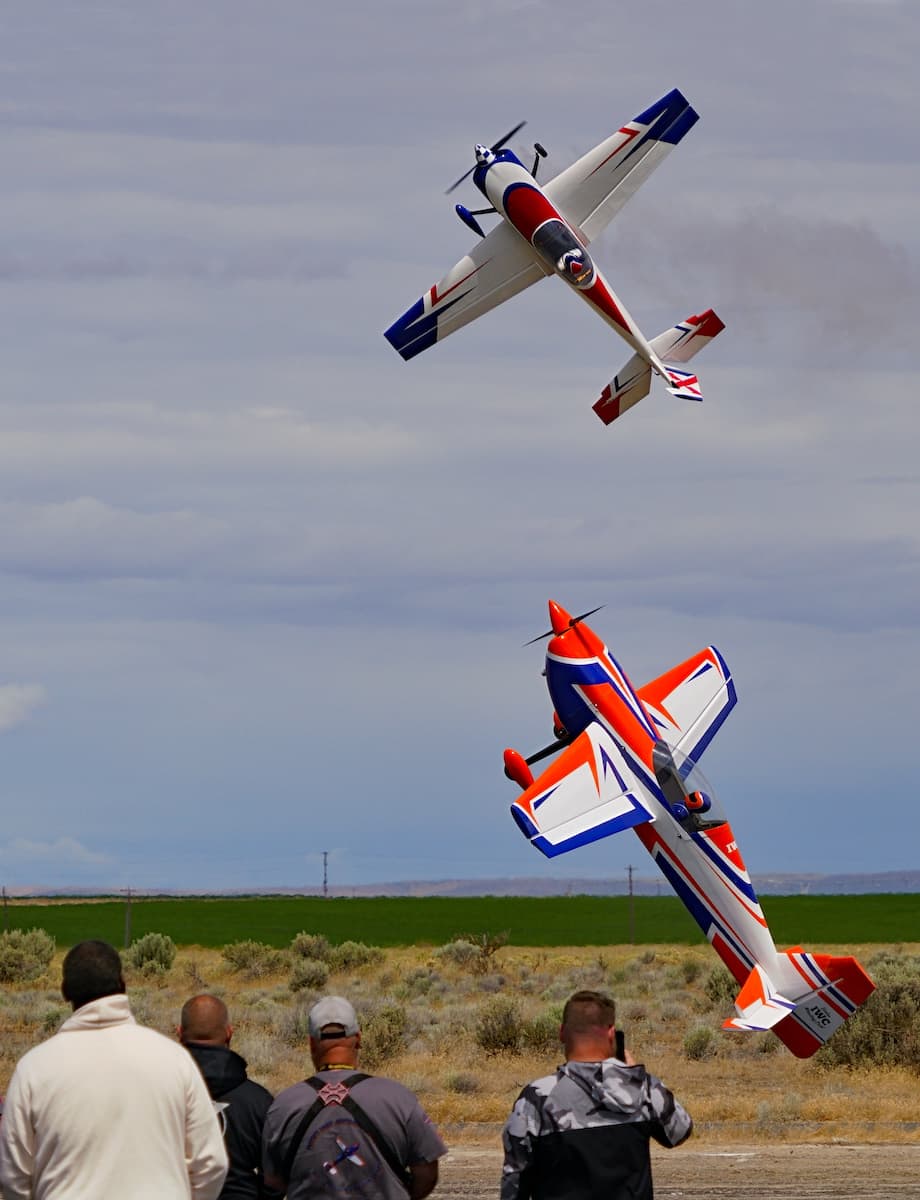
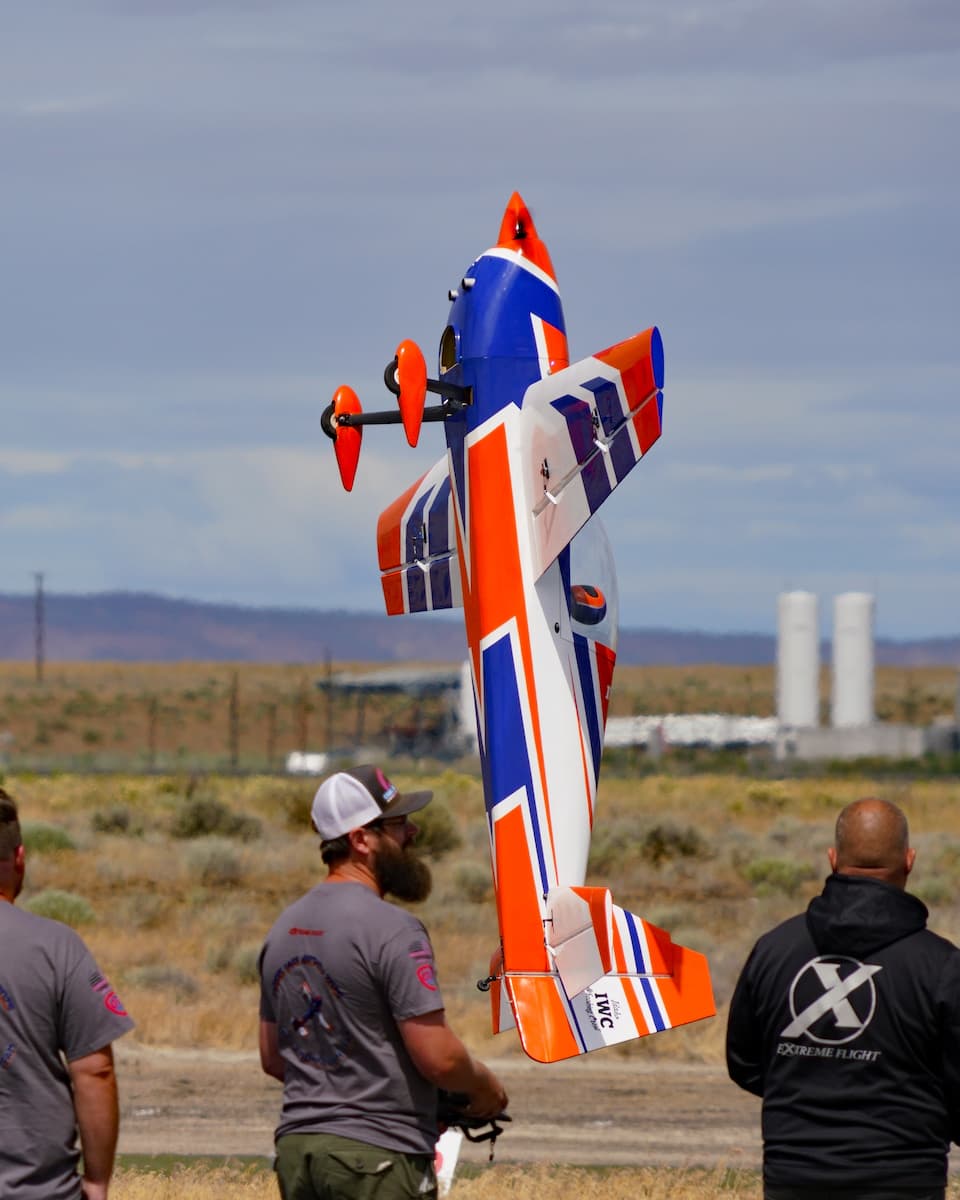
The 2025 Moses Lake Air Show, held June 20-21 at Grant County International Airport (KMWH) in Moses Lake, Washington, built upon the edgy ambience of previous years with a return of world-class RC aircraft and pilots, plus the second year of STOL competition.
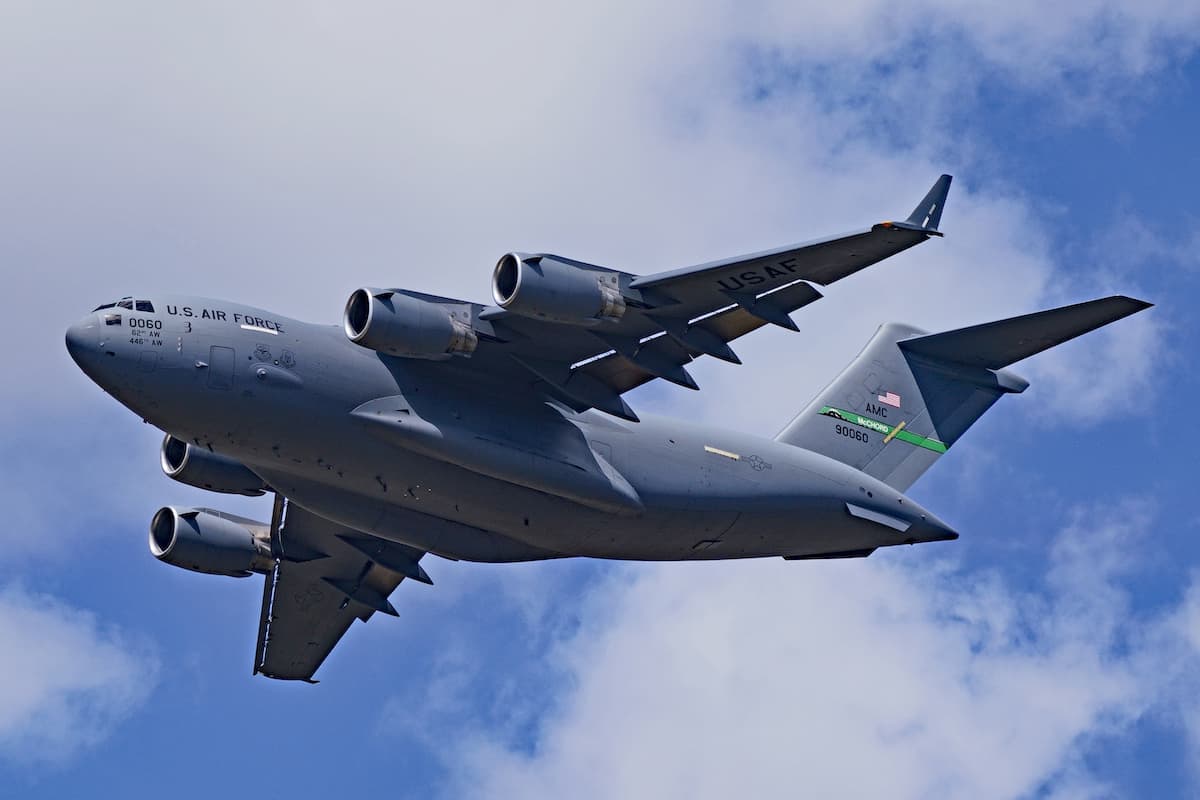
Those events sandwiched a traditional air show of aerobatic pilots, skydivers, and an Air Force demonstration of the C-17 Globemaster III.
New this year was a special airstrip staked to the earth near the show line, made of recycled artificial turf material.
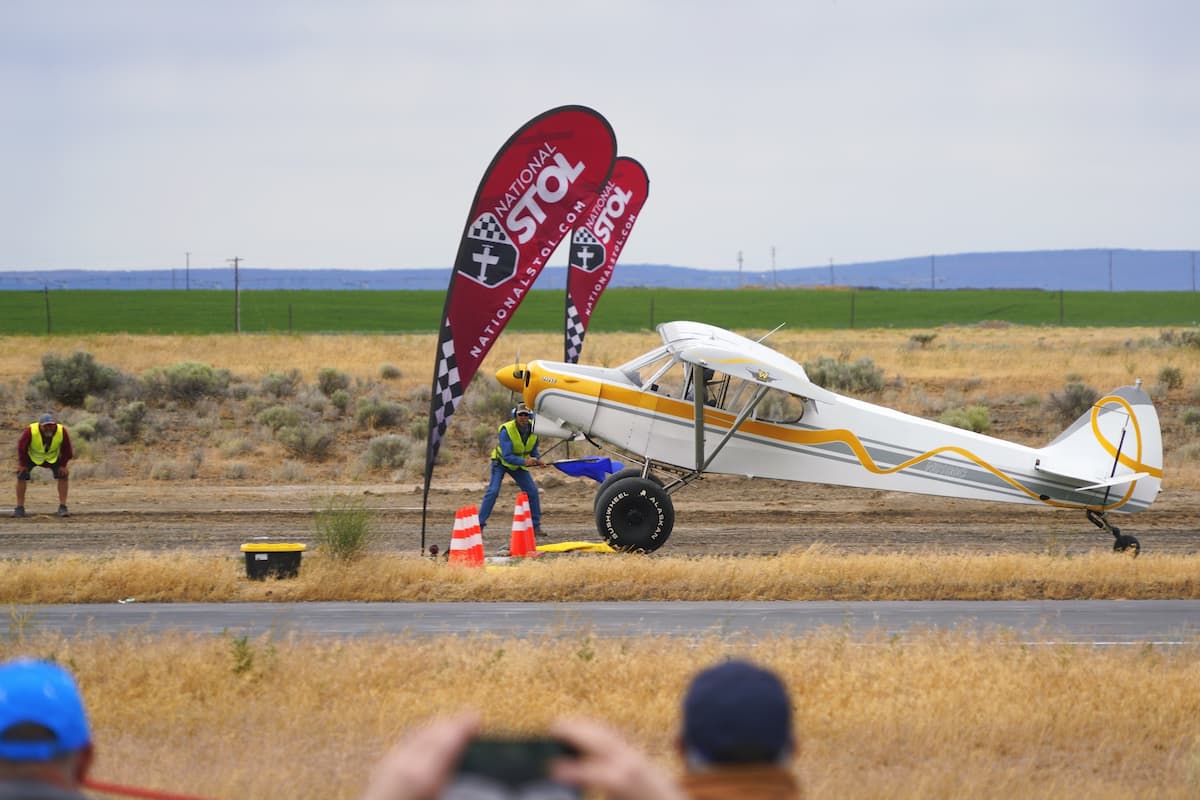
This innovation followed last year’s STOL competition, in which the airstrip was freshly graded from the Moses Lake airport’s soil. Breaking the ground’s surface to make last year’s airstrip revealed slumbering gray ash from the May 1980 eruption of Mount St. Helens.
Several inches of the fine ash blanketed KMWH and subsequent vegetation held the ash captive until the soil was graded. If motorists in 1980 were concerned with adverse effects of St. Helens ash on vehicle brakes and air cleaners, modern-day STOL fliers did not want clouds of the stuff abrading their aircraft.
In the show’s static display area, a subdued gray Cessna 182 flown by the Civil Air Patrol (CAP) received its share of attention. If this Cessna looked more military than the typical bright red-white-and-blue CAP aircraft, there is good reason. It is one of a handful of Cessna 182s owned by the U.S. Air Force and painted for the air force of Afghanistan, and flown to the country’s air base at Shindand with the help of long-range fuel tanks.
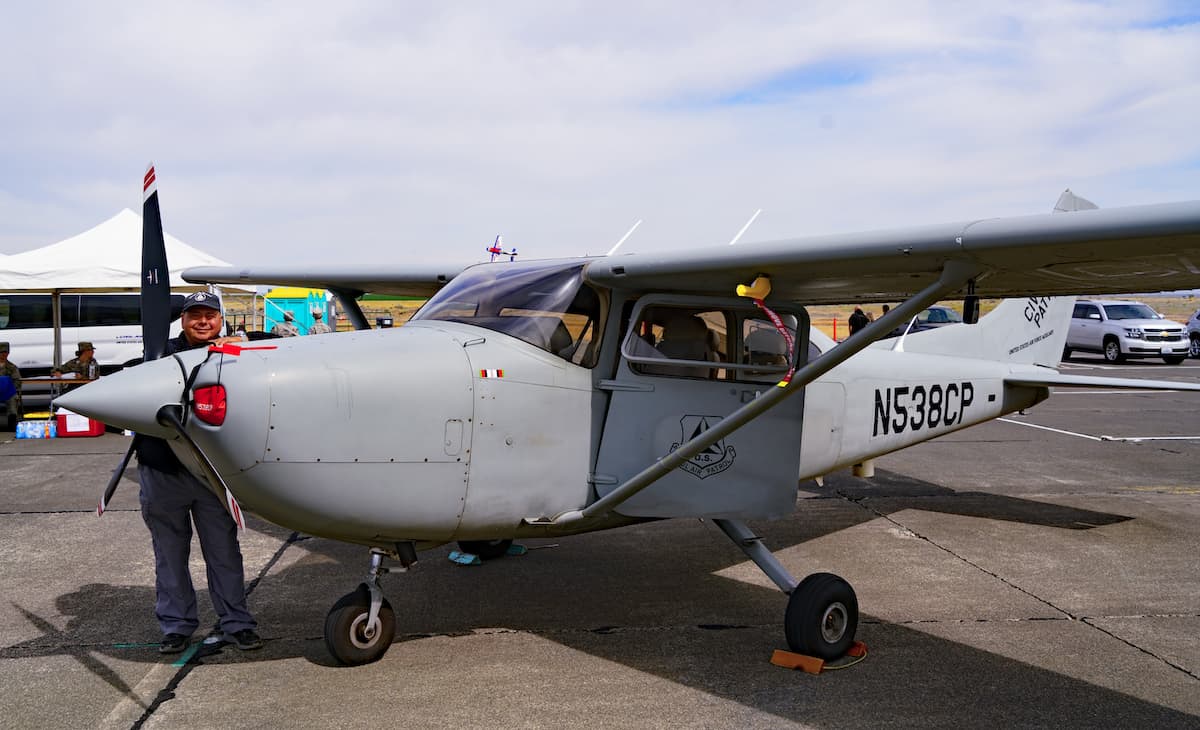
The first Afghan Air Force pilots to train in-country in three decades began in Cessnas like this one in 2012. Beyond C-182s, the Afghan pilots were slated to operate the country’s larger Cessna 208 Grand Caravans. When the program ended, nine of the 182s were made available to the Civil Air Patrol, including this example in the CAP’s Columbia Basin Composite Squadron.
CAP Lt. Col. Roger Patry flies the gray Cessna. In addition to traditional search-and-rescue and disaster relief missions, the Columbia Basin squadron uses this Cessna to fly U.S. Navy low-level training routes, searching for towers and obstacles not present on charts, Patry explains. A cabin window on the left side of the fuselage has a hatch that can be opened in flight, giving unimpeded photographic access to document what the CAP crew finds.
He says the CAP Cessna has played a wayward general aviation aircraft for intercept by F-15 fighters of the Oregon Air National Guard. It’s a scripted scenario in which the Cessna’s pilot does not do what is requested of him, right up to the point of simulated destruction of the gray C-182.
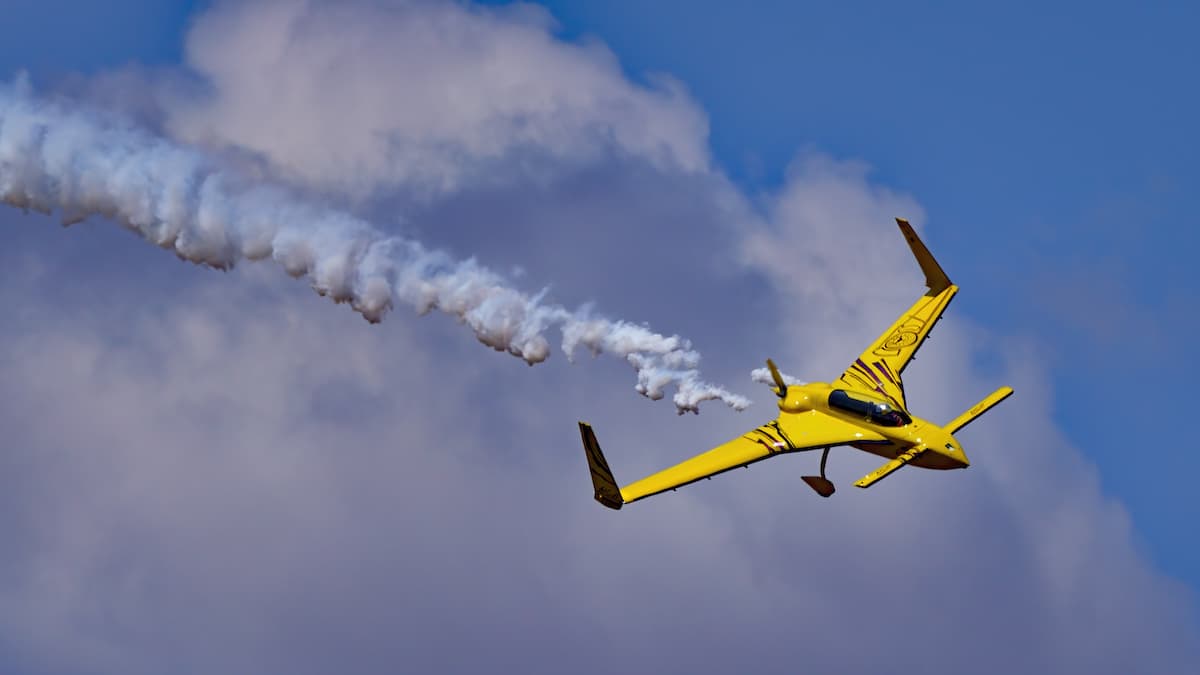
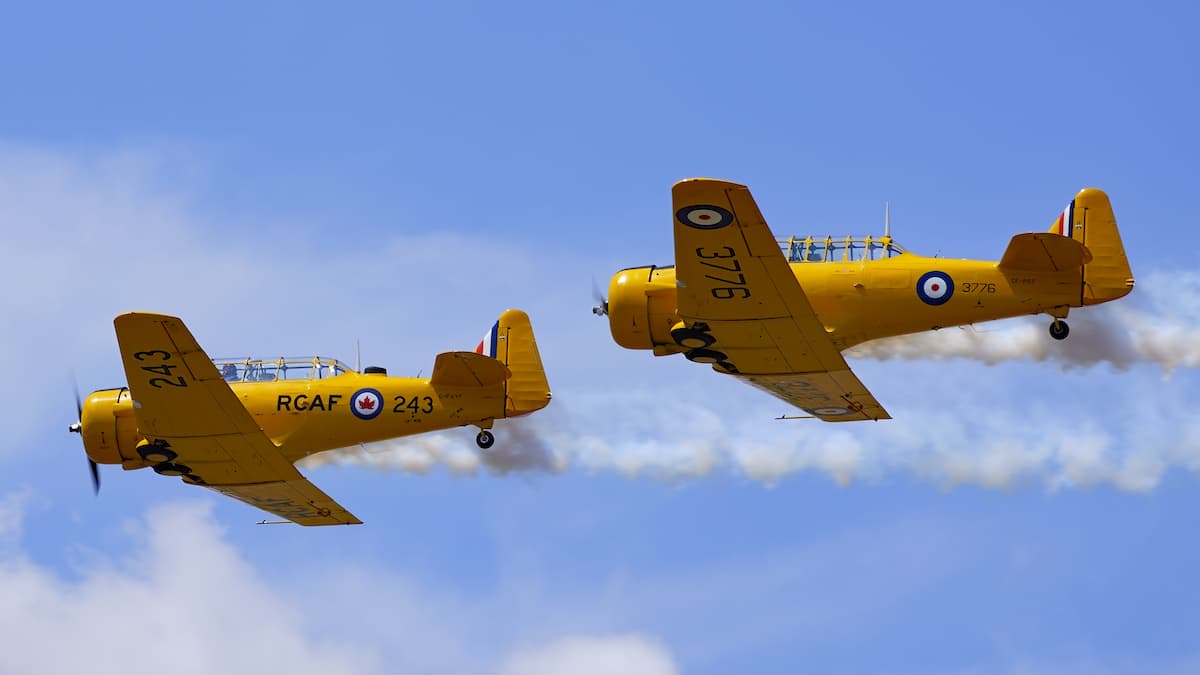
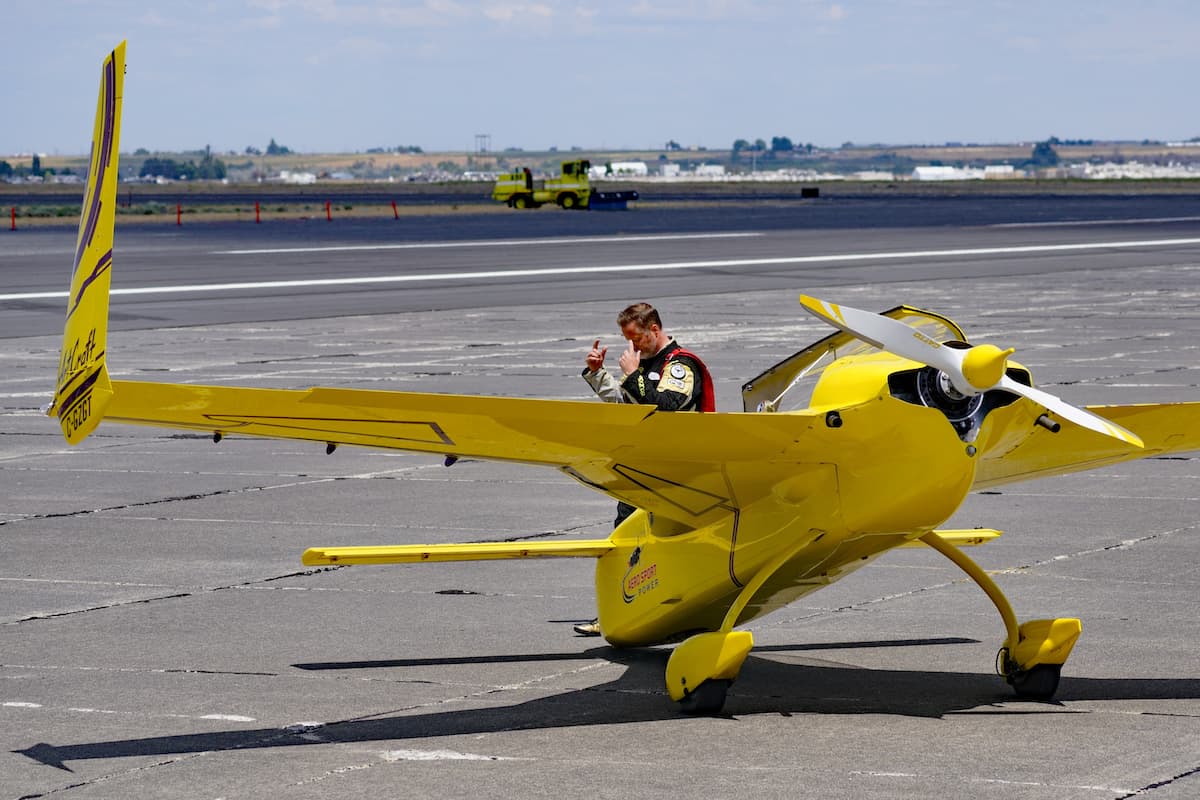
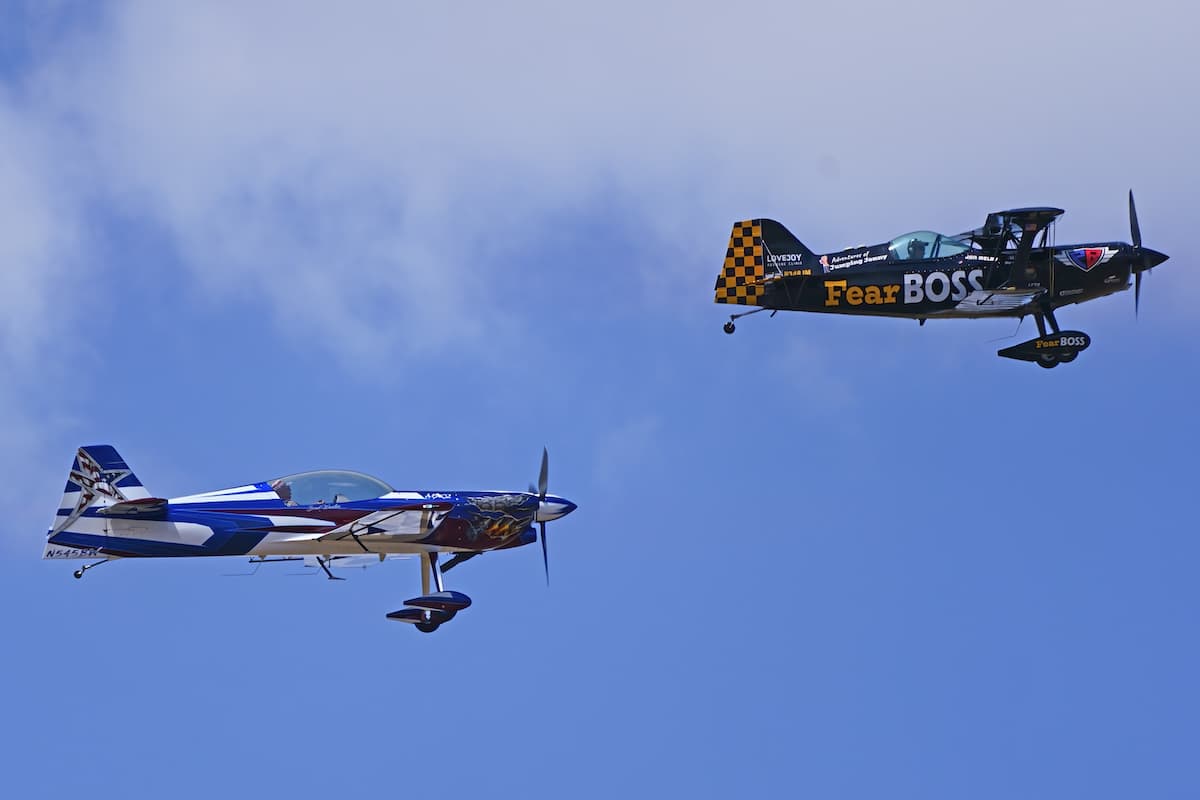
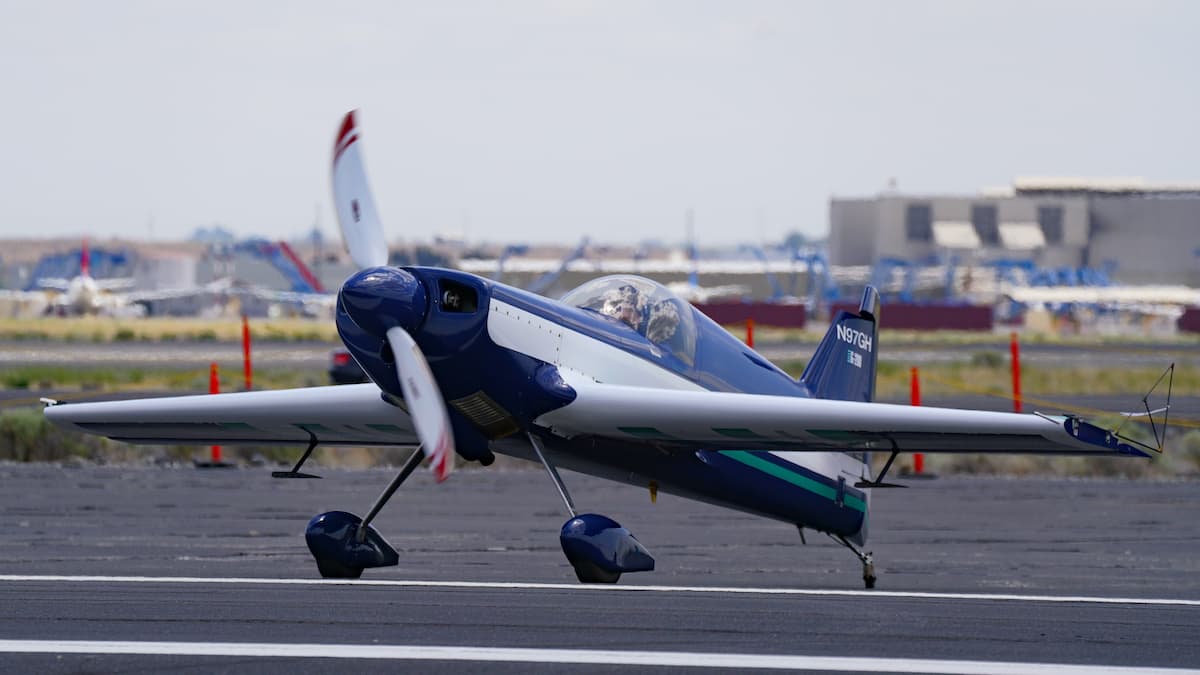
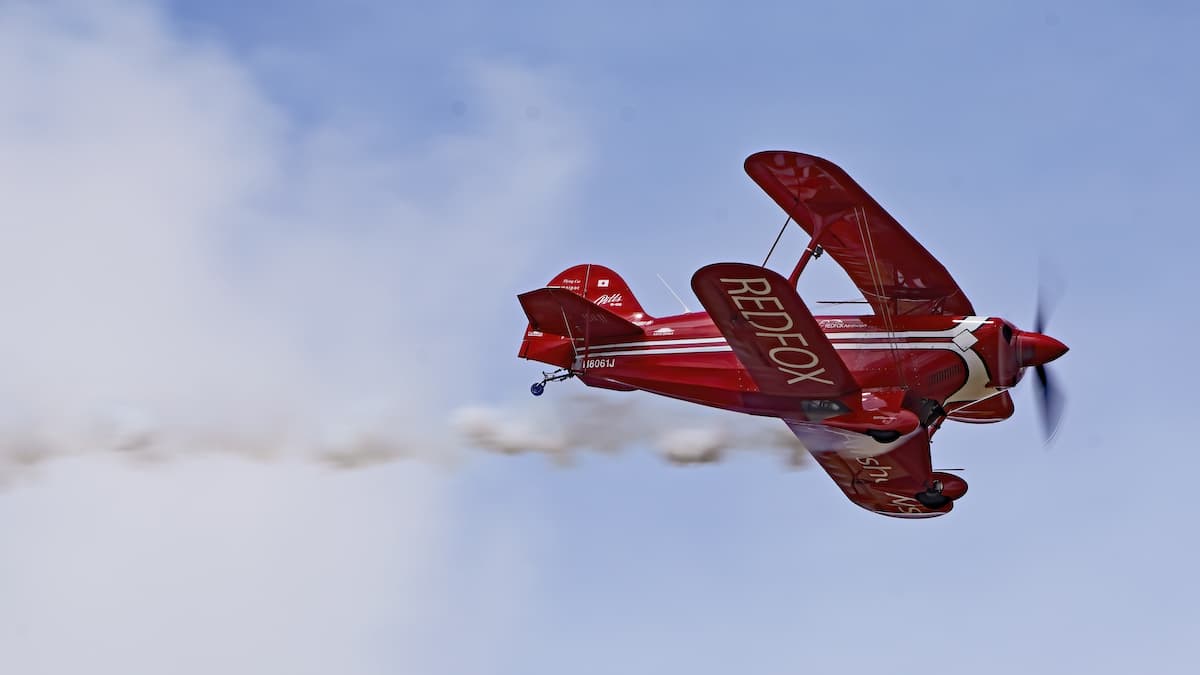
This year’s show featured a cadre of favorite air show performers, including brothers David and Drew Watson in their Yellow Canadian Harvard World War II trainers; Kyle Fowler’s graceful and unorthodox Long EZ maneuvers; Brad Wursten’s carbon-fiber MX2 monoplane; Greg Howard’s diminutive G200 aerobatic monoplane; John Melby’s black Fear Boss-emblazoned Pitts S-1 biplane; and Yuichi Takagi’s bright red-and-white Pitts Special.
A U.S. Air Force crew from the 62nd Airlift Wing demonstrated the capabilities of the big C-17 transport, and carried jumpers from the Air Force’s Wings of Blue parachute team.
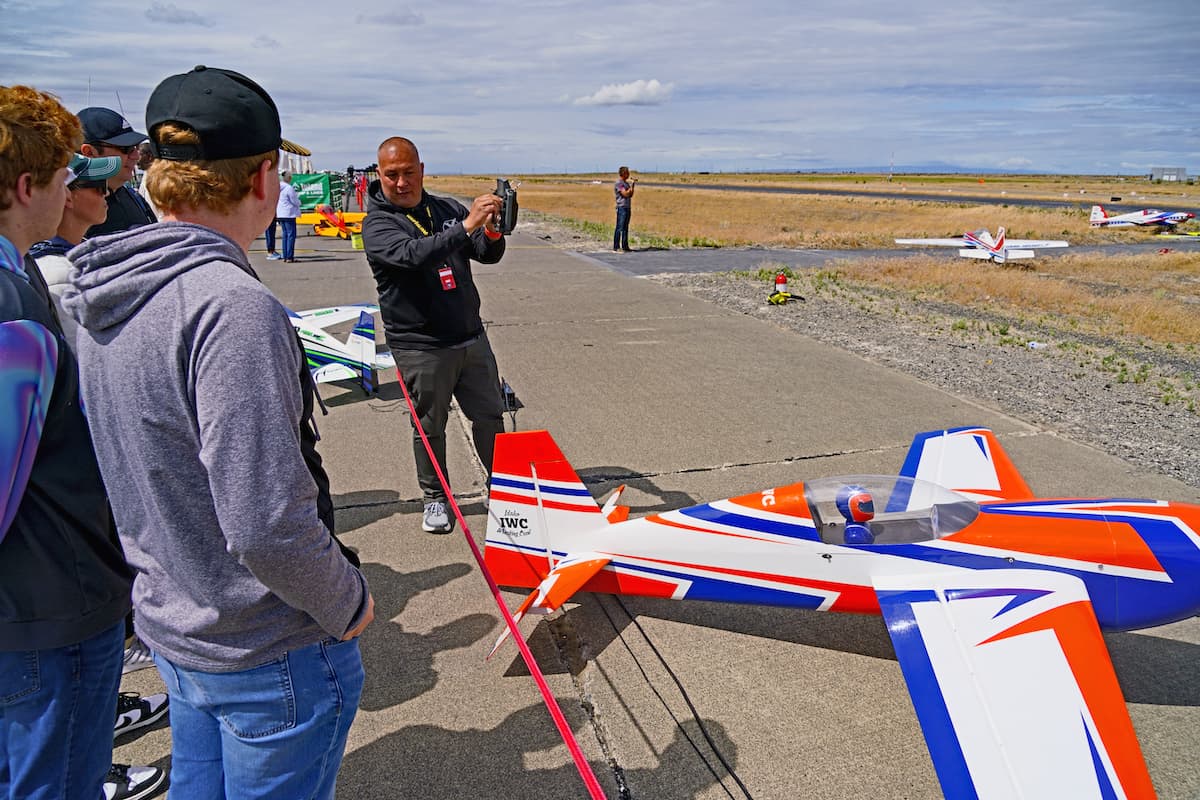
Pilots of radio-controlled aircraft were happy to show how their machines worked, using the radio transmitter to move control surfaces on the ground while a gathering crowd learned RC fundamentals on the spot.
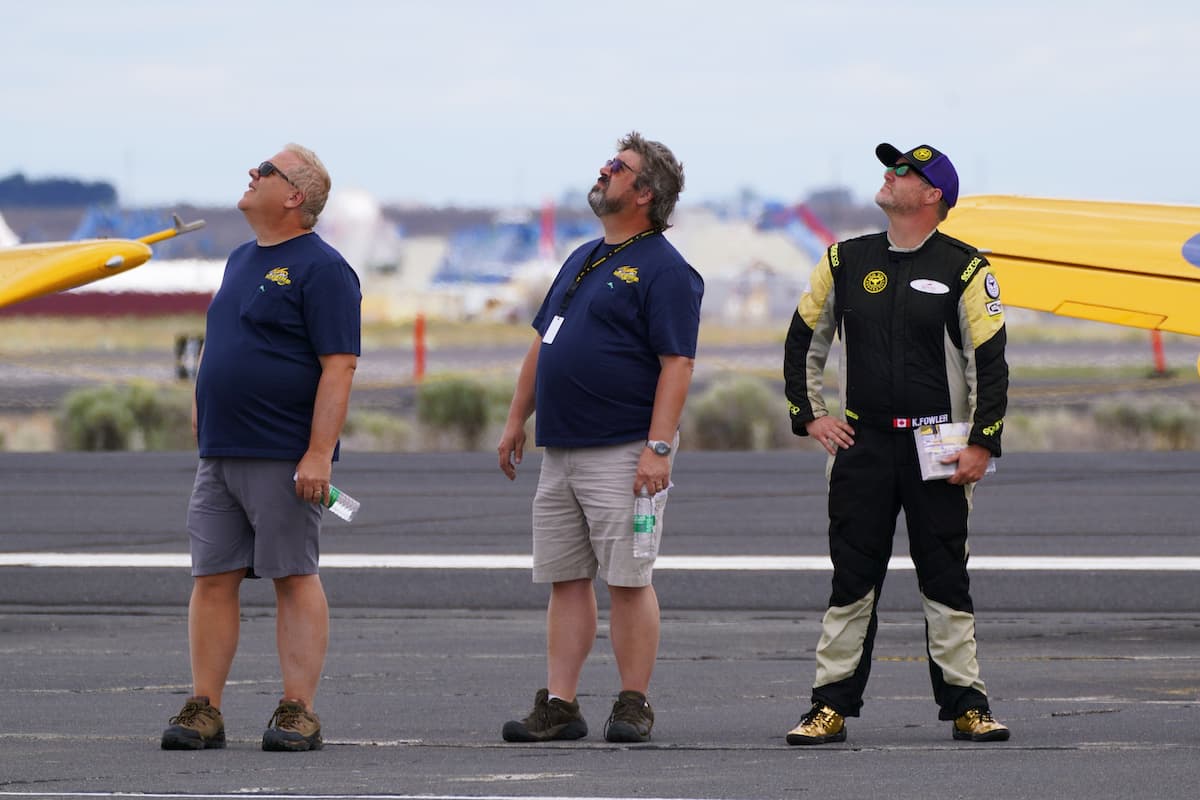
And over at the rope line by the air show performers’ ramp, the aerobatic pilots often could be seen chatting with air show visitors, signing autographs, and posing for pictures.
For more information: MosesLakeAirShow.com
