

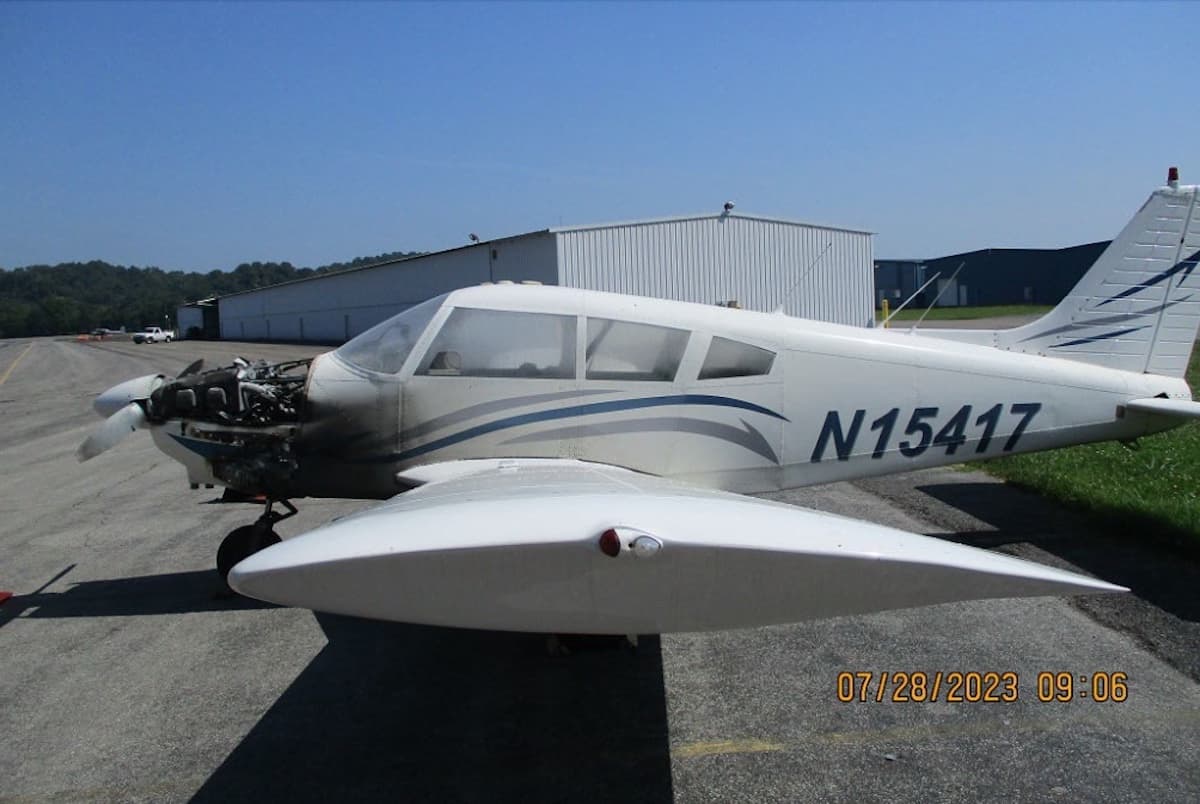
The flight instructor reported that the flight was the student pilot’s first flight, known as a Discovery Flight, in a Piper PA-28-180.
The CFI added that the preflight inspection, engine start, taxi, and run-up were normal. He initiated a takeoff roll on Runway 26 at the airport in Knoxville, Tennessee, by letting the student pilot advance the throttle. The engine rpm initially increased to 2,200, then decreased to 800, followed by flames emanating from the engine cowling.
The flight instructor rejected the takeoff, advanced the throttle lever, retracted the mixture level, and turned off all electrical equipment, including the master switch. He also instructed the student pilot to turn the magnetos and fuel selector to off, which he did. They then exited the airplane on the runway and called the FBO for assistance.
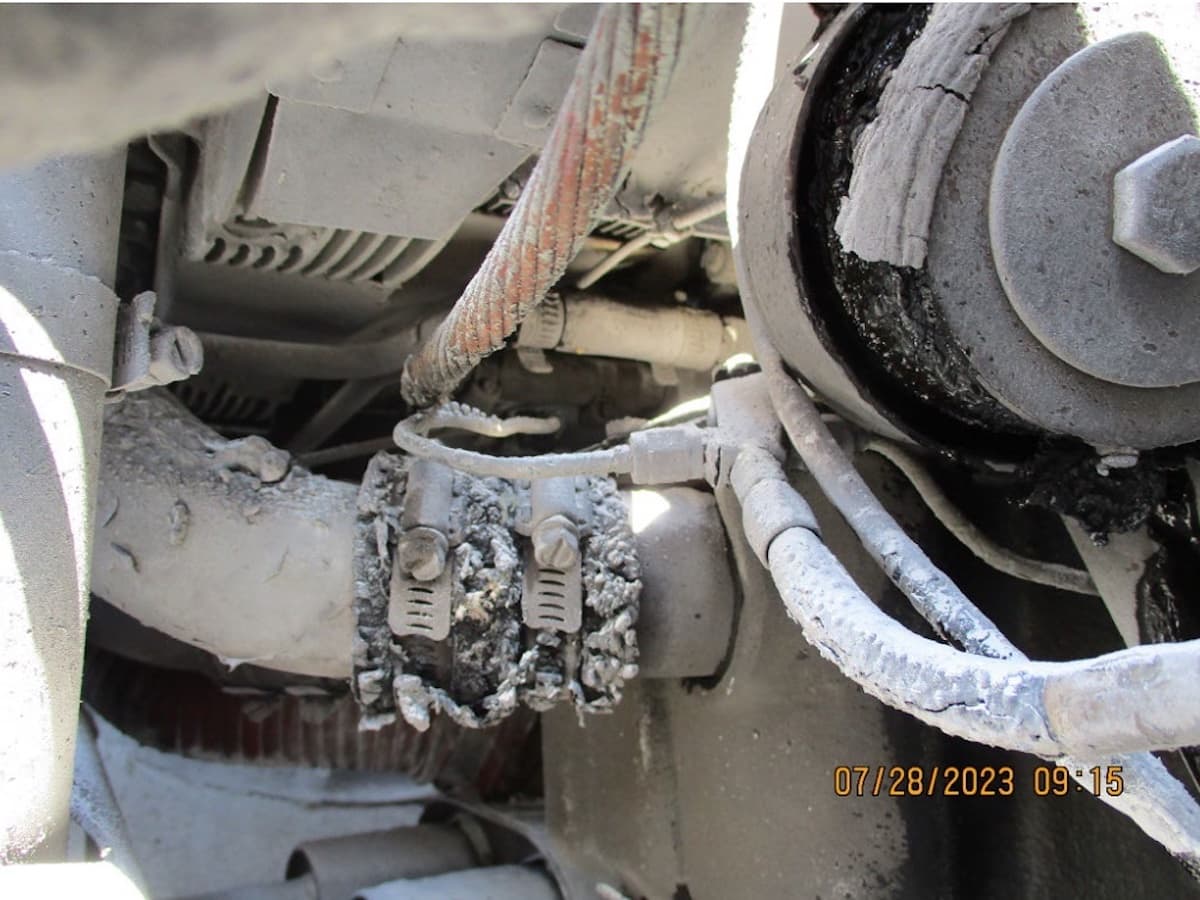
Examination of the engine compartment by an FAA inspector revealed substantial damage to an engine mount tube. The inspector also noted that about a 25- to 30-inch length of starter motor electrical lead was not clamped and had drooped down on top of the fuel primer line. He also observed metal “beads” on top of the fuel primer line, consistent with chaffing and welding due to contact from the electrical lead.
Review of maintenance records revealed that the airplane had been operated for 73 hours during a one-month period following its most recent 100-hour inspection.
FAA Advisory Circular AC 43-13-1, Section 2 Fuel Systems, revealed: “…Routing. Make sure that the line does not chafe against control cables, airframe structure etc., or come in contact with electrical wiring or conduit…In no case should wiring be supported by the fuel line…”
Review of Piper Cherokee Service Manual, Table III-I Inspection Report, B. Engine Group, revealed: “…Inspect engine compartment wiring for condition (chafing, cracked insulation, general deterioration), security, proper routing, and correct installation…”
Probable Cause: An in-flight fire that resulted from an inadequate 100-hour inspection, which failed to detect and correct improper electrical cable routing in the engine compartment.
To download the final report. Click here. This will trigger a PDF download to your device.
This July 2023 accident report is provided by the National Transportation Safety Board. Published as an educational tool, it is intended to help pilots learn from the misfortunes of others.
I would say that the actual cause was the improper installation of the primer line or starter cable. It was a poor 100hr inspection that failed to notice the error but not the actual cause. And speaking of inspections, when was the last annual since that would be a much closer look at the aircraft’s system. No mention of how many hours on the engine since most recent replacement or overhaul time and that would be helpful as it was most likely when the problem originated. The aircraft was a 1972 model so this was not its original engine. Bad conclusion and did not include enough of the relevant information.
For a primer line to wear through a heavily insulated starter cable, it takes way more than 73 hours!