


On the 88th anniversary of her mysterious disappearance, July 2, 2025, officials with the Purdue Research Foundation (PRF) and Archaeological Legacy Institute (ALI) revealed they are joining forces to locate Amelia Earhart’s lost aircraft.
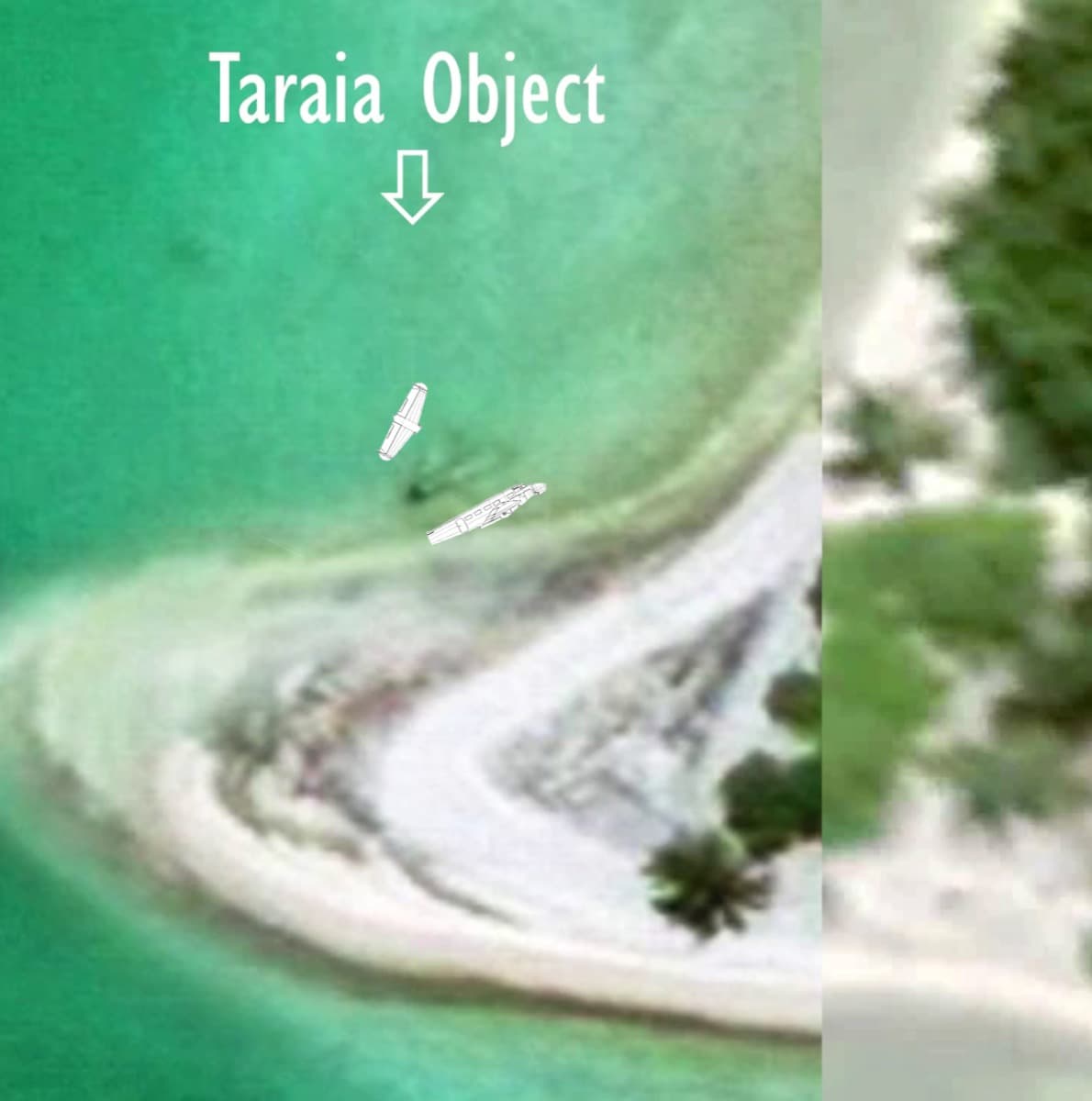
The search, named the Taraia Object Expedition, will begin when a field team organized by ALI visits, by sea, the Pacific island Nikumaroro in November 2025 to confirm whether a visual anomaly known as the Taraia Object, seen in satellite and other imagery in the island’s lagoon, is what remains of Earhart’s plane. Nikumaroro is approximately halfway between Australia and Hawaii.
“What we have here is maybe the greatest opportunity ever to finally close the case,” said Richard Pettigrew, ALI’s executive director. “With such a great amount of very strong evidence, we feel we have no choice but to move forward and hopefully return with proof. I look forward to collaborating with Purdue Research Foundation in writing the final chapter in Amelia Earhart’s remarkable life story.”
Earhart worked for Purdue University after Purdue President Edward Elliott became concerned that the women enrolled at the university were not completing their educations. He hired Earhart to live in the new women’s residence hall for a few weeks of the semester, serve as a counselor on careers for women, advise Purdue’s aeronautical engineering department and enjoy access to the resources of Purdue’s new airport — the only one, at that time, at a U.S. college or university.
As part of Purdue University’s pioneering efforts in aeronautical research, PRF funded the “flying laboratory” Lockheed Electra 10E airplane through the Amelia Earhart Fund for Aeronautical Research. Purdue trustee and benefactor David Ross gave money, and further donations were received from J. K. Lilly, Vincent Bendix, and the Western Electric, Goodrich and Goodyear companies. Earhart used the plane, which was specifically outfitted for long-distance flights, in her attempt to circumnavigate the globe and set a record for the longest-distance flight.
“Purdue Research Foundation began its commitment to Earhart’s aeronautical explorations in 1935,” said PRF president and CEO Chad Pittman. “By embarking on this joint partnership with ALI, we hope to come full circle on our support of Earhart’s innovative spirit, solve one of history’s biggest mysteries, and inspire future generations of aviators, adventurers, innovators and Boilermakers.”
In recognition of PRF’s contribution, Earhart intended to give the plane to Purdue upon her return, where it would be used to further scientific research in aeronautics.
Although she never returned, the Purdue-Earhart connection remains strong, according to university officials, who note she is remembered across campus through facilities, programs, and clubs. Additionally, in 2024 construction began on the approximately 10,000-square-foot Amelia Earhart Terminal at Purdue University Airport that has resumed commercial passenger services to the country’s first university airport.
“Both Earhart and her husband and manager, George Putnam, expressed their intention to return the Electra to Purdue after her historic flight,” said Steven Schultz, senior vice president and general counsel of Purdue University. “Based on the evidence, we agree with ALI that this expedition offers the best chance not only to solve perhaps the greatest mystery of the 20th century, but also to fulfill Amelia’s wishes and bring the Electra home.”
The Electra, which disappeared on July 2, 1937, has never been recovered, but a vast amount of circumstantial evidence has been amassed, largely by The International Group for Historic Aircraft Recovery over nearly 40 years, supporting the Nikumaroro hypothesis. This idea posits that Earhart and her navigator, Fred Noonan, did not crash at sea but instead landed and were marooned on an uninhabited island and subsequently perished there.
The hypothesis, as updated by ALI with new evidence for the Taraia Object, is based on documentary records, photographs and satellite images, physical evidence, and personal testimony, including these highlights:
- Radio bearings recorded from radio transmissions at the time by the U.S. Navy, the U.S. Coast Guard and Pan American World Airways, which converge on Nikumaroro
- A 2017 analysis of human bones discovered on the island in 1940, which determined Earhart’s bone lengths were more similar to the discovered bones than 99% of individuals, strongly supporting the conclusion they belong to Earhart
- Artifacts including a woman’s shoe, a compact case, a freckle cream jar, and a medicine vial — all dating to the 1930s
- The Bevington Object, a photographic anomaly captured just three months after the plane’s disappearance, which appears to represent one of the Electra landing gear on the Nikumaroro reef
- The Taraia Object, located in 2020, which has been in the same place in the lagoon since 1938
The expedition is planning to embark from Majuro in the Marshall Islands on Nov. 5, spend five days on Nikumaroro inspecting the Taraia Object, and return to port on Nov. 21. If the initial expedition proves successful in confirming the identity of the aircraft, PRF and ALI plan to return for larger excavation efforts in 2026 to uncover and help return what remains of Earhart’s plane.
For more information: Amelia.PRF.org
Nonouti Island is a place that really needs to be searched. I have images from Google Earth and photos from a US Army bombing mission on a Japanese garrison in 1943. Both have the number 16020 and the letters NR visible. There is other debris that matches the Lockheed 10E. All of the debris is underwater . Happy to share it with you.
I always theorized she ended up in a time-slip like the story of the pilot in Florida who gained time flying through a bizarre tunnel-like structure. Oddly, if you look at the myths of Japan like the Utsuro-bune- a lot of similarities, weirdly. Just Google the koro incense burner they reference and you will see the resemblance to the prop engines. The woman carried a wooden box (she had one with a Sexton in it and likely would have stowed other belongings) and also they found bread inside the odd boat (her sandwiches) ….and one version that claims the woman said she was a princess from India… sounds much like “from Purdue in Indiana” after years of mistranslations. The edo period symbols for golden saffron and the loop antenna mounted to the top of her plane. A.I. sums the itso-bune up as: “The tale is said to have occurred in 1803 when fishermen in Hitachi province (present-day Ibaraki Prefecture) on the eastern coast of Japan found a strange, round “hollow boat” or utsuro-bune floating in the sea. The vessel was made of iron and wood and had a sealed top with crystal windows. ” The Wikipedia entry is interesting. An unlikely but super fun thought, no?
I’ve always had a fascination with the Earhart expeditions. Perhaps it’s because I went to Purdue as an aeronautical engineering student (didn’t graduate), learned to fly at Purdue Field, and by chance was assigned to live in the Earhart dorm for a semester. Good luck with the search!