

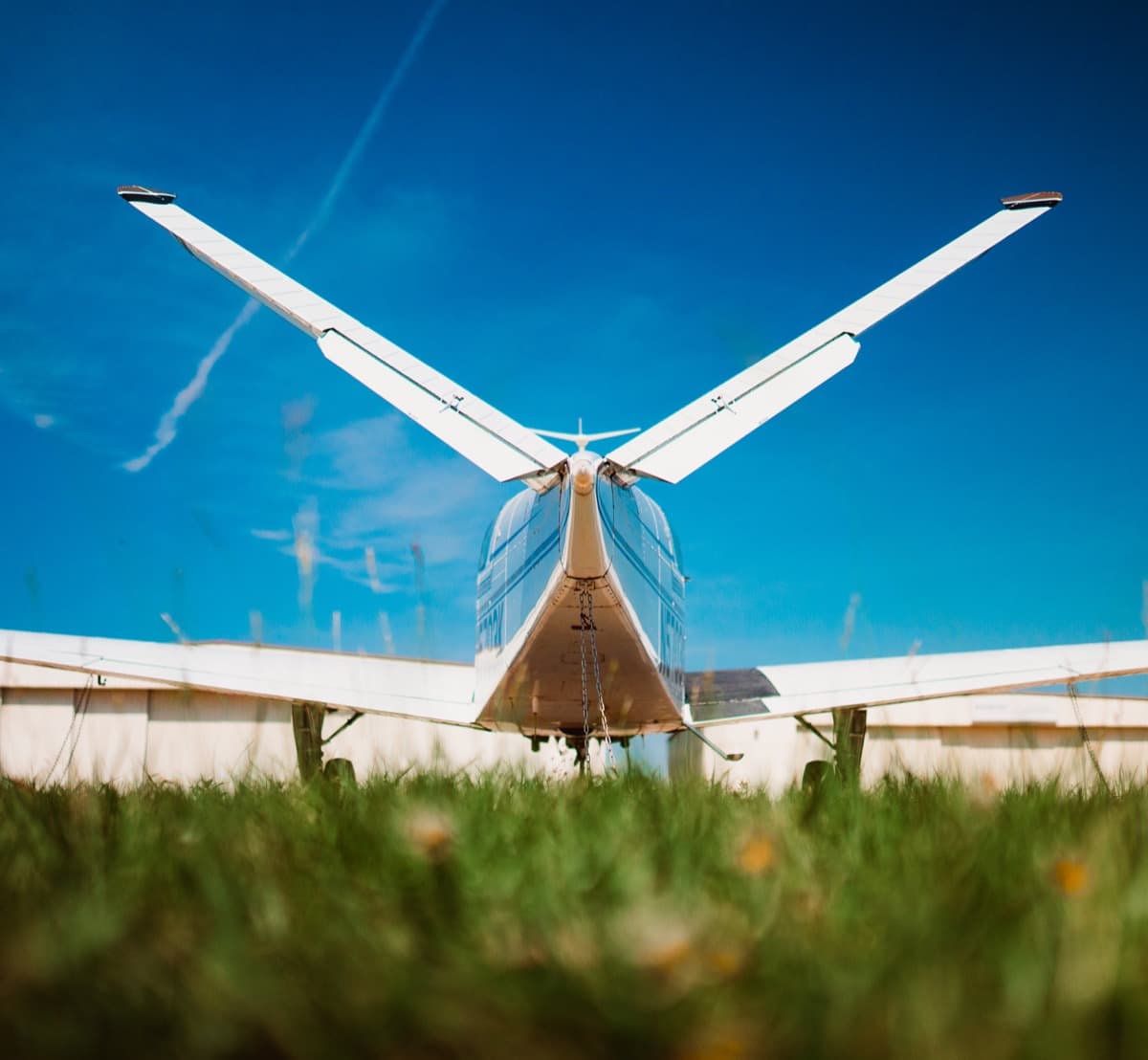
Several years ago, V-tail Bonanzas faced an existential threat: Replacement skins for magnesium ruddervators were no longer available at any price.
Ruddervators are the moveable control surfaces on the V-tail that move in opposition for yaw, or rudder control, and together for pitch, or elevator control. Even minor corrosion or damage to a ruddervator would render the airplane unairworthy, with no means of returning it to flying status, according to officials with the American Bonanza Society (ABS).
Of the 10,402 V-tails built between 1947 and 1982, more than 5,000 are still flying in the U.S., with more around the world, all potentially affected by this issue.
That led the ABS Air Safety Foundation to establish the Manuel Maciel Ruddervator Prize in 2021 to encourage the industry to create an FAA-approved repair or replacement for damaged ruddervators.
Donated by the family of the late Manuel Maciel, the $500,000 prize was designed to cover part of the costs incurred by the first company to get a product approved and build at least 100 ready-to-install kits to show a commitment to supporting the V-tail fleet long-term.
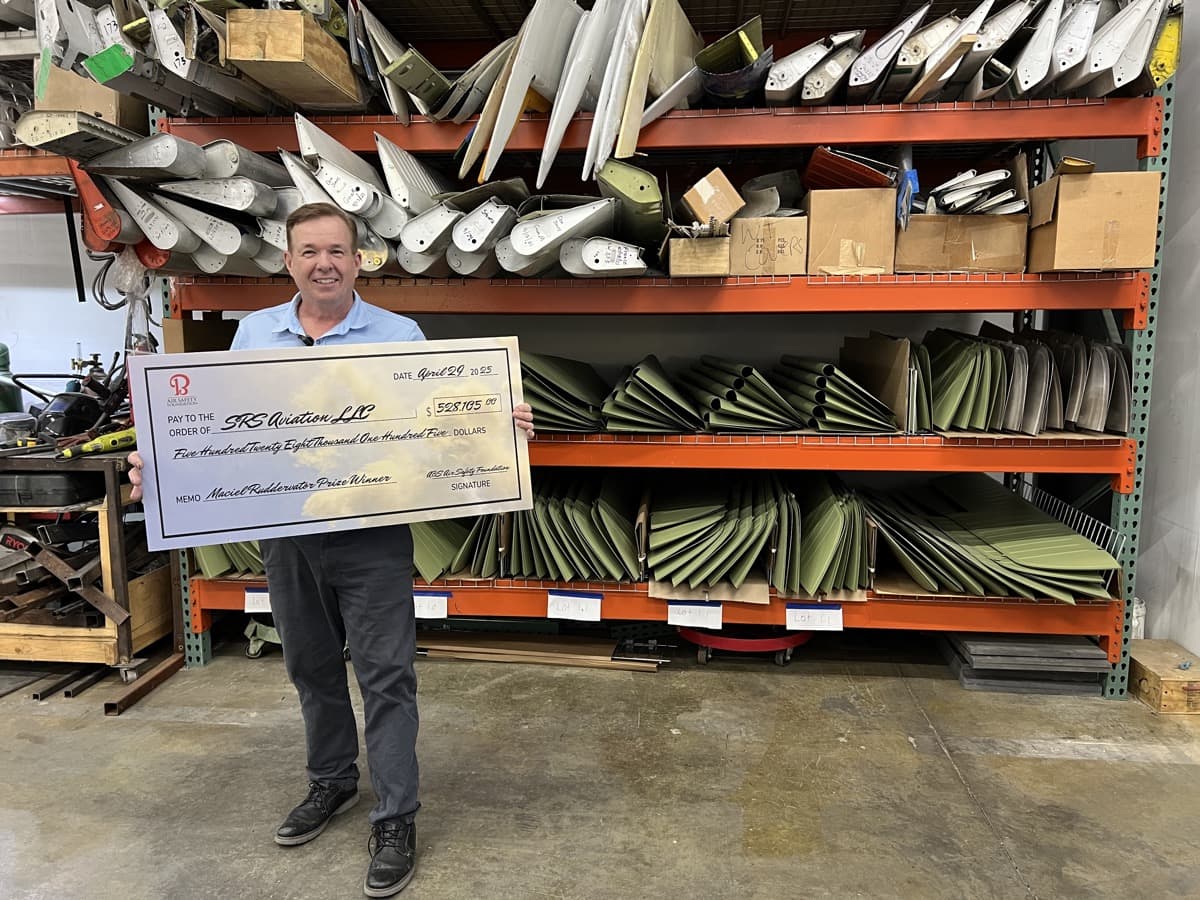
The prize, which increased to $528,110 with individual donations from ABS members to help encourage a solution, was awarded July 23, 2025, to SRS Aviation of Burnsville, Minnesota, during EAA AirVenture Oshkosh 2025.
The company was one of seven who pursued the prize, according to ABS officials.
SRS has extensive experience with aluminum replacement skins for conventional-tail Beechcraft, but found the unique balance requirements of the V-tail could not be met with aluminum.
SRS spent more than three years researching magnesium production techniques and developing expertise in manufacturing and working with magnesium components. It now has FAA PMA approval to do everything from skin replacement through total repair and rebuild of ruddervators. Like factory-original equipment, the replacement skins built by SRS are magnesium.
“In the beginning we thought this was going to be easy to do, which could not have been further from the truth,” said Dave Laurin, president and owner of SRS Aviation. “First we had a nine-month struggle to PMA this part. Then came the cost of material and manufacture, which included machinery and special processes only related to magnesium. Lastly, there was nobody out there that had special knowledge of how to make formed magnesium parts and specifically how to make them perfectly. With the Manuel Maciel award to offset our development, now we have a really good product and we are confident we can support the fleet for many more years.”
“The prize inspired innovation and research within the aviation community, which is critical to address availability of parts for aging airplanes,” said Susan Delgado, ABS Board President. “These new SRS ruddervators will help preserve our Beechcraft fleet for generations to come.”
For more information: Bonanza.org, SrSAviation.com
Great news!!! Having owned 3 V tails throughout the years, it was always a concern that my planes be reduced to big scraps of aluminum if corrosion occured on the ruddervators or if they were a victim of damage from unseen collisions, hangar rash, hail, etc.
That being said, while SRS has indicated that it produces replacement for all V tails, is this a confirmation that it will produce the pre C model smaller versions along with the later larger sizes?
Cirrus uses aluminum ruddervaters on it’s v-tail jet. It’s too bad Beechcraft couldn’t have done the same on the Bonanza. But I suppose computer modeling to avoid flutter is better now than it was way back when the Bonanza was designed.
This! We need more of this!
Great job SRS supporting legacy aircraft.
And what a unique way to incentivize innovation ABS Air Safety Foundation!
Thanks for additional content, M/M…. a brief google search of magnesium production revealed many issues. Specific cutting tools, their wear rates, work hardening issues all had to be overcome. Like Are, I finished article with a curiosity: what was the issue that prompted Beechcraft to step away from part production?
So many production issues, and perhaps an aging workforce expertise that proved difficult to replace? Companies sometimes have tough production choices driven by plant space, required investments and future plans ( short list of my guesses! )
All in, a very interesting taste of the production world. Online reviews of magnesium by engineering experts describe a very capable and very demanding material!
Congrats, Dunndid.
Excellent news, and congrats to the winners! However, clarification on one point is needed, please:
The original skins were magnesium and were “no longer available at any price”, yet the good folks at SRS are using, wait for it, magnesium.
I’m happy for SRS, they’ll do well with the new product, but why has it not been available previously, if they are using the same material?
Are, I really do wish that making replacement parts for these older airplanes was simple. It isn’t. Aluminum sheet is easy to buy (Aircraft Spruce and many others), many sizes, many alloys, and so on. Magnesium sheets are another thing. SRS had to identify the exact alloy, find a reliable source at something even approaching a reasonable price, make dies for the stiffeners, determine the correct hole spacing for the ribs, you can’t use aluminum rivets in magnesium structures (dissimilar metal corrosion) unless they are specially treated ($$$), you are far better off using magnesium rivets (more $$$), there are corrosion control issues with thin magnesium sheets (which is how we got here in the first place), and that’s just some of the problems on the technical end of this.
SRS also had to PROVE to the FAA that these parts are safe. They are a critical part of the control system on these airplanes and a failure here pretty much guarantees a crash. I am sure the FAA looked this over very carefully indeed.
The “not available at any price” part comes from Beechcraft, who evidently decided to make these parts NLA. Used parts are likely to have the same problems as the parts we are trying to replace, and waiting around for a scrapped V-tail Bonanza is not an ongoing and reliable source of parts anyway.
So yes, it is just magnesium, but the journey from a flat sheet of stock to “Clear!” is long, involved and expensive. Kudos to SRS for making it possible.
With Best Regards,
M/M