

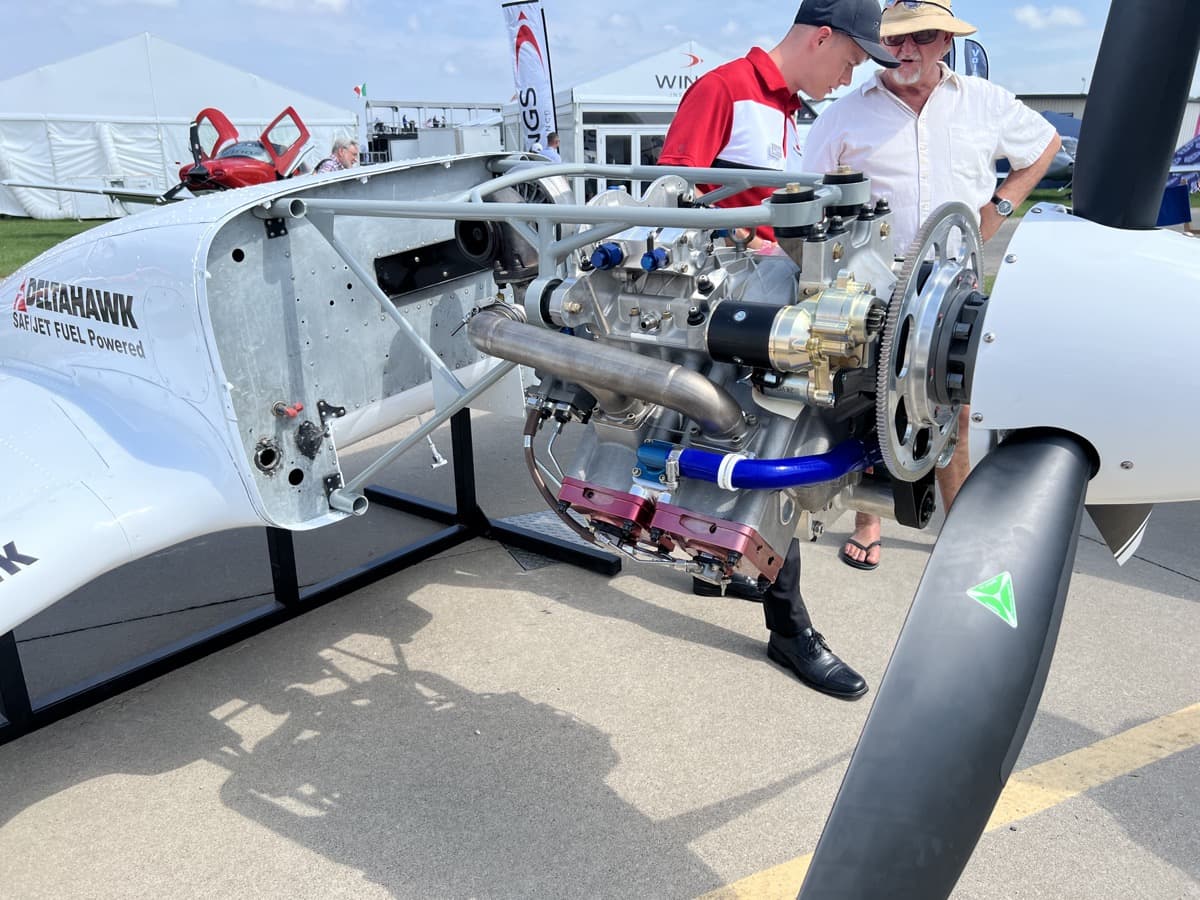
Piper Aircraft unveiled the new Piper Seminole DX — a diesel-powered PA-44 Seminole featuring DeltaHawk’s FAA-certified engine — at EAA AirVenture Oshkosh 2025.
Piper began taking position reservations during the show.
The liquid-cooled, 180-hp turbo-charged DeltaHawk engine produces turbine performance at 40% better fuel efficiency versus reciprocating avgas engines, while also achieving a significant reduction in cost of ownership due to fewer moving parts, according to Piper officials.
The engine is approved for JET A and JET A-1 fuels, with Sustainable Aviation Fuel (SAF) approval pending.
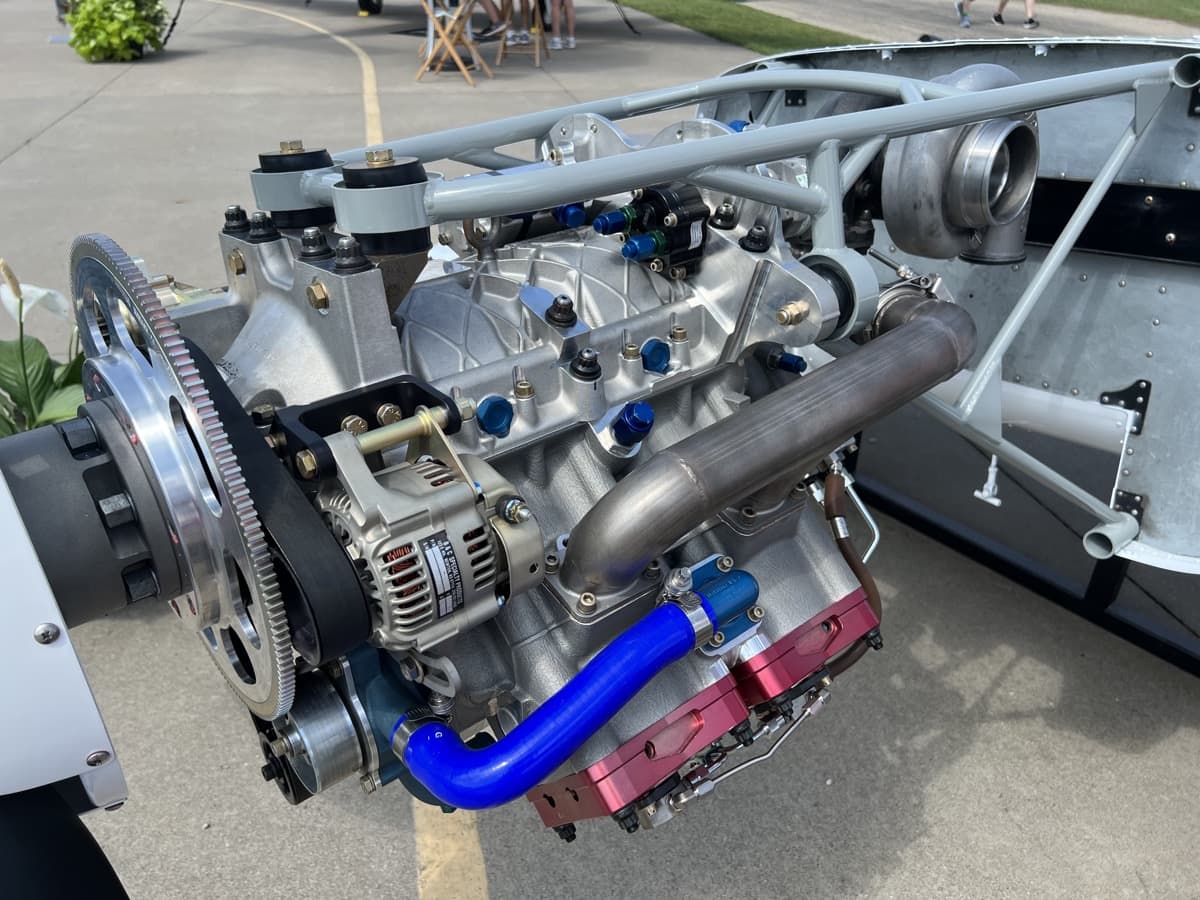
Piper will use a Piper-owned STC to integrate DeltaHawk’s firewall-forward kits into the Seminole production line. The kit includes counter-rotating DeltaHawk engines and three-blade, full-feather propellers, company officials explained.
Additionally, the aircraft will have an advanced cabin temperature control system utilizing the engines’ liquid cooling, officials said.
“The market has been heard, loud and clear, regarding the need for a reliable, cost-effective, heavy fuel, multi-engine training platform,” said John Calcagno, President and CEO of Piper Aircraft. “The new Seminole DX fills that market void perfectly.”
Piper officials estimate demand for the Seminole DX will be between 25 to 40 aircraft a year over the next 10 years.
Certification flight testing begins in November 2025, with FAA certification expected in the third quarter of 2026, followed by certifications from Transport Canada, EASA, and India’s DGCA.
Deliveries of 2027 model year Seminole DX aircraft are anticipated to begin in late 2026 or early 2027, according to Piper officials.
Piper and DeltaHawk are exploring further engine applications for both the PA-28 Archer and PA-46 M-Class platforms, company officials added.
For more information: Piper.com, DeltaHawk.com
Government strangle hold on general aviation drives cost through the sky.
Shouldn’t the holes in the firewall be capped or blocked off?
I think this will increase sales of Piper Twins because the aircraft will now have a high service ceiling and lower operating costs. The engines are turbo charged and supercharged giving the aircraft a service ceiling of 18,000 feet….
Maintnenance and fuel consumption should be much lower than conventional engines.
The Seminole is not pressurized. 18,000″ requires oxygen and while I am accustomed to wearing a mask, passengers complain.
So rather than analyzing the engine and aircraft potential performance at 18,000′, it might be more practical to review and compare performance at 12,000′.
The number of times that I have had a passenger ask me about wearing a mask ….. “Do I have to wear this thing?” and I reply, “No, I am required to make it available to you” and he removes the mask and is asleep within ten minutes and later complains of a headache.
What is the rated torque of the 350hp engine when compared to a Lycoming 350hp engine?
Well…if they both have the same maximum rpm, then the peak torque will be equal.
The torque curve vs rpm may be very different, and I’ll assume that the diesel will have a higher torque at lower rpm than the gas engine…[ experience wit diesel tractors. ].
I noted that the GO-300 that I fly behind has a flat torque curve from 1,800 rpm to the redline of 3,200 rpm.
So, maybe the diesel and Lycoming are actually similar, except for the turbo-supercharging of the diesel….sea level power to 18,000 ft.
Oh.!! and the higher fuel efficiency.
The engine manufacturer spent 100 million dollars and 20 years getting the engine FAA approved…..
Very nice, but tee tailed, vee tailed and y tailed aircraft should be banned. They handle and fly like garbage. Only the 727 was ok.
Turbine performance? It’s the same power as the Lycoming it replaces.
I believe that they are referring to the critical altitude of greater than 17,500 ft, with the turbo-supercharging. The test SR20 climbed to 25,000 ft.
As a 2 stroke diesel, it is nothing like any avgas piston engine.!!
I want this engine in my Seneca II.