

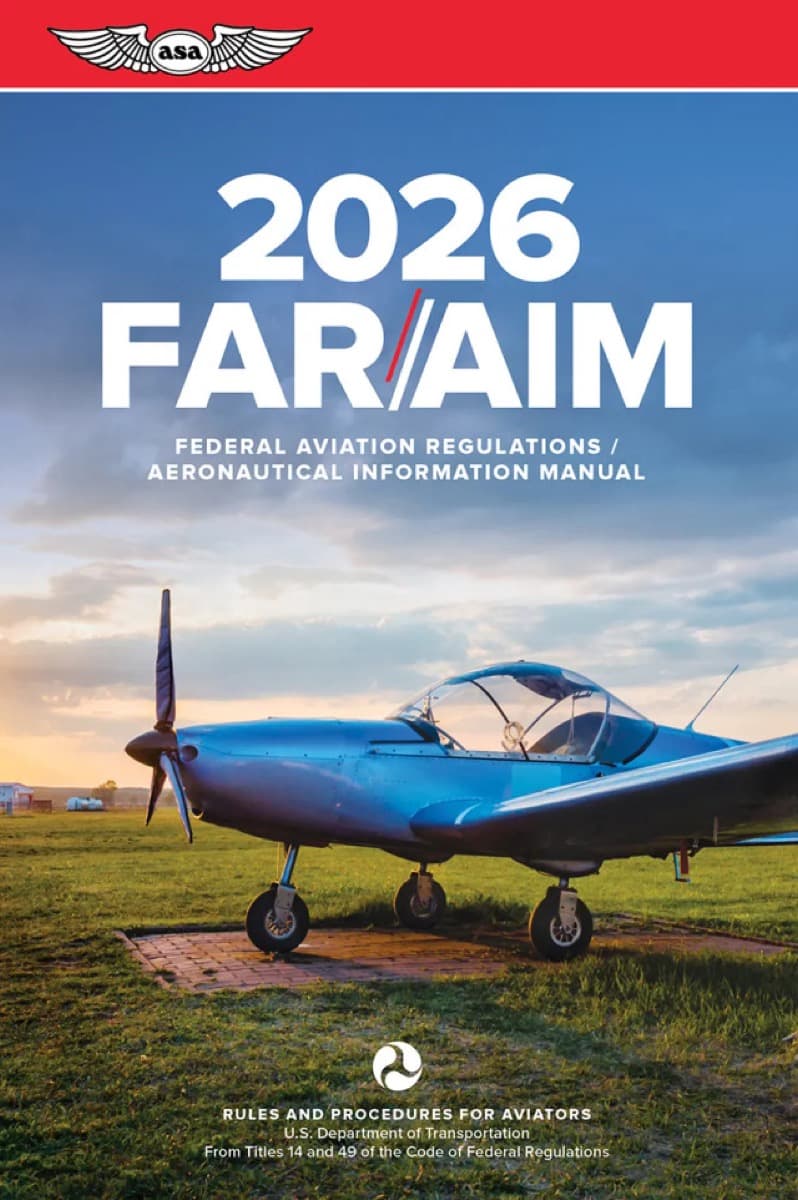
I was thumbing through the Aeronautical Information Manual the other day (no, I don’t have a life, but I am at peace with it) when I came across something that I’d never read before or forgotten.
It’s a list of the Top 10 Causes of GA accidents.
They are:
- Inadequate preflight preparation and/or planning
- Failure to obtain and/or maintain flying speed
- Failure to maintain direction control
- Improper level off
- Failure to see and avoid objects or obstructions
- Mismanagement of fuel
- Improper inflight decisions or planning
- Misjudgment of distance and speed
- Selection of unsuitable terrain
- Improper operation of flight controls
This is from 7-6-1, the Potential Flight Hazards of the Safety of Flight section.
It got me questioning how we are training pilots and maintaining proficiency, so today’s “question” came from the universe, rather than from a specific reader.
The manual helpfully points out that this list has been stable for, well, pretty much ever.
What struck me is the fact that the first five are about simply getting into the air at all, while the second five are largely about reaching the intended destination.
And, naturally enough, some dovetail into others domino fashion.
For instance, improper preflight prep might include neglecting to check the forecast winds aloft, which can become a player in fuel mismanagement, resulting in smacking into an object on unsuitable terrain.
Still, it’s a shocking list. Aren’t these all basic pilot skills? Not even getting into the whole semantics that aviators, what most flying folk aspire to be, are a higher breed than mere pilots, shouldn’t anyone with a pilot certificate have an adequate operational handle on all of these items?
I’ve been mulling this list over and have some thoughts on each.
1. Inadequate preflight preparation and/or planning
As worded, I think we can comfortably say that this isn’t about the preflight inspection, but about the part of a flight that happens before you grab your car keys and drive to the airport.

Sure, as an airplane owner, I can appreciate the spontaneous impulse to go fly if some unexpected time pops into your schedule and the day looks lovely. But I doubt that type of flying makes up much of this Number One cause of GA accidents.
So why is it that many pilots can’t pre-plan a flight?
I suspect that it’s because they were never taught to.
Real-world flight planning isn’t taught by most flight schools. Instead, students are only taught enough to survive two waypoints on a check ride before the examiner simulates a diversion. Students still fill out the old paper navlogs, most cheating by filling in numbers that they don’t understand from ForeFlight, and call weather briefers only when required.
On top of that, most training flights don’t go anywhere, and are only flown under decent conditions for liability reasons. The only “real” flight to anywhere that many students do prior to certification is the solo cross-country, which has a lot of oversight.
And then, as soon as you have that certificate, you start going places. And you’ll likely use your iPad for flight planning, even though you were never taught how to use it for that application.
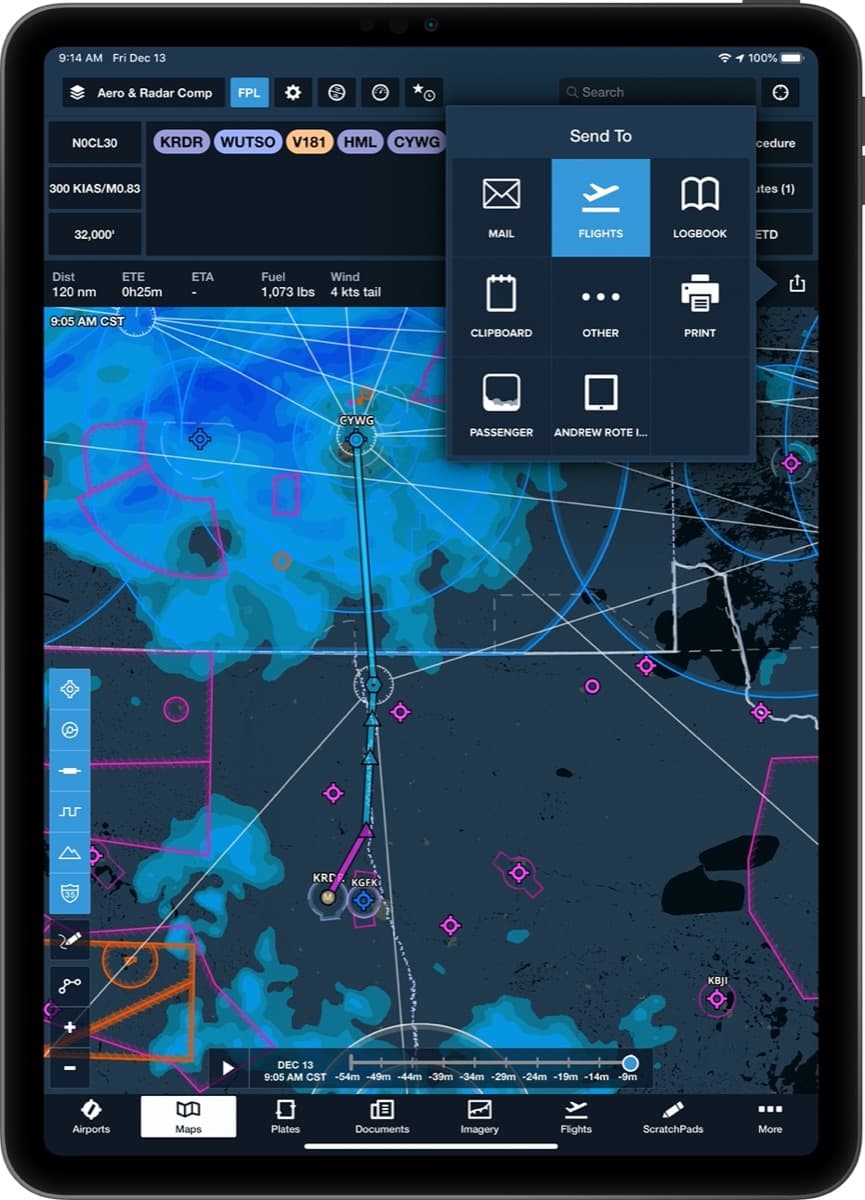
I’ve given some thought to how I would teach a new pilot how to do real-world flight planning on an iPad. And although I hate acronyms, I know that I’m fighting a losing battle, so I created one for the proper steps for real-world iPad flight planning: CAN’T FIGHT.
That stands for select your COURSE, usually point-to-point nowadays.
Make sure your course doesn’t go through an AIRSPACE you aren’t supposed to be in.
Look at NOTAMs, including those nasty Temporary Flight Restrictions (TFR).
Consider TERRIAN and choose a FLIGHT level (altitude).
Look at forecast WINDS, calculate GAS needed, then calculate how HEAVY you are (weight & balance).
Lastly, check the current and forecast weather at THREE points — departure, midway, and destination.
It’s not perfect, but maybe it could move preflight out of the Number One spot if everyone did at least that much.
Numbers Two to Five
2. Failure to obtain and/or maintain flying speed, 3. Failure to maintain direction control, 4. Improper level off, and 5. Failure to see and avoid objects or obstructions.
I lumped two, three, four, and five together because they are basic airmanship skills related to takeoff operations, and because I suspect that they share a common problem: The use-it-or-lose-it phenomena — also known as skill fade.

Consider that, when still a student, most training flights involve a lot of takeoffs and landings. A student pilot might do six, eight, or 10 takeoffs on a training flight.
But, once certificated, most pilots only takeoff once per flight or once per flight leg on multi-leg trips.
Additionally, most GA pilots really don’t fly all that much over the course of a year, so those flights happen less frequently than when they were in training. Even for those who are lucky enough to own airplanes, I think the average time flown per year is something like 30 hours.
Simply put, I think that many pilots aren’t doing enough takeoffs to stay sharp. They’ve lost their edge.
So what can you do?
Consider adding an extra lap around the pattern every time you fly. Or set aside a dedicated day for pattern skill maintenance on a routine basis.
I know that in some parts of the country this is easier said than done.
Many airports have mind-bending noise abatement procedures, policies, and limitations to keep the airplane-hating people who bought houses near the airport happy, while others are so chock-full of student training flights that it’s worse than the mall parking lot at Christmas. Still, we are talking about an inoculation against four of the top five causes of accidents here.
Hey, many of you go to the gym religiously. This is your aeronautical gym. Go work out.
6. Mismanagement of fuel
Yes, this is really a thing. Every time I profile a fuel incident in my sister-column Human Factors, commenters chide me for talking about the subject AGAIN.
I have to keep talking about it because people keep crashing perfectly good airplanes over it. So why is this happening?
My money is on expectation bias.
Assuming, unlike Number One, that a pilot has planned his fuel use, there’s a human tendency to count on that plan working.
To address this, I call your attention to the Prussian General Helmuth von Moltke, who famously wrote, “all plans of battle fail at first contact with the enemy,” or words to that effect.
Knowing this, my operational approach to fuel is two-fold.
I know I can fly my Ercoupe for two hours given my aircraft’s useless load (that’s not a misprint), taking into account legal reserve, etc. I flight plan based on how far I think I can go in two hours, but in flight, I monitor my progress by time, not distance, and land for fuel short of my planned stop if there’s the slightest doubt in my mind about reaching it in the two hours. In remote areas that requires a bit of forward thinking, but in reality, it’s more a matter of flexibility than raw intelligence.

So I guess my advice is to flight plan based on distance, then fly based on time — making sure you’ve firmly shifted gears in your brain between buckling your seatbelt and starting your engine.
Oh. Right. And while electronic flight bag time en route estimates in the air are helpful for keeping tabs on time, be cautious. They use your current ground speed and wind is a fickle mistress.
Numbers Seven to Nine
7. Improper inflight decisions or planning, 8. Misjudgment of distance and speed, and 9. Selection of unsuitable terrain.
Once again, I’ve lumped a few similar-cause items on the list together. These are all elements of what the industry has come to call aeronautical decision-making, which is simply thinking like a pilot, not a passenger just along for the ride.
The one thing we can count on in flight, thanks to Moltke, is that the flight plan goes to hell as soon as the wheels leave the ground. Like the weather we fly in, any flight is a host of variables, making it virtually impossible to predict all aspects of a flight. Therefore we must stay mentally flexible. We must change to meet unexpected challenges.
But how does one prepare for mental flexibility?
One thought is, ironically, not flexible at all: Religiously use scheduled, in-flight reality checks. Set a flight timer. Every 15 minutes evaluate: How well are conditions aligning to my expectations?
The more drift you see between the two, the more your plan must change. And the sooner you change your plan, the better.
What should you focus on? The big killers: Ground speed, ceiling, visibility, turbulence, fuel burn, and fatigue.
And keep tabs on not only where you are, but down range as well, which is easy to do with today’s cockpit tech.
10. Improper operation of flight controls
I don’t think this is what many of you are thinking it is — that autopilot dependence has created a pack of pilots who only know how to fly by pressing buttons in the right order.
After all, we’re told this list is as old as the hills. I think that most pilots are actually fine with their flight controls. In normal flight.
It’s when there’s a deviation from normal flight operations that the problems come up.
Again, it comes back to flight training. Flight training is kept tame.
The solution?
Practice unusual flight ops, which is different from unusual attitudes and upset training.
I’m talking just outside your normal operations. Land with no flaps periodically. Practice those accelerated stalls. Fly steep turns with no trim. Make sure you know how your plane acts, both routinely and just a hair beyond routine, so there can be no surprises.
And hopefully, some day in the future, the list will be only eight items long. Or five. Or three.
Maybe someday — if we pilots overcome our training deficiencies and maintain our proficiency — they’ll drop the list altogether.

“Stick and Rudder” Reading and doing. If failure is your GOAL, just neglect to understand the truth is that of conjecture. Ignorance is the path to stupidity. Everyone CFI’n better start with “Did’ga read it?” OK, then we’ll just go prove it. If not we’ll go read it.
Love your inclusion of noise guidance/fly friendly airport/community requests. At best they are (most of the time) taught to be considered for the few airports used during training —- rarely to be included in the flight planning process.
While I’m at it, there’s a great upheaval in the pilot community around landing fees. Understandably, we – like most humans – don’t like surprises like when we land and get a charge we don’t expect (whether $1 or $50) and even worse when it comes weeks later. The flip side of this is how many of us were taught to include fees, charges, and fuel cost in our preflight planning .. I wasn’t.
I wanted to really learn to fly……so I became a CFI…….I really wanted to learn instrument flying…….so I became a CF-II……I wanted to learn the multi well so I ……began teaching the Multi Rating…..
A. lot of CFI’s become an instructor to get the magic number of 1500 hours for the airlines…..Then give it up forever ……
We continue to make the same mistakes over and over again……even though FAA spends millions on seminars and useless enforcement actions…
So, eventually we will run out of affordable aircraft and insurance will be too high……
Not sure what “improper level off” is, Sounds bad.
Foreflight is a wonder of aviation, and a license for CFIs, some CFIs, to be lazy.
As. DPE, I see Pvt pilot applicants show up with a flight plan built on FF, and have no idea what the numbers mean. I keep a plotter & an old sectional so that they can plot true course for me. Most can, some have no idea, including a recent CFI candidate.
Troubling.
Thanks but this is not helpful at all !!!!
because top 10 are pretty much everything to flying an airplane. lol
Excellent article, Mr. Dubois, thank you. I’ve passed it along to my pilot friends who are commercial pilots and CFIs. These are serious aviators who take their jobs and lives VERY seriously. But these, of course, are pros in aviation. The bulk of GA pilots are not pros.
Sir, I don’t share your optimism about that list getting shorter. Nope. Too little stick-and-rutter experience, too little of what you recommend about practicing pushing your airplane to the limits to see how it reacts are the root causes of many/most of the accidents we read about on this news service and hear Juan Brown explain. Even he made the comment that he was concerned that the airplane insurance companies are exhausting their ability to payout for crashes because they’re starting to exceed insurance premiums. Money needs to go into the top of the funnel before it can come out of the bottom. Higher premiums, while onerous, might keep the marginal cost hobby fliers out of their machines and the sky, thus saving lives and property.
The biggest obstacle to fixing this situation are today’s babysitter technology that attempts to do everything for the pilot. Modern cars have cameras to back up with, lane changing warnings, etc. All that magic stuff lulls drivers into a false sense of security in the vehicle, which translates directly to the cockpit, especially with modern ‘glass panel’ displays. AI — the current ‘opiate of the people’ — will just make this situation worse. Top of the list are self-driving cars: pure idiocy. Remove the human element and suffer the consequences — death and destruction.
The friends I spoke of earlier started flying as crop dusters and flying oil pipelines into canyons and the most dangerous terrain imaginable. They learned how to safely fly a primitive airplane with just a compass and altimeter and a good marriage of man with machine. Just like a spouse, after a while you get to know literally everything about him/her. That’s why older couples finish each-other’s sentences. Should be that way with flying, but modern gim-cracks and gee-gaws (yes, I’m senior) lull today’s recreational pilots into a false sense of security — right into the trees and ‘granite clouds’ Sad but true. And BTW: the friend who is a CFI is an old-school drill sergeant who just flunked a check ride yesterday. He is a model CFI and despises the wham-bam-thank-you-mam alleged CFIs taking student’s money for very minimal training. End of rant.
Regards/J
What is meant by improper level off?
What is “Improper Level Off”?
“I think that most pilots are actually fine with their flight controls. In normal flight.” I don’t. The regions of command are more frequently than not taught incorrectly. This results in pilots believing that power can oppose the weight and control the altitude on an approach. A 160hp 172 has a static thrust of probably around 700 lbs and cruising thrust around 300. I don’t think 2400lbs can be lifted or raised if below the glideslope with a force of a few hundred pounds, especially considering that the thrust vector is aimed downwards. How many times have you heard use throttle to control altitude? It’s a crazy fallacy.
Warren, yes power for glide slope remaing on speed (angle of attack)
Guess you never landed a board ship.
Doesn’t have anything to do with where you land. The airplane still flies the way it is designed and engineered to fly – the lift vector from the wing opposes the weight. I read an article written by someone very familiar with those approaches which indicated that those pilots sometimes make close-in glideslope adjustments WITH THE PITCH. Why would they do that? Because power doesn’t really control altitude.
I’m curious to know Mr. Webb, how do you control your rate of descent?
With the elevator, just like an autopilot does on a coupled approach.
Sorry but I think this is missing a key point. You are not trying to use the 172’s thrust to directly lift the 1,400 pounds. The wings do all the lifting. Power simply determines whether not you are going to be descending or ascending at a given speed and by how much – surplus power over what is required to maintain level flight translates into a climb and vice versa. In practice we usually all use a combination of power and pitch together to set up the flight profile we want but once in the pattern I try and separate the functions by following the mantra of “pitch for speed and power for descent rate”.
Well, if you used the lift vector to control your altitude, you would easily maintain a more accurate line of flight to the aiming point. That’s what autopilots do and they maintain the GS needle in the middle. Are you saying that all autopilots are incorrectly programmed and certified? See faasafety course ALC-34 – “After aligning with the runway, the final flap setting should be completed and the pitch attitude adjusted for the desired rate of descent.”
If you’re talking about GA aircraft, autopilots only have control over elevator and elevator trim so that’s all it has access to to control rate of descent. The pilot still needs to control the throttle to maintain the proper approach speed. A new Cirrus or larger aircraft with auto-throttles can combine the two elements to maintain proper speed and glideslope. If you are on approach and adjust your glideslope without adjusting your power, your speed is going to change there’s no way around it. If you actually flew airplanes Mr. Webb you wouldn’t even question the theory that power controls altitude.