

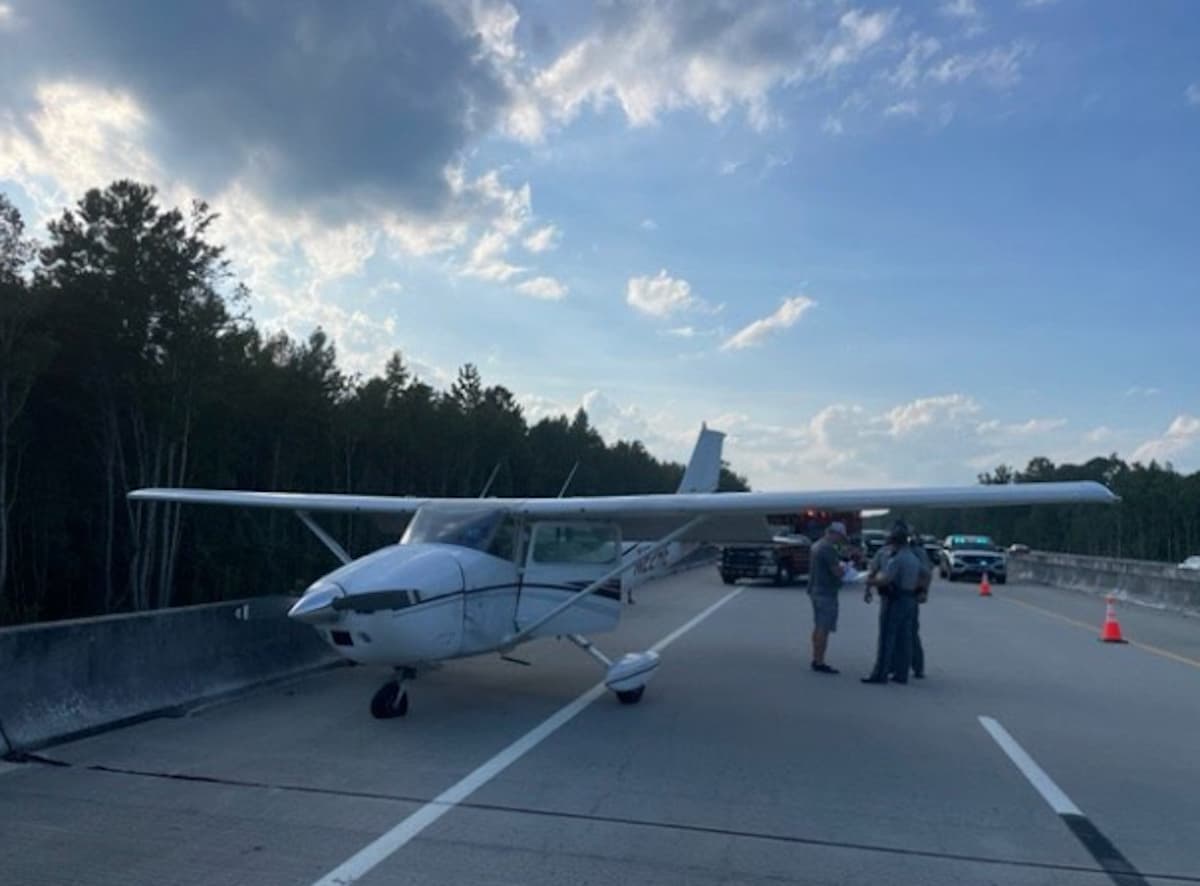
The pilot stated that he visually confirmed there were 52 gallons of fuel onboard the Cessna 182P and that both fuel caps were secure during his preflight inspection of the airplane.
He then departed on the approximate 1 hour and 15-minute flight.
While en route, the “low fuel light” flickered on and off. He noted the fuel gauge was reading half full, and he continued with the flight.
When the airplane was about eight minutes from the destination airport, and after descending to traffic pattern altitude, the engine stopped producing power.
The pilot was unable to restart the engine and made a forced landing to a highway near North Myrtle Beach, South Carolina. The airplane hit a jersey barrier during the landing, which resulted in substantial damage to the airframe.
FAA inspectors examined the accident site and observed that the left wing fuel cap was missing and blue fuel stains were evident on the wing aft of the fuel cap that extended to the trailing edge of the flap.
Recovery personnel also reported that both fuel tanks were empty when the wings were removed for transport.
The missing fuel cap was not located.
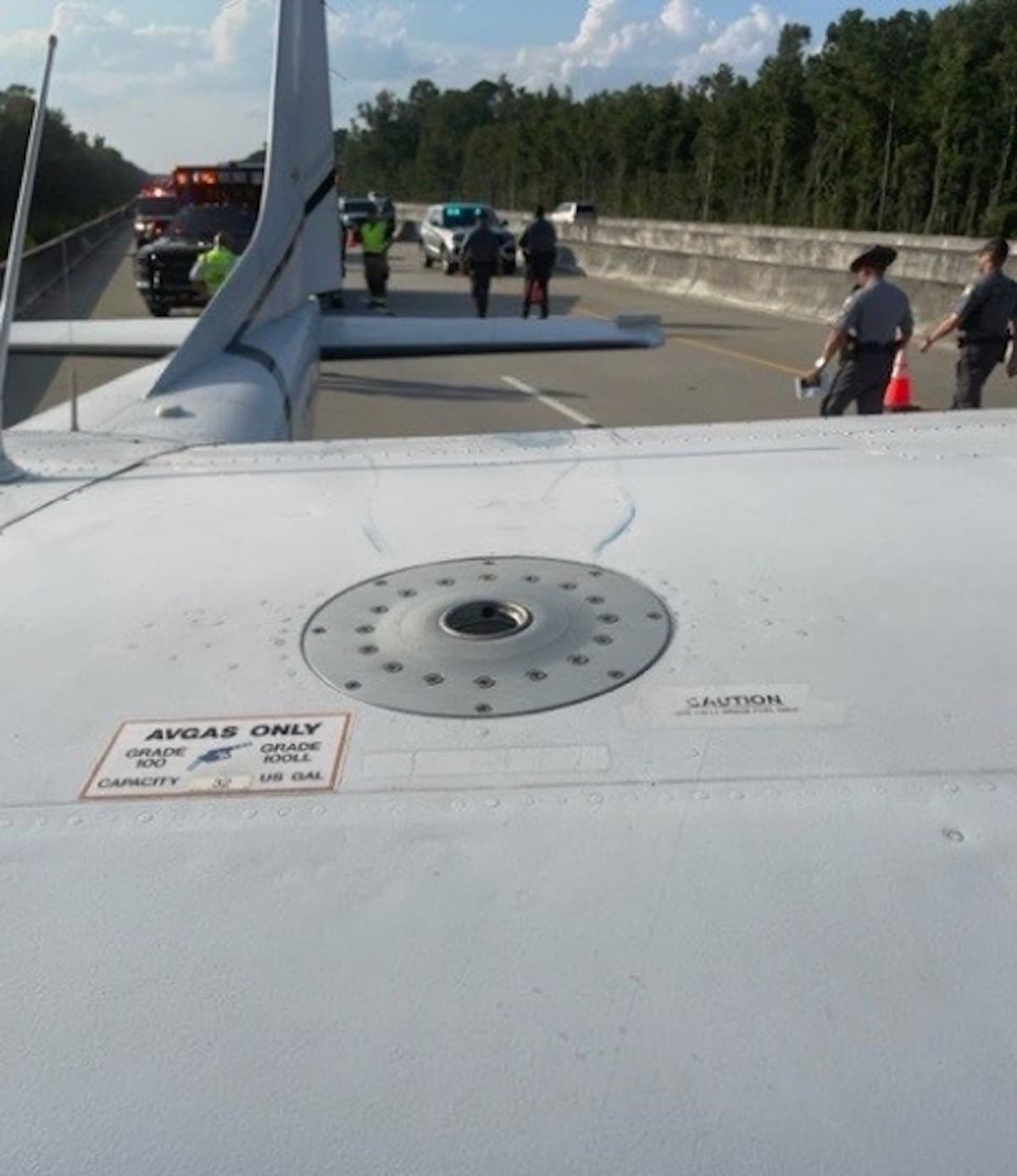
Based on this information, it is likely that the pilot did not properly secure the left fuel cap during the preflight inspection, and that during the flight it separated from the airplane. The remaining fuel was siphoned from the fuel tanks through the open fuel port, resulting in fuel exhaustion, and the total loss of engine power.
Probable Cause: The pilot’s failure to properly secure the left wing fuel cap, which resulted in a loss of engine power due to fuel exhaustion.
To download the final report. Click here. This will trigger a PDF download to your device.
This August 2023 accident report is provided by the National Transportation Safety Board. Published as an educational tool, it is intended to help pilots learn from the misfortunes of others.
Aviator made a mistake and will learn from it, to be kind I hope the smart a einstein commentators are as fortunate and only real damage will be to their enlarged Egos’.
Doing some ‘googling’ on Monarch caps, there have been a number of reports of this cap not sealing and fuel siphoning. They made a number of changes, and the cap chain tab can interfere with a good seal.
So, this low time pilot [ not related to the failure], was in a club aircraft, appears to have been the unfortunate ‘victim’ of the cap failure.
BTW, Monarch says that the attach chain is intentionally weak, so it will break off so that the cap does not ‘flail around’ damaging the wing.
So, maintaining these caps can be a bit complicated….
I sold my high wing aircraft (Cessna) and purchased a low wing (Vans RV)…….No more climbing a ladder the fill the tanks…..No more hitting my head on the ailerons or flaps….No more losing my fuel caps….he he
Having a low-wing aircraft doesn’t prevent a person from making a mistake. Tires, brakes, control, surfaces, trim, tabs, etc..
It does allow you to see the fuel cap during taxi and flight!
This incident would not have happened in a low wing aircraft
That looks like a monarch cap I believe they have a flapper valve called an anti-siphon and also they do have a chain to the cap. Which helps when done refueling the cap can be replaced easily it’s right there.
Yup.!! This can happen on a Cessna with the fuel selector on ‘both’, so the fuel will be siphoned from both tanks through the selector valve.
If a pilot notes the fuel loss, he can switch to either tank , and prevent the loss from one of them.
I had a cap come off, but it was on a short chain, which only allowed a few gallons to be lost.