

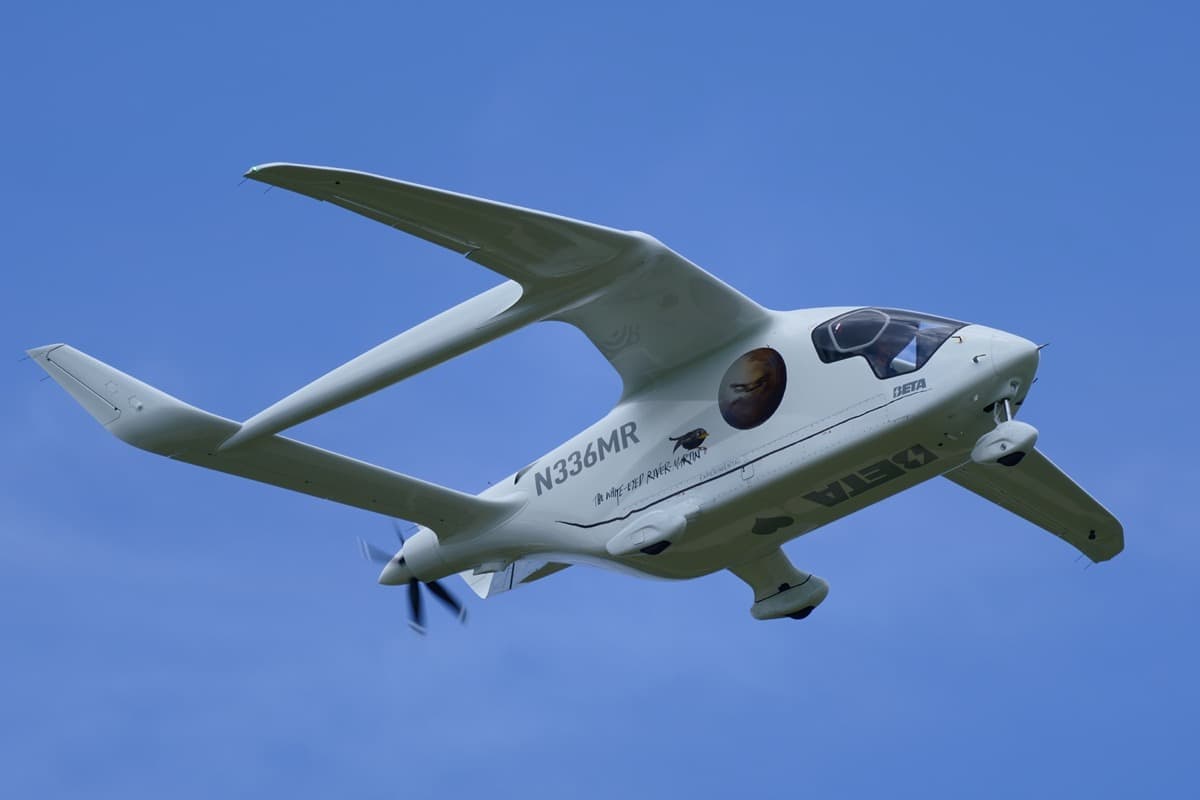
GE Aerospace and BETA Technologies have formed a new partnership to accelerate the development of hybrid electric aviation.
Under the new agreement, GE Aerospace and BETA plan to develop a hybrid electric turbogenerator for Advanced Air Mobility (AAM) applications, including long-range Vertical Takeoff and Landing (VTOL) aircraft, future BETA aircraft, and other potential applications.
“The collaboration brings BETA’s expertise in high-performance, permanent magnet electric generators together with GE Aerospace’s tested turbine, certification and safety expertise for large-scale manufacturing and electrical power systems expertise,” company officials said in a prepared release.
This hybrid solution will tap into existing infrastructure and capabilities, such as GE Aerospace’s CT7 and T700 engines, and is expected to bring significant enhancements in range, payload and speed performance compared to other aircraft in the same segment, BETA officials noted.
Additionally, GE Aerospace will make an equity investment of $300 million in BETA, subject to regulatory approval, to advance technologies that will support the future of flight. In connection with this partnership, GE Aerospace will also have the right to designate a director to join BETA’s Board.
“Partnering with BETA will expand and accelerate hybrid electric technology development, meeting our customers’ needs for differentiated capabilities that provide more range, payload, and optimized engine and aircraft performance,” said GE Aerospace Chairman and CEO H. Lawrence Culp, Jr.
“This partnership brings together two teams deeply committed to and guided by aerospace engineering excellence and building the future of flight,” added Kyle Clark, BETA Technologies’ Founder and CEO. “We believe the industry is on the precipice of a real step change, and we’re humbled that GE Aerospace has the confidence in our team, technology, and iterative approach to innovation to partner with us. We look forward to partnering to co-develop products that will unlock the potential of hybrid electric flight, and to do it with the rigor, reliability, and safety that aviation demands.”
GE Aerospace is advancing a suite of technologies for the future of flight, including integrated hybrid electric propulsion systems and new engine architectures. Multiple milestones have been achieved over the last decade, including a 2016 ground test of an electric motor-driven propeller, company officials said. In 2022, GE Aerospace completed the world’s first test of a megawatt-class and multi-kilovolt (kV) hybrid electric propulsion system in altitude conditions up to 45,000 feet that simulate single-aisle commercial flight.
BETA, which manufactures the Alia, has led the AAM industry in electric flight distance and hours flown, BETA officials said, noting its electric propulsion and battery systems are developed in-house.
For more information: GEAerospace.com. BETA.team
.
Saw at Wisconsin. . They had all the infrastructure. What’s going to happen when it’s at some small itty-bitty airport and it needs a full charge
Yup, you land this thing at an airport and run your extension cord over and wait 14 hours for it to recharge. no infrastructure at most airports. No good.
That’s gonna be a big hit isn’t it?
It’s great to see GE investing in electric technology. This type of propulsion has a niche market for now (check out the electric Beavers in Vancouver) but I see lots of potential future applications. The one thing few articles ever seem to mention is how quiet these aircraft are. That alone opens up a lot of possibilities, both civilian and military.
No where does this article state the reality that this turns a weird-looking battery airplane into a weird -looking fossil-fueled airplane. The irony is hilarious.