

The pilot and pilot-rated-passenger intended to complete a personal cross-country flight in the de Havilland Tiger Moth DH-82A with variable wind about 6 knots at the airport in Greeley, Colorado.
The pilot noted the windsock nearest the airplane indicated a tailwind, but the other windsocks farther down the runway indicated a headwind or crosswind.
During takeoff, the airplane became airborne faster than expected and climbed well, so the pilot made an early right turn over airport hangars. The airplane’s upper wing slats fluttered, which indicated to the pilot that the airspeed was low, then they “came out hard,” which indicated the airplane was near a stall.
He ensured the throttle was full forward and decreased pitch attitude to maintain airspeed but felt like the airplane “was being forced down.”
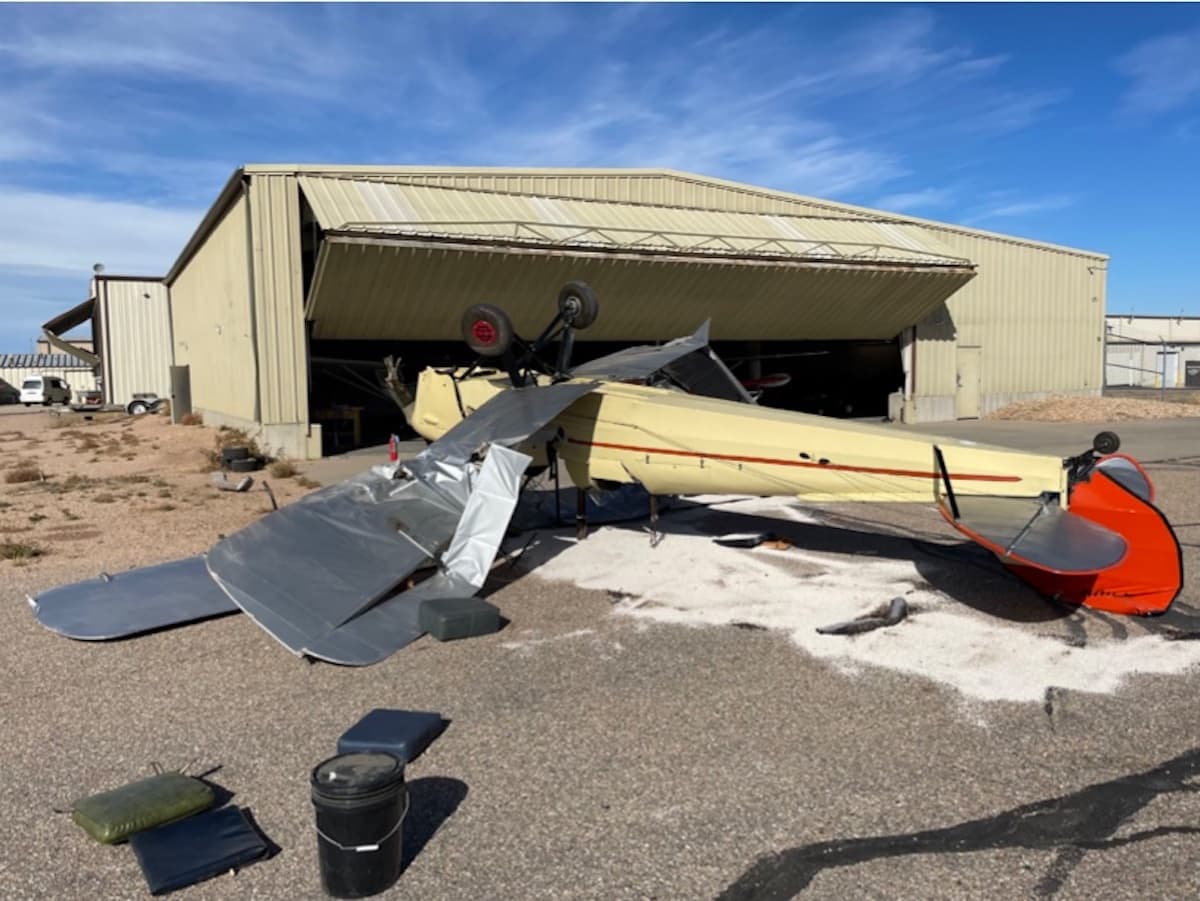
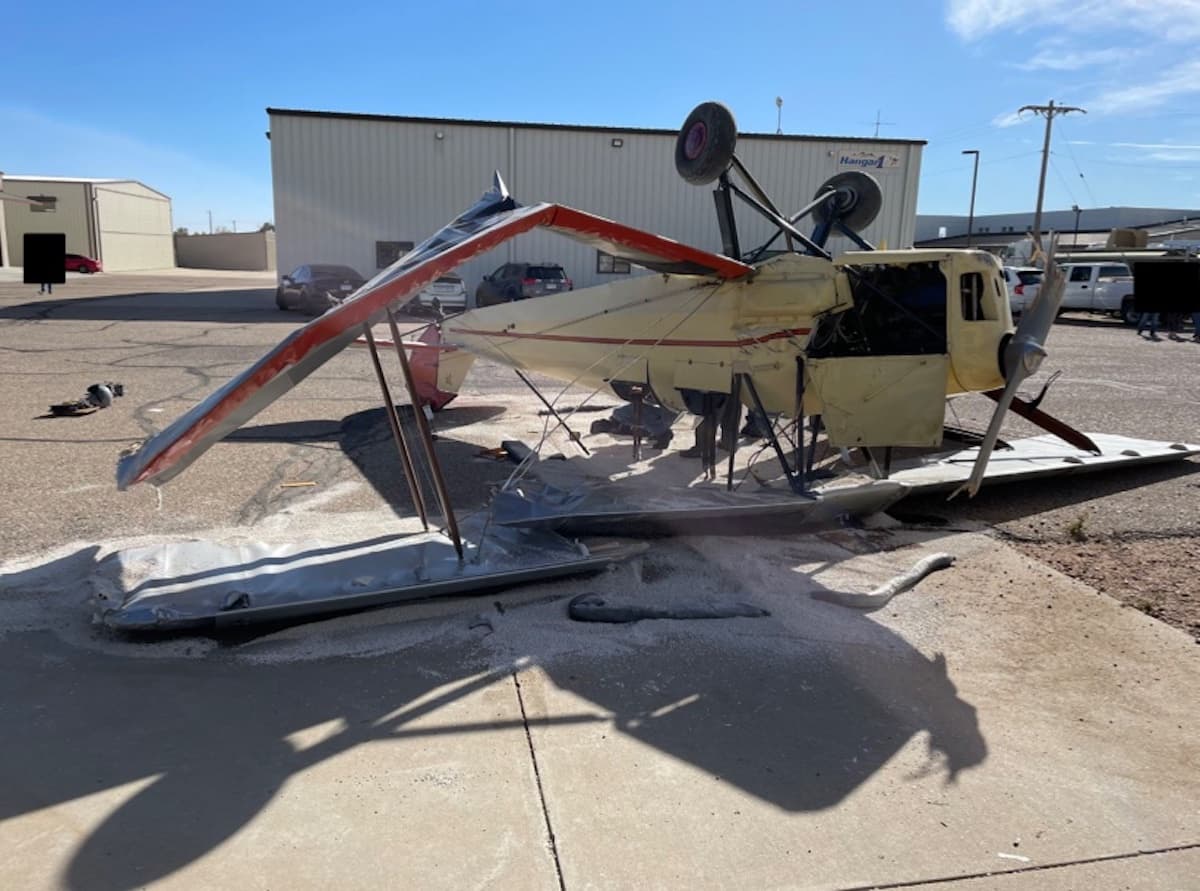
Unable to maintain altitude, and with no suitable forced landing area, he maneuvered the airplane to collide with the side of a hangar and the ground, then it nosed over.
The airplane sustained substantial damage to the wings, fuselage, and empennage.
The pilot reported that there were no pre-accident mechanical malfunctions or failures that would have precluded normal operation.
Airport surveillance video showed the airplane at low altitude and appeared to climb until it overflew airport hangars. The airplane maintained a climb pitch attitude as it descended into the hangars.
Probable Cause: The pilot’s decision to turn out early during the initial climb and failure to maintain adequate airspeed/angle-of-attack, which resulted in an aerodynamic stall and impact with airport hangars. Contributing to the accident was the variable wind conditions above the hangars and the pilot’s lack of awareness of those conditions.
To download the final report. Click here. This will trigger a PDF download to your device.
This October 2023 accident report is provided by the National Transportation Safety Board. Published as an educational tool, it is intended to help pilots learn from the misfortunes of others.
The different readings on the wind socks would have been enough info to decide on a no go situation.