

My wife loves puzzles. The kind you spread out on a table and put together, piece by piece.
Me, not so much.
Unless I do.
Puzzle Piece: ADS-B
We recently published a guest editorial, “Proposed ADS-B bill will harm aviation,” by Shaun Germolus, director of aviation at Kissimmee Gateway Airport (KISM) in Florida. In the editorial, Shaun shared his thoughts on the use of ADS-B data to help fund airport operations.
The comment section on that particular editorial was spirited. Several commenters, while disagreeing with Shaun’s perspective, appreciated learning a thing or two about how airports operate.
In a formal response to Shaun’s editorial, Jim Coon, Senior Vice President of Government Affairs and Advocacy for the Aircraft Owners and Pilots Association, submitted an opposing guest editorial, “Proposed ADS-B bill will protect general aviation”.
Jim outlines many reasons why ADS-B should not be used to help airports collect fees.
ADS-B and airport operations are not the subject of this column, but in Jim’s reply is the following nugget:
“GA piston pilots currently pay a 19 cents per gallon federal fuel tax, non-commercial jet operators pay a 21.9 cents per gallon federal tax, and commercial airlines pay 4.4 cents per gallon. Taxing fuel at the pump is a very efficient method of collection.”
Puzzle Piece: Taxes
I doublechecked Jim’s numbers. According to the Airlines for America website, the U.S. Government-Imposed Taxes on Air Transportation webpage specifically, passengers on commercial aircraft are subject to and pay a litany of taxes and fees (following table courtesy Airlines for America).
| Commercial and General Aviation Taxes | 1972 | 1992 | 2025 |
| AIRPORT & AIRWAY TRUST FUND (FAA) | |||
| Passenger Ticket Tax 1a (domestic) | 8.00% | 10.00% | 7.50% |
| Flight Segment Tax 1b (domestic) | — | — | $5.20 |
| Frequent Flyer Tax 2 | — | — | 7.50% |
| International Departure Tax 3 | $3.00 | $6.00 | $22.90 |
| International Arrival Tax 3 | — | — | $22.90 |
| Cargo Waybill Tax 4 (domestic) | 5.00% | 6.25% | 6.25% |
| Commercial Jet Fuel Tax (domestic flights not continuing ex-USA) | — | — | 4.3¢ |
| Noncommercial Jet Fuel Tax (domestic) — n/a to airline ops | 7.0¢ | 17.5¢ | 21.8¢ |
| Noncommercial AvGas Tax (domestic) — n/a to airline ops | 7.0¢ | 15.0¢ | 19.3¢ |
| Liquid Fuel used in a Fractional-Ownership Flight — n/a to airlines | — | — | 14.1¢ |
| ENVIRONMENTAL PROTECTION AGENCY (EPA) | |||
| LUST Fuel Tax 5 (domestic) | — | 0.1¢ | 0.1¢ |
| LOCAL AIRPORT PROJECTS | |||
| Passenger Facility Charge | — | Up to $3.00 | Up to $4.50 |
| DEPARTMENT OF HOMELAND SECURITY (DHS) | |||
| September 11th Fee 6 | — | — | $5.60 |
| APHIS Passenger Fee 7 | — | $2.00 | $3.71 |
| APHIS Aircraft Fee 7 | — | $76.75 | $281.39 |
| Customs User Fee 8 | — | $5.00 | $7.20 |
| Immigration User Fee 9 | — | $5.00 | $7.00 |
Point of clarification Jim, according to Airlines for America, as of Jan. 1, 2025, commercial airlines pay 4.3 cents per gallon, non-commercial aircraft pay 21.8 cents per gallon of Jet-A, and we non-commercial piston powered pilots pay 19.3 cents per gallon of avgas. But what’s a few tenths of a cent among friends?
Those sitting in the front row of the commercial aircraft (first or business class) are paying more in ticket tax because the base fare is higher for the comfier 1B seat.
Those of us flying personally or in a non-commercial business aircraft are simply subject to the fuel tax.
Puzzle: ATC
Freakonomics Radio is a 15-year-old podcast that discusses “The hidden side of everything.”
Two recent episodes, 645: Is the Air Traffic Control System Broken? and 646: An Air Traffic Controller Walks Into a Radio Studio… made me think of Jim Coon’s tax comment in the ADS-B puzzle.
As I listened to episode 645, guest Dorothy Robyn discussed the funding of ATC.
Dorothy Robyn is a senior fellow at a tech-oriented think tank in Washington, D.C., with an impressive transportation background prior to her current gig.
Cutting to the quick: She said business jets fly in the same airspace as commercial airline aircraft do.
“And they (business jets) are paying a fraction of what a commercial airliner is paying for a similar trip.”
She cites an Eno Transportation Center, a transportation think tank, study:
“This goes back to 2017. Two flights from Dallas to DC. One is a passenger airline, 180 passengers, Airbus A321.
“And the other is a private jet with 10 passengers. According to this Eno example, the passengers paid $2,600 in the form of a ticket tax. There’s also another $760 in segment fee.
“That’s a flat charge. And then $100 in fuel taxes. So total of $3,500 in taxes.
“The private jet, there’s no ticket tax. There’s no segment fee. All there is is a fuel tax of a couple of hundred dollars in their example.
“$3,500 versus $327.”
Podcast host Stephen Dubner counters, sort of, “But to be fair, the big plane is carrying a lot more people.”
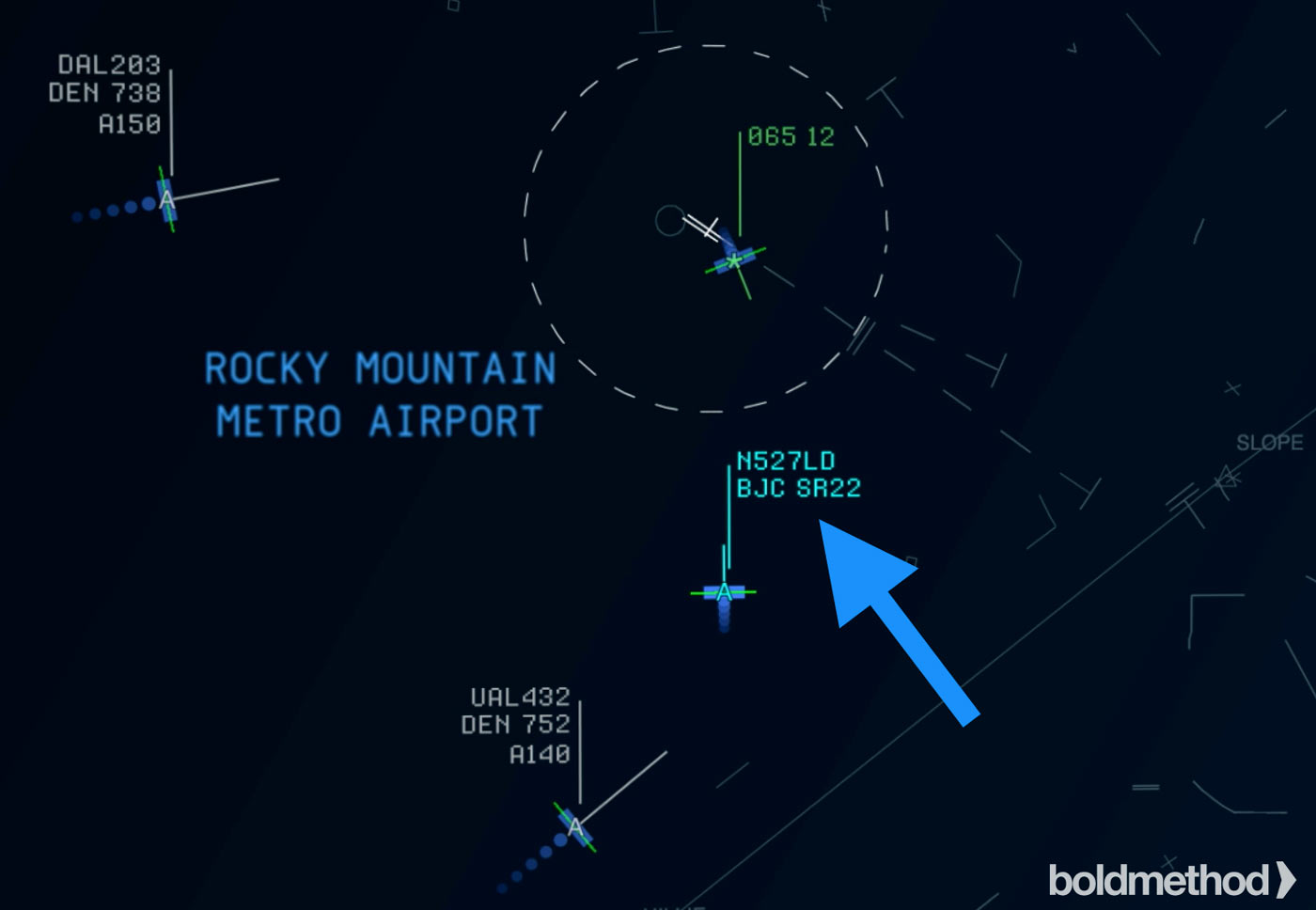
Robyn counters and brings the discussion back to ATC: “But here’s the key. A blip is a blip (referring to a radar screen). A plane is a plane. If you’re a controller and you’ve got an A321 and a business jet, they get equal treatment. The cost they impose on the system is identical.”
Correct. As it should be.
In the case of the example A321, there are 181 taxpayers, not one.
180 passengers paid a total of $2,600 in ticket tax, and $760 in segment fees.
The airline pays 4.4 cents per gallon of Jet-A. As cited by Robyn, “$100 in fuel taxes.”
In the case of the business jet, Robyn points out there is no ticket or segment tax. Which makes sense, because the seats aren’t sold to the passengers, they are filled with employees (and guests) of the business that owns the aircraft.
But the owner of the business jet pays nearly five times more in taxes per gallon of Jet-A when compared to the airlines: 21.9 cents vs. 4.4 cents.
Last I checked, $327 is more than $100.
It is important to compare apples to apples, as the saying goes.
Puzzle: Random Question/Thoughts
So, when an airline has to reposition an aircraft from Dallas to DC (without passengers), there is no ticket or segment tax collected by the airline. Do they then operate as a Part 91 flight and pay 21.9 cents per gallon for that precious Jet-A? I have no clue.
What percentage of ticket tax from the Eno example came from business travelers compared to non-business travelers? I can’t find it as I write this, but I recall listening to a podcast with Ed Bastion, CEO of Delta Air Lines. My impression was that business travelers are VERY important to the well-being of Delta Air Lines.
I take that to mean that business travelers pay a higher ticket price (thus more ticket tax). And, as you can see, the ticket tax Robyn refers to is, by far, the largest amount of taxes remitted to the government.
So, instead of lamenting that business jets are “paying a fraction” of commercial aircraft, it could just as easily be argued that Part 121 is getting the better deal when it comes to paying for ATC.
This is the kind of puzzle I do enjoy.
The pieces are interesting and fun to look at and think about, but it sure can be hard to see how they all fit together.
And sometimes I think that is how the puzzle makers want it.

Seems to me that the TAX argument is a diversion from the crux of this discussion. When the FAA and all of the aligned groups that pushed for and got the ADSB mandate shoved down everyone’s throat, all in the name of “Safety”, and “upgrades” to the National Airspace system, THEY SWORE THAT ADSB DATA WOULD NEVER BE COLLECTED FOR THE LEVYING OF USER FEES!!!! So, all tax fairness discussions are pretty much moot. My 2 cents worth……..
I was assigned to report to the General Aviation terminal in Montréal Canada, for a work assignment for Bechtel Engineering’s Project in Greenland. I expected to walk to remote location for transportation. Instead, there was a regular gate next to United or Air Canada for a DC 6 half full of cargo, two stewardesses. As a Commercial rated pilot, it was a real treat
So when i read all these taxes against our aviation system I can not help but get mad at all the money that was wasted to pay for the millions of illegal immigrants that were aloud to pour into America…
The cost for 2023 was an estimated 166 BILLION that is BILLION with a B!!!
So I do not want to read or hear about any other taxes!!!
Yes, undocumented immigrants (a/k/a “illegal” per MAGA), do cost something like $150 billion dollars a year – HOWEVER, according to the non-partisan Congressional Budget Office (CBO) – they contribute $97 billion a year towards Medicare and social security. which they cannot get back, and their combined purchasing power is $299 billion dollars a year – a lot of which is spent here. They also did a lot of jobs in agriculture and construction which now have labor shortages. So – 150 billion out vs. 400 billion in . . . the numbers don’t lie. We should be deporting politicians instead . . .
Aviation taxes on tickets and fuel are used to fund a variety of things beyond ATC. Airport improvements for one. Navigation systems for another. It should also be noted that private aircraft do not have vast airport resources dedicated to their use as do the airlines. I’ve never seen a private jet connected to a jetway, although it may happen.
It seems to me basically fair to charge users of a resource to pay for it. Similar to turnpike tolls and fees — the drivers pay for the road. Better than just tapping the general revenue pot paid for by all taxpayers, fliers or not.
Regards/J