

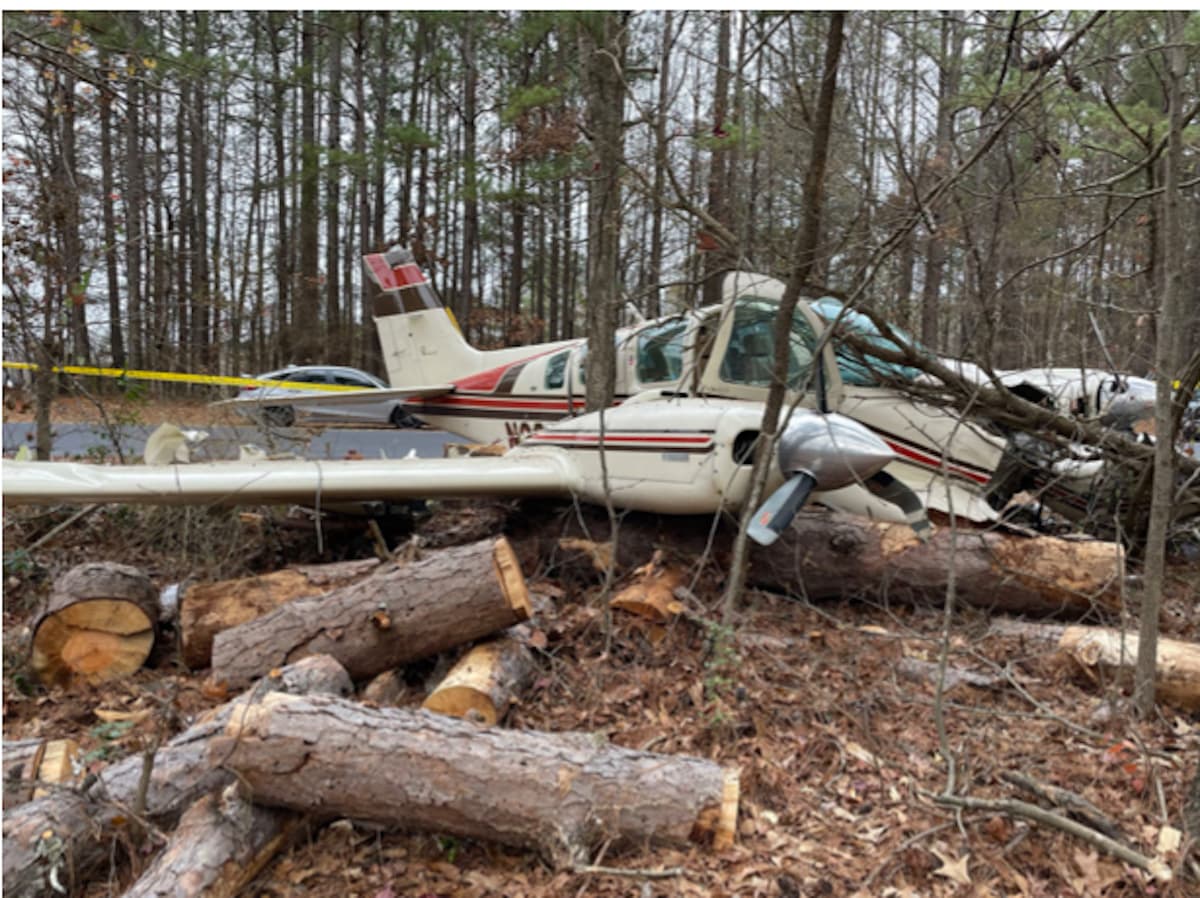
It was a Friday afternoon in mid-December 2023. The pilot of the six-seat Beech 58, one of the Baron family of aircraft, was making a short ferry hop to deliver his airplane to a maintenance provider. The twin had developed an electrical glitch that popped the landing gear relay, necessitating cycling the breaker to deploy the gear. The pilot selected a Beech-specialist mechanic based at a nearby private airpark to troubleshoot the issue.
He took off from Middle Georgia Regional Airport (KMCN) in Macon, Georgia, bound for the private airpark — Cedar Ridge Airport (GA62) — about 50 miles to the northwest in Griffin. The pilot estimated the flight would take 20 minutes.
Out of habit and practice, he filed IFR even though it was a pleasant, clear day.
The Accident
The pilot had never flown into this airport before, but upon spying it at the expected time and place, he canceled his flight plan in-flight and proceeded for the landing. The wind was from the south, so he flew a smart downwind parallel to a freshly re-surfaced strip of asphalt, turned base, then turned final.
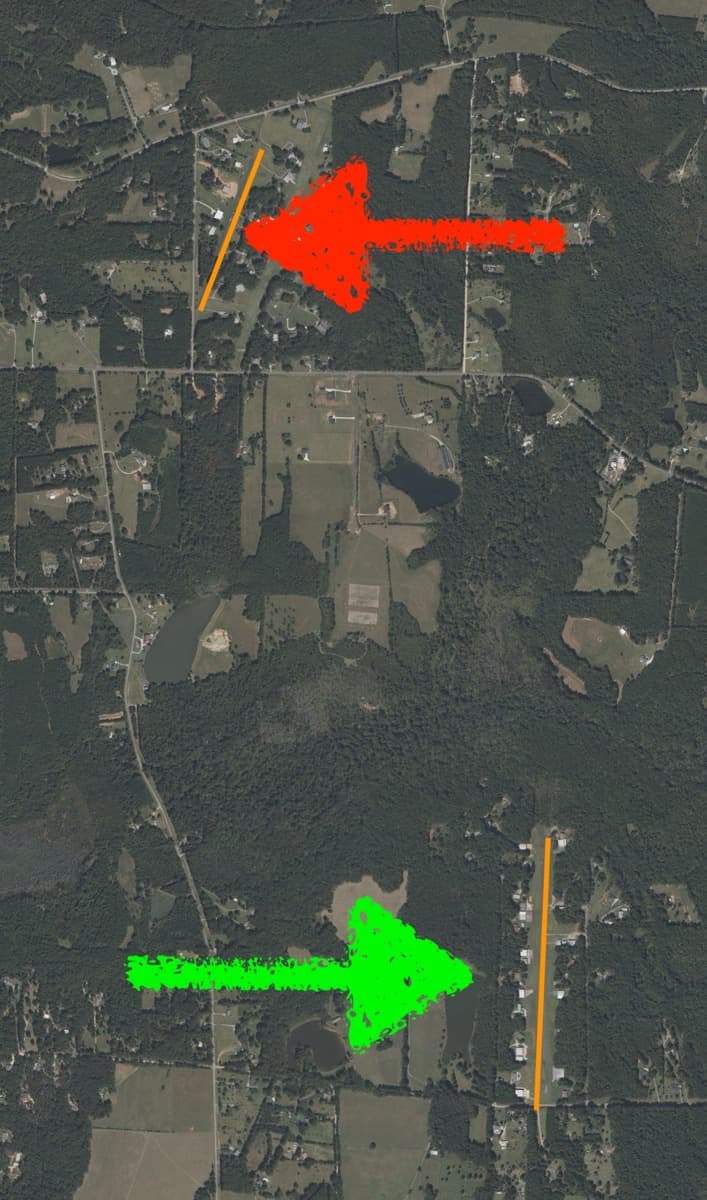
The problem was the lovely strip of asphalt wasn’t Cedar Ridge Airport at all, but a paved combined taxiway/driveway for the nearby Brook Bridge Aerodrome (8GA9), a turf field. The runway he thought he was landing on was about 9,000 feet to the south.
By the time he realized he was about to land on something not a runway, he judged he was “too low and too slow” to initiate a go-around, fearing a stall. So he went ahead and put the big twin down, pulling power and applying maximum braking.
He almost made it.
Now, I wasn’t able to find out what sorts of airplanes make their homes at Brook Bridge, but my guess would be largely piston singles as, at nearly 40 feet wide, the Baron didn’t quite have enough room on the taxiway. Its left wing clipped a power pole, spinning the aircraft into the trees that lined the pavement, destroying the airplane. Fortunately, the plane was going slow enough at the time that the pilot’s injuries were limited to his wallet.
The Pilot
The pilot was a 77-year-old male. He held a private pilot certificate with instrument and multi ratings, and a third class medical. His total time was 5,745 hours, with 3,425 in twins and 3,325 in the make and model. He had flown 75 hours in the previous 30 days, which is a lot for a GA pilot.
The NTSB
The National Transportation Safety Board chalked the cause of this accident up to “the pilot’s misidentification of a taxiway as the intended runway, which resulted in a collision with a utility pole and trees.”
Investigators didn’t make too big a fuss over the fact the pilot was at the wrong airport altogether, but they did attach an abridged copy of NTSB Safety Alert 0-33, “Landing at the Wrong Airport,” to the final report.
Analysis & Discussion
Taking a close look at the layout of these two airports illuminates how one might be mistaken for the other. Cedar Ridge has parallel paved and turf runways. The paved strip is 18L/36R. It’s 3,000 feet long and 40 feet wide. The associated turf runway is 150 feet wide and runs right alongside the paved runway. There are no taxiways. The whole airport is “cut” out of a fairly solid canopy of trees.
Brook Bridge’s turf runway is of similar size to Cedar Ridge’s, but is cocked 20° more around the compass rose at 02/20. The paved taxiway is pretty much at the same orientation and is located west of the field, with trees, houses, and hangars in between the runway and taxi/driveway. The tree cover is a bit less dense around this airport.
I don’t know how it looked that December, but looking at the satellite view on my Garmin Pilot App, there sure is a lot of green. At first, I couldn’t even “see” the runways at either field.
Adding to the camouflage, Cedar Ridge’s paved strip looks pretty faded. With fresh pavement next door, I can see how it would attract the eye. While a bit narrower than Cedar Ridge’s paved strip, it is similar in length, and oriented in a somewhat similar direction. Although, that said, a quick glance at the compass on final should have alerted the pilot that something wasn’t quite right.
None of the statements by the pilot indicate one way or another if he was tuned in to the close proximity of the two airports or how much he did — or didn’t — study the layout as part of his preflight planning.
The Takeaway
Ok, so while it’s not all that common to have two airports within spitting distance of each other, it does happen — and even airports that are several miles apart are sometimes mistaken for each other by pilots. And while those turf fields are sometimes hard to spot, and I’m guessing that turf fields with paved taxiways aren’t all that common either, it’s still a core pilot responsibility to land where one is intended to land, assuming the airplane is functioning, as it was in this case.
So what’s the takeaway here? While, after the fact, we can “understand” what happened, what can we do to prevent such occurrences in the future?
At a minimum, a state of hyper alertness should be deployed when planning to land at any airport that has another field in close proximity. While they might be hard to spot and sort out airborne, it’s easy enough to look at the chart and see when two airports are in close proximity.
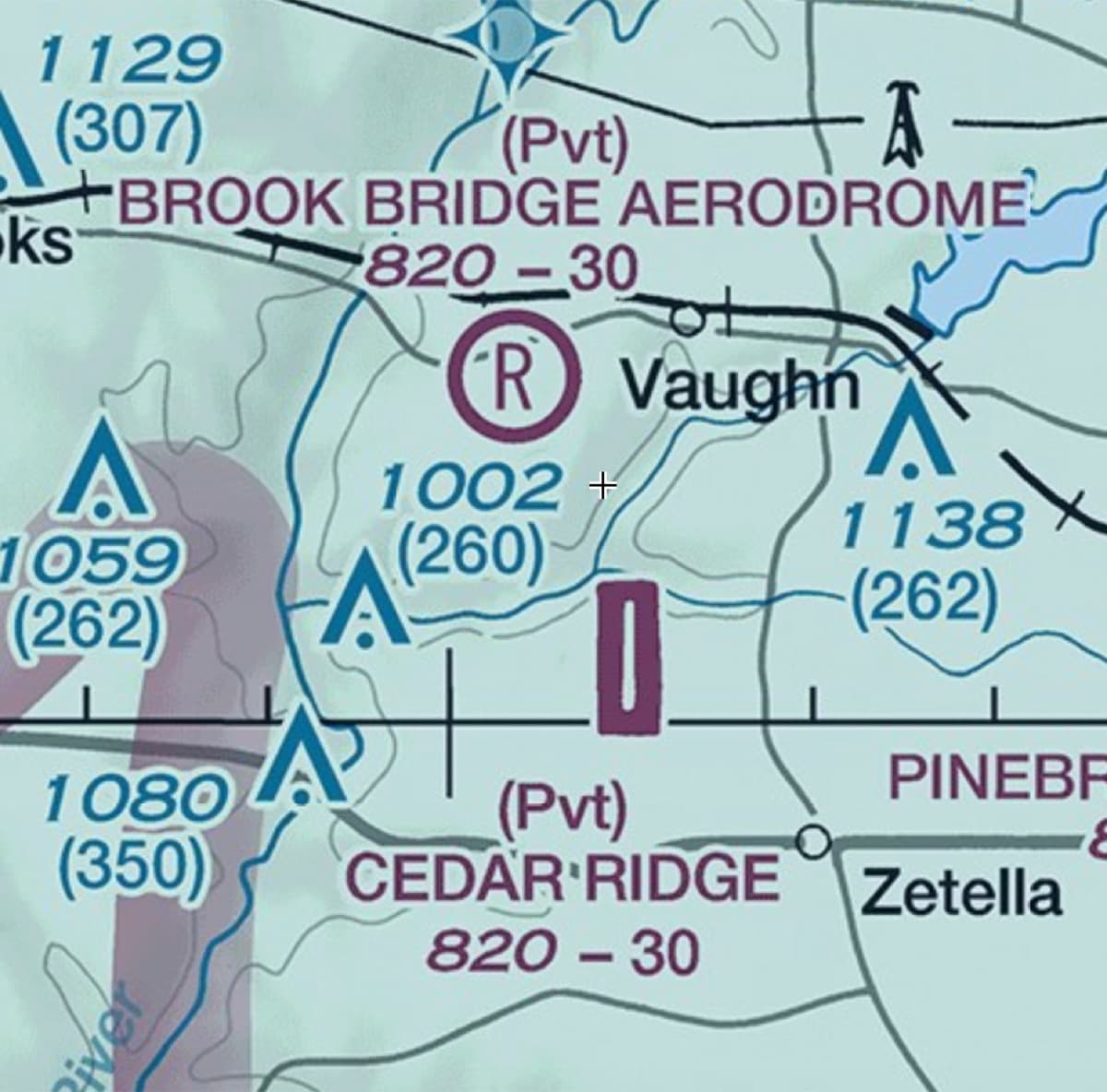
And when that’s the case, I think a higher level of advanced preparation is required. And much of that preparation should be on the ground, before the prop spins.
We have a lot of modern tools to help us prepare, and understand the literal lay of the land, when it comes to landing in strange places. Most flight apps feature satellite views of airports that allow you to zoom in and out, and slide the image around to study the surrounding area. Some even create virtual fly-bys so you can visualize the approach. If you don’t have any of those, you still have Google Earth.
So I guess the takeaway here is when it comes to “twin” airports chair fly it before you fly it. You don’t want to be the victim of a case of mistaken identity.
The Numbers
Want to read more? Download the NTSB’s final report here or view the items on docket here.

Well, on a positive note, he doesn’t have that pesky landing gear problem anymore.
In the. 1950’s Delta confused Yazoo City for JAN and landed a DC-6 on the tuff runway. Seats were removed and several thousand feet of Marston mat were borrowed from the USAF. With minimum fuel onboard, a safe takeoff was made, an a 5 minute flight was made to JAN. It was reported that the entire population of Yazoo City watched the T.O.
Yes, the pilot made a mistake in identifying his intended airport which could have been mitigated by a good preparation/Threat & Error Management assessment prior to flight.
But in my opinion he made a right decision not to attempt a go-around in a dire situation being slow and low with the high trees at the end of the strip (as reported). By committing to the landing and accepting a crash/sacrificing the aircraft he probably averted a worse outcome to himself, and lived to learn from this event.
Pull out the Cheyenne Sectional. Look at Rapid City Regional Airport (RAP) and Ellsworth Air Force Base (RCA).
Wanna guess how many times airliners have lined up on the wrong runway …and/or actually landed at the air base?
Hint: More than once.
I sure hope I’m able to fly 75 hours a month when I’m 77 years old!
An odd thing about this story is that GA62 lists no services for repair. The satellite view also clearly shows that GA62 is a paved, marked runway, 18/36. There are no markings on what I interpreted as the taxiway at Brook Bridge, and they look nothing alike to me. I suppose the pilot forgot to look for runway markings.
As a student pilot, I was flying to an airport I had been to once and flew over the airport, but something looked off. I flew over again, but the runway was not marked 7/25, which was what I was expecting. That was my clue not to land there, but I did fly to the correct airport, marked as expected. I was warned by my instructor to ensure I was landing at the correct airport, as I was not endorsed for landing anywhere else, save an emergency.
Excellent lesson. Attempted landings at the Pratt and Whitney airport in East Hartford, CT, but intended for Hartford-Brainard airport on the other side of the river, happened for years. The tower saved many pilots at all levels of experience and aircraft, except for one guy who was coming to Brainard in a C152 for radio repairs. He landed safely on the closed runway I think it’s something generally not covered well if at all in aviation courses leaving the pilot to experience an exciting epiphany.
Easy mistake to make. Almost done it myself several times. No comments.
However, I do have an odd, maybe amusing, comment to make about the photo with the arrows. One in 12 males is at the very least, red/green color blind. I’m worse and fly on a demonstrated ability waiver and have for 65 years and 11,000+ hours. What I see on the photo is a red and yellow arrow. Not sure which is which. Just pointing that out. It has always been interesting to me that Red and Green are the critical colors when 8% of us can’t tell them apart. Red stop signs, for instance, fade into the foliage. Remember that when at a four-way stop. We don’t mean to be a threat but we are.
Most anyone could have made this mistake. At least he no longer has to worry about the electrical landing gear problem…
It isn’t just us bug-smasher drivers who sometimes have this problem . . .
Friend of mine was a pilot for Eastern (remember them?) and he had a medical problem so they kicked him upstairs and made him Director of Safety.
He did a good job, eventually retired, but told me a few “interesting” stories.
“Miami ground control, taxi instructions to the gate, please.”
“Eastern ###, we don’t see you.”
“Miami ground control, well we ARE on the ground . . . ”
“Eastern ###, we still don’t see you, what can you see?”
“Miami, we see a large red WW2 style hangar on our right.”
(Laughter in background) “Eastern ###, son, y’all are at Opa Locka, not Miami.”
Eastern ###: ” . . . . Oh ****.”
Passengers completed their flight by bus, Eastern found the lightest pilot they had, took out all the seats, left ten gallons of Jet-A in the airplane (a 727) and JUST cleared the power lines at the end of the very short runway. Nobody hurt, a few very red faces though.
Wasn’t the first time, won’t be the last time.
Short hop in a twin with landing gear maintenance issue … then filing IFR for a few minutes? Why force yourself to be this busy.
One for the books………!
I am sure the Baron had a GPS system?…….and it would be easy to find by just following the Magenta line…..and doing a fly by to see the field?
But we all live and learn….
Glad he did not get hurt.