

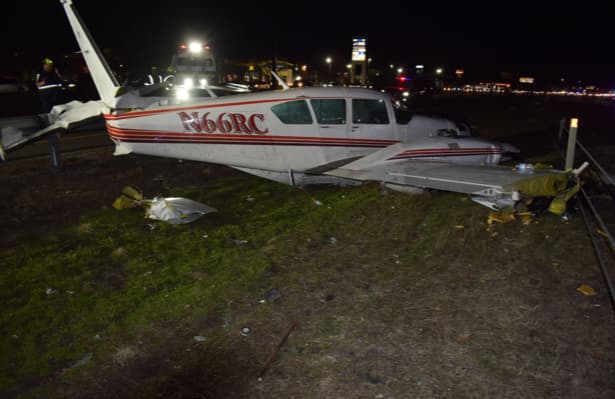
The pilot told investigators that while returning from a five-hour aerial survey flight in the Piper PA-23-250, she noticed about a quarter tank of fuel indicated on each fuel gauge and continued the flight toward the destination airport in Forney, Texas.
While on the approach, she noticed that both engines sputtered and both fuel gauges indicated empty.
She conducted a forced landing to a highway median and the airplane hit guardrails. Both wings, the empennage, and fuselage sustained substantial damage. The pilot sustained minor injuries in the crash.
Post-accident examination of the airplane revealed that the fuel tanks contained no usable fuel.
Probable Cause: The pilot’s inadequate fuel planning and improper in-flight decision-making, which resulted in a total loss of engine power due to fuel exhaustion.
To download the final report. Click here. This will trigger a PDF download to your device.
This December 2023 accident report is provided by the National Transportation Safety Board. Published as an educational tool, it is intended to help pilots learn from the misfortunes of others.
What improvement in fuel planning might happen if when a pilot runs out of fuel, that the FAA impose a large fine, maybe $5,000 , and required a number of hours of CFI time in training fuel use calculations.
$60 for 10 gallons of fuel vs a large fine might be enough incentive for pilots to be more conservative in fuel planning. ?
If you are a “pilot” and run out of fuel, go to the local FSDO and had them your pilot certificate(s). You are too stupid to fly an airplane. This makes the cost of insurance for all other pilots go up. Thank you very much!
First thought is over 5 hours in the air is a long time for a bladder, but I digress.
We don’t know how long the trip was once the 1/4 indications were mentioned. It’s simply a matter of poor fuel management.
Fuel totalizers have been around a long time and are very accurate if certain parameters are followed. This should be operator required equipment for these long hour flights.
Surviving a night time deadstick in a twin is nothing short of luck or divine intervention.
Flying for 5.0 hours in an aircraft that has about 5.6 hours of fuel [ 140 gal and 25 gph ], is not good fuel planning.!
This low time pilot had only 60+ hours in this aircraft but should have know the fuel use, and NOT trust the gauges. But, they were accurate when they indicated ’empty’…
Why not fly for 4 hours and have that possible 1.5 hours reserve, and refuel if needed.
Poor piloting and a wrecked aircraft.!
Should lose her license and have to start all over again. These accidents are totally preventable. Amazing the attitude on some pilots. Simple math!